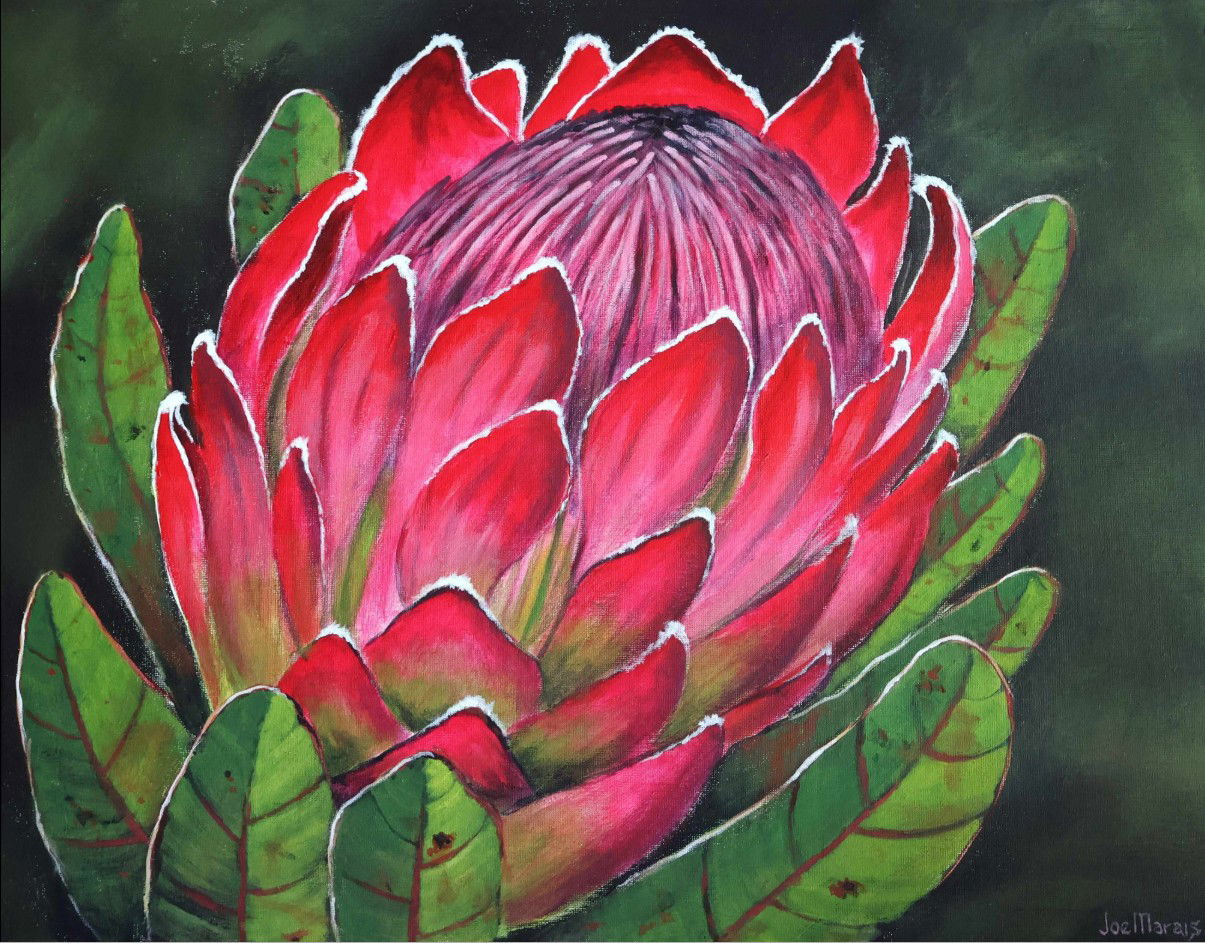
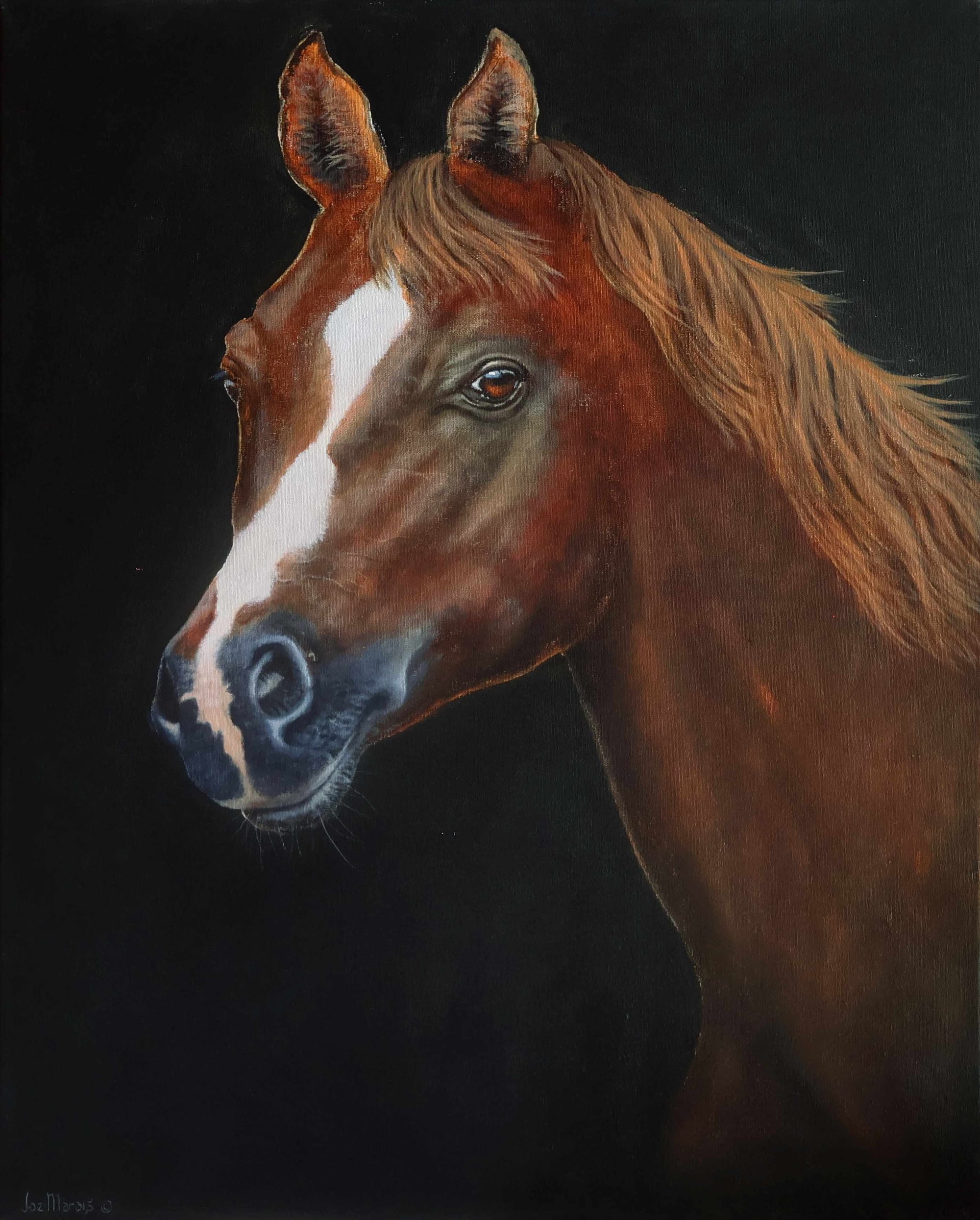
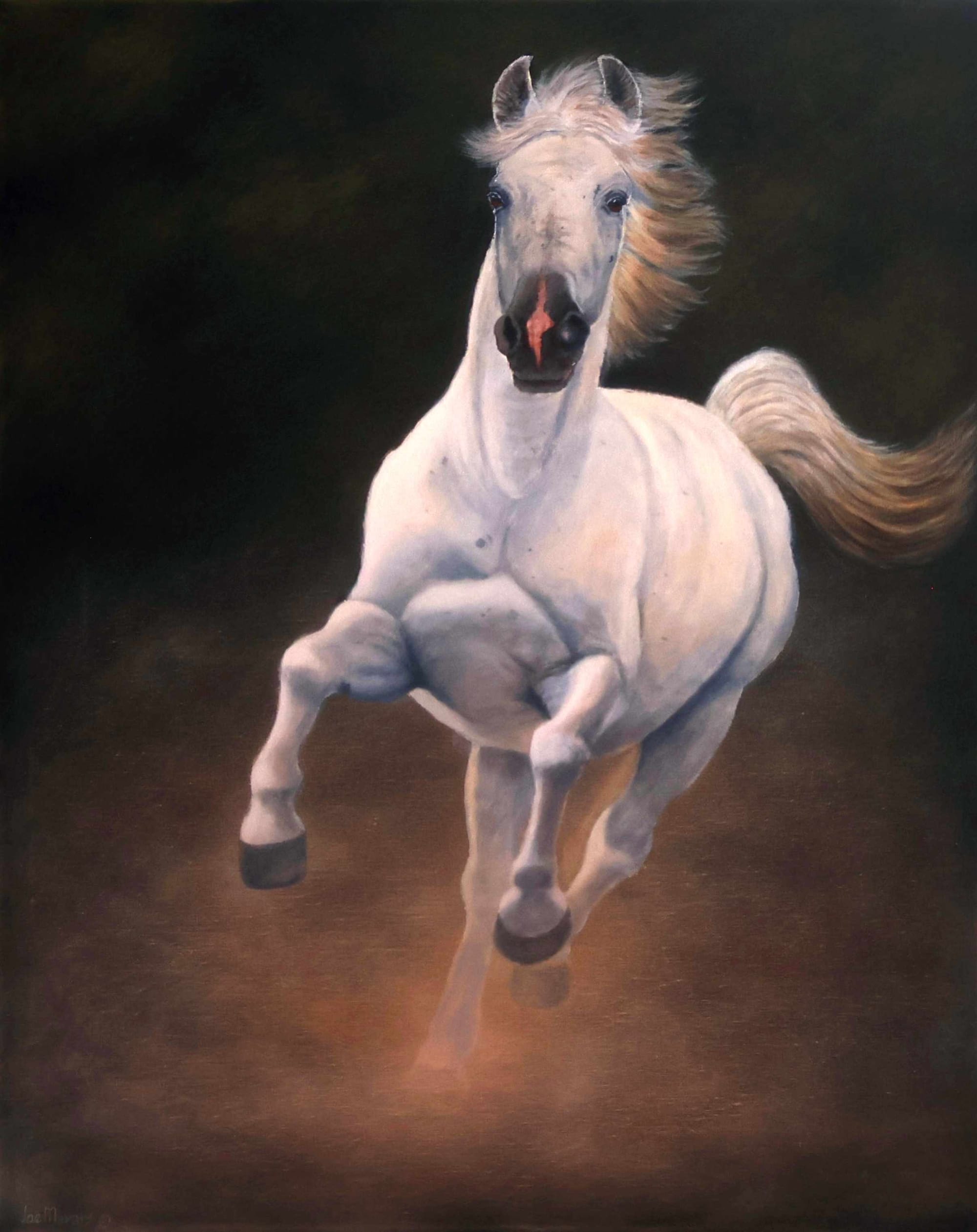
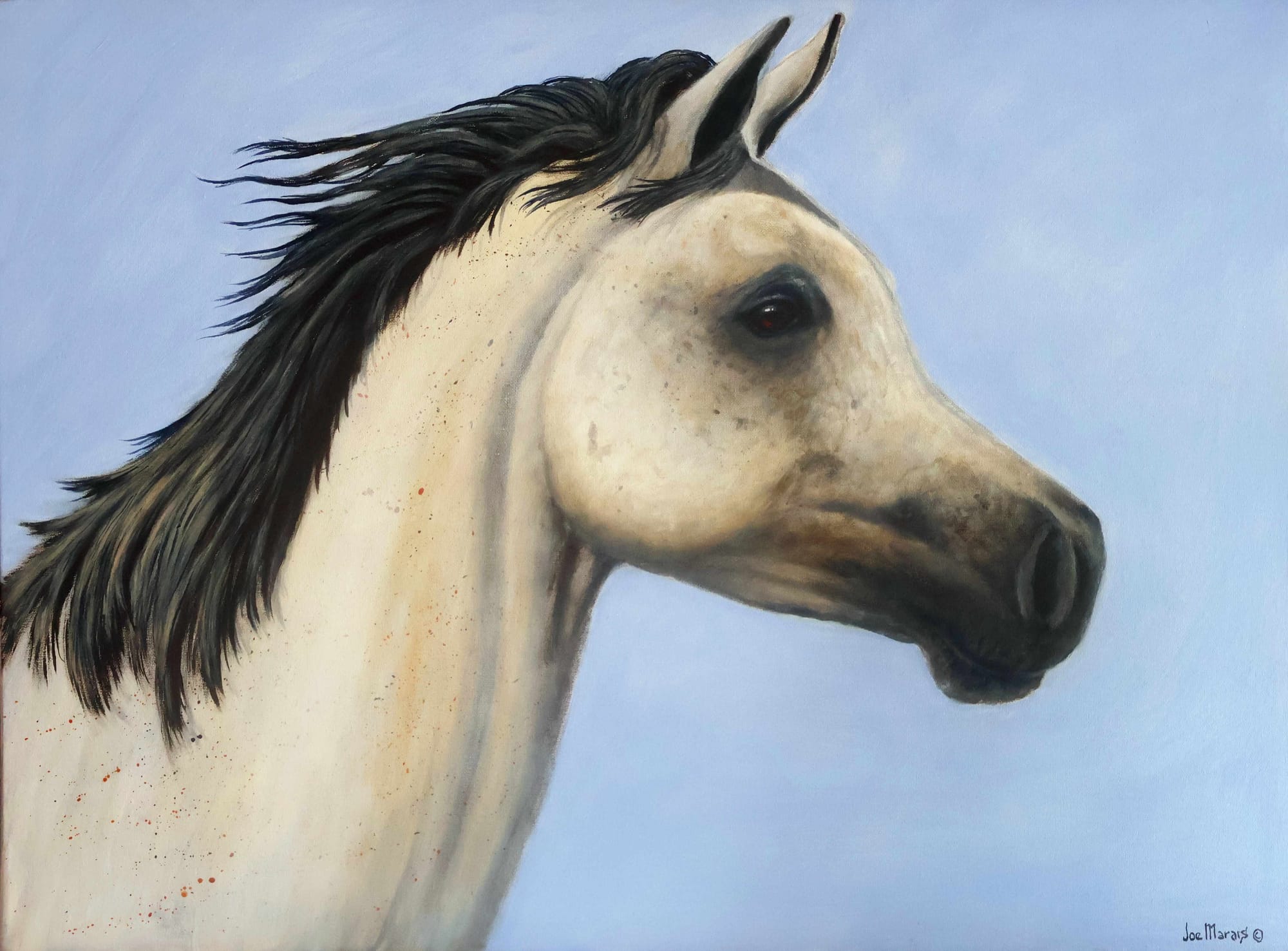
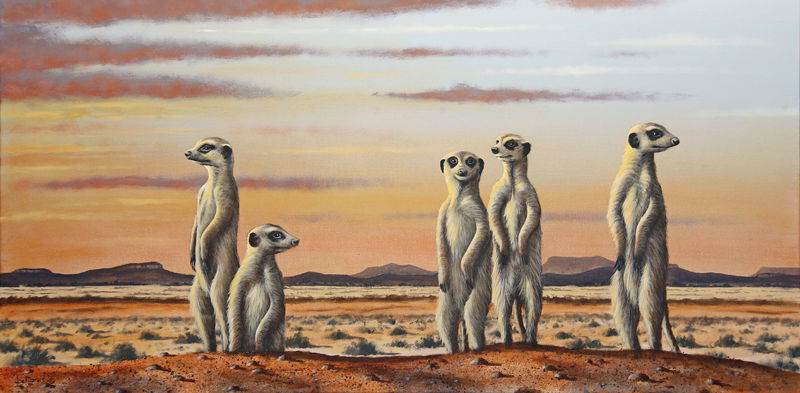
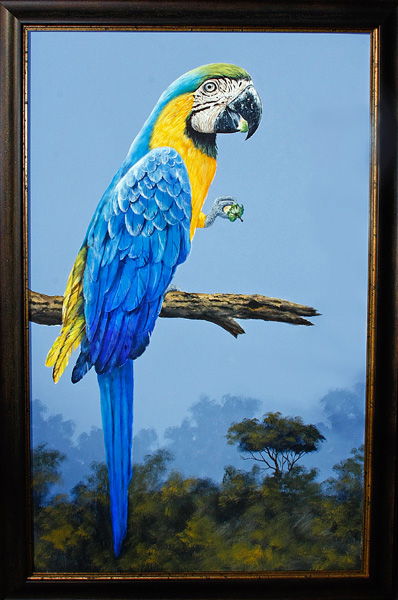
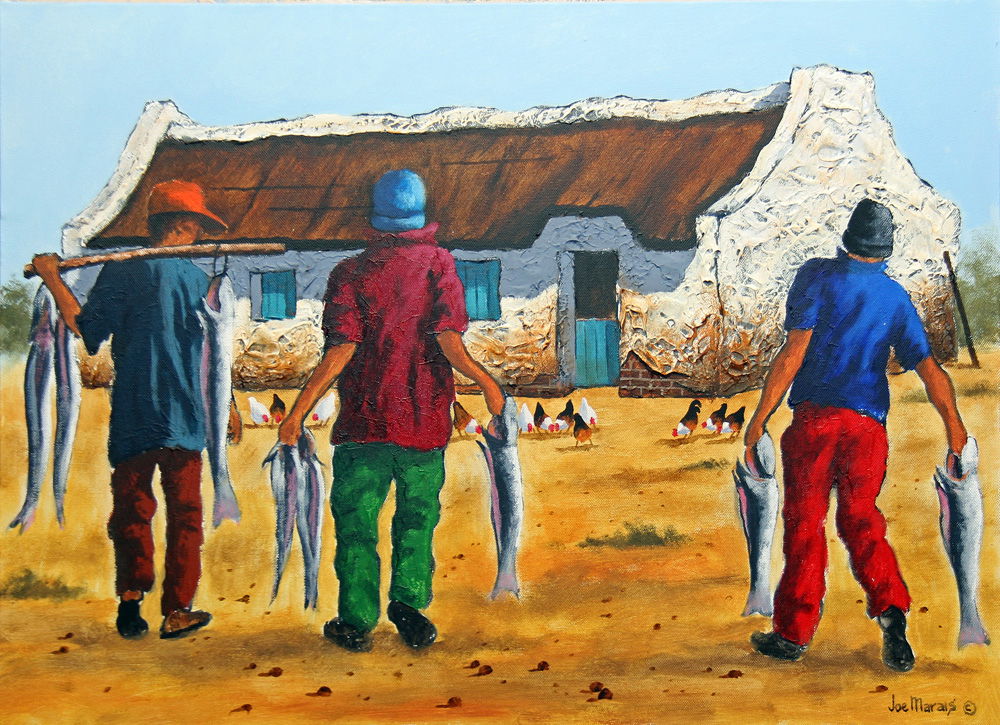
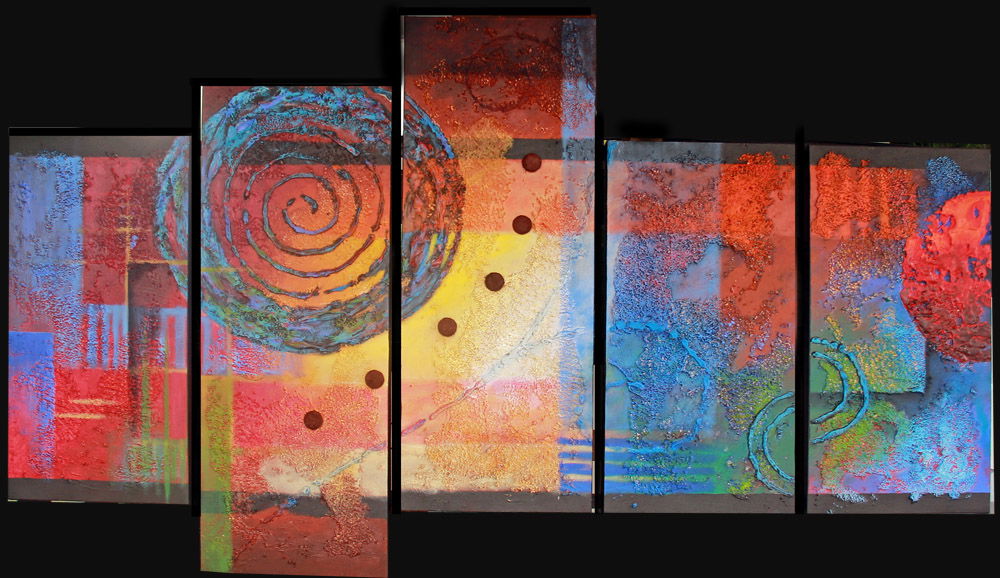
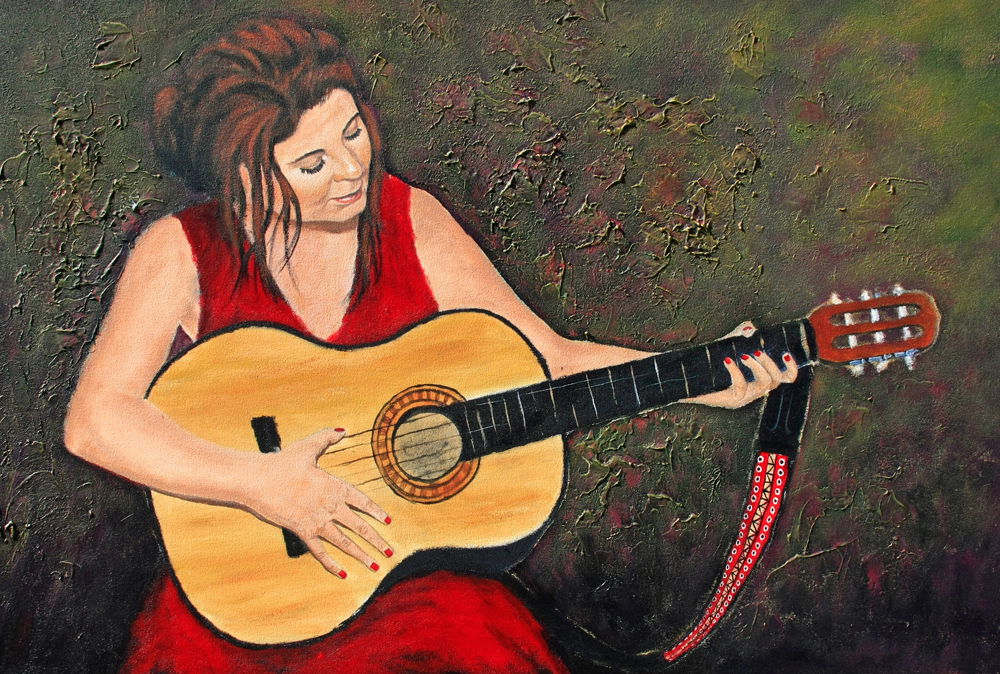
Wild Art - A Brush with Nature
Joe Marais Art
"african wildlife art — the heartbeat of africa on canvas"
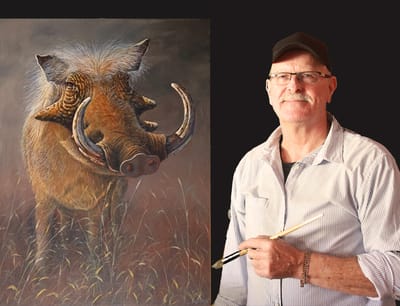
African Wildlife Art — The Heartbeat of Africa on Canvas
By South African Wildlife Artist, Joe Marais
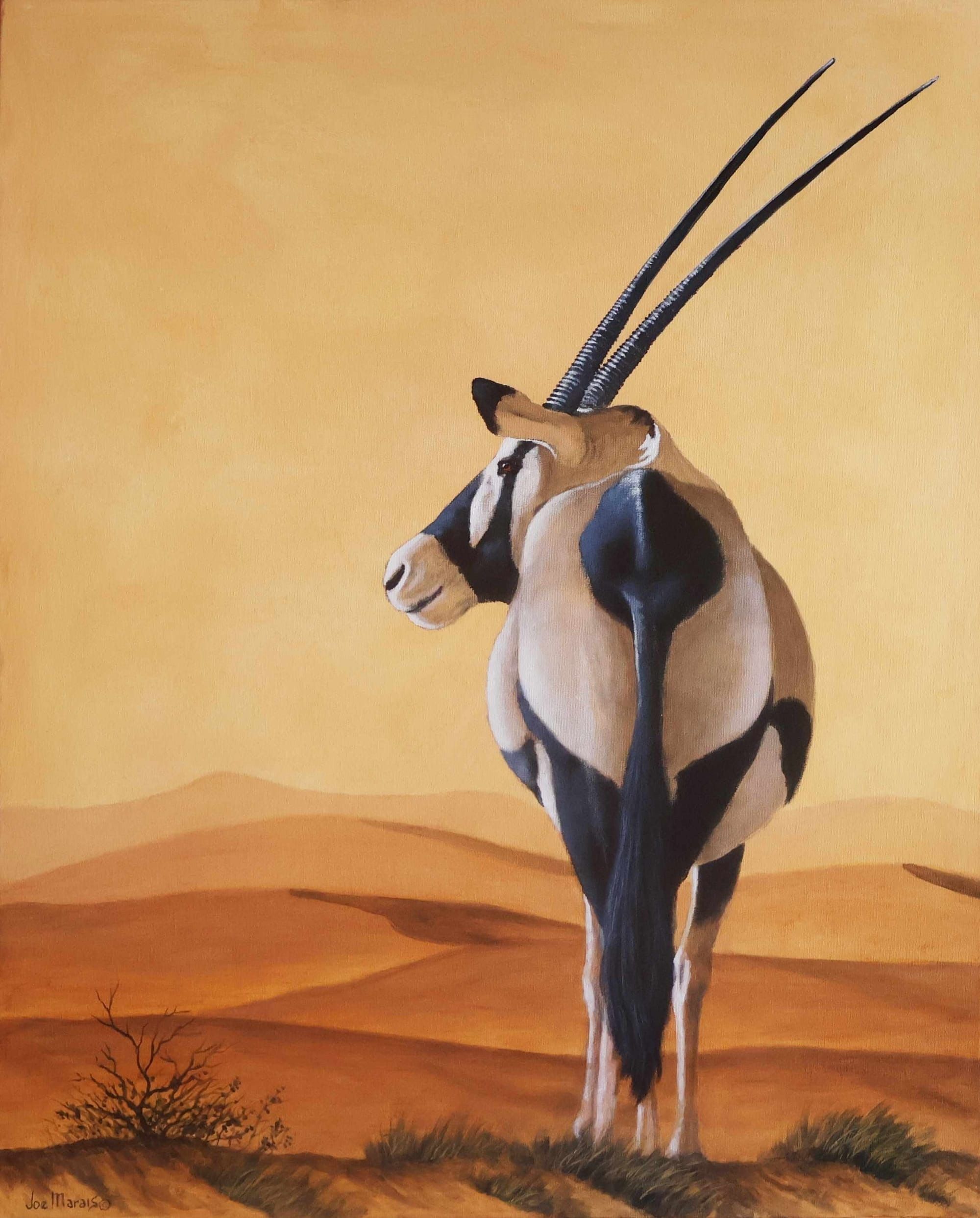
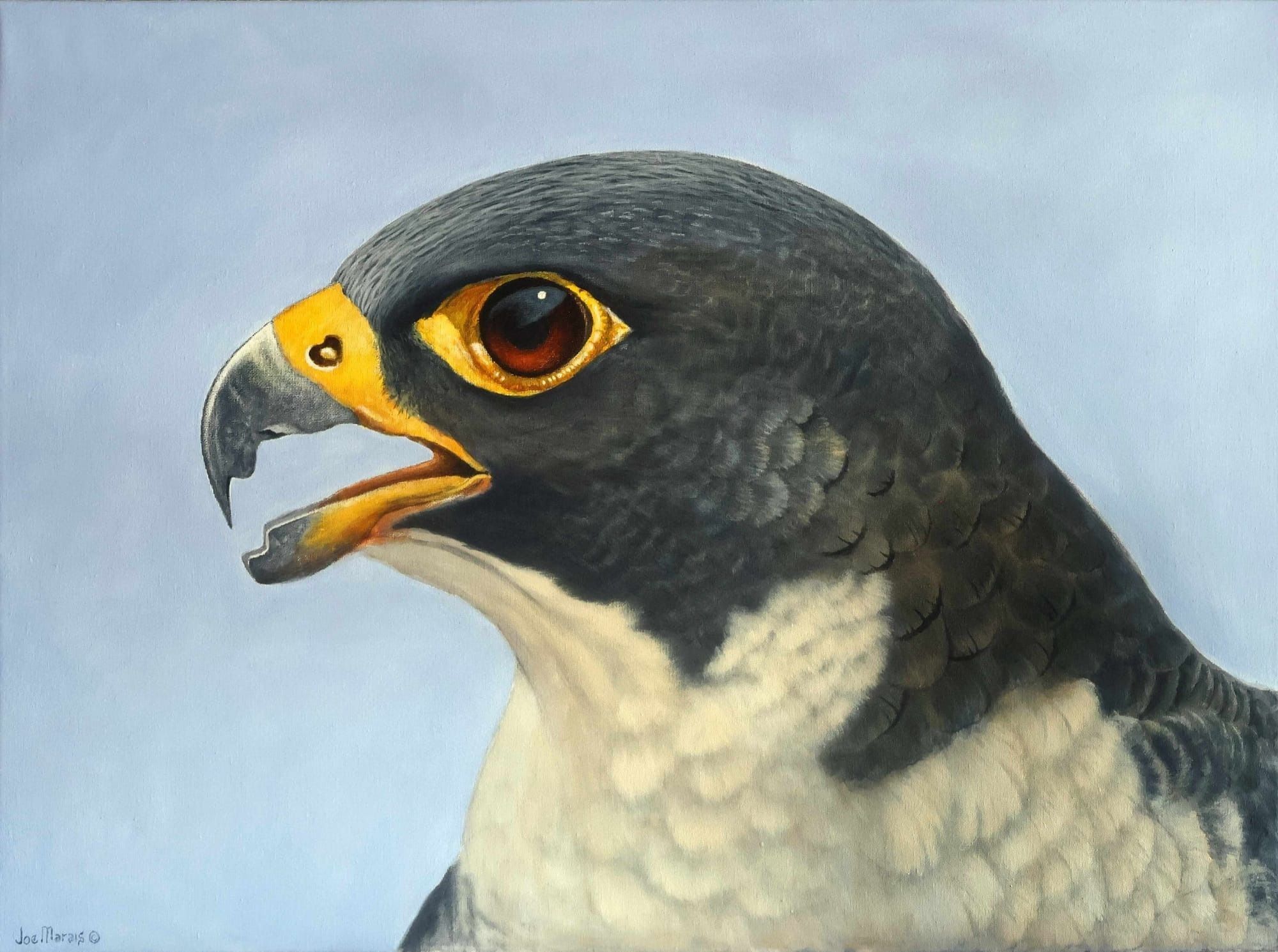
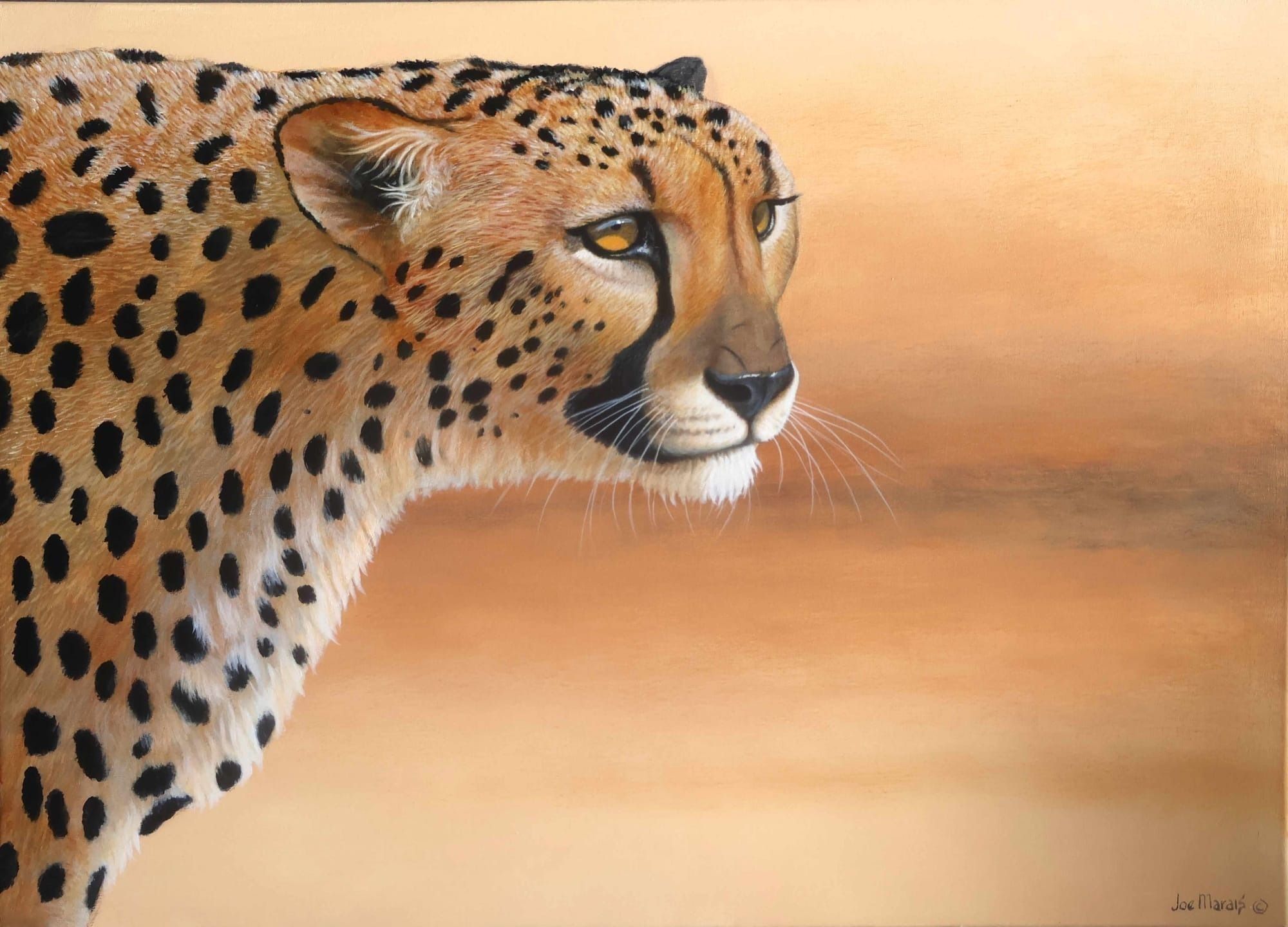
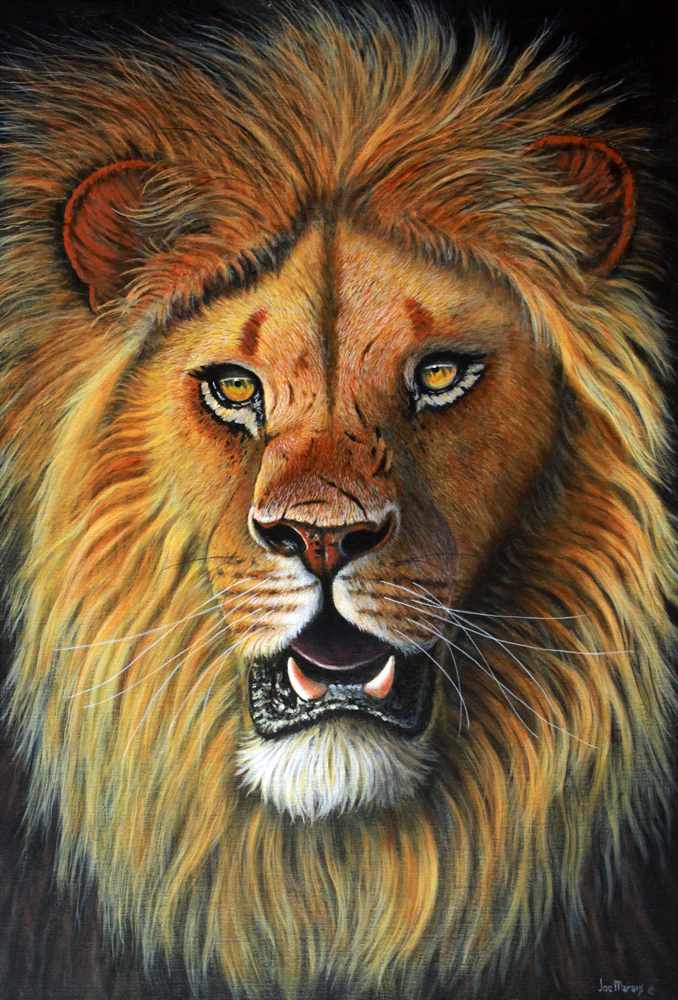
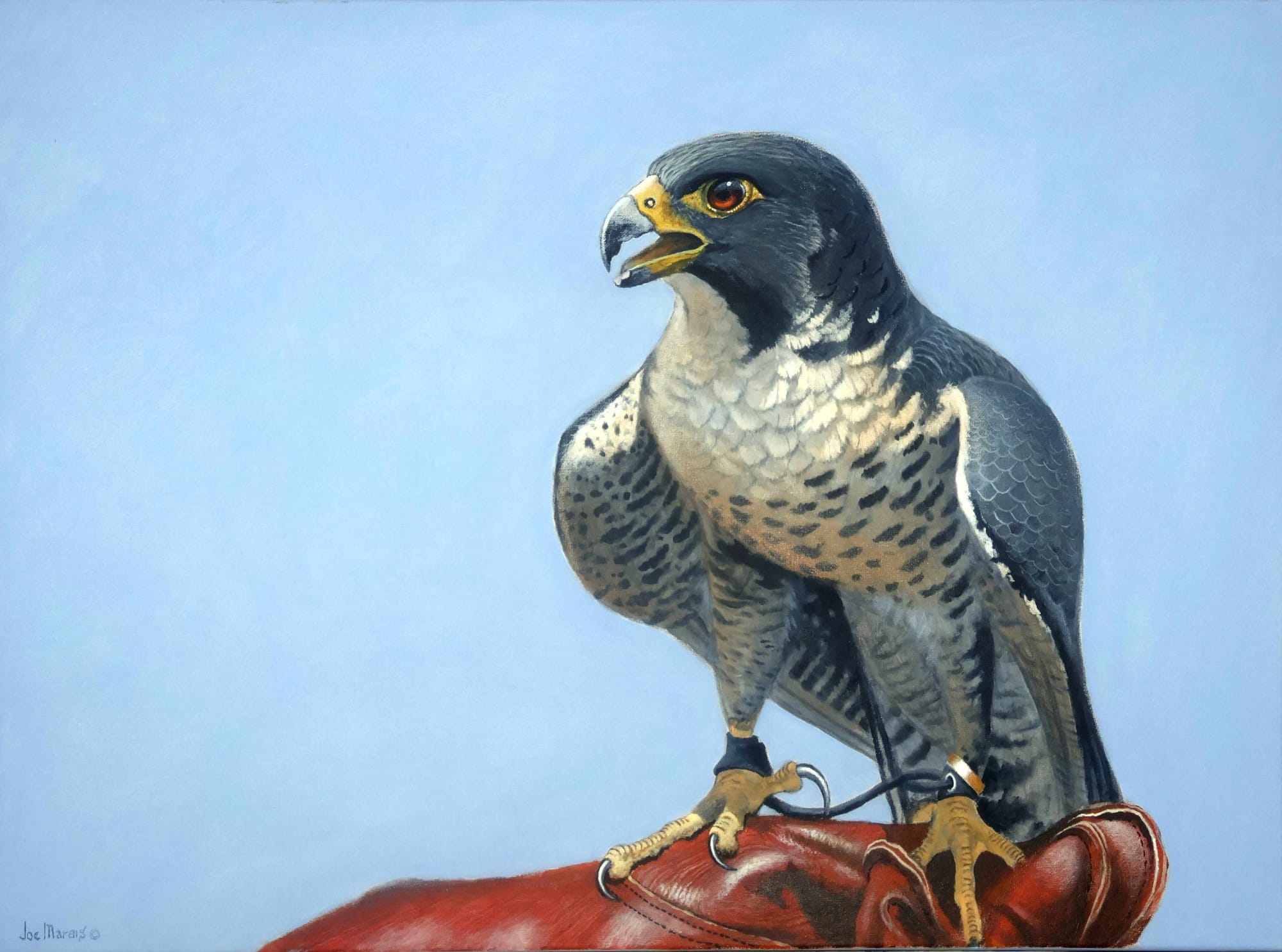
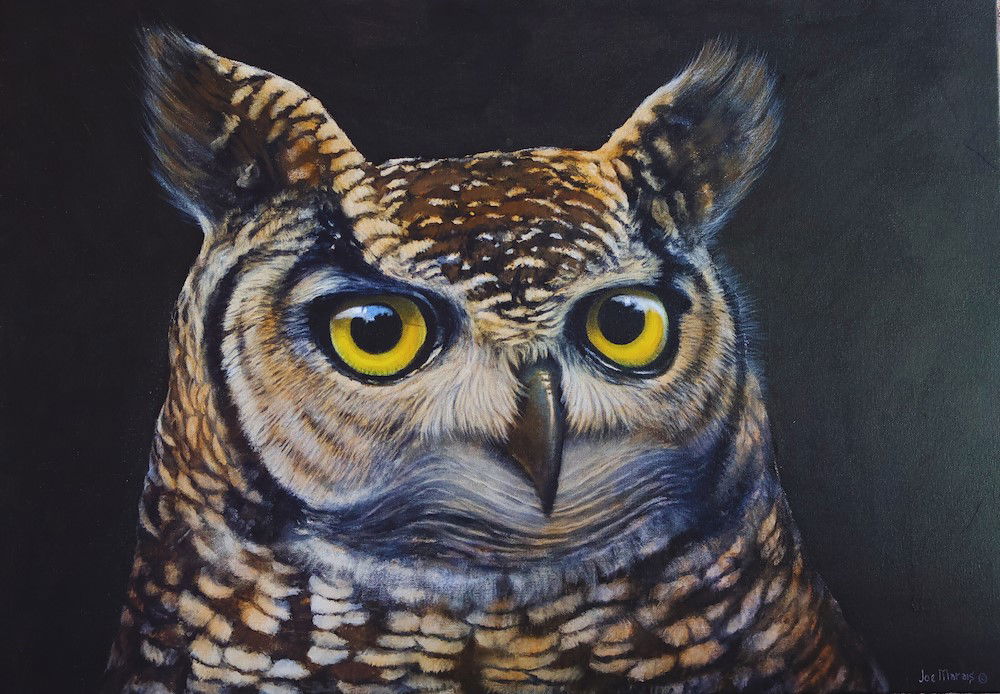
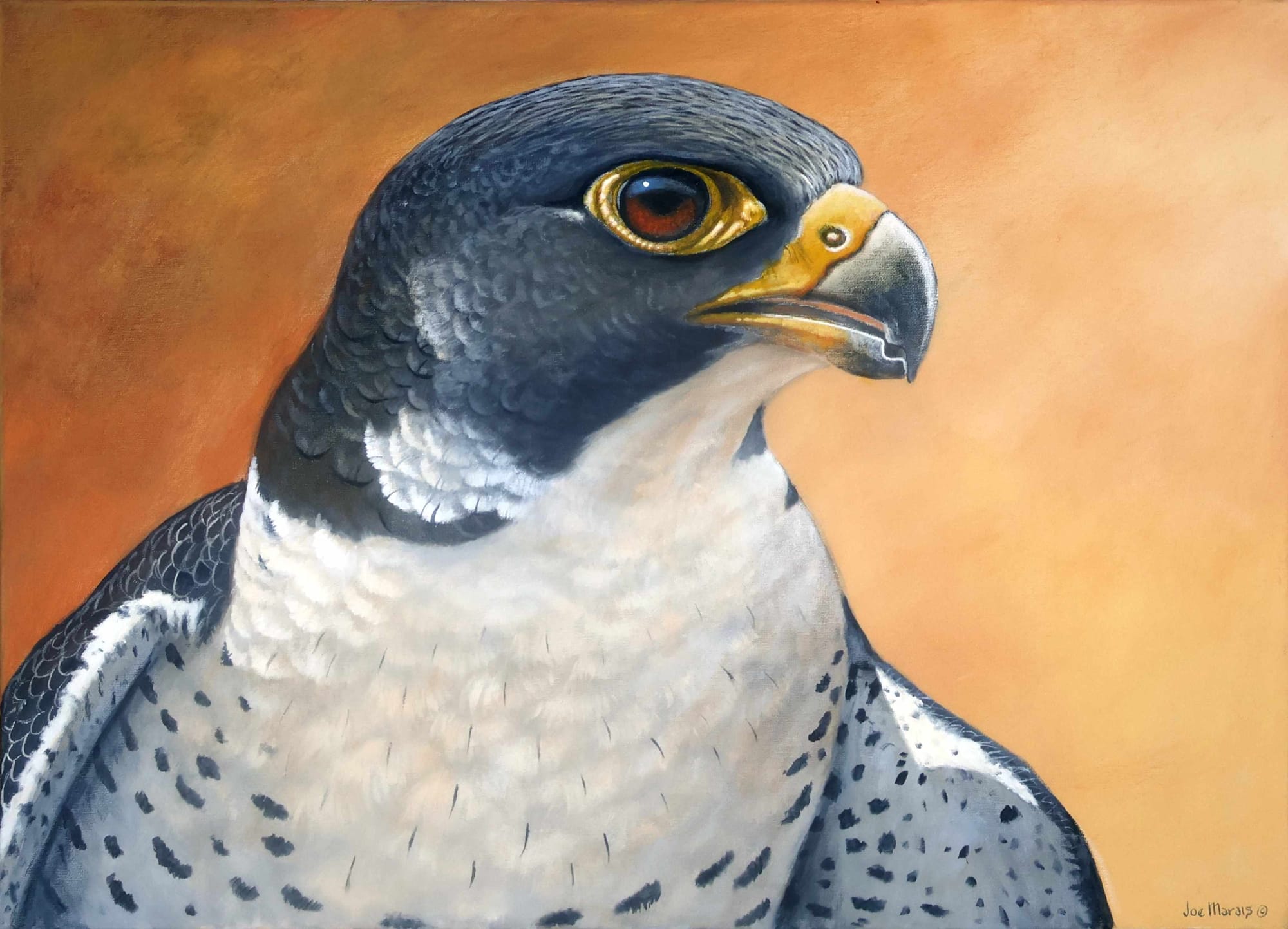
Joe Marais is a South African wildlife artist whose work is defined by authenticity, field experience, and a deep, lifelong connection to the African wilderness. For more than 30 years, he has dedicated his career to capturing the wild, unfiltered essence of Africa — not as an observer from afar, but as someone who has lived its rhythm, its silence, and its unforgettable moments.
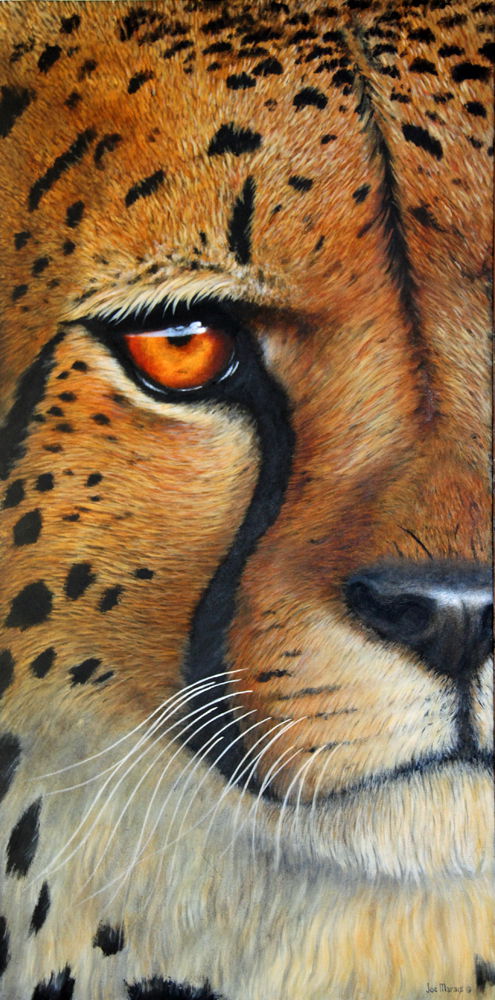
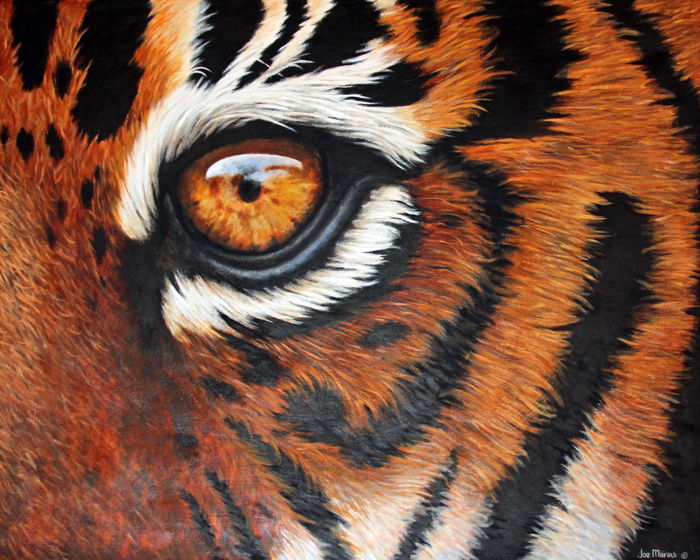
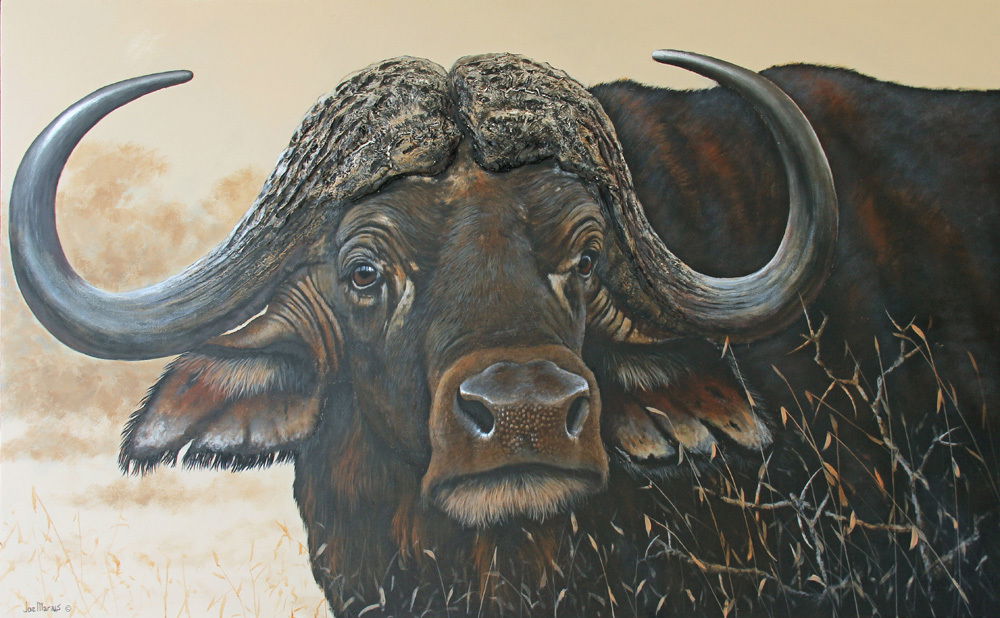
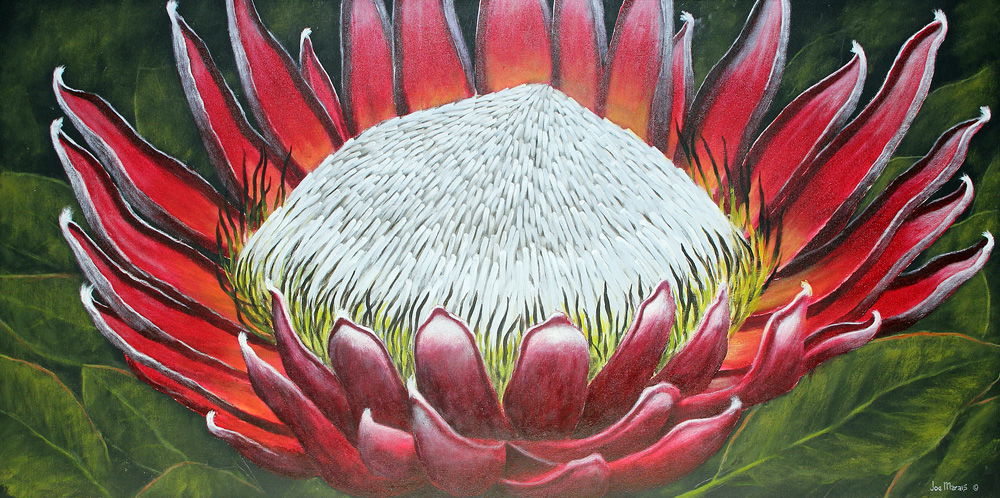
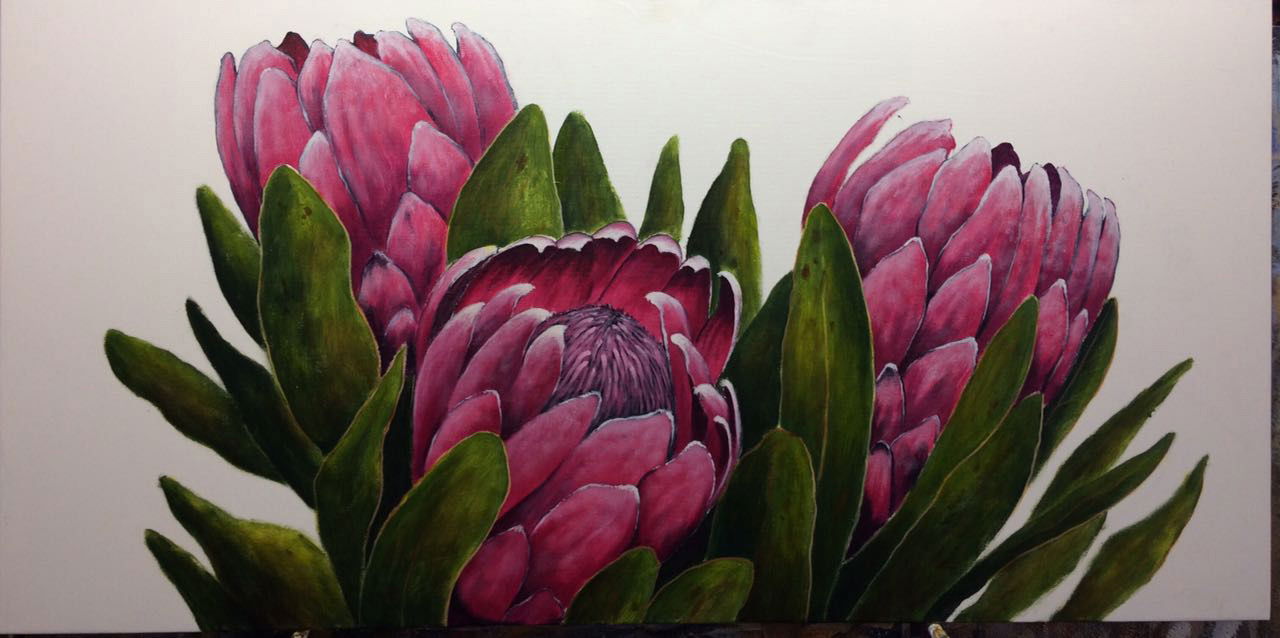
Joe’s artistic journey began not in a classroom or studio, but in the bush itself. With no formal art training, he developed his own distinctive style through intuition, passion, and countless hours spent in the presence of Africa’s wildlife. His work includes a wide range of African wildlife paintings, inspired by the landscapes and animals of Africa. His preferred medium, acrylics, allows him to work with precision and realism, bringing to life the dramatic light, textures, and emotion that define his paintings. Every artwork he creates is rooted in personal field observation and reference photography — moments witnessed firsthand, often under challenging or thrilling conditions.
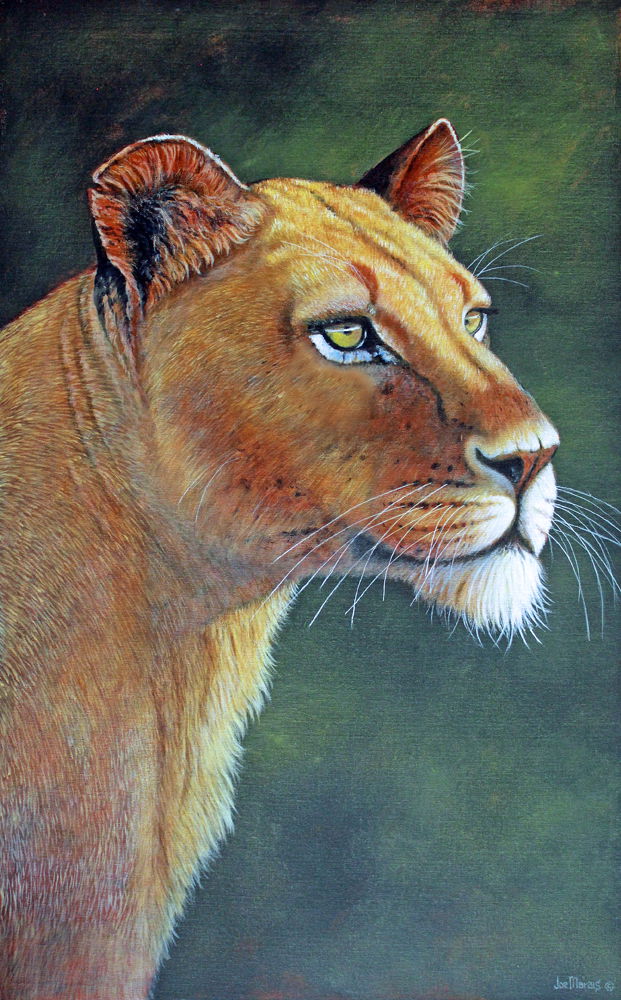
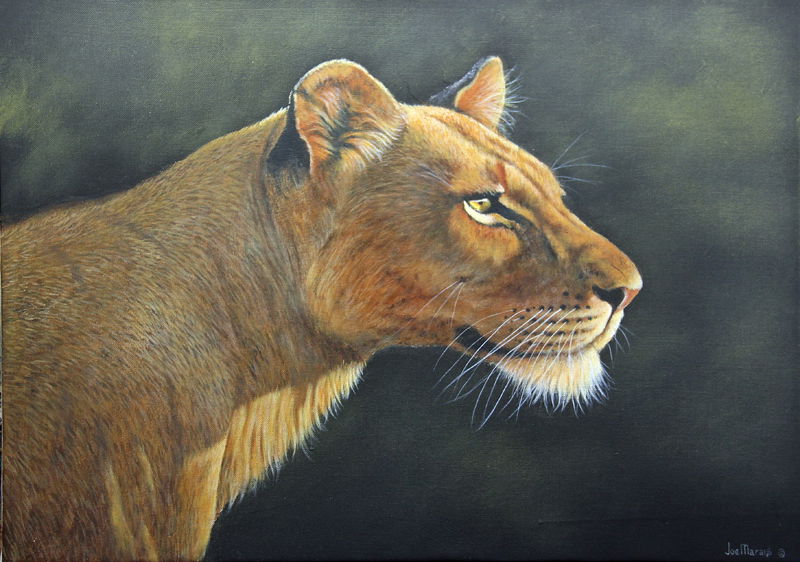
His research trips across South Africa, Botswana, Zambia, and Zimbabwe form the backbone of his creative process. Joe and his wife, Ilse, frequently camp in remote regions of Botswana, sleeping in a small ground tent while elephants, lions, and leopard move quietly around them at night. Days are spent at waterholes, observing animal interactions, sketching, and photographing the “magic moments” he later brings to canvas. These experiences give his work an unmatched level of accuracy, intimacy, and emotional depth.
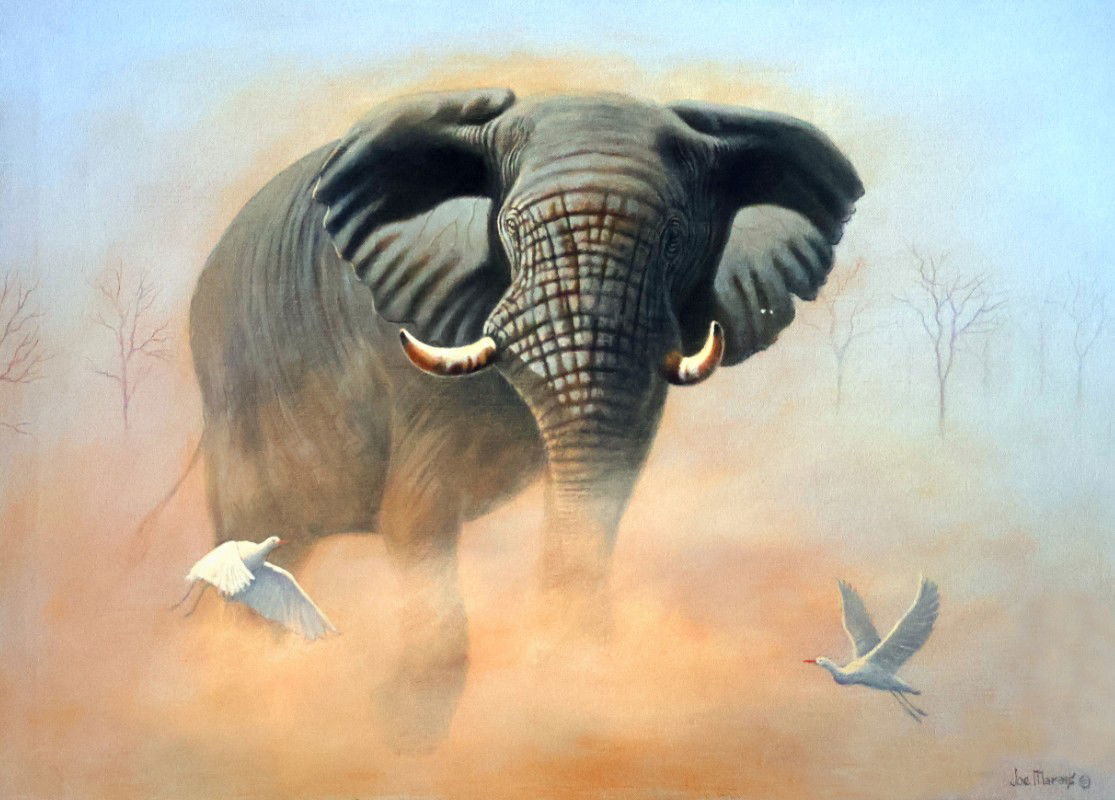
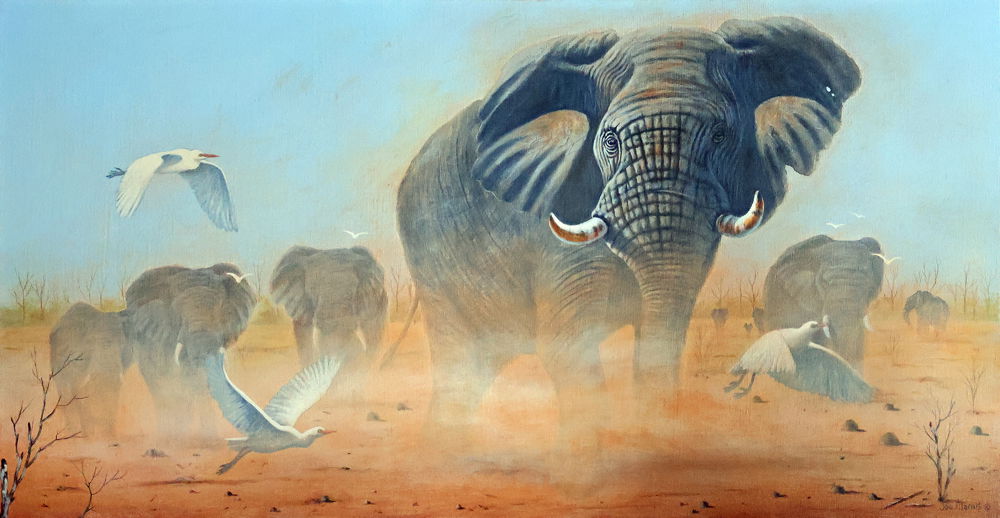
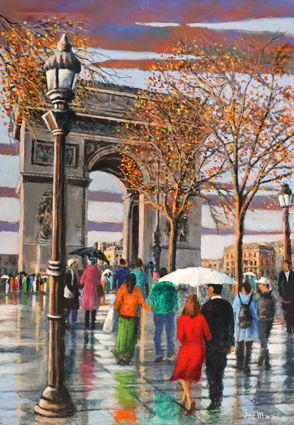
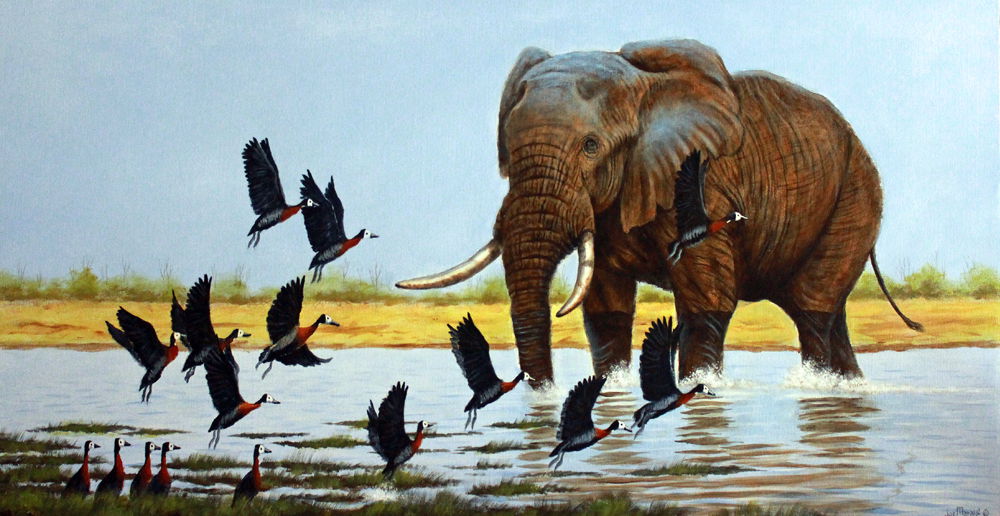
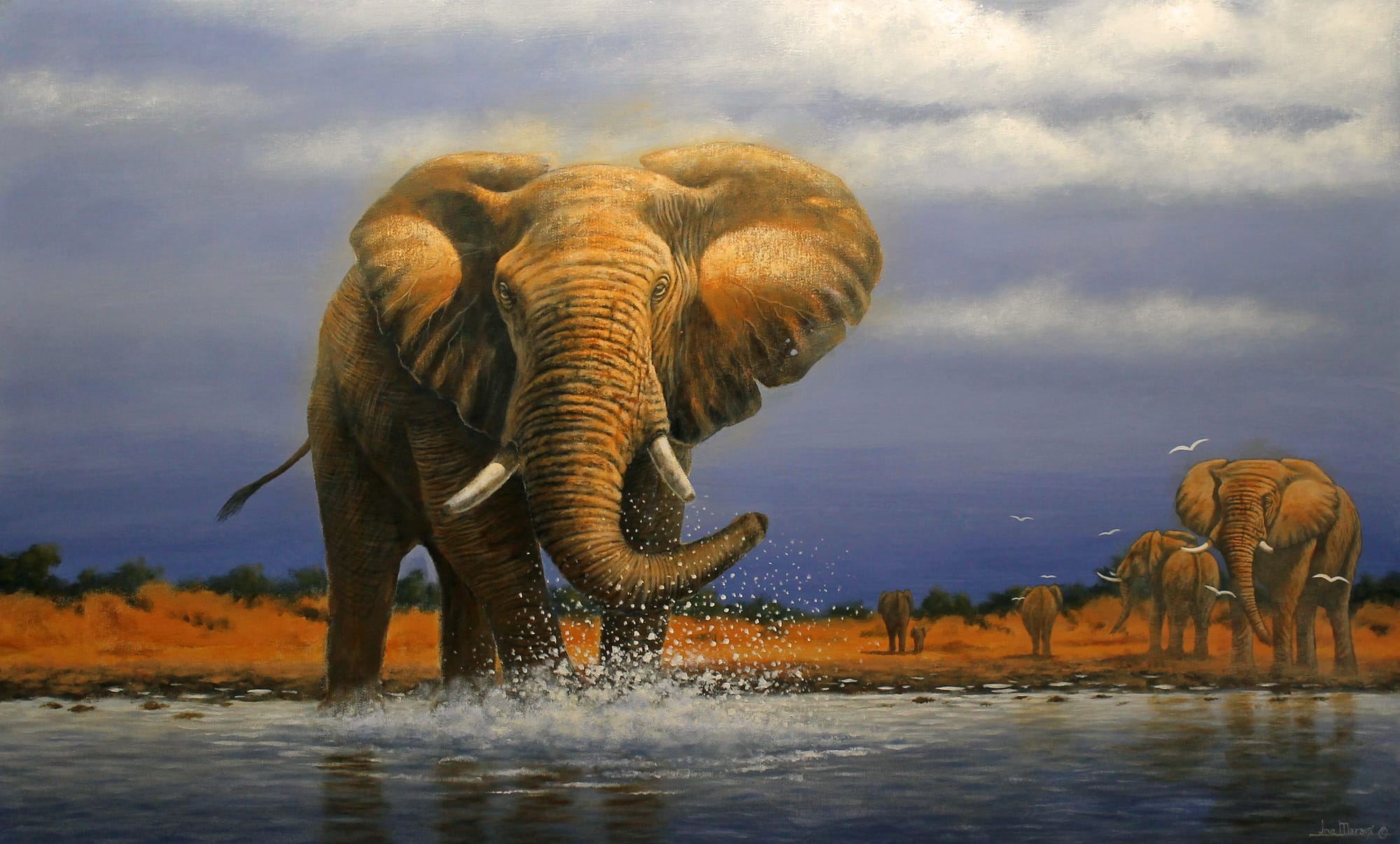
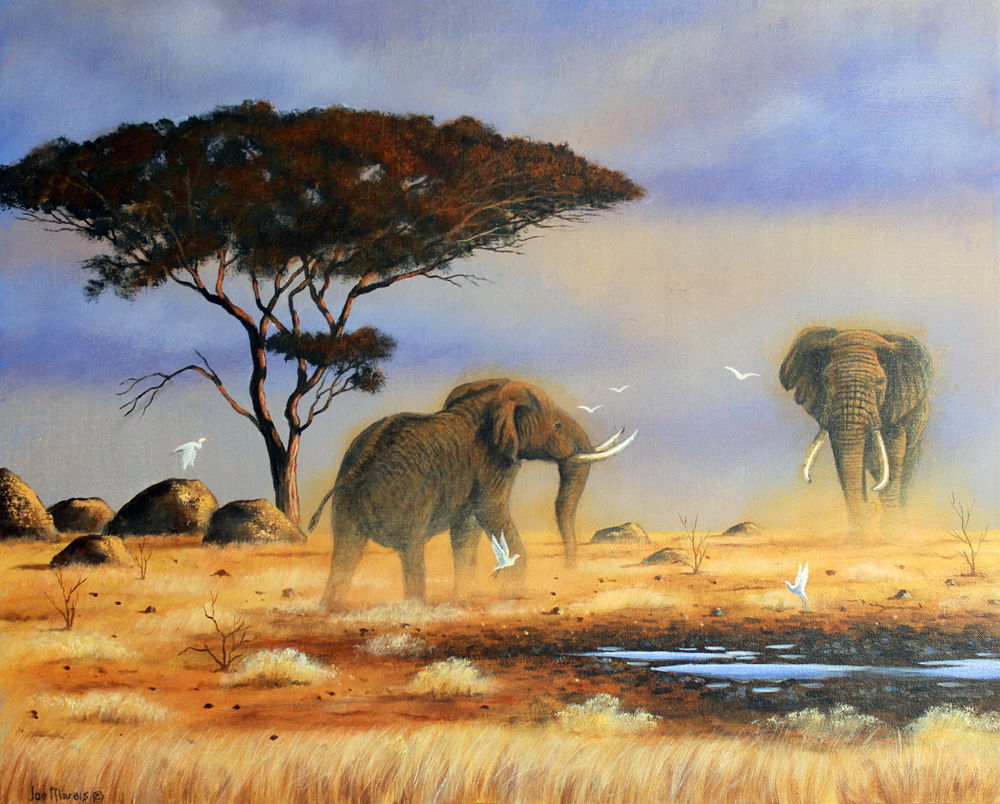
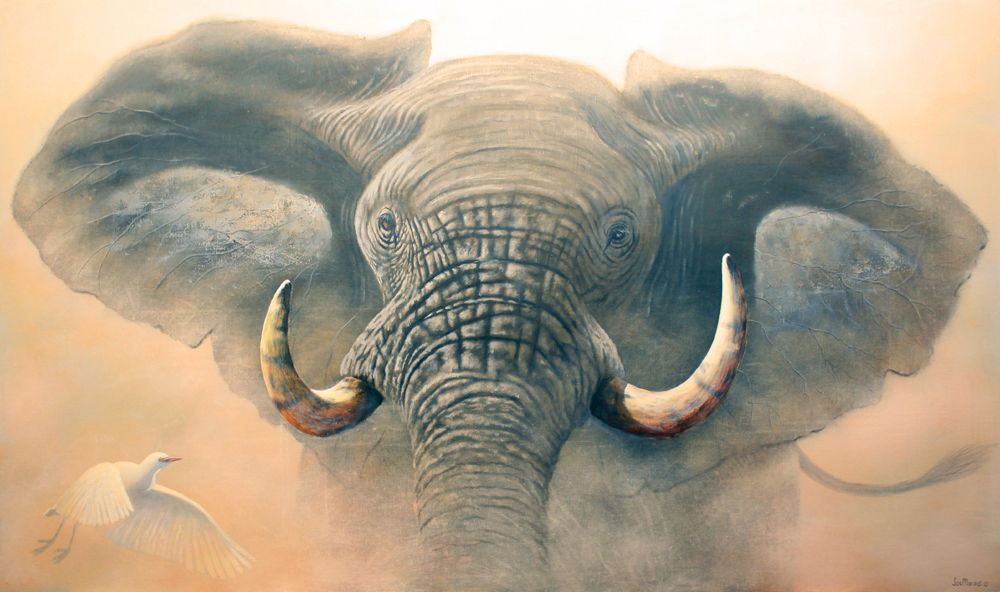
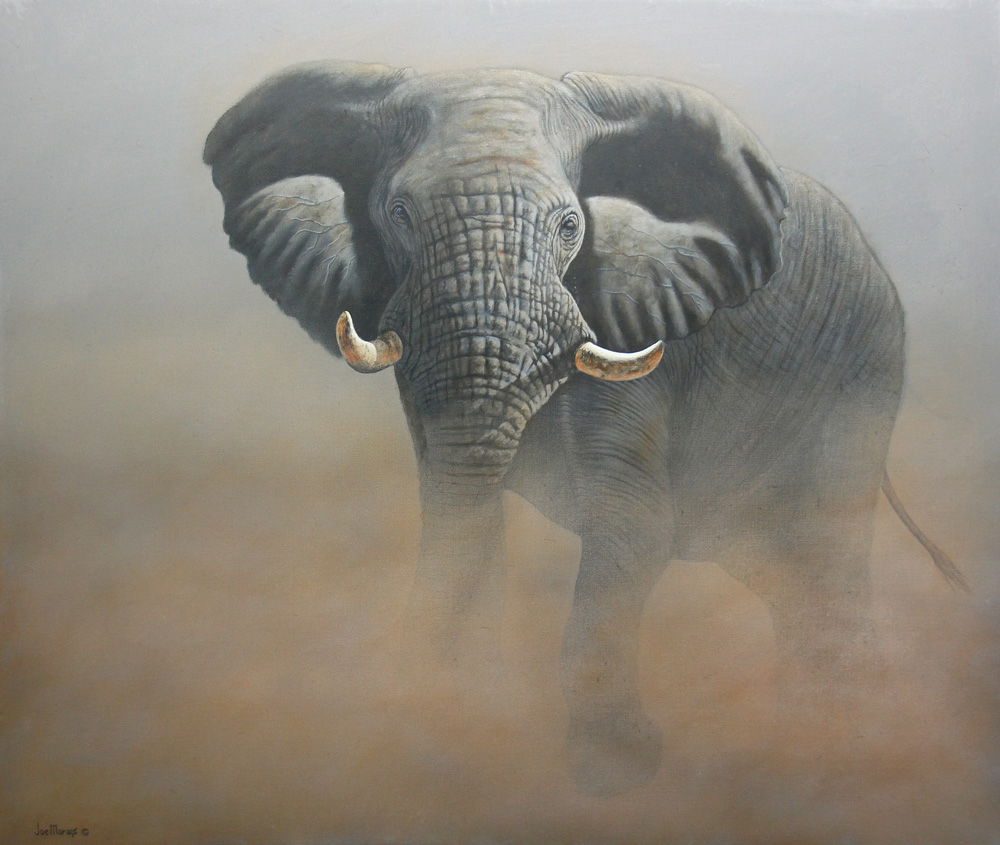
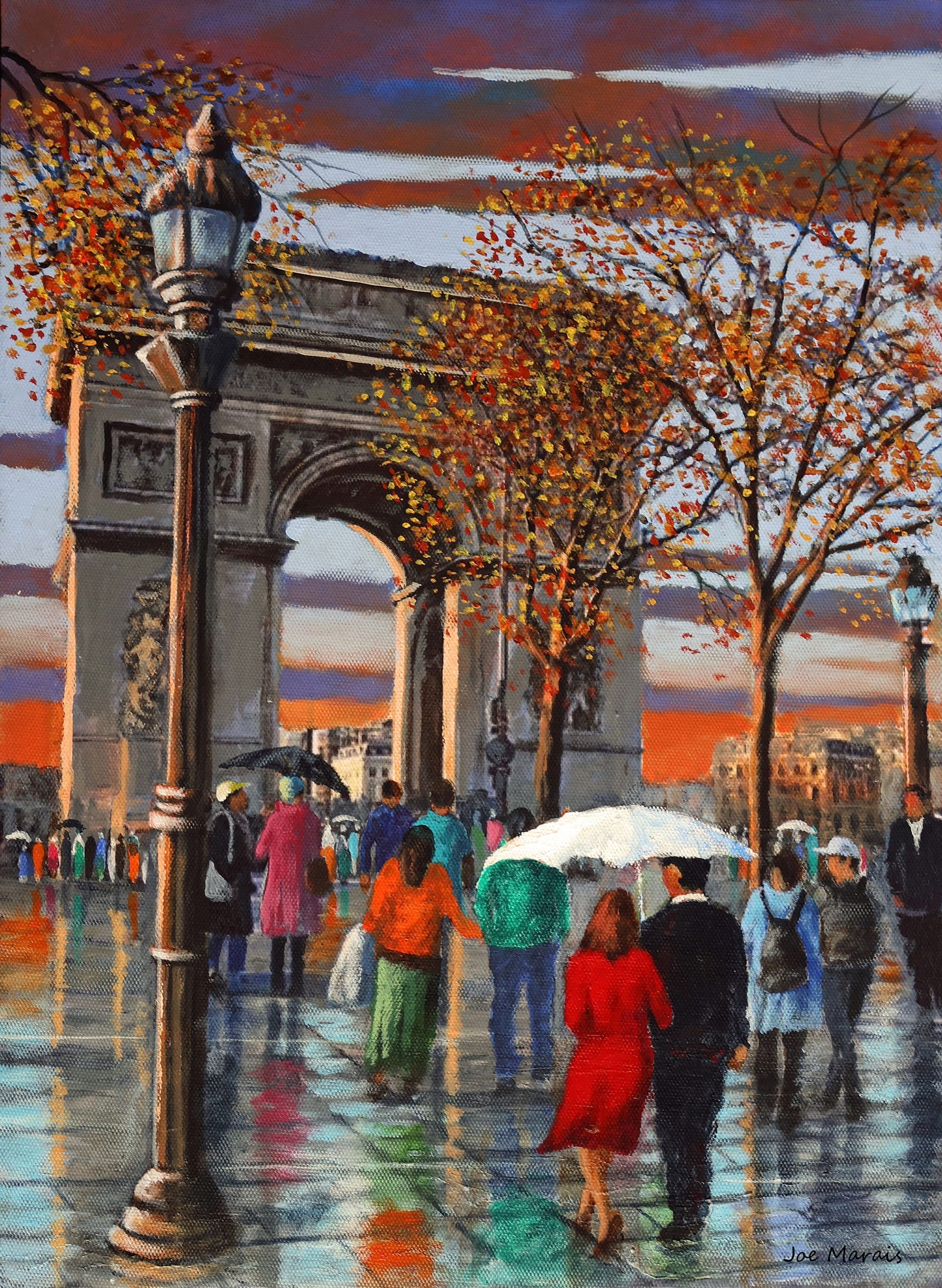
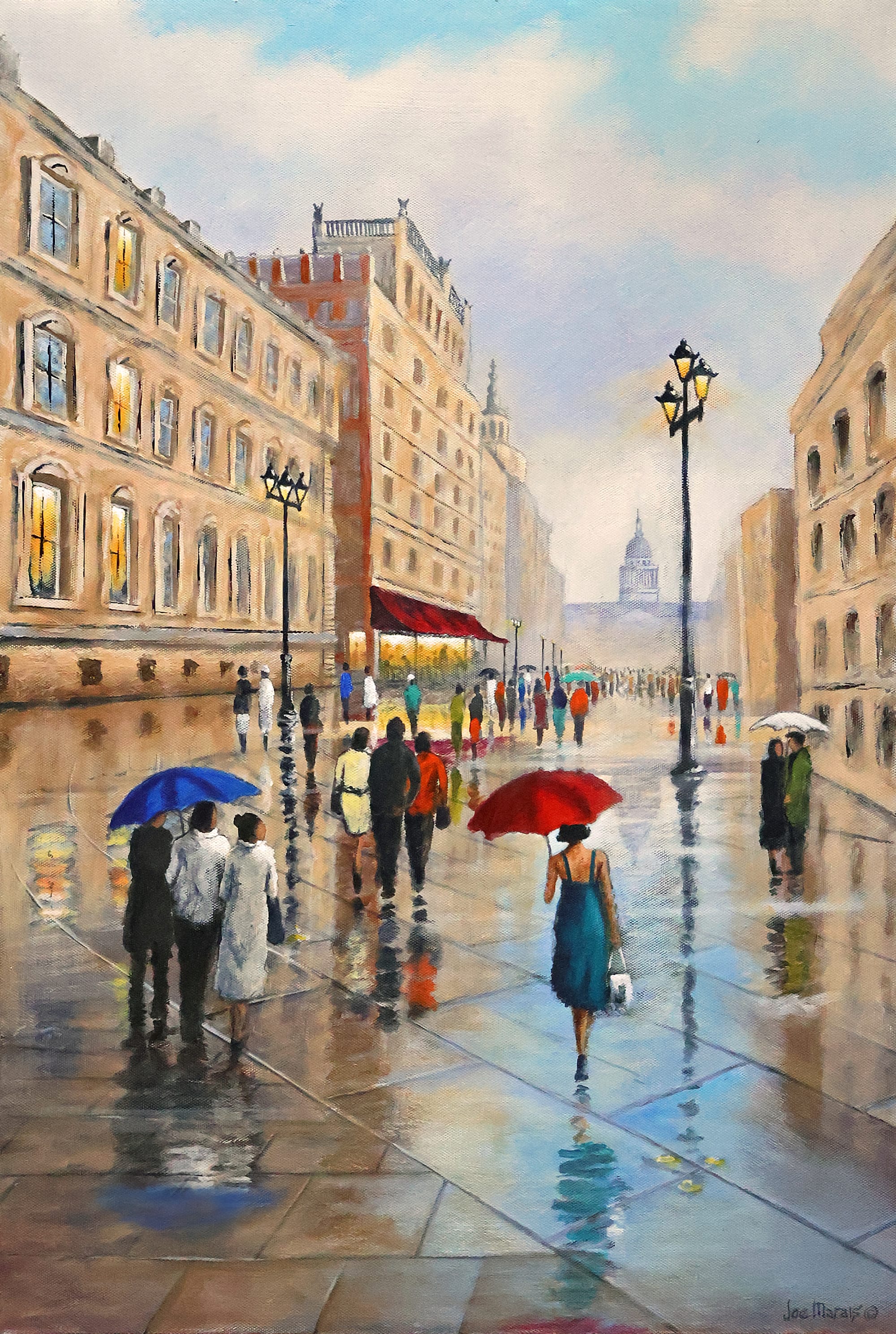
Joe’s art has been exhibited internationally for decades. His career includes notable appearances at Washington Square Outdoor Art Exhibition in New York, galleries across Canada, major South African art venues, Tuscany in Italy, Mauritius, Paris, London, and the Abu Dhabi Hunting Expo. His life-size 6m × 3.2m bull elephant — a monumental project requiring more than 500 hours — remains one of his most ambitious achievements and now belongs to a private collector. Over the years, his paintings have also supported conservation initiatives through numerous donations to African wildlife projects.
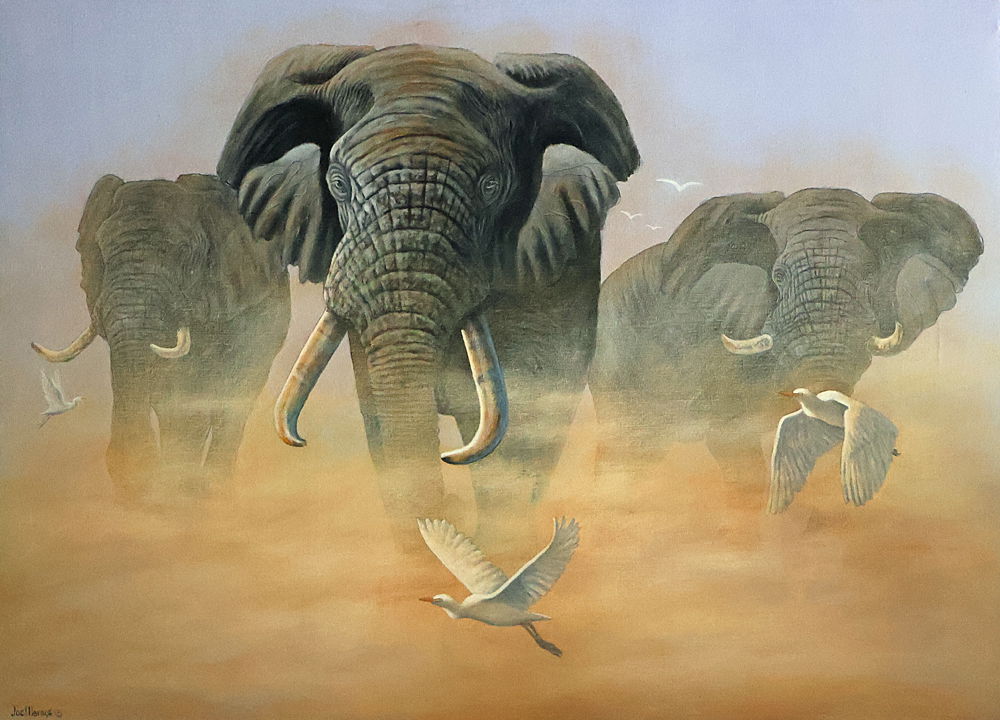
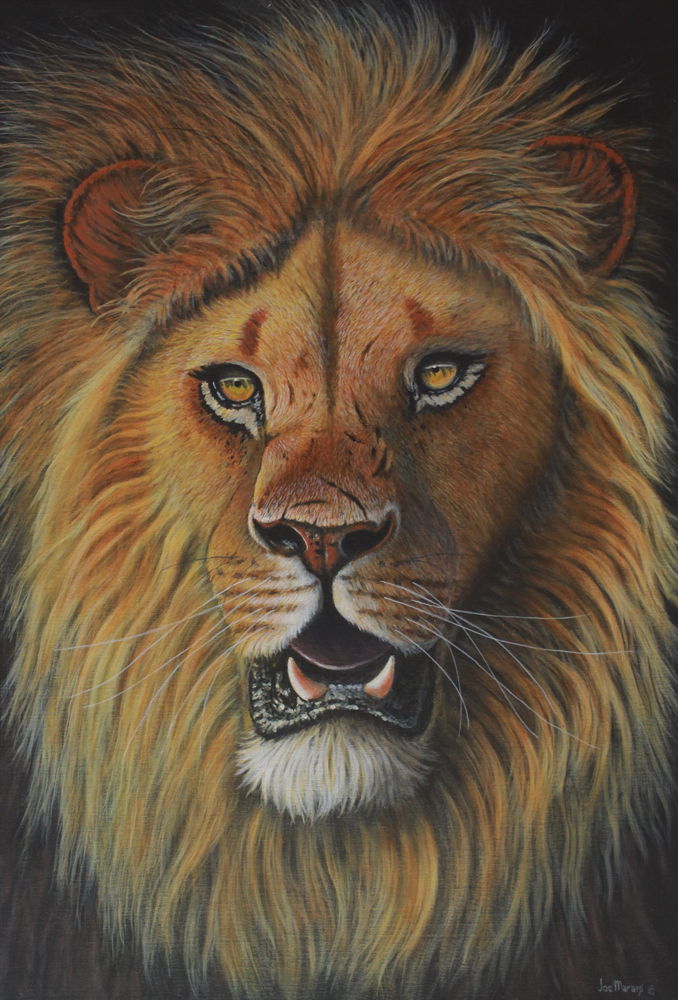
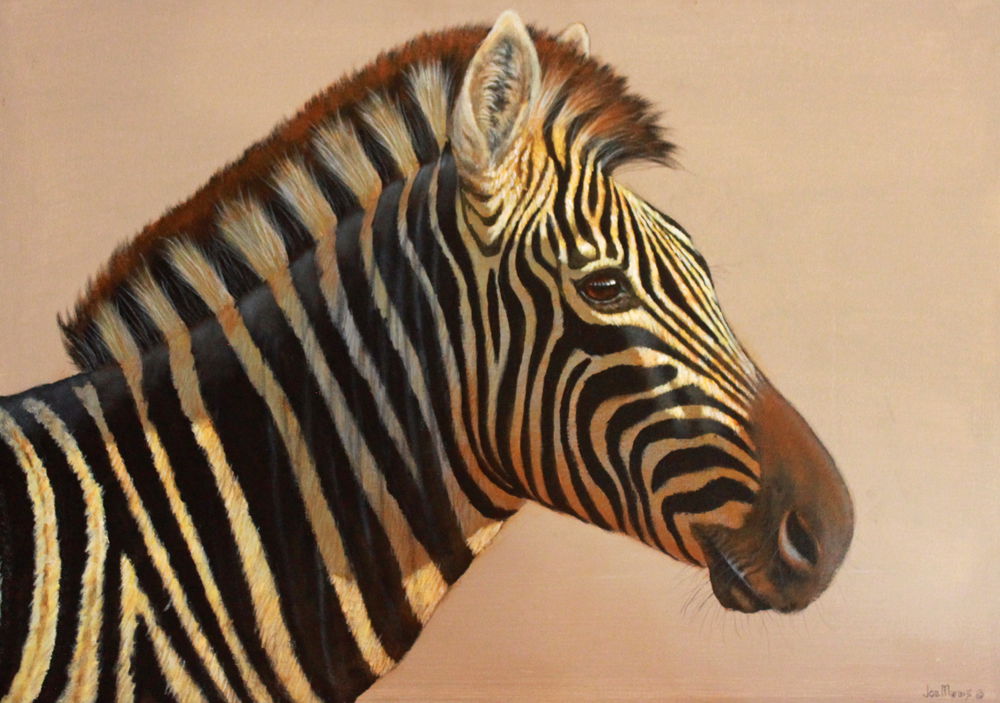
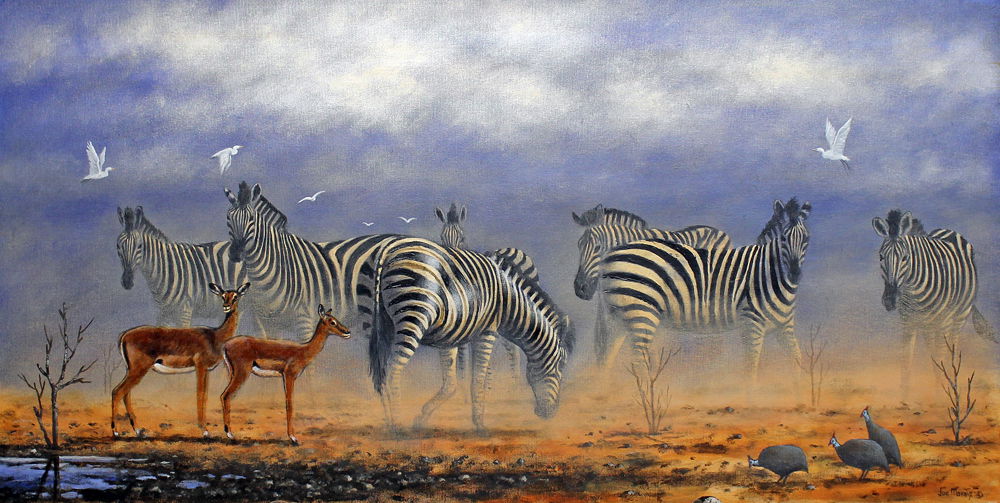
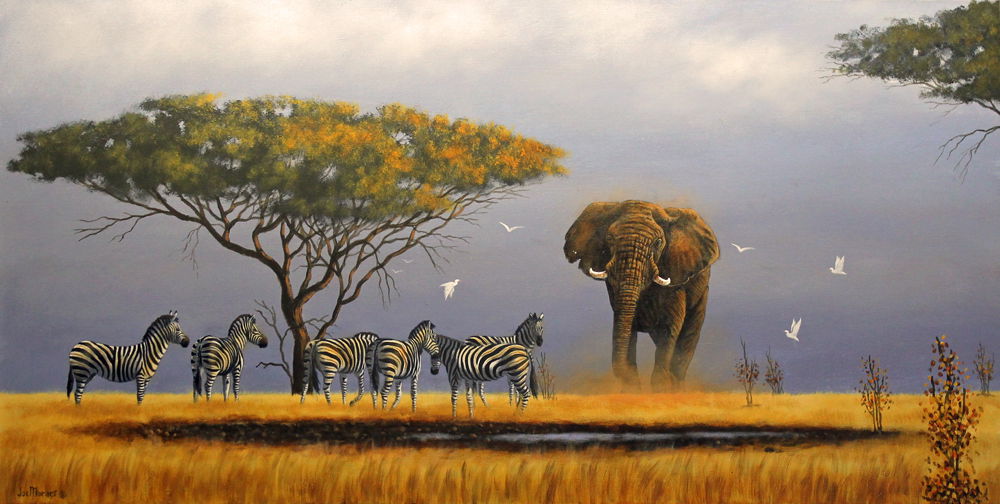
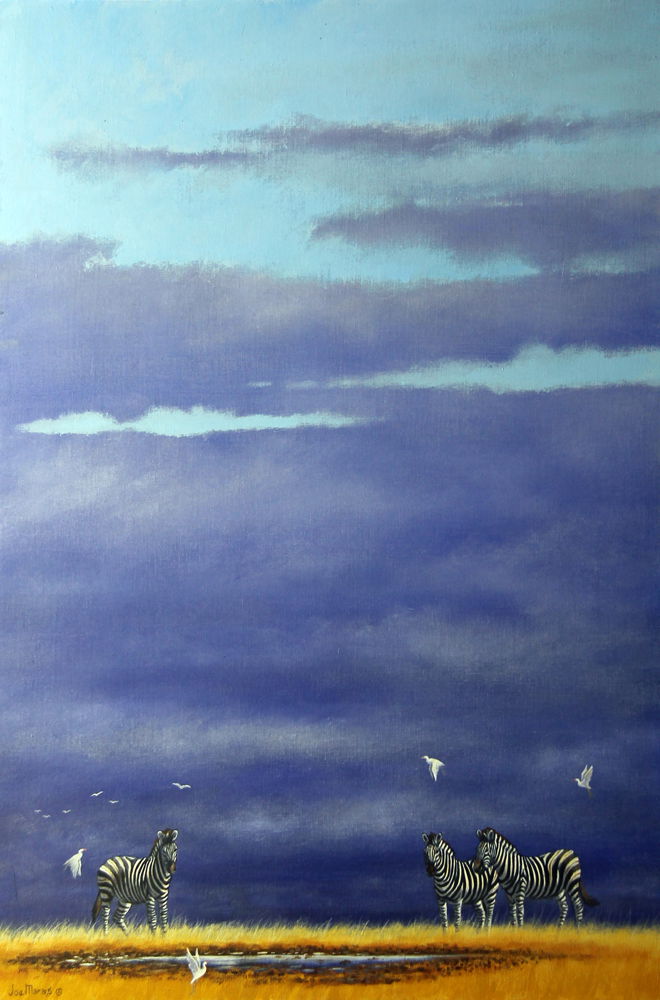
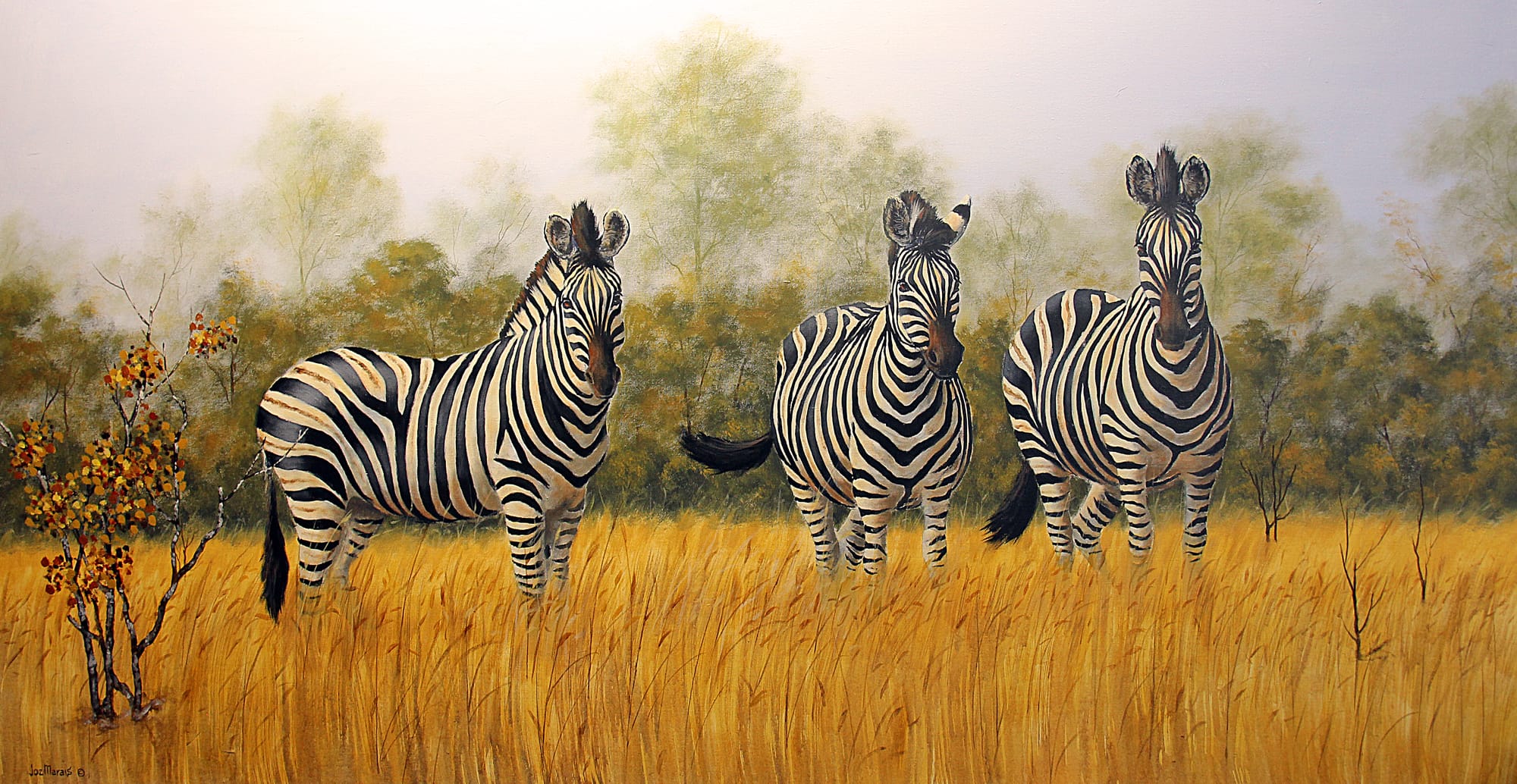
Collectors value Joe’s work for its honesty. Whether depicting an elephant bull, a zebra herd, or a scene at a dusty Botswana waterhole, his paintings are known for capturing the true spirit of Africa — its power, its fragility, its diversity, and its timeless beauty. Many buyers describe his art as a way to reconnect with the places they have visited and the memories they treasure.
Today, from his studio in Meerensee, Richards Bay, KZN, South Africa, Joe continues to paint the wildlife he knows intimately and respects deeply. His mission remains unchanged: to share with the world the extraordinary beauty of Africa, and to preserve its legacy through art that speaks from the heart.
Email: art@joemarais.co.za
Email: art@joemarais.co.za Cell: +27 76 4944 356
Website: https://www.artbyjoemarais.co.za/
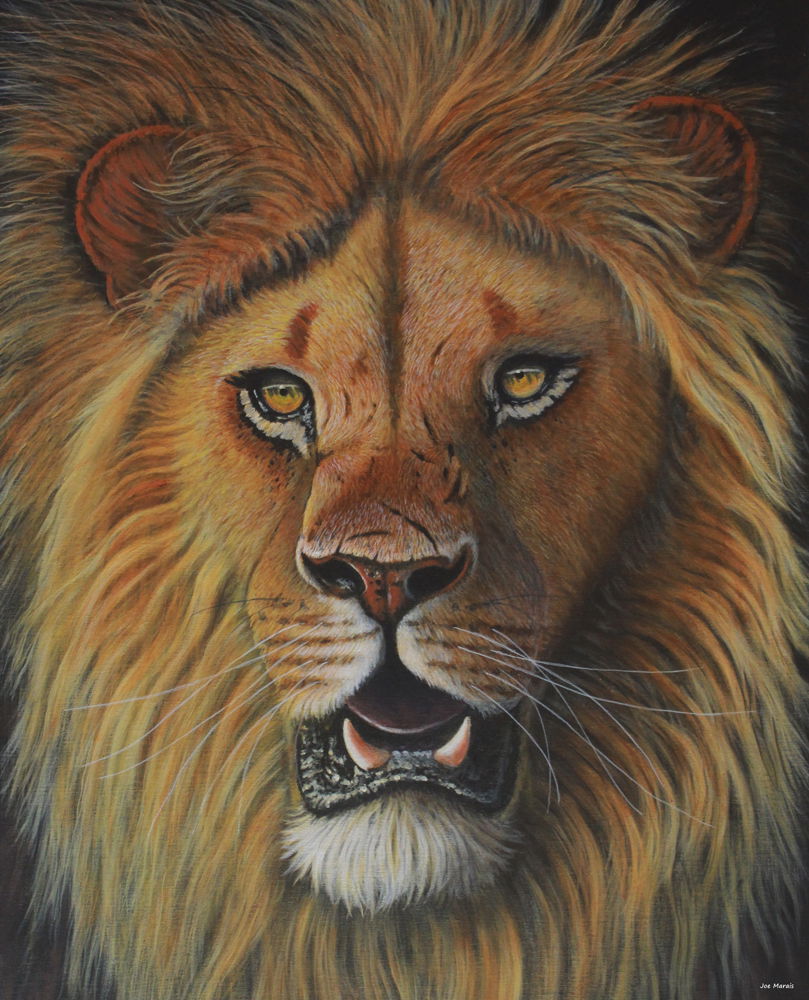
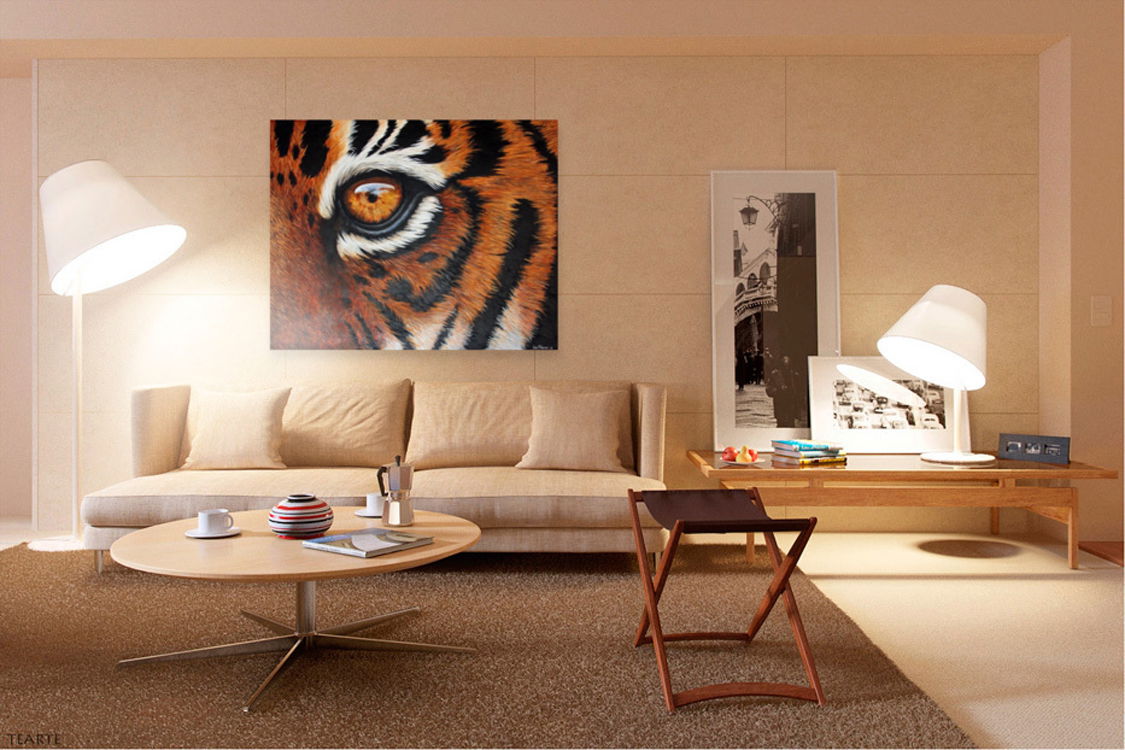
A single, breathtaking canvas print can instantly transform the entire ambiance, bringing the untamed soul and joy of the African bushveld into your daily life. The secret to making it work? Choosing the exact right size. The Golden Rules of Scaling Art Picking art is emotional, but sizing it, is a science.
Use these two designer secrets to find your perfect fit: Over Furniture (The 60–75% Rule): If hanging a canvas above a couch, sideboard, or office desk, the art width must be 60% to 75% of the furniture's total width. This creates a balanced visual anchor. On Bare Walls (The 3/8ths Rule): If the wall is completely bare (like a hallway or staircase landing), the artwork should cover roughly (approx.) 57% of the empty wall space so it doesn't get swallowed by the room. Standard Sizes and Where They Belong:
The Statement Piece (90cm x 120cm and larger): Best for the main lounge sofa, master bedroom, or corporate boardroom. A large-scale print of a majestic African elephant or lion demands attention and acts as an instant conversation starter. The Focus Anchor (60cm x 90cm): Perfect for home offices, cozy entertainment areas, or entryways. It easily stands alone without overwhelming smaller spaces. The Gallery Builder (40cm x 60cm or smaller): Ideal for narrow hallways, spare bedrooms, or grouped together as a matching set of three (a triptych) to fill long walls dynamically.
The 24-Hour Paper Trick! Before buying, cut newspaper or cardboard to your desired canvas dimensions. Tape it to your blank wall using painter's tape and leave it for 24 hours. Walk into the room at different times of day—you will instantly know if you need to scale up or down. Don't let a glaring blank wall compromise your home's comfort or office space. Bring the heritage and raw spirit of African wildlife into your space today..
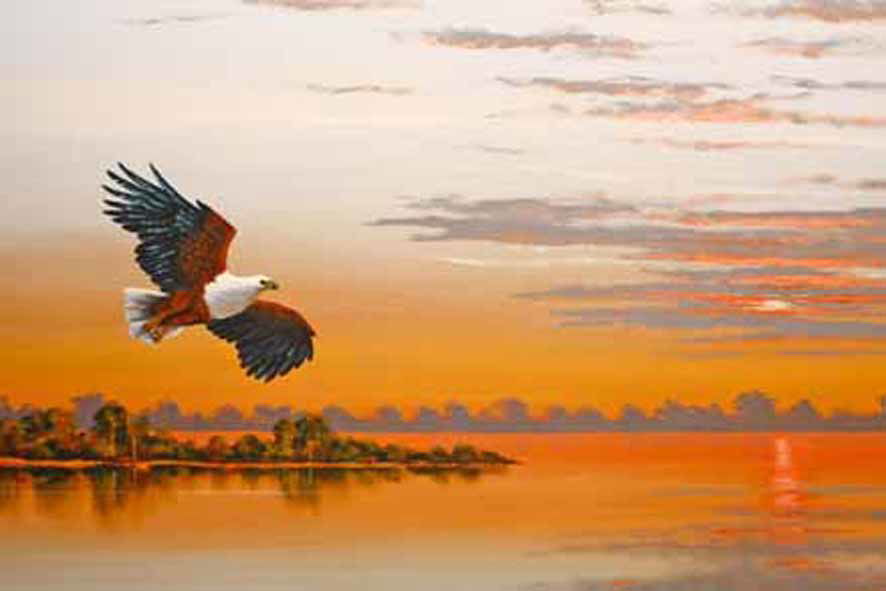
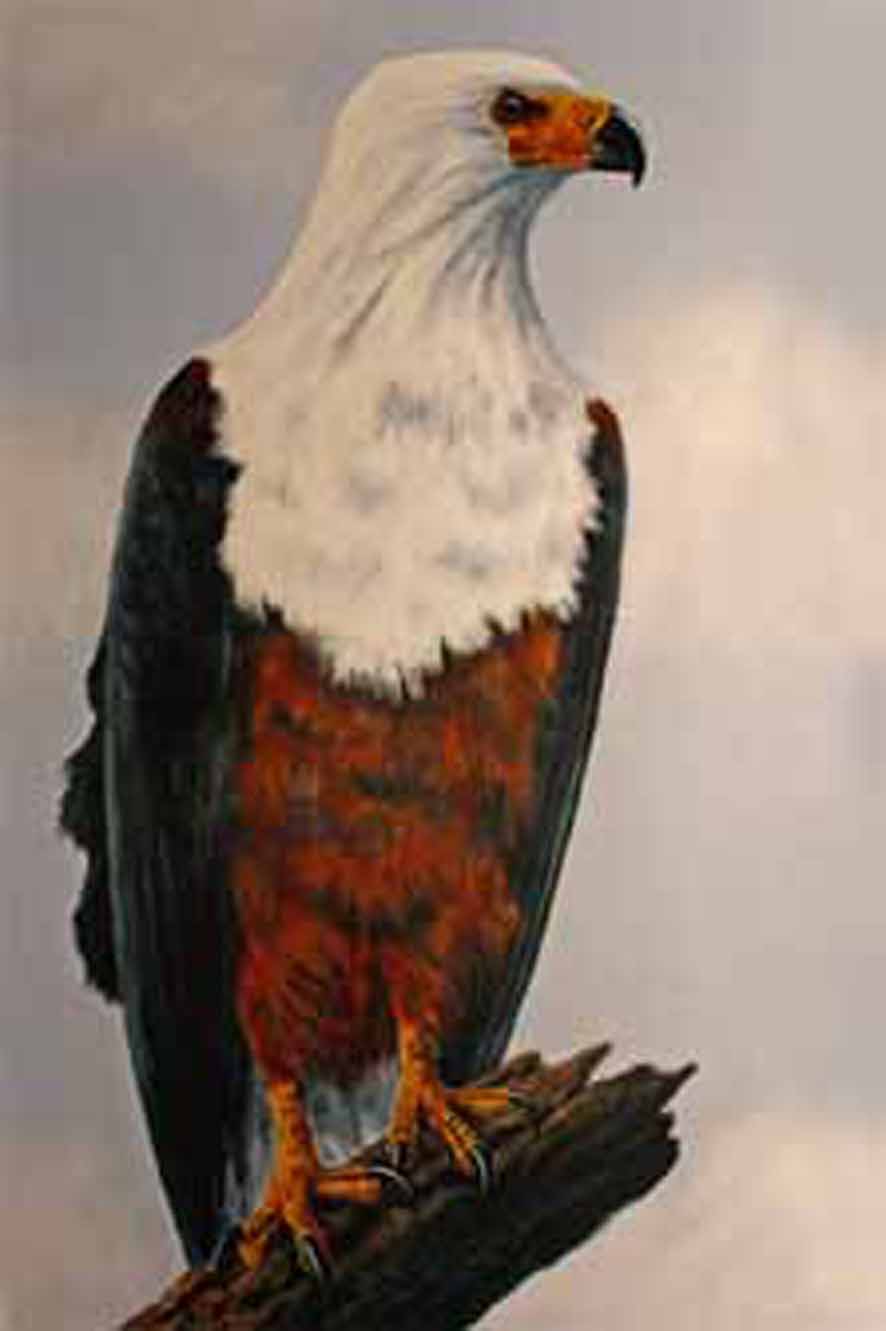
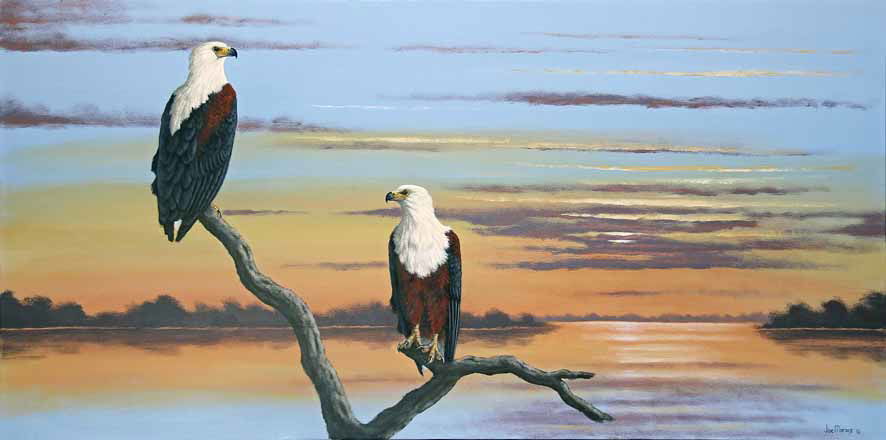
Having always loved fish eagles, I remember vividly that we headed to Lake St Lucia, around 40 years ago, to capture some fish eagle shots and also at the same time, enjoyed a weekend away! We hired a Parks Board aluminium boat, armed with my Ricoh camera loaded with a 12-exposure film, and a box of frozen sardines. Once aboard, I steered the little boat—which had a top speed of about 3 kilometres per hour—towards the Narrows, passing countless hippos, crocodiles, and birds along the way. Whenever we spotted a fish eagle, Ilse would throw a sardine about 5 metres from the boat while I stood ready with the lens.
Anyone who knows Ilse knows she absolutely detests the smell of sardines, let alone handling them! But... she did it anyway! 😊 Because I could only afford a 12-exposure roll, there was absolutely no room for error. As the eagle launched from its perch, I was poised like Clint Eastwood. Everything was set for success—but perfect timing only happens in the movies!
The tiny boat rocked constantly, and I was shaking with pure excitement. After a full day on the water, I was lucky if I walked away with one or two usable images. The rest were completely blurry. Yet, getting just one or two good photos made all the effort worthwhile, especially since we got to also enjoy a wonderful weekend away. Those truly were the days!
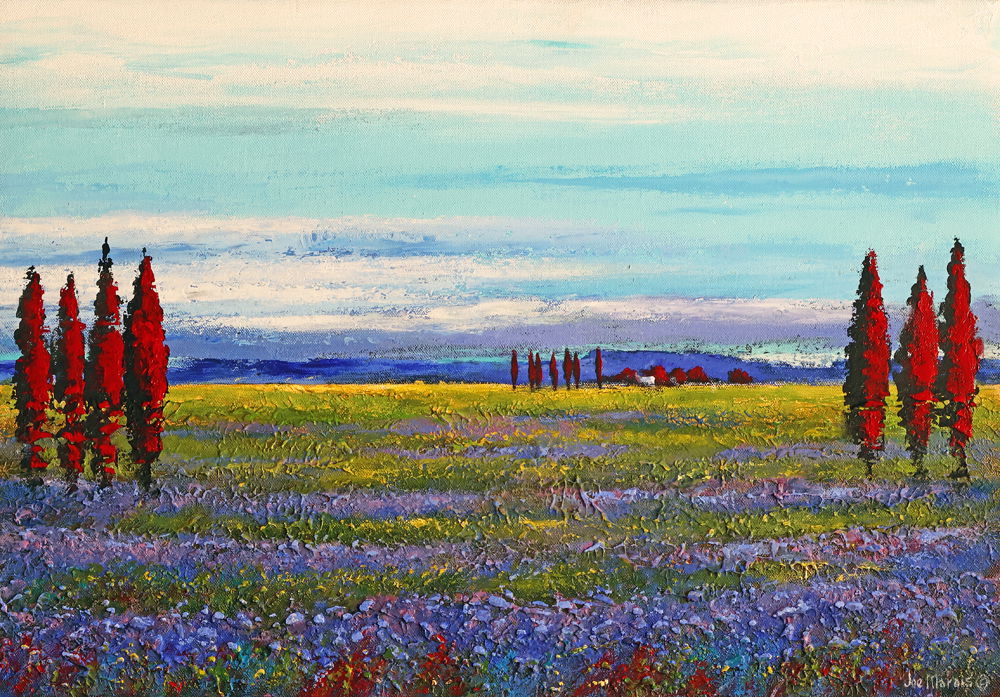
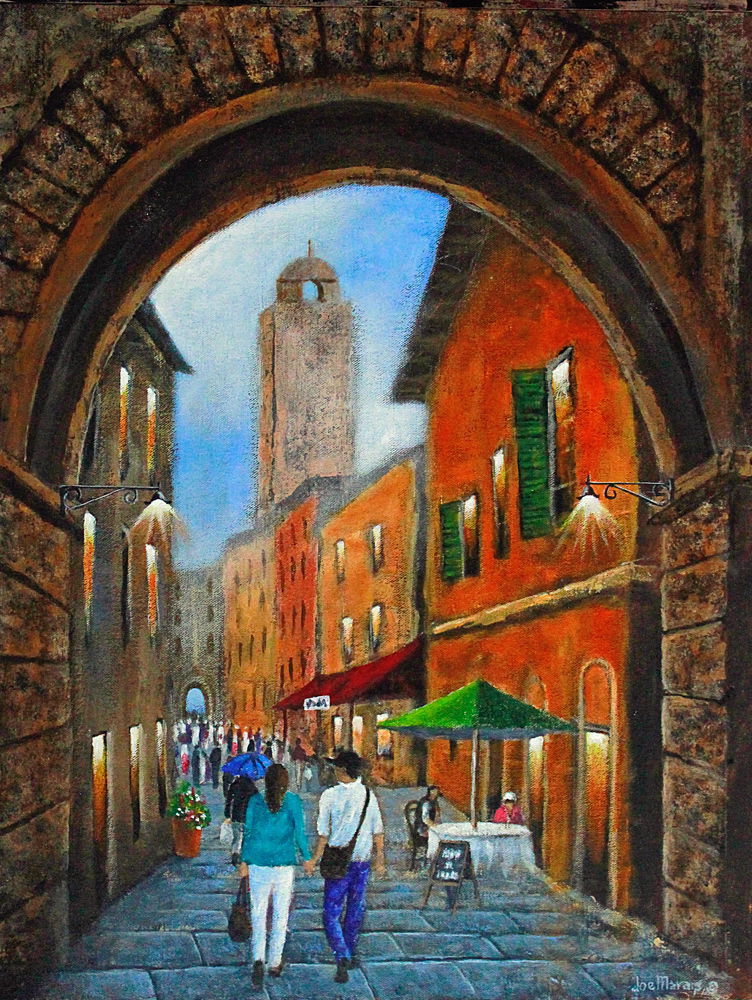
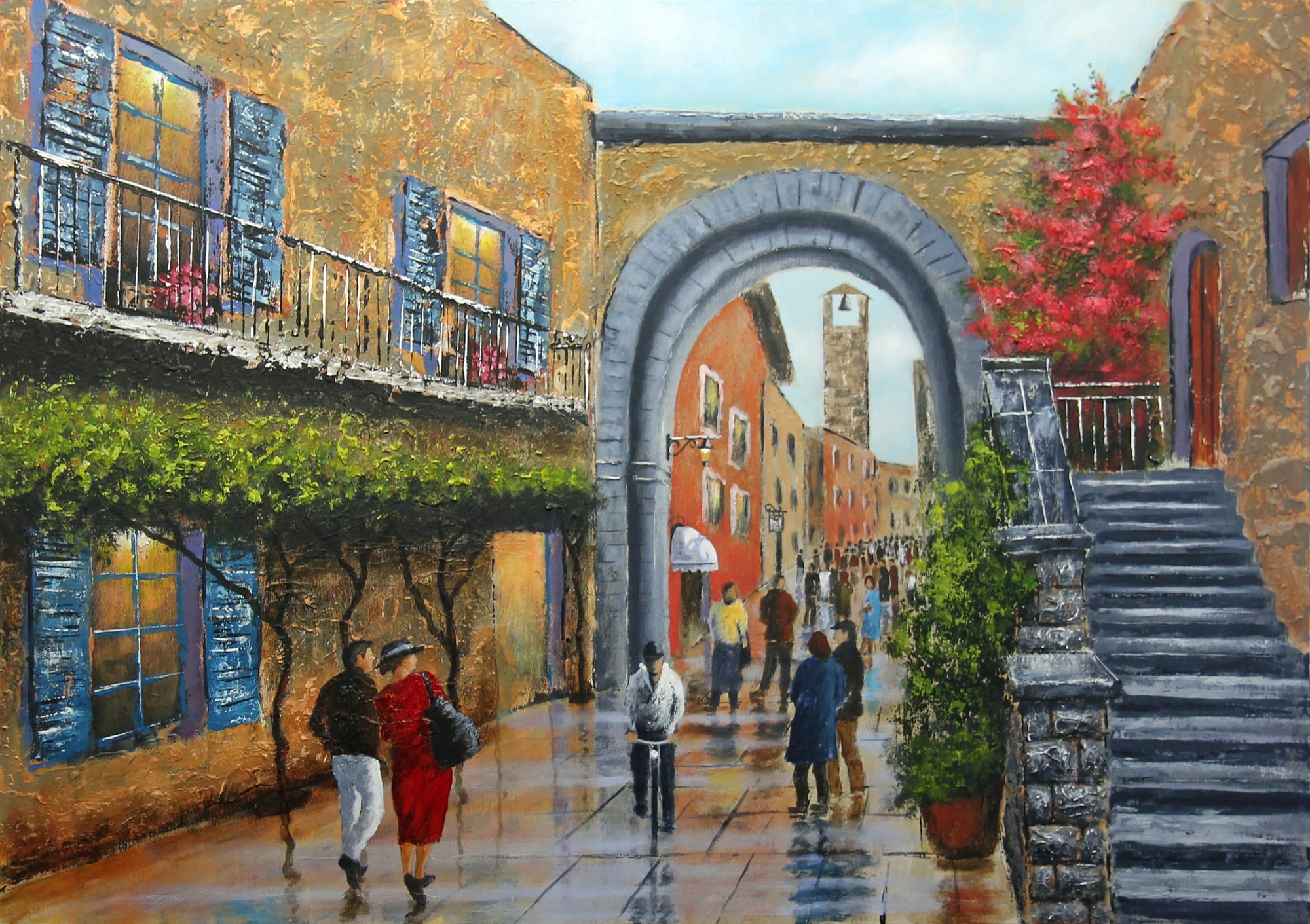
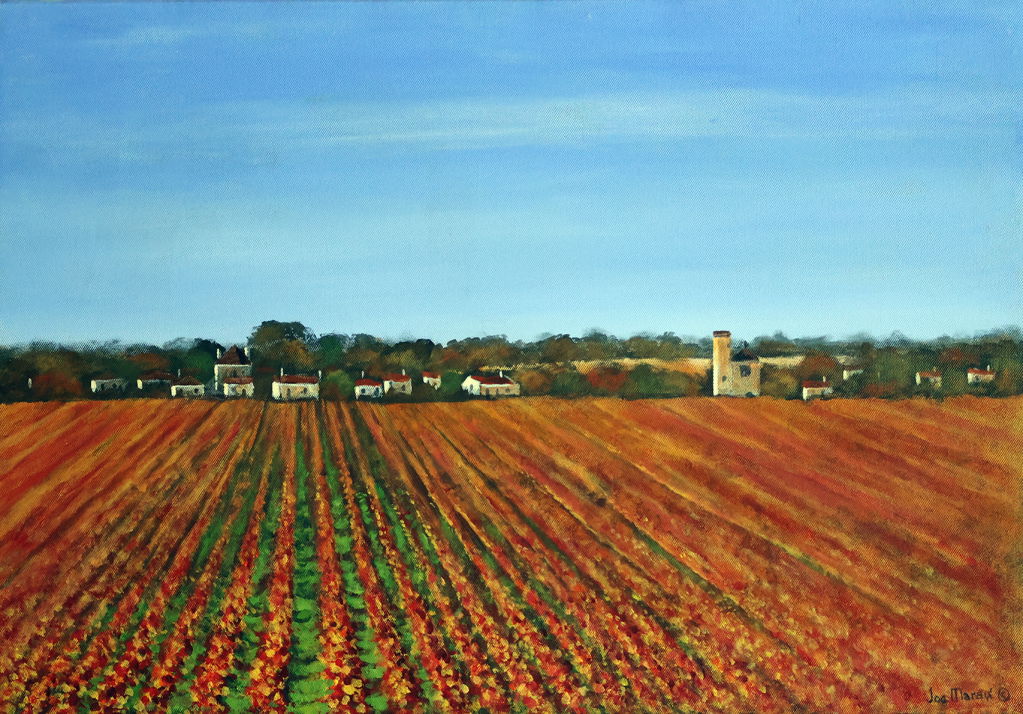
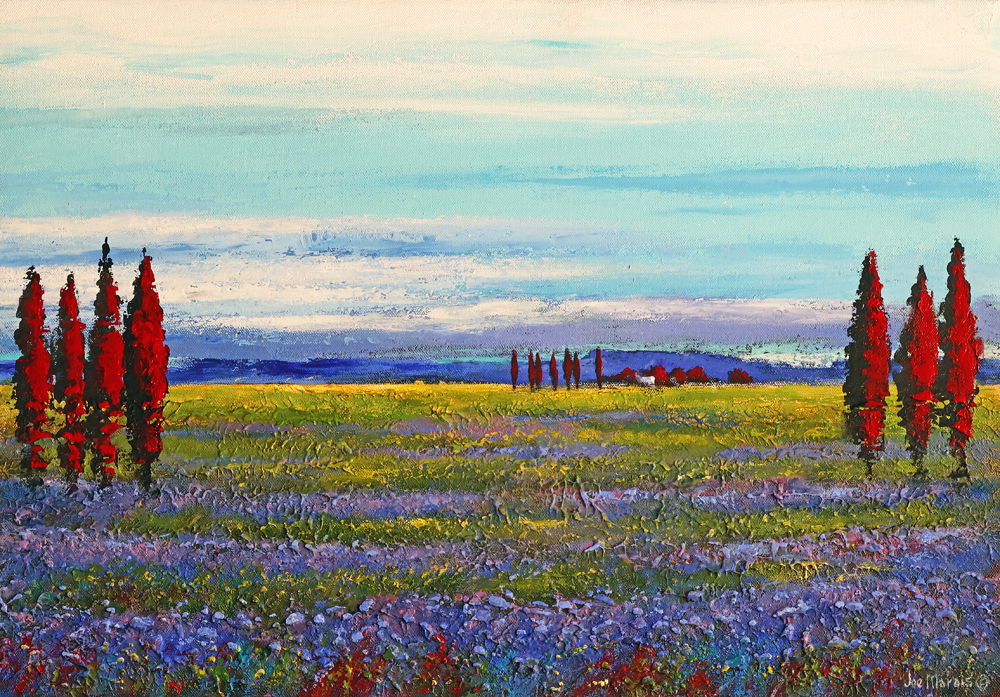
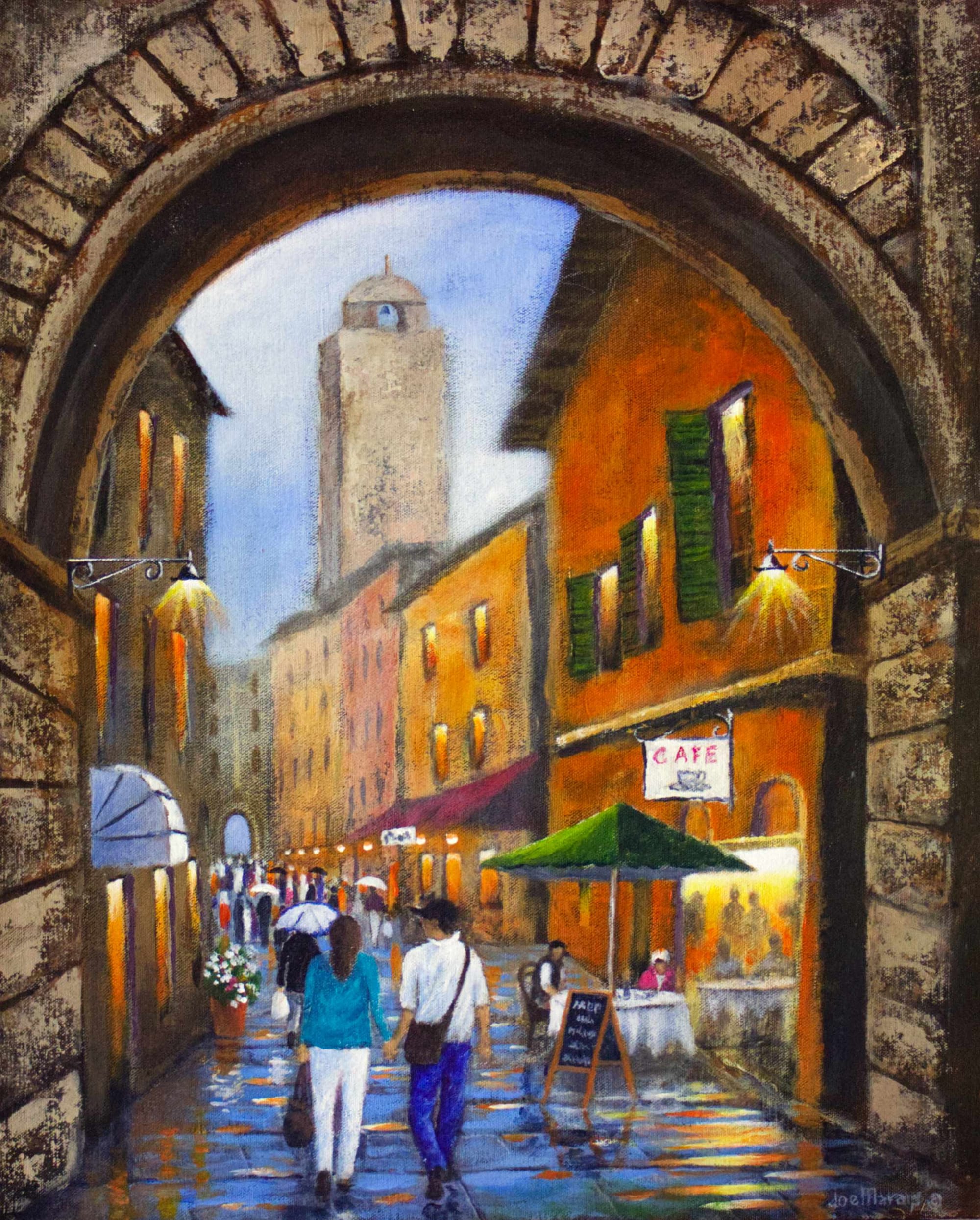
They unfolded endlessly beneath the wide blue sky, stitched together by winding gravel roads and crowned with ancient hilltop towns that seemed to rise straight out of another century. Tuscany did not feel hurried. It did not feel modern. It felt eternal. Each small village, perched confidently on its rise of land, carried centuries in its stone walls. Cypress trees stood like sentinels along the ridgelines. Vineyards curved in gentle patterns across the slopes, their geometry softened by sunlight.
It was as though the landscape had been composed by a master painter long before I ever arrived with brush in hand. On that particular day, we were driving through the countryside when I saw it — a view so harmonious, so perfectly balanced, that I instinctively had to stop. There was no studio, no planning, no preparation. Just the open road, the warm air, and that magnificent panorama. I only had a small canvas with me and my paints. That was enough. I sat down in the grass beside the road, the earth still warm beneath me. Wildflowers brushed against my legs, and the scent of sunlit fields drifted gently on the breeze.
Ilse poured coffee from her flask, and we shared that simple moment — two travellers, alone in the Tuscan countryside, with nothing but time and gratitude. There is something deeply honest about painting en plein air. The light changes. The shadows shift. You cannot hesitate. You must respond — quickly, intuitively — to what is before you. For about an hour, I worked, trying to capture not just the shapes of the hills, but the stillness. The quiet poetry of the place. The way the road curved like an invitation into the distance.
As I was putting in the final touches, I heard a bus approaching. It pulled over nearby, and soon a small group of tourists wandered toward me, curious. They stood behind me quietly at first, watching the painting take its final form. One gentleman stepped forward and asked, “Is it for sale?” I smiled and said yes. I told him the price and added, “Give me ten minutes to sign it.” He nodded and returned to the bus. I signed the painting with a full heart. Not just because it was sold — but because it had been created in that very place, under that sky, in that moment.
Ten minutes later, he returned as promised, paid the exact price, and carefully carried the painting back to the waiting bus. And just like that, they were gone — driving off through the Tuscan hills with a small piece of that morning in their hands. Ilse and I sat quietly for a while after they left. The fields were still golden. The towns still watched from their hilltops. The world felt calm and perfectly ordered. It had been one of those rare days where everything aligns — art, travel, love, and providence — woven together in the simplest of ways.
Tuscany gave us more than scenery that day. It gave us a reminder: when you stop, truly stop, and respond to beauty without hesitation, the world often answers back in the most unexpected and generous ways. It was, without question, a fulfilling and unforgettable day.
- A Parisian Reflection -
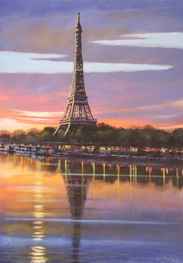
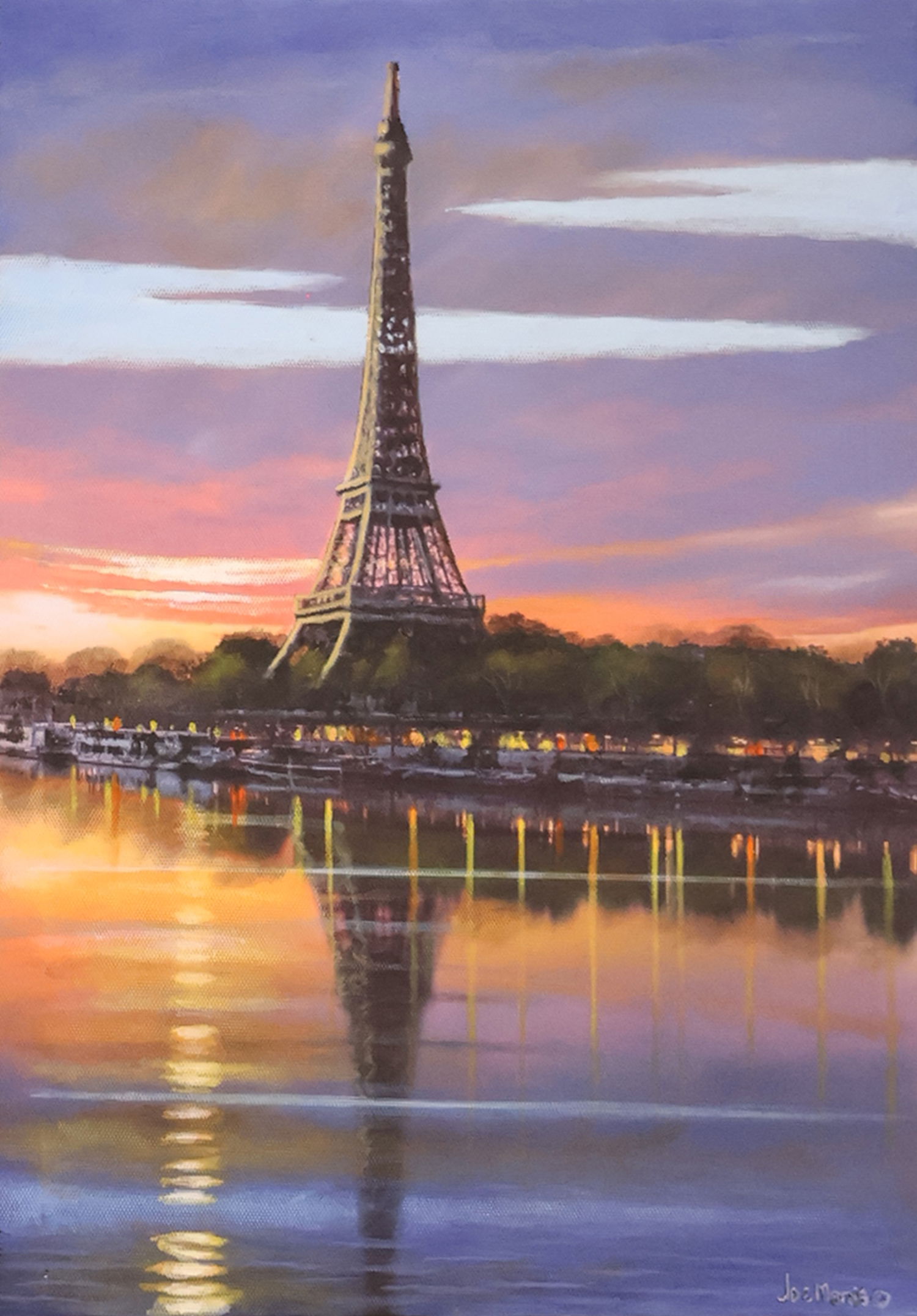
Ilse and I took a leisurely boat cruise along the Seine River, departing from the base of the Eiffel Tower. As the boat glided along the water, I carefully studied the changing perspectives of the tower, the surrounding trees, and the way the light danced across the river’s surface. That quiet observation allowed me to identify the exact viewpoint I wanted for my painting: a strong, elegant angle of the tower with its reflection stretching into the Seine.
Early the following morning, we travelled by Metro to ensure I could set up before the inevitable crowds arrived. The Eiffel Tower is one of the most visited monuments in the world, with between 7 and 10 million visitors annual, and capturing a moment of calm there, requires planning and patience. Plein air painting demands quick decision-making—light changes rapidly, colours shift, and the atmosphere evolves minute by minute. On this particular day, the weather was overcast and slightly gloomy. While the muted light created a soft mood, I chose to interpret the scene through my own artistic lens. Rather than replicate the grey sky, I transformed it into a warm sunset, using glowing tones of rose, gold, and violet.
This choice was intentional: plein air painting is not merely about copying what is in front of you, but about translating the emotion and spirit of a place onto canvas. The reflection of the Eiffel Tower in the Seine became a central element of the composition. Painted loosely and expressively, it adds movement and rhythm to the scene, echoing the life and energy of Paris itself. The glowing lights along the riverbank suggest the city is transitioning into evening, a time when Paris truly earns its reputation as the City of Light.
This painting represents more than a famous monument. It captures a fleeting moment in time—an early evening calm, a personal connection to a place, and the timeless romance of Paris. Painting outdoors, surrounded by history, architecture, and everyday life, reminds me why plein air painting remains such an essential part of my artistic journey and career.
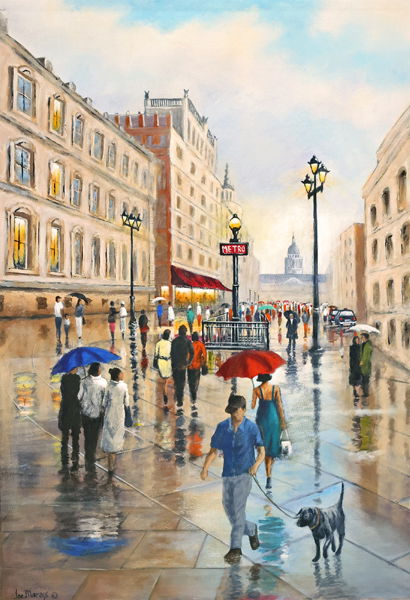
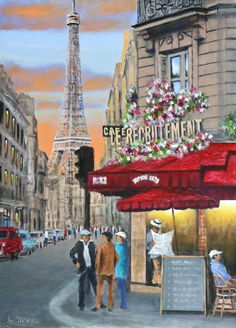
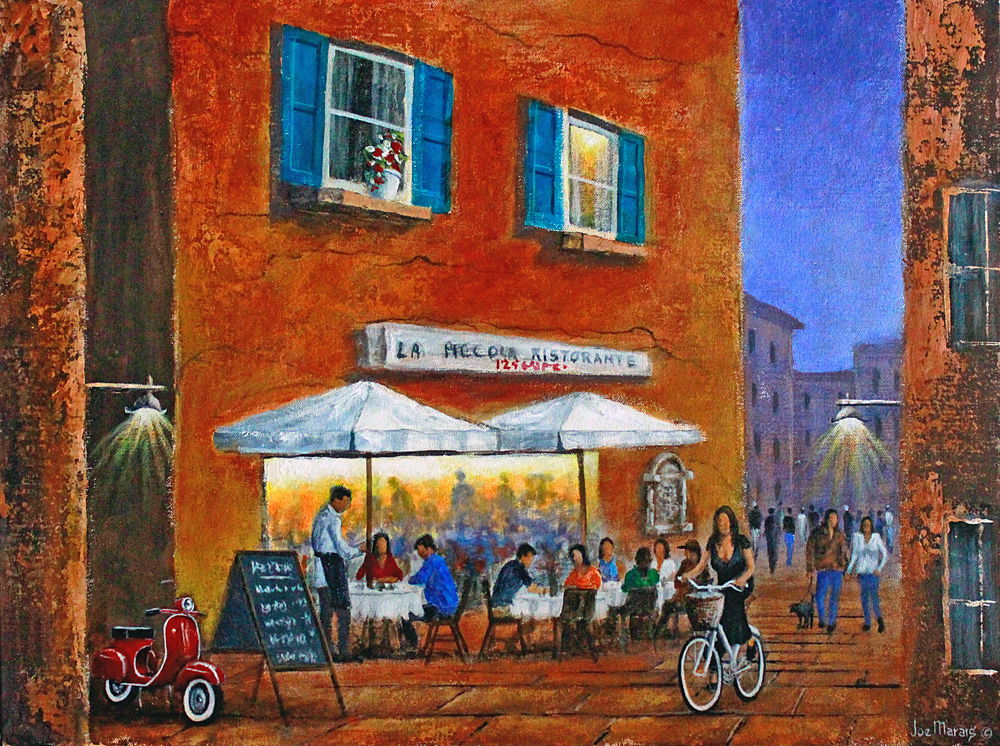
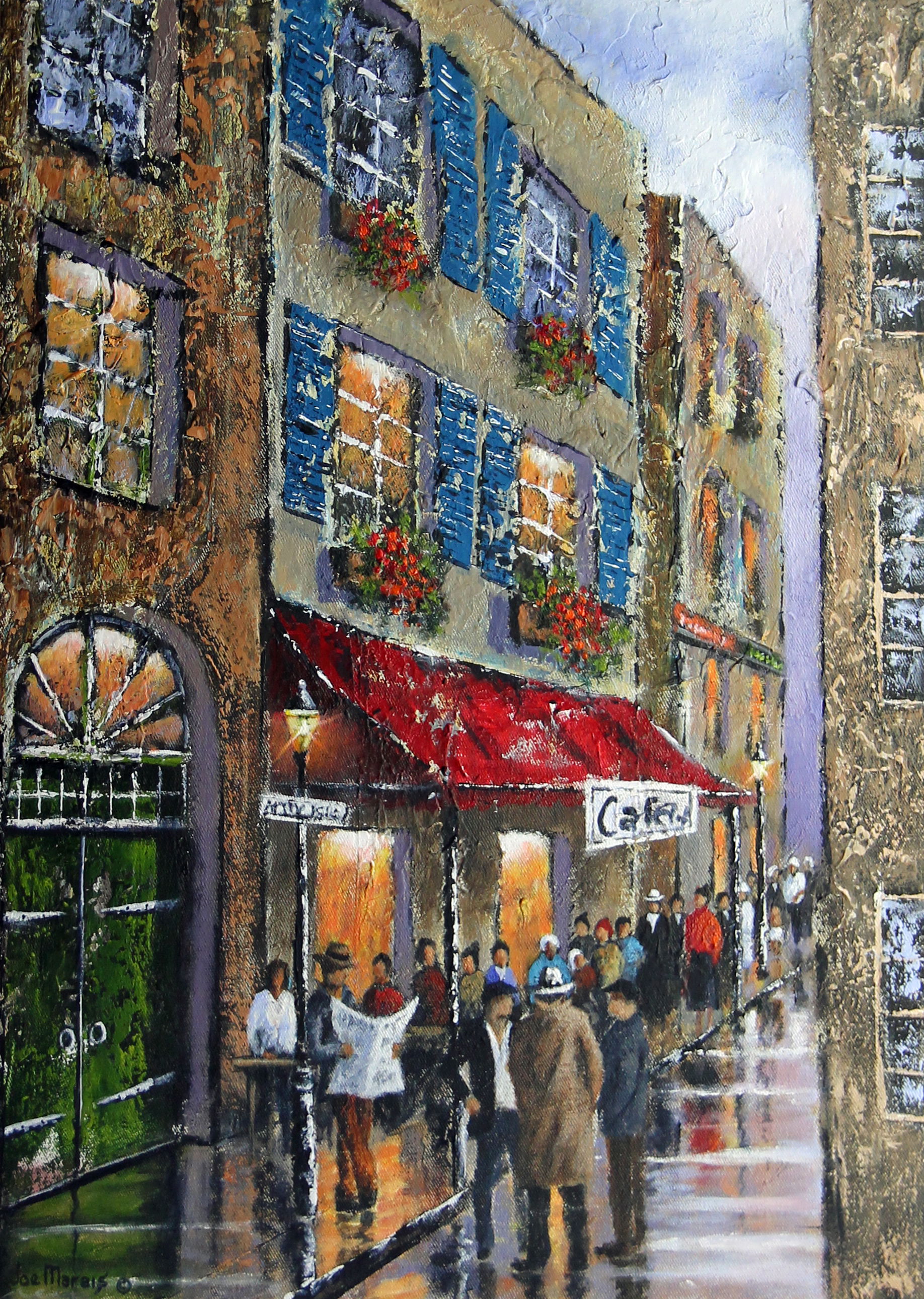
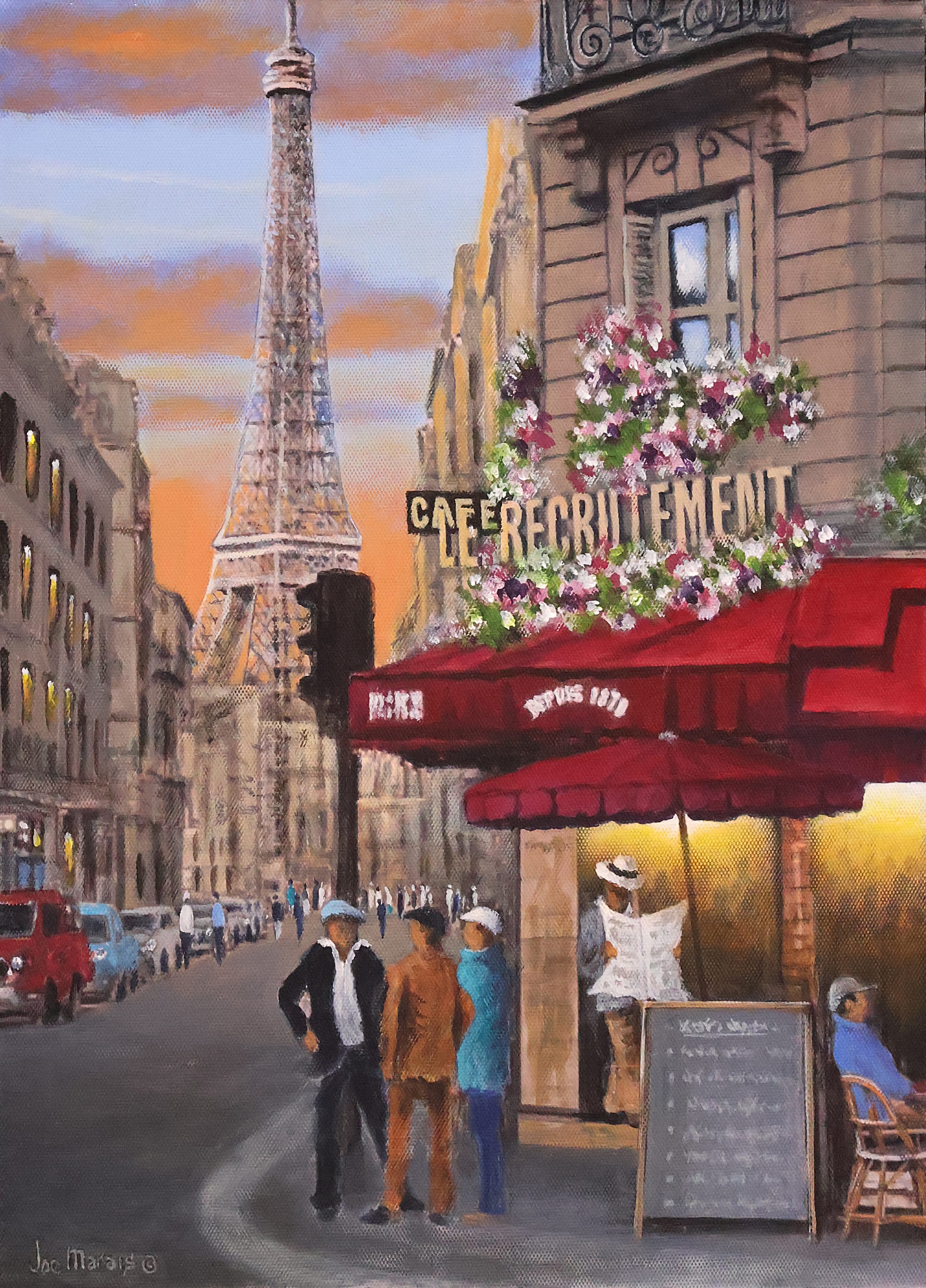
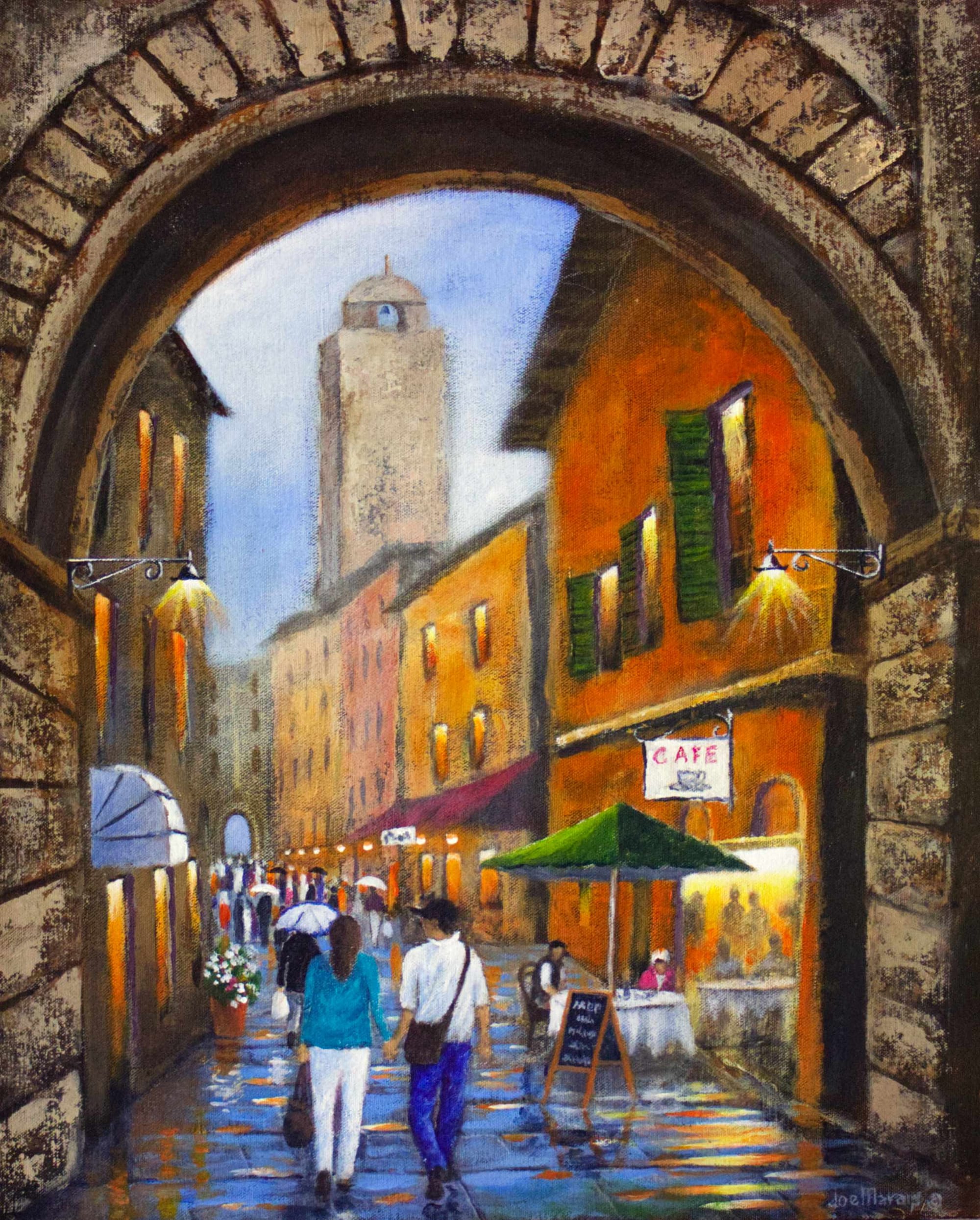
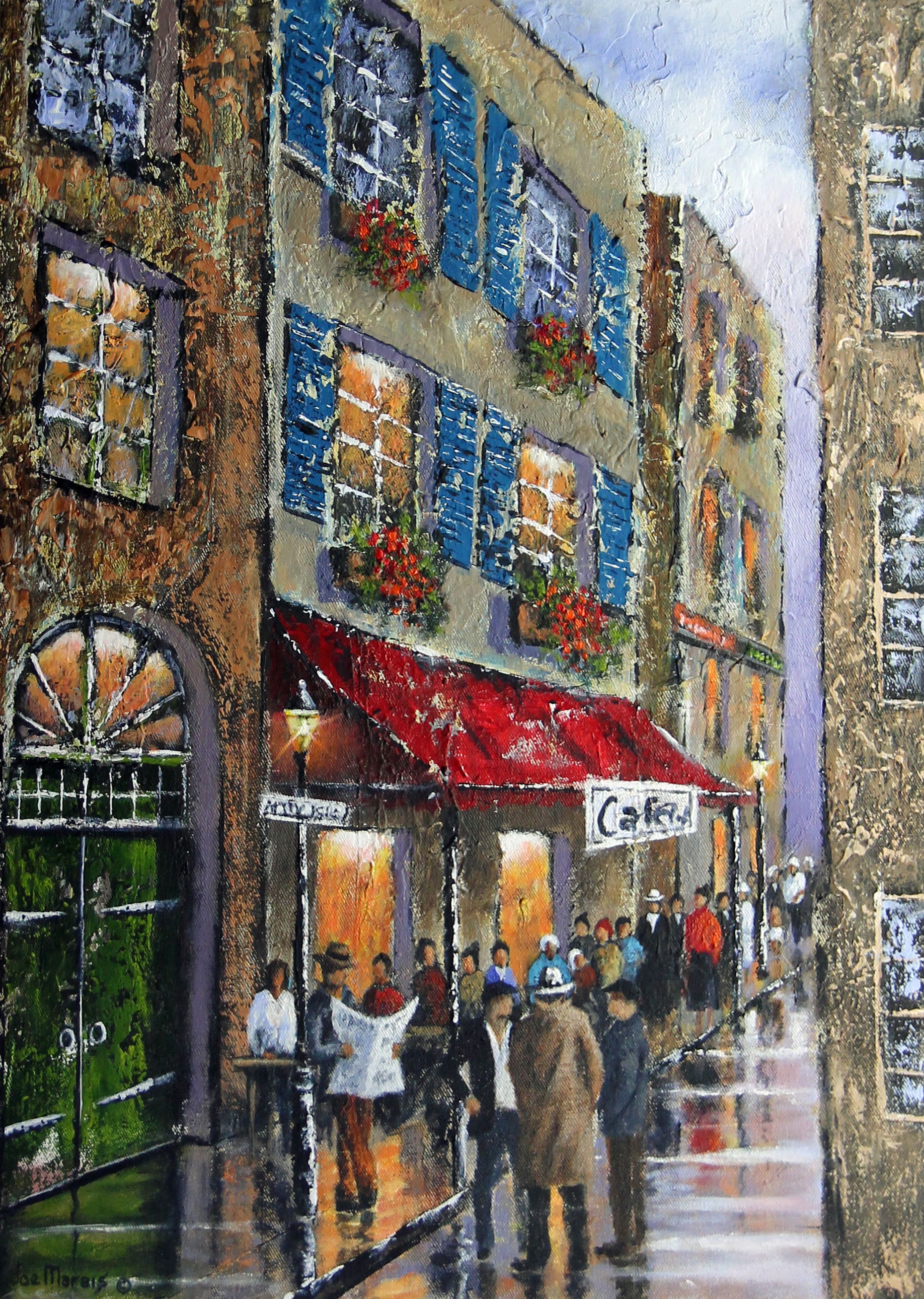
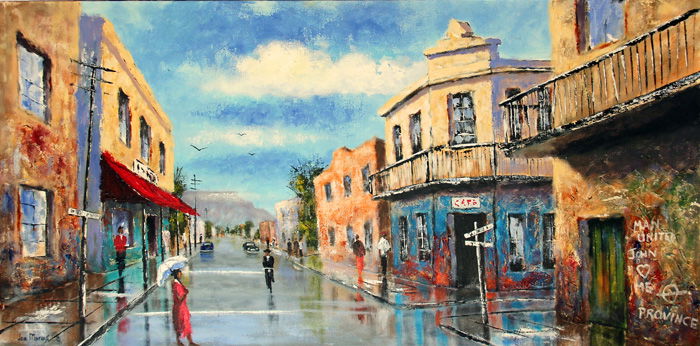
On this particular morning, my wife Ilse and I left our hotel fairly early. Experience has taught me that plein air painting requires time — time to observe, to feel, and to settle into a place before the crowds and the day fully unfold. We took the Metro toward Le Marais, and from the moment we stepped out onto the street, something shifted. I felt it immediately: a quiet but unmistakable spiritual connection. Le Marais was alive.The air was filled with sound — people talking animatedly, music drifting from open doors, the clinking of coffee cups, footsteps echoing along cobbled streets. Cafés were already busy, art galleries preparing to open, museums welcoming visitors.
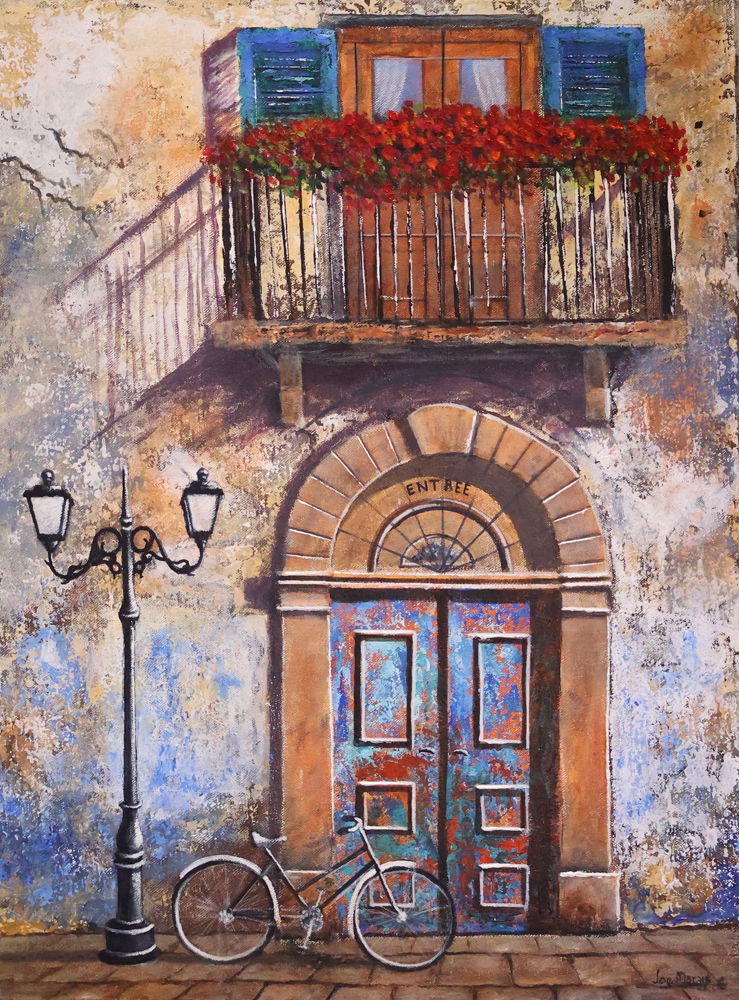
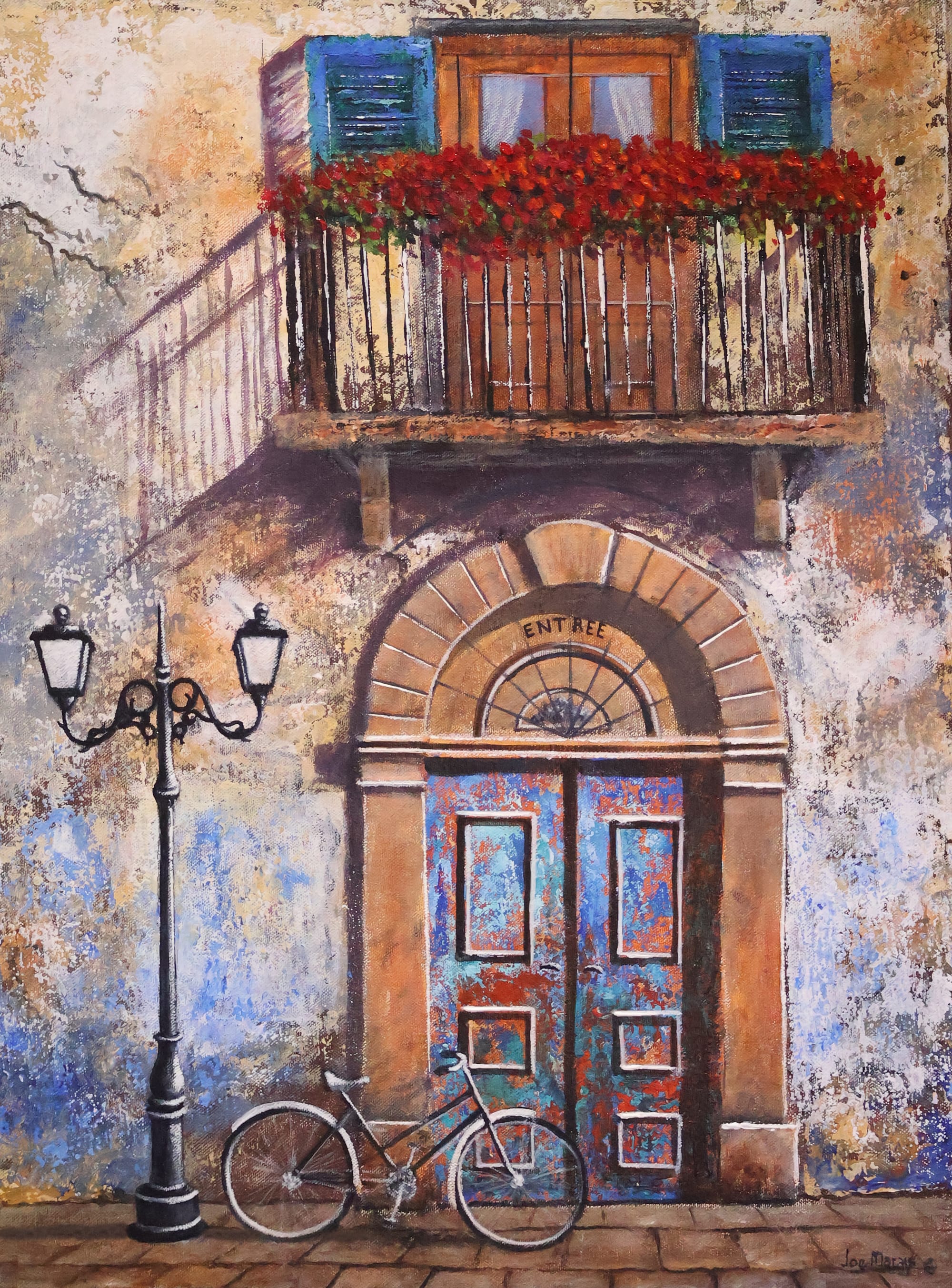
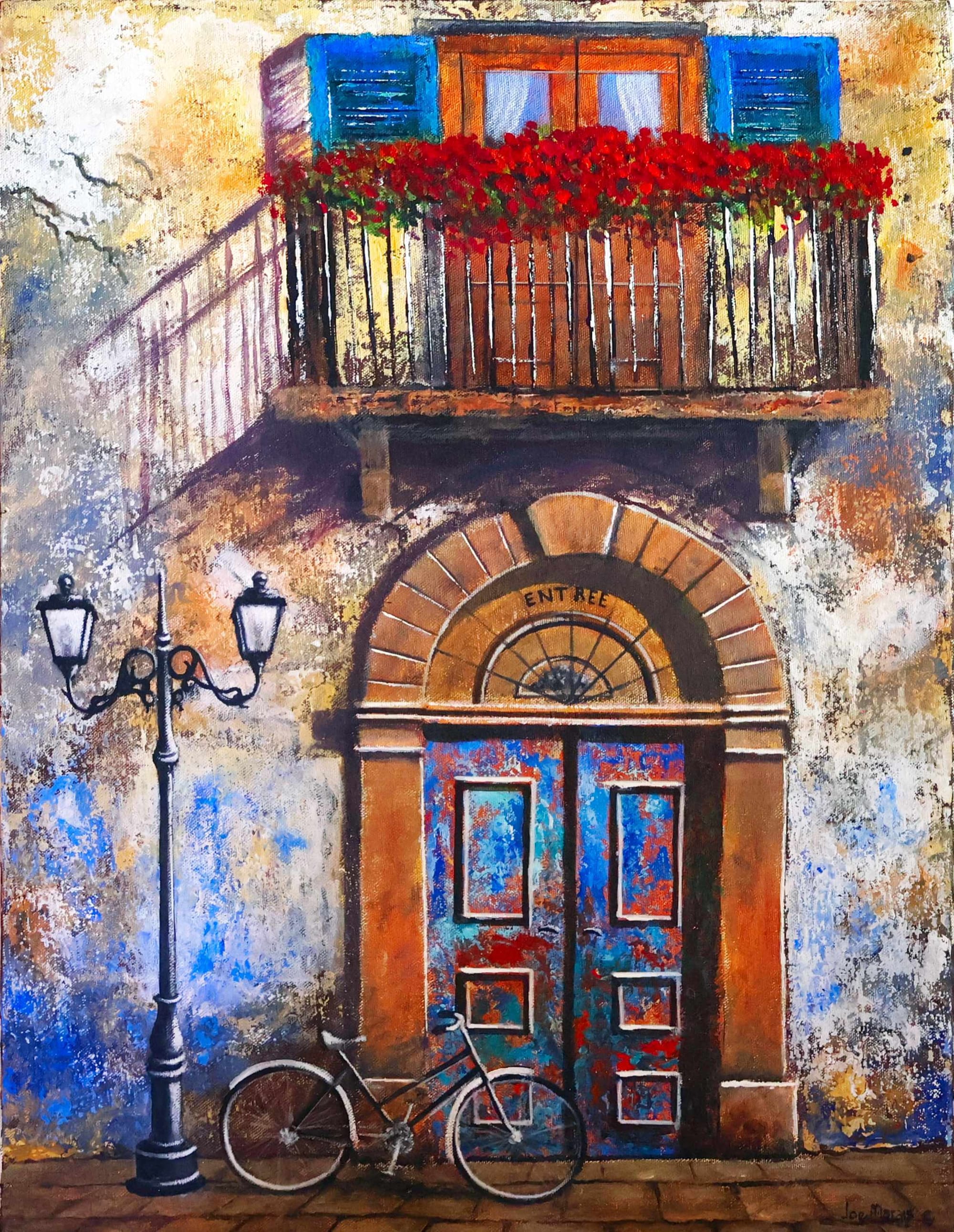
It was vibrant without being overwhelming, energetic without losing its intimacy. Ilse and I instantly loved the atmosphere. It felt welcoming, layered, and deeply human. As we walked through one of the side streets, away from the broader avenues, I saw it. An old, weathered doorway stood quietly against a textured façade, its surface marked by time. Above it, a small balcony overflowed with red flowers, framed by shutters that hinted at countless stories lived behind those walls. A streetlamp stood nearby, and a bicycle rested casually against the wall — details so ordinary, yet so distinctly Parisian. I stopped in my tracks. I knew immediately that this was what I had been looking for.What made it even more perfect was the wide sidewalk.
For a plein air artist, practical considerations matter, and this space allowed me to set up my easel without obstructing the flow of people. It felt as though the street itself had invited me to paint. Once my equipment was in place, Ilse stepped away to fetch us coffee from one of the many cafés just around the corner. In Le Marais, coffee is never far away. As I began sketching the initial outlines, the feeling of connection deepened. There was something profoundly moving about standing there, brush in hand, painting in a neighbourhood tied so closely to my ancestry. It felt less like observation and more like dialogue — between past and present, place and painter.
As the composition took shape, people began to stop. Some were tourists, curious and enthusiastic, cameras in hand. Others were locals, strolling by with an easy familiarity. They watched quietly, offered comments, asked questions. I welcomed the interaction. Painting in public is an exchange; it brings art out of isolation and places it back into the rhythm of daily life. Ilse returned and stood beside me, holding an umbrella to give us some shade from the strengthening sun. The day had become warm — unusually warm for painting — and the light was strong, almost unforgiving at times. Still, I worked steadily, responding to the textures of the wall, the contrasts between shadow and sunlight, and the rich colours that defined the scene.
The weathered surface of the building fascinated me. It told its own story — layers of paint, wear, and time, all of which I tried to honour in my brushwork. I was not interested in perfection or polish. What mattered was character. Le Marais is not pristine; it is authentic, lived-in, and deeply expressive. That was what I wanted the painting to convey. As the afternoon progressed, the sunlight became more direct, and the heat intensified. Eventually, I knew it was time to stop. Plein air painting teaches you to listen — not just to the environment, but to the painting itself. There is a moment when continuing would mean losing the freshness that gives the work its life. We packed up, tired but satisfied, knowing the essential spirit of the piece had been captured. Back in my studio in Meerensee, Richards Bay, I completed the final finishing touches.
Studio work allows for reflection and refinement, but the heart of the painting was already there — embedded in the experience of that day in Le Marais. Every brushstroke carried the memory of sound, warmth, conversation, and connection. Bringing that painting home felt like bringing something tangible back from Le Marais — a fragment of history, atmosphere, and personal meaning. There was a sense of relief, even gratitude, in knowing that I had honoured both the place and my own journey as an artist. This painting is more than an image of a Parisian street. It is a tribute to ancestry, to the enduring power of place, and to the quiet moments when art allows us to feel rooted across centuries and continents. Le Marais gave me that gift, and through this painting, I am able to share it.
joe marais art - copyright - all rights reserved
my blog (1) : read more about my approach to wildlife art
What Makes a South African Wildlife Artist Unique? Africa is not merely a subject for a South African wildlife artist; it is a unique personal experience. The rhythms of the bush, the quality of light, the dust carried on a dry-season wind, and the quiet intensity of wildlife encounters shape the way African wildlife art is conceived and created. This depth of connection is what distinguishes a South African wildlife artist from those working purely from photographic reference or distant observation.
Africa as Classroom and Mentor For artists who have grown up or worked extensively in Southern Africa, the landscape becomes a teacher. Time spent in reserves, rural areas, and remote wilderness regions develops an understanding of animal behaviour, movement, and presence that cannot be learned second-hand. A zebra standing alert in fine dust, an elephant’s slow, deliberate stride, or the stillness of predators at rest all carry subtleties that are absorbed through observation rather than instruction. This immersion allows the artist to depict wildlife not as static subjects, but as living beings within a dynamic environment.
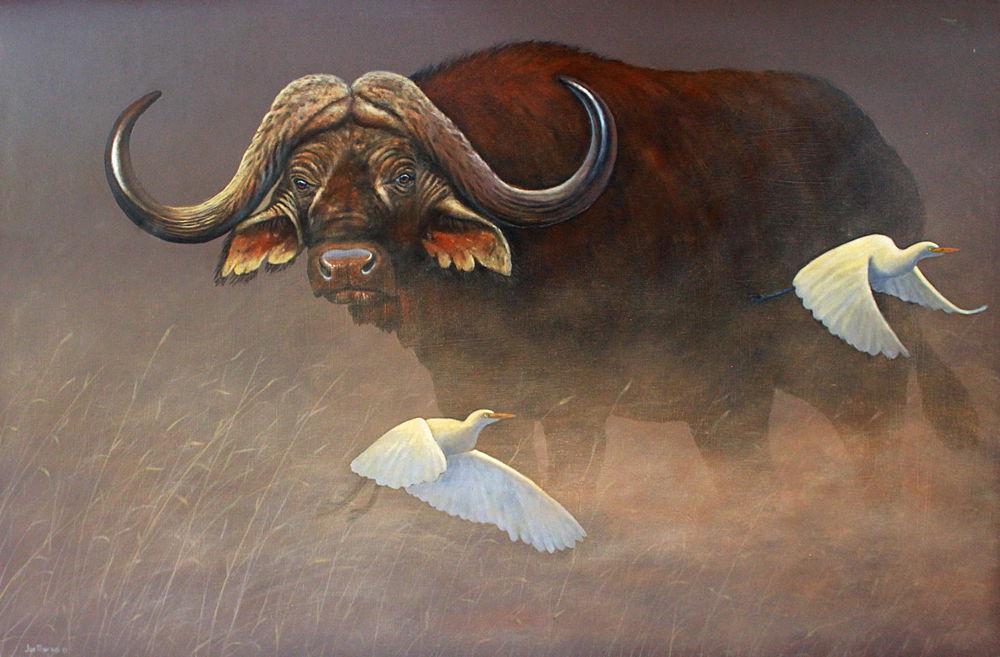
Understanding Light, Atmosphere, and Space African light behaves differently. It is sharper, more directional, and often unforgiving. A South African wildlife artist learns how early morning haze softens form, how midday sun compresses colour, and how late afternoon light enriches tone and contrast. These elements are critical in African wildlife paintings, where atmosphere plays as important a role as anatomy. Dust, heat shimmer, dry grasses, and vast open skies contribute to a sense of space that defines the African aesthetic. Capturing this environment authentically requires familiarity with the land itself.
Movement Over Detail One of the defining characteristics of African wildlife art is its emphasis on movement and energy rather than photographic precision. Wildlife rarely poses. Animals shift weight, react to sound, and move through their surroundings with purpose. South African wildlife artists often prioritise gesture, posture, and flow — allowing the painting to convey life rather than perfection. This approach results in work that feels immediate and emotionally engaging, inviting the viewer into the moment rather than presenting a static image.
Cultural and Environmental Context Wildlife in Africa exists within a broader cultural and conservation narrative. For many artists, painting African wildlife is inseparable from an awareness of conservation challenges, land stewardship, and the relationship between people and nature. This context informs the work subtly — not through overt messaging, but through respect, restraint, and authenticity. The artwork becomes a visual record of place and time, reflecting both beauty and vulnerability.
From Field to Canvas A South African wildlife artist’s process typically begins long before brush meets canvas. Field observation, sketching, photographic reference, and mental note-taking all contribute to the final composition. Once in the studio, planning gives way to instinct, allowing unplanned elements to emerge — much like nature itself. This balance between preparation and spontaneity is central to wildlife art, resulting in paintings that feel both considered and alive.
Why Authentic African Wildlife Art Matters In an increasingly digital and fast-paced world, original African wildlife paintings offer something rare: a connection to the natural world that is honest and enduring. Collectors are drawn not only to the subject, but to the story, experience, and integrity behind the work. A South African wildlife artist brings more than technical skill to the canvas — they bring memory, environment, and understanding. This is what gives African wildlife art its lasting power.
joe marais art - copyright - all rights reserved
👉 [https://wild-art-prints-by-joe-marais.myshopify.com/]
high quality wall prints - free delivery countrywide
Size A2 - 420 x 594mm
Collector Accent Size - Box Mounted
Limited Edition of 75
Size A1 - 594 x 841mm
Statement Size - Box Mounted
Limited Edition of 50
Size A0 - 1189 x 841mm
Gallery Feature Size - Box Mounted Canvas Print
Limited Edition of 25
Size 400 x 300mm
Tourist Size - Shrink Wrapped Print on Photo Quality Paper with Backing board
Open Edition
premium box-mounted canvas prints – free delivery nationwide
SIZES:
A2 – 420 x 594 x 15mm – Box Mounted – Ready to hang – Including delivery to your door – R1150
A1 – 594 x 841x 25mm – Box Mounted – Ready to hang - Including delivery to your door - R1700
A0 – 1189 x 841x 35mm – Box Mounted – Ready to hang - Including delivery to your door – R2900
300 x 400mm Shrink Wrapped Photo Quality Paper Print with Backing Board - R600
Secure Courier Delivery Country Wide
joe marais print on your wall
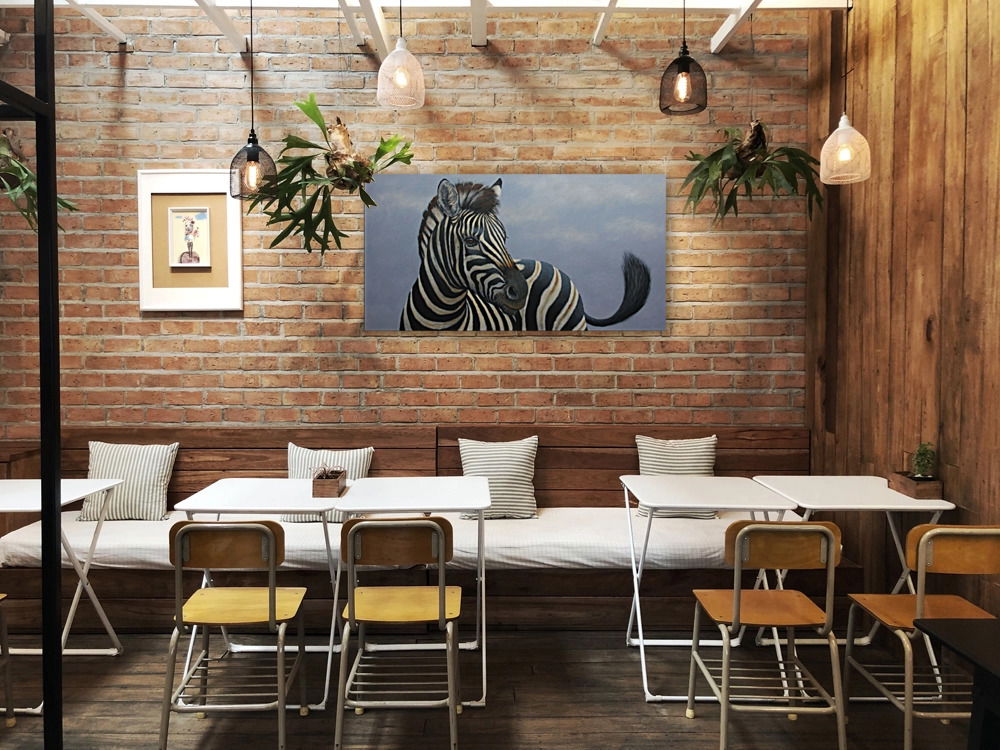
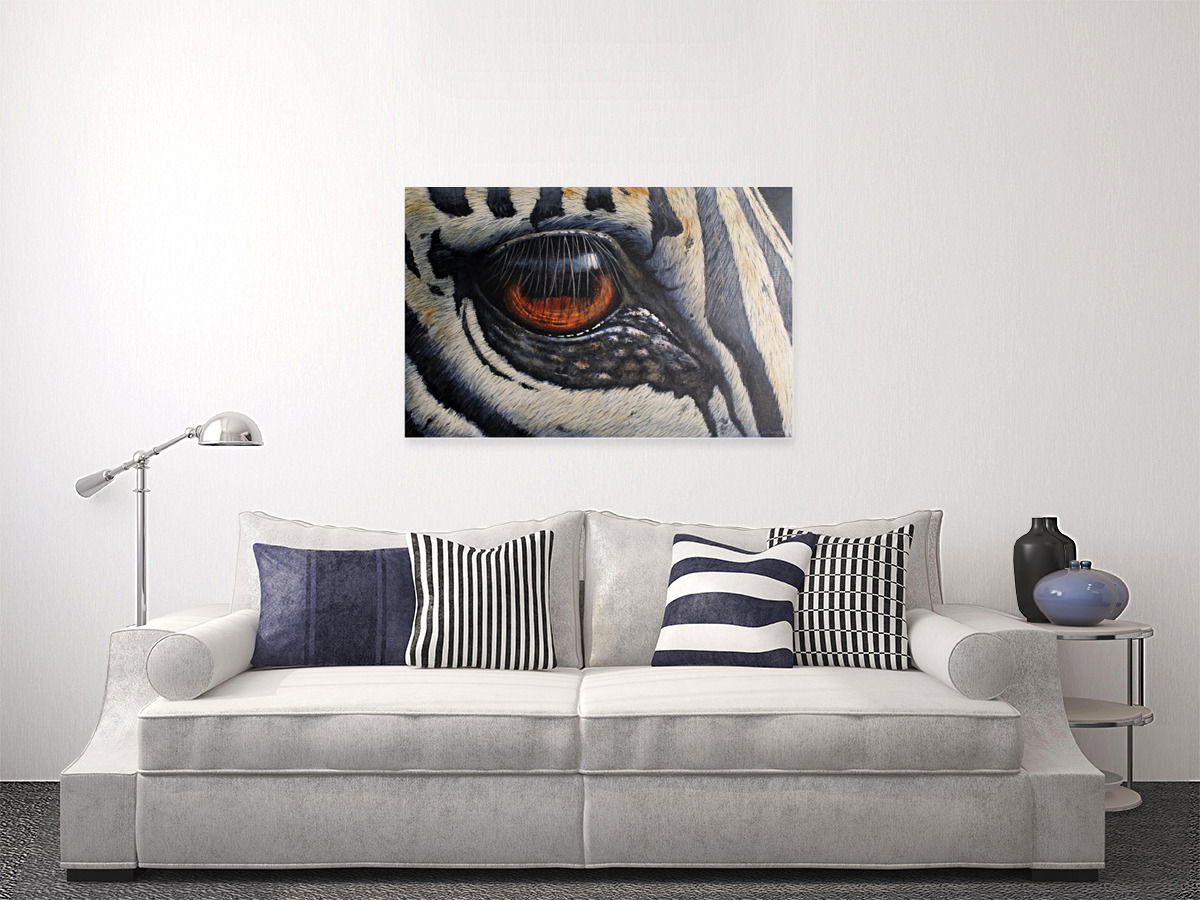
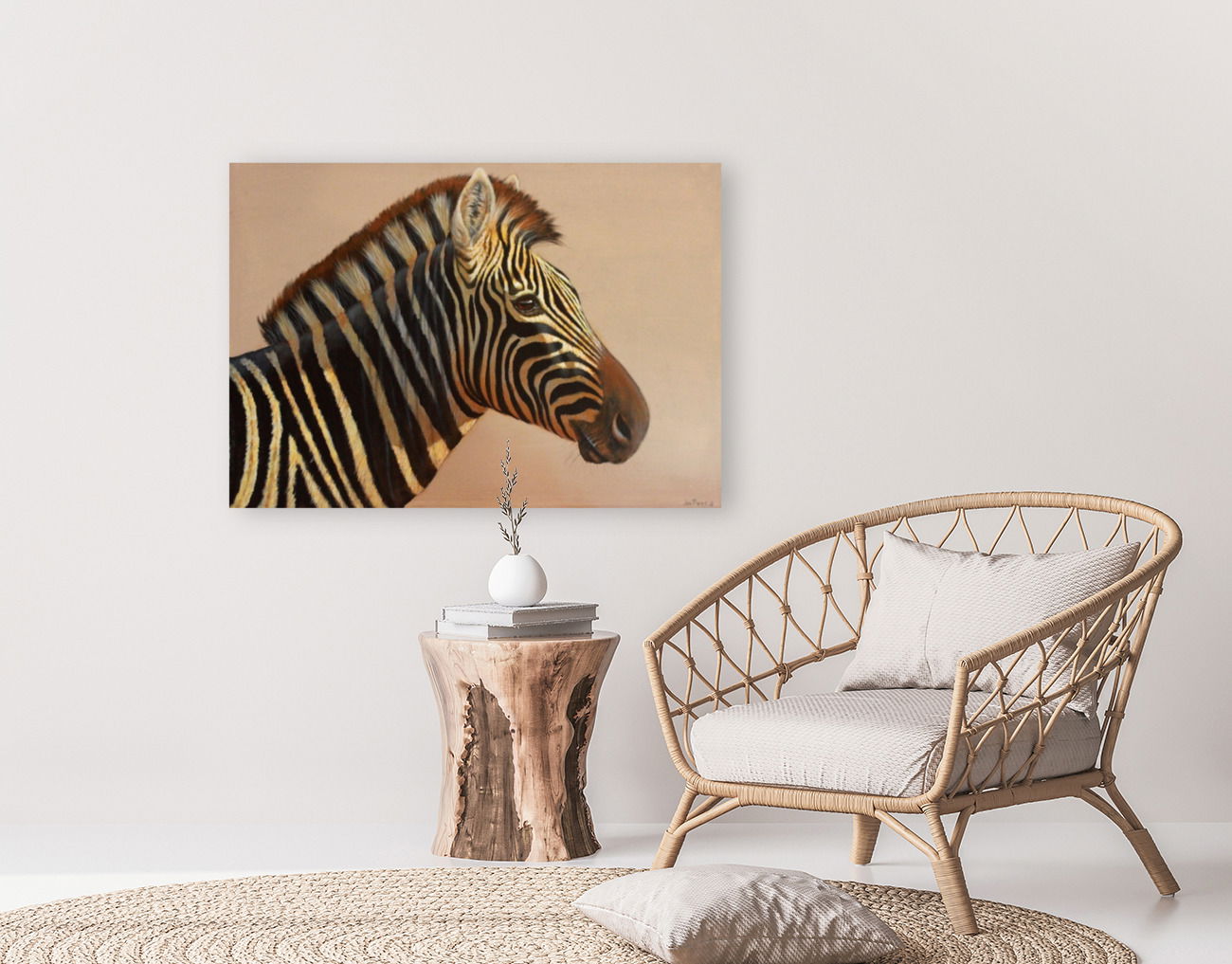
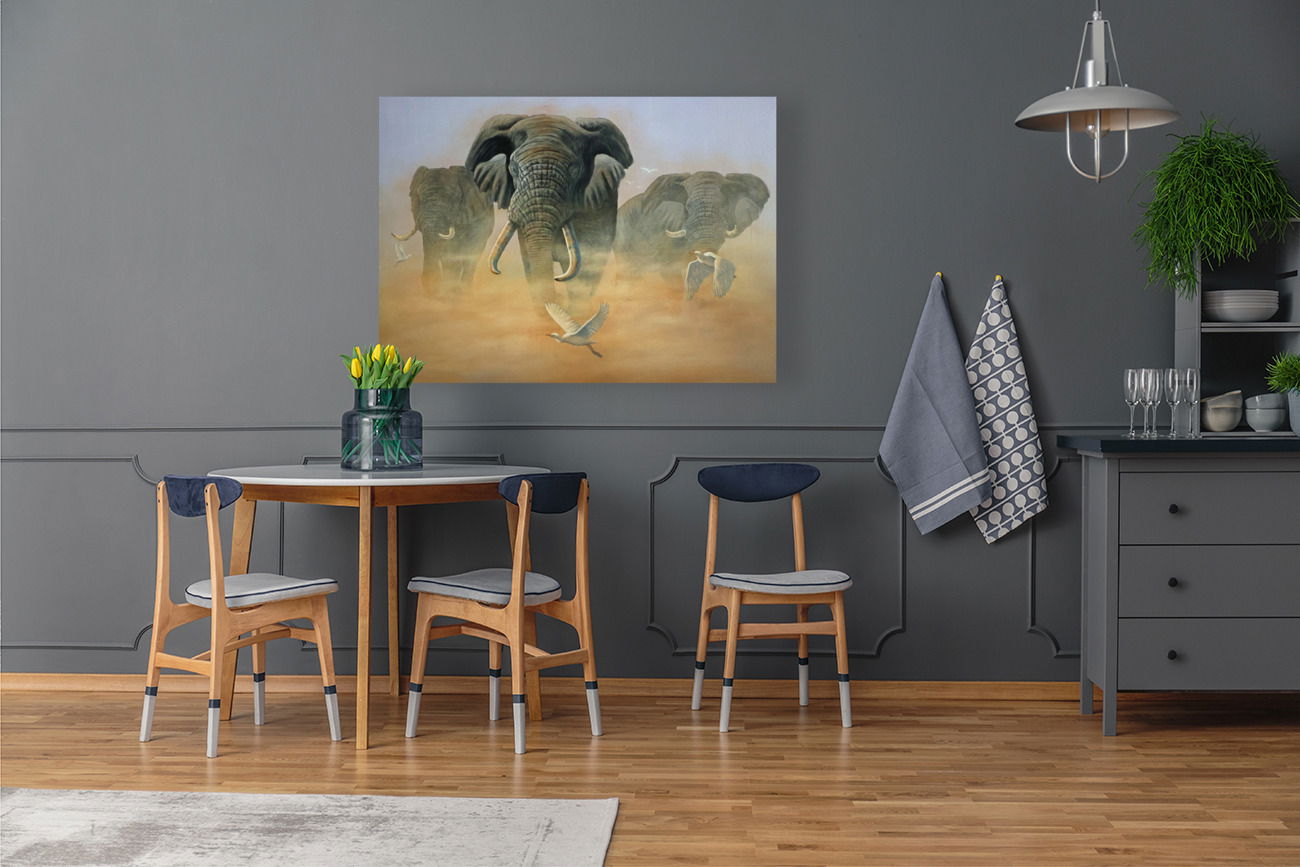
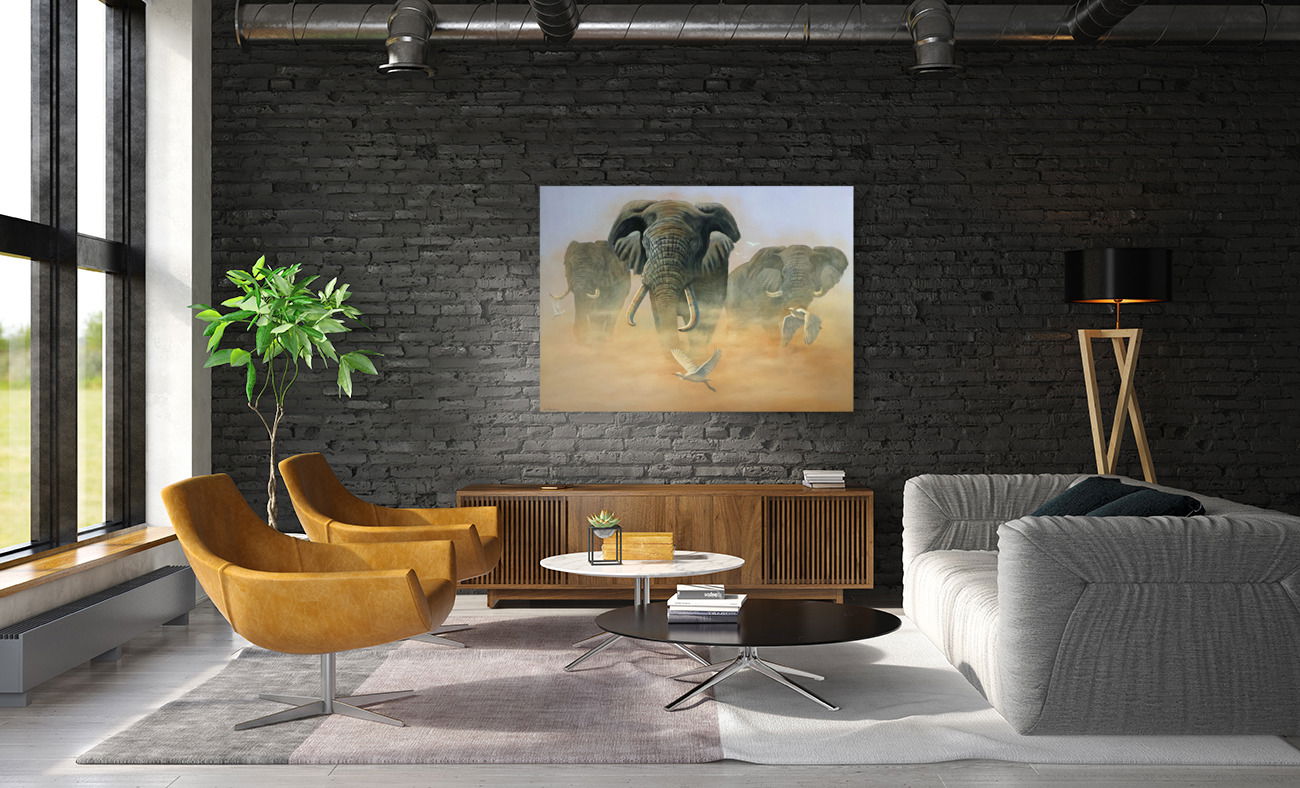
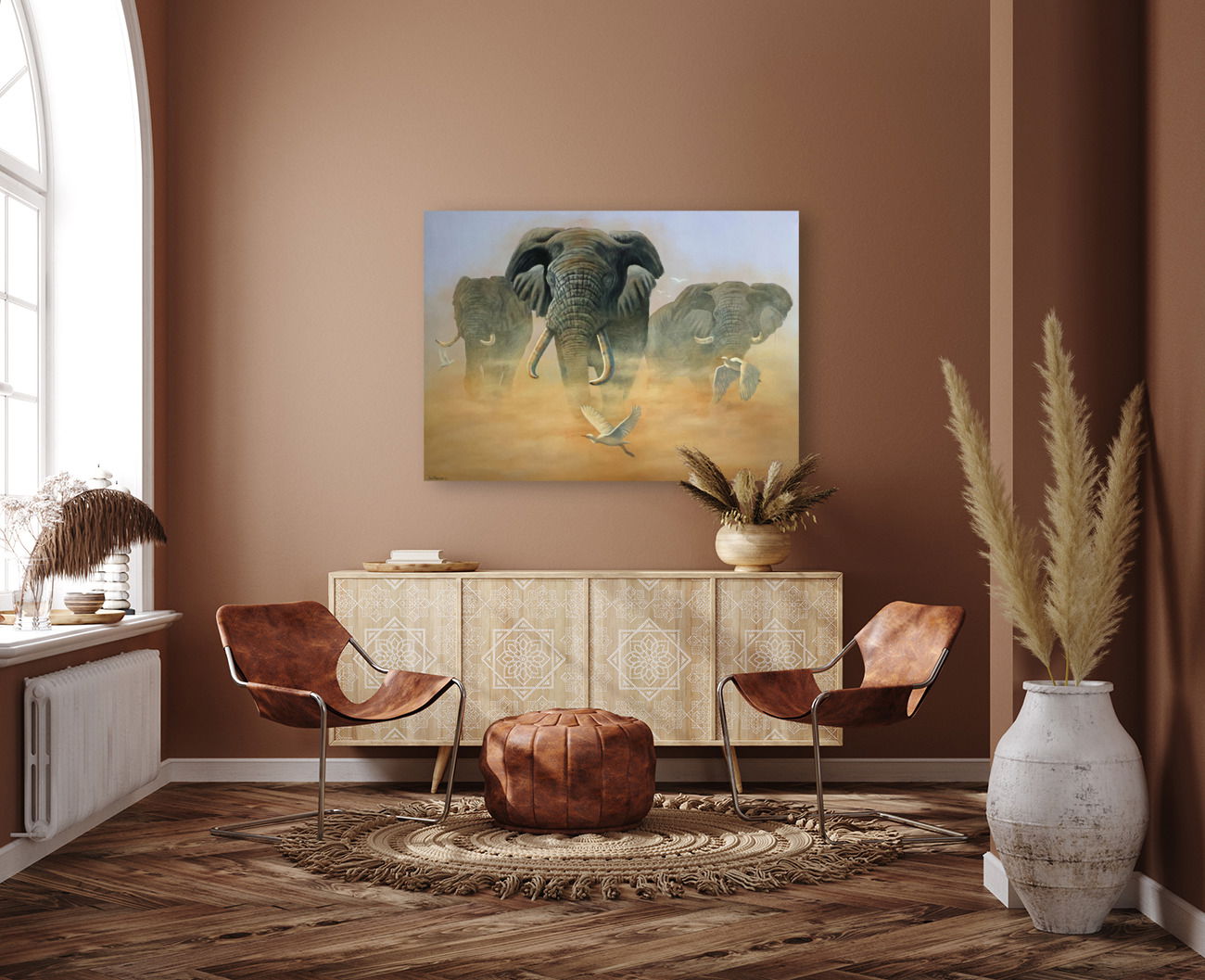
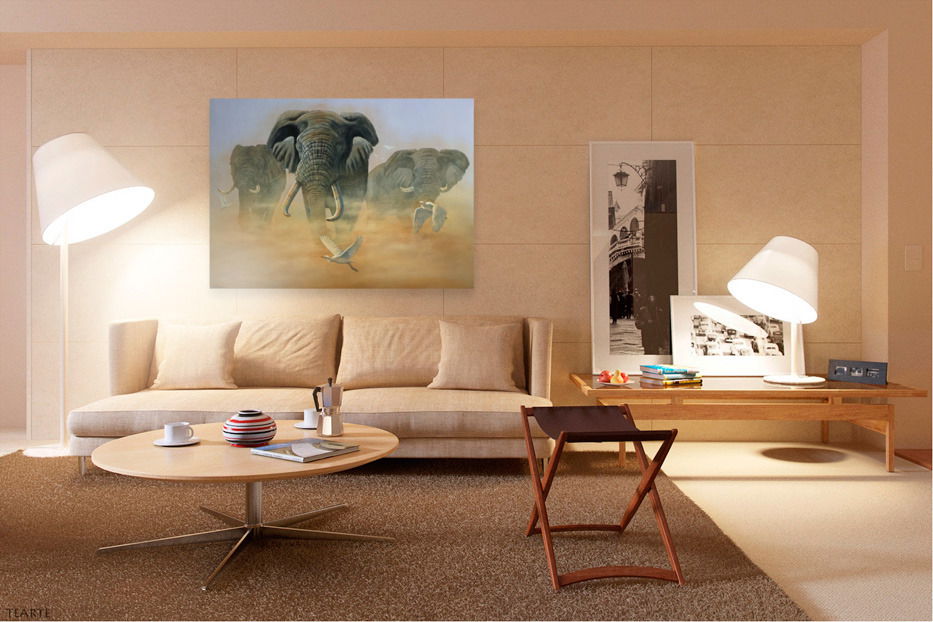
“once these original paintings are gone, they will not be repeated.”
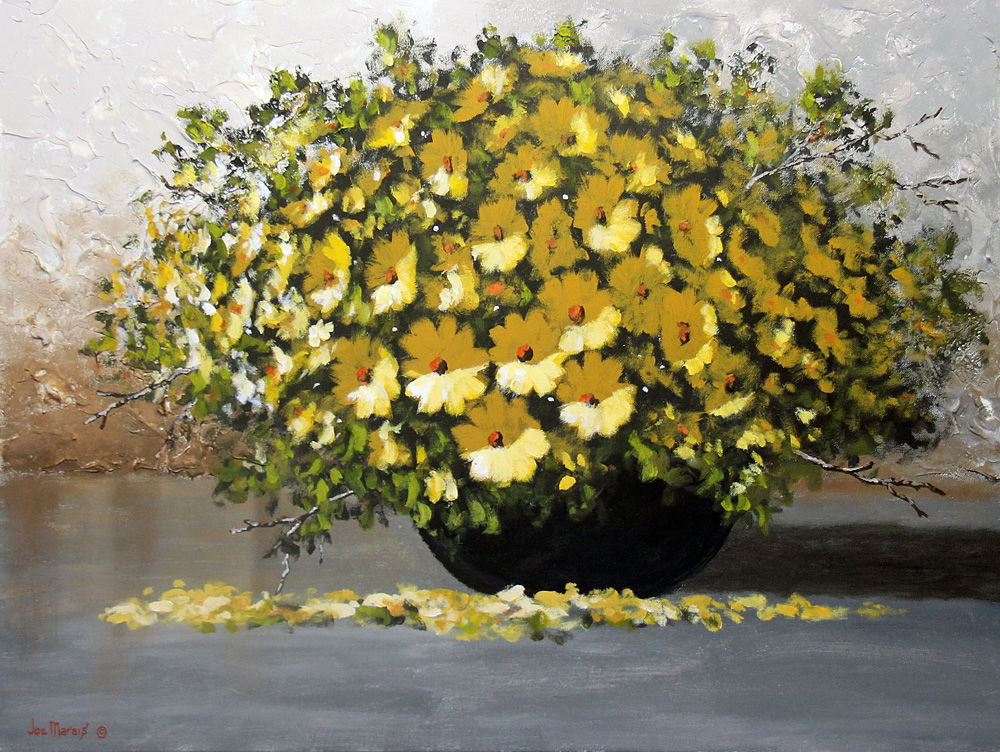
Golden Daisy Dance by South African Artist, Joe Marais
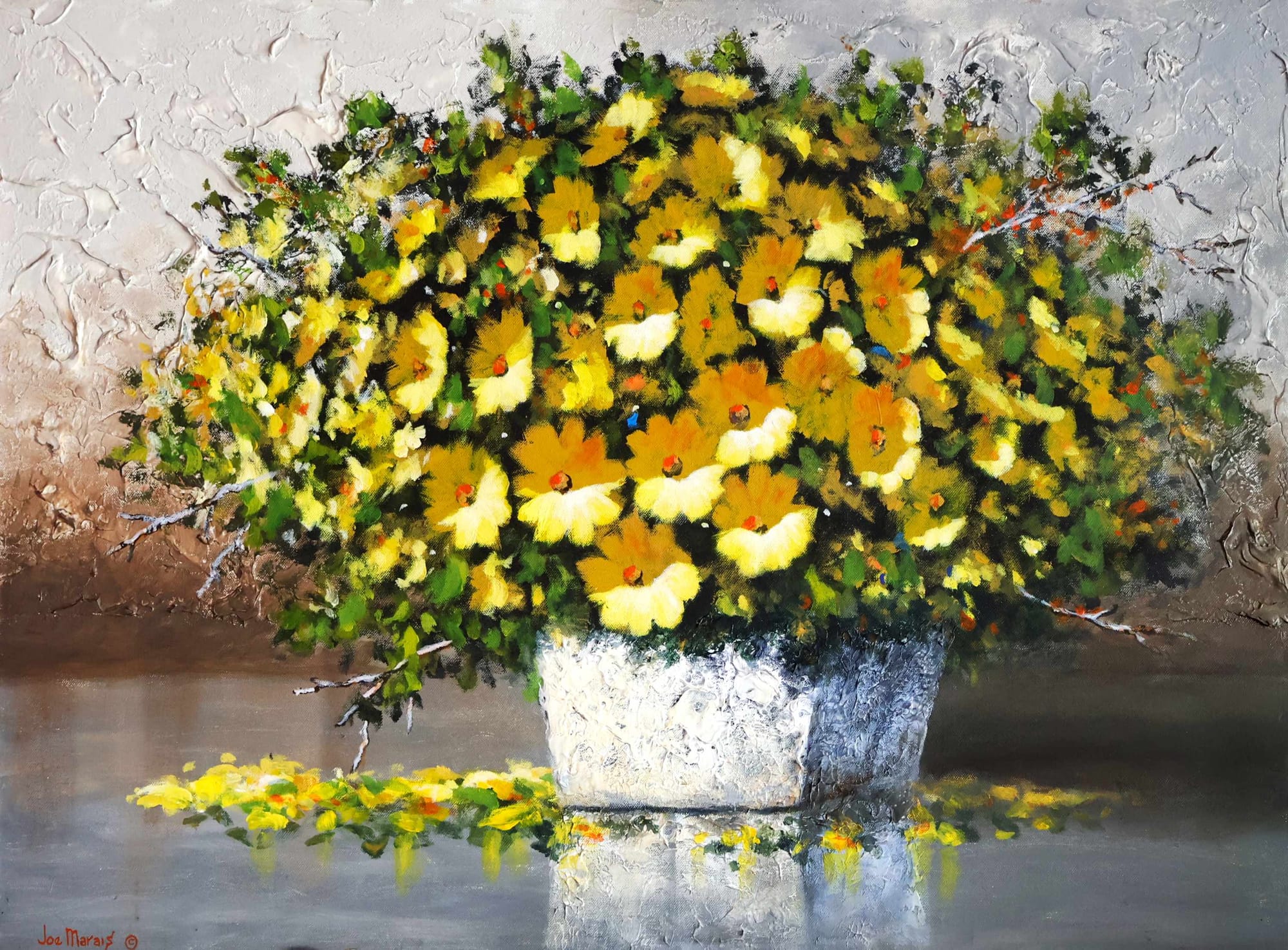
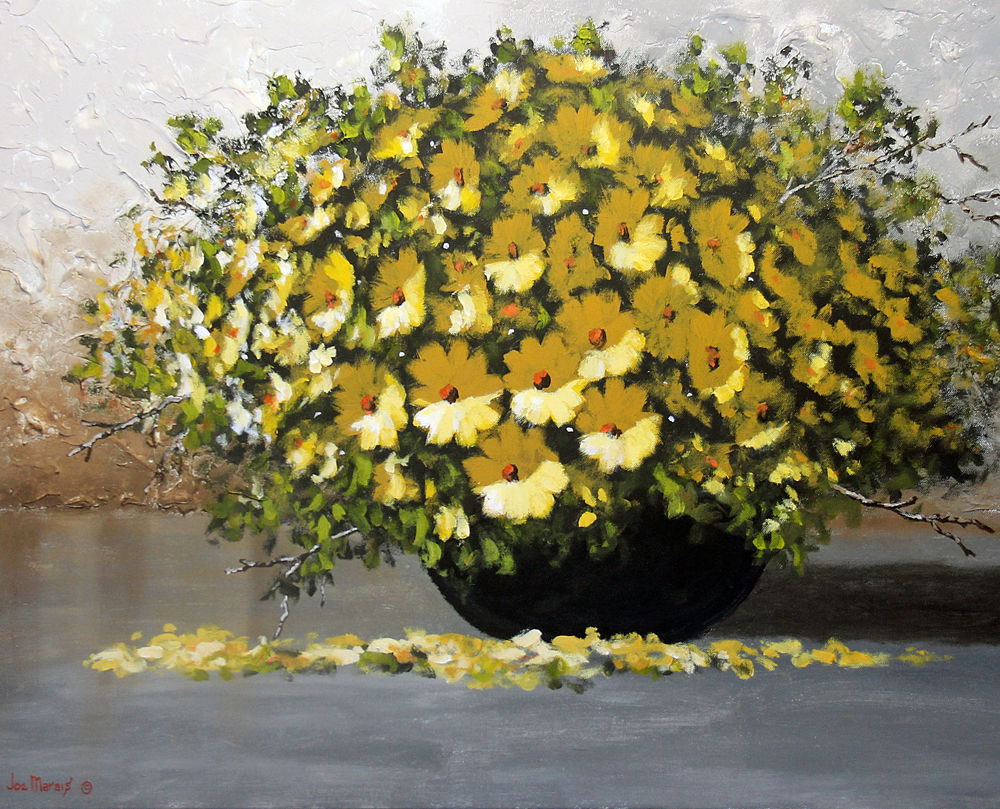
Title: Golden Daisy Dance Original Acrylic Painting on Canvas Measurements: 900 x 650 x 20mm Block Mounted The energy of yellow daisies extends beyond mere appearance. They symbolize optimism, resilience, and the promise of renewal. The sight of yellow daisies could lift spirits, brightening even the cloudiest days. They have a unique ability to instill hope and joy in everyone who encounters them. Bright and cheerful, yellow is associated with happiness, optimism, and warmth, reminiscent of sunlight. It can energize a space and uplift spirits.
Twilight Tranquility by Joe Marais
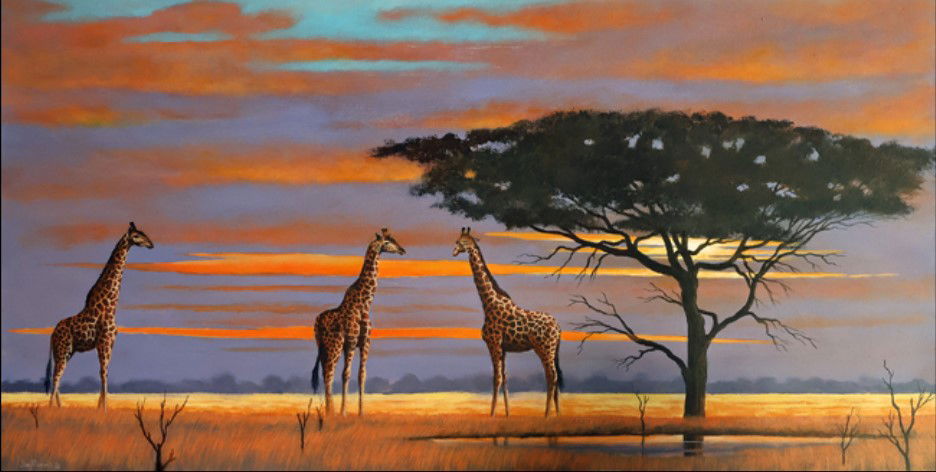
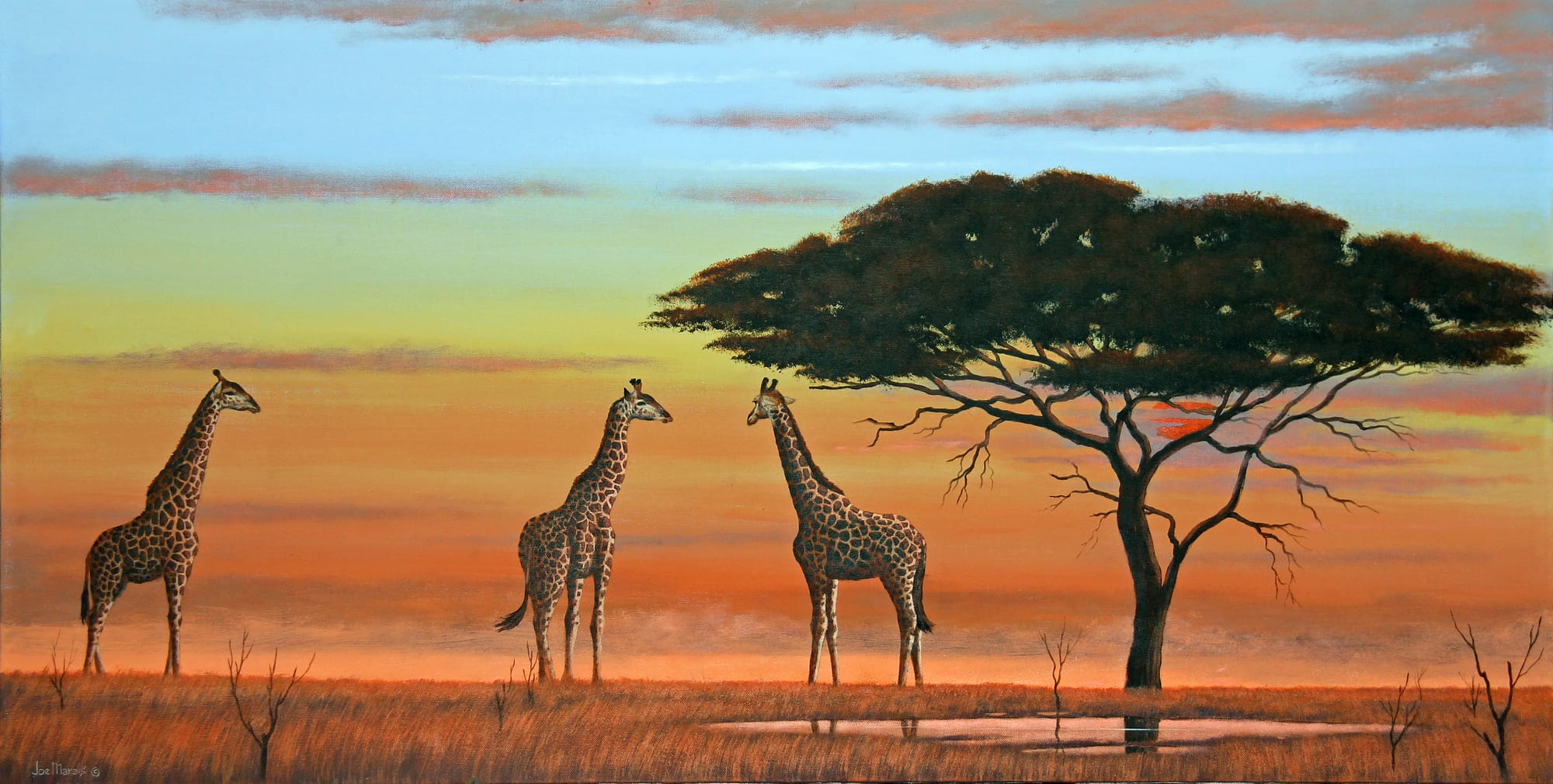
Title: Twilight Tranquility Original Acrylic Painting on Canvas Measurements: 1170 x 600 x 30mm Block Mounted The giraffe is a large African hoofed mammal belonging to the genus Giraffa. It is known for being the tallest living terrestrial animal and the largest ruminant on Earth, with four recognized species distinguished by their unique patterns and habitats. The giraffe's scientific name is Giraffa camelopardalis, which comes from the Greek words kamēlos (camel) and pardalis (leopard). Mass: 1 200 kg (Male, Adult), 830 kg (Female, Adult) Speed: 60 km/h (Maximum, Sprint) Gestation period: 13 – 15 months
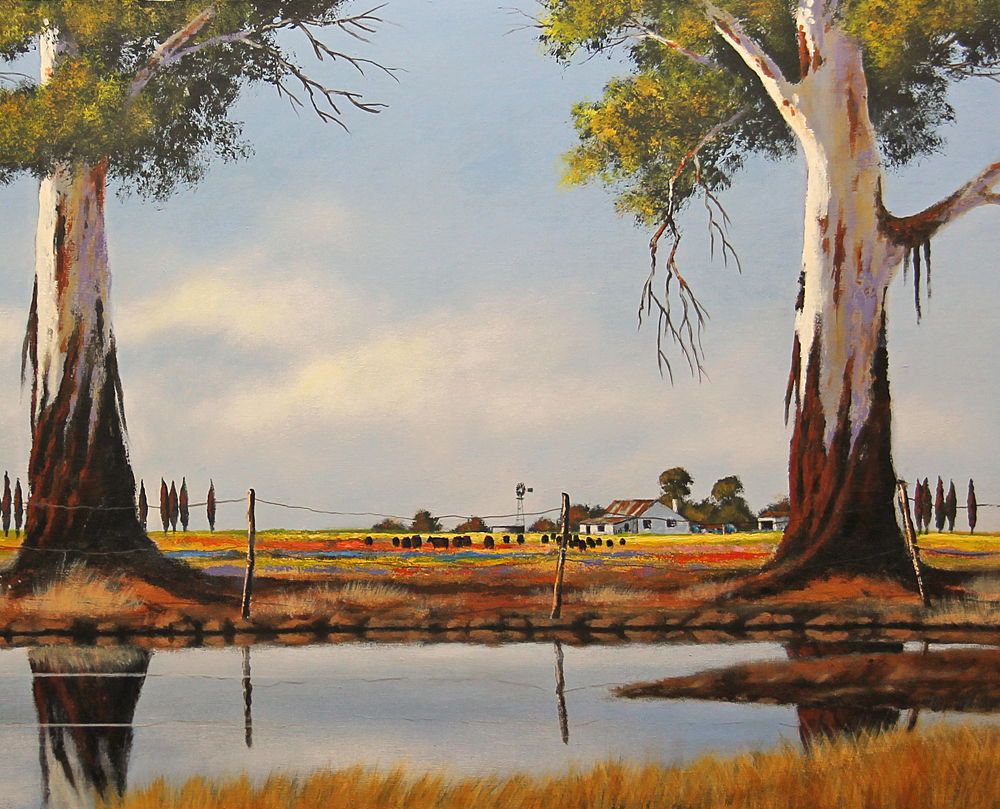
The Forgotten Canvas by Joe Marais
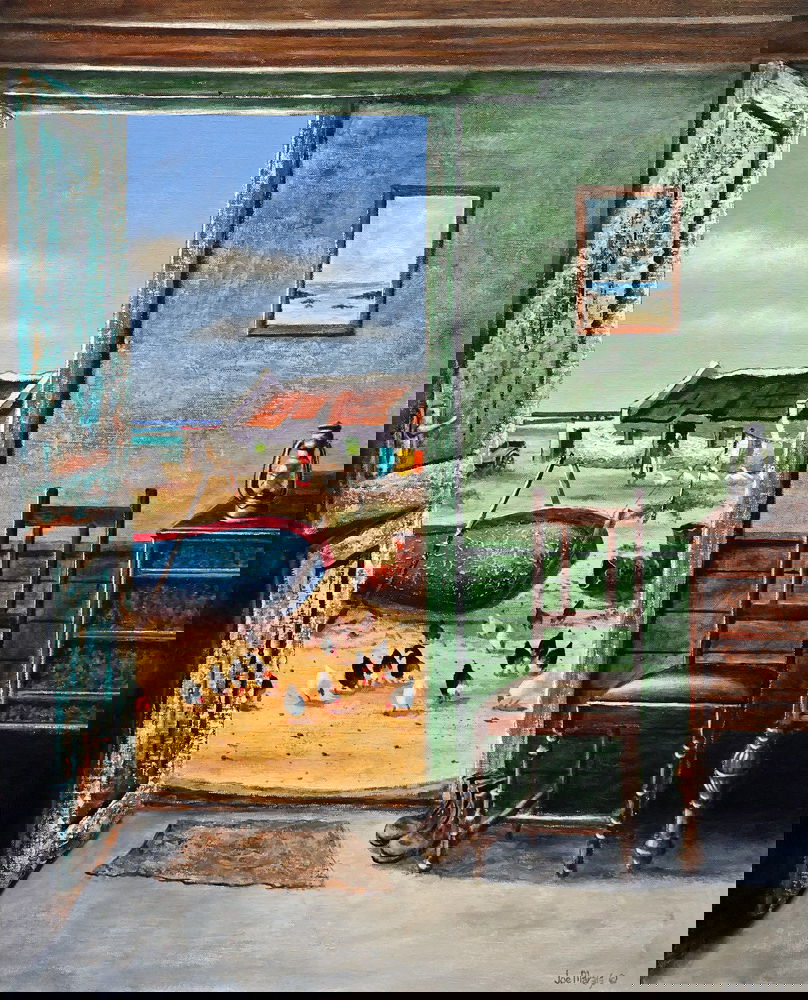
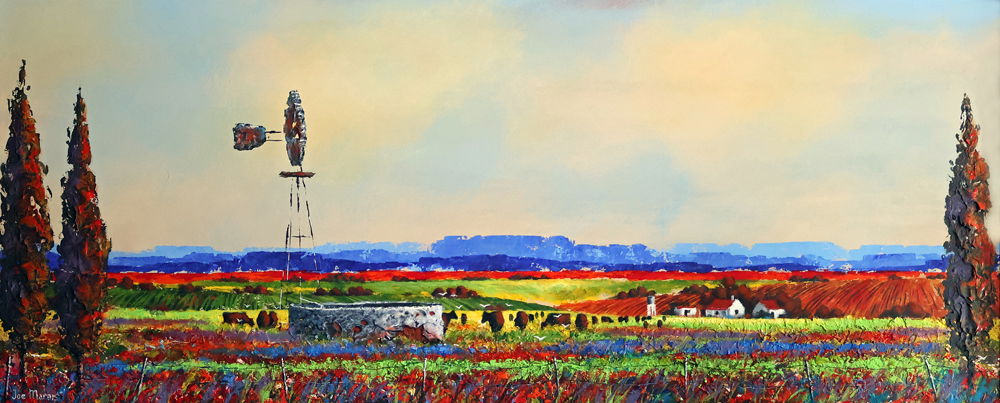
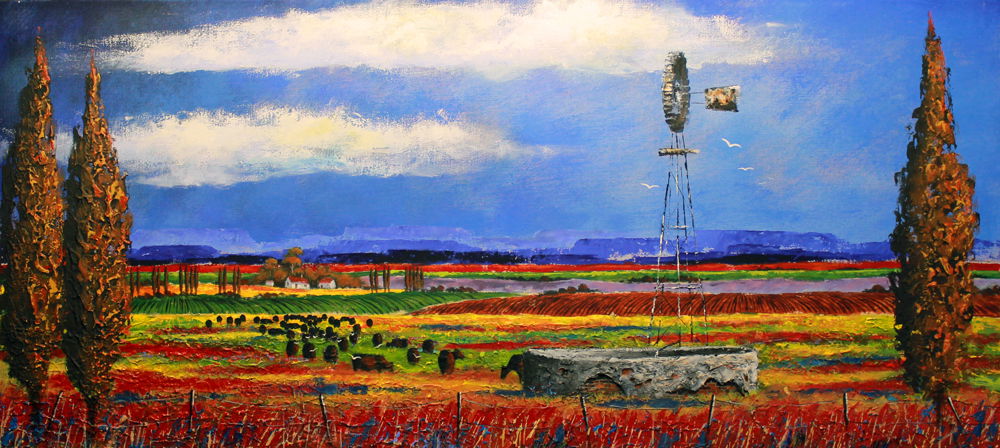
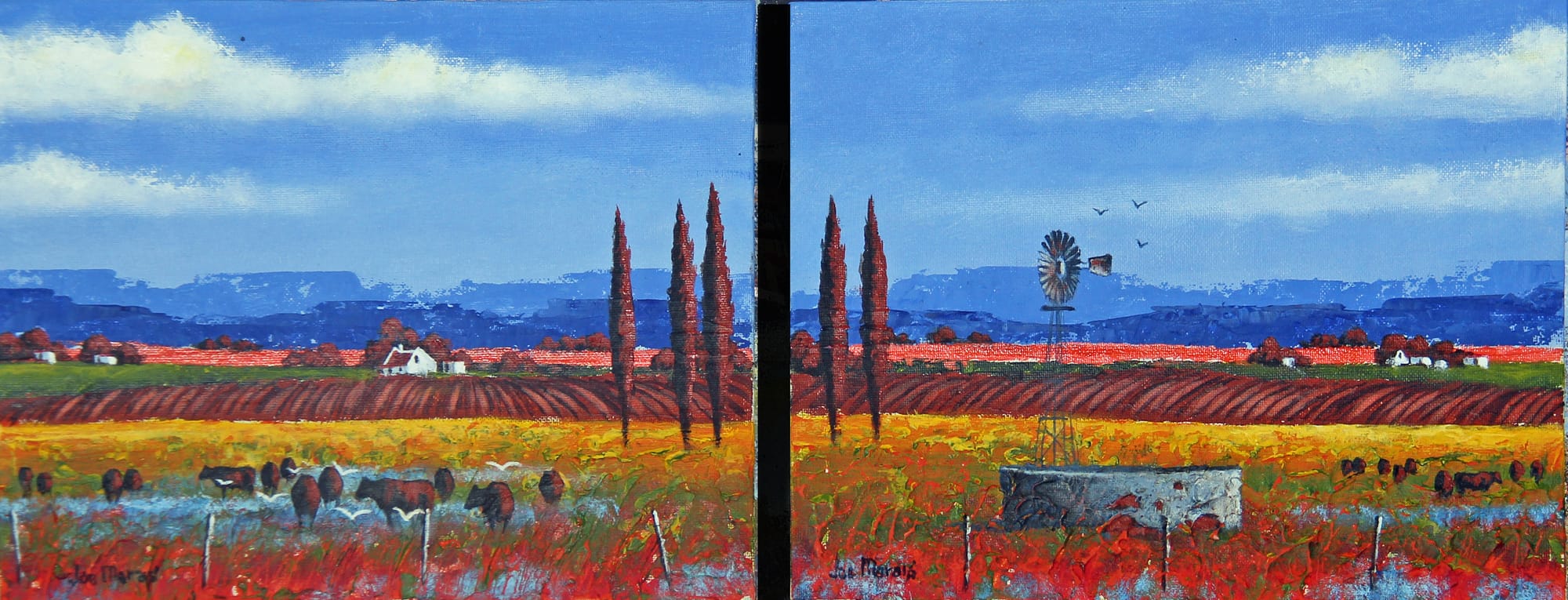
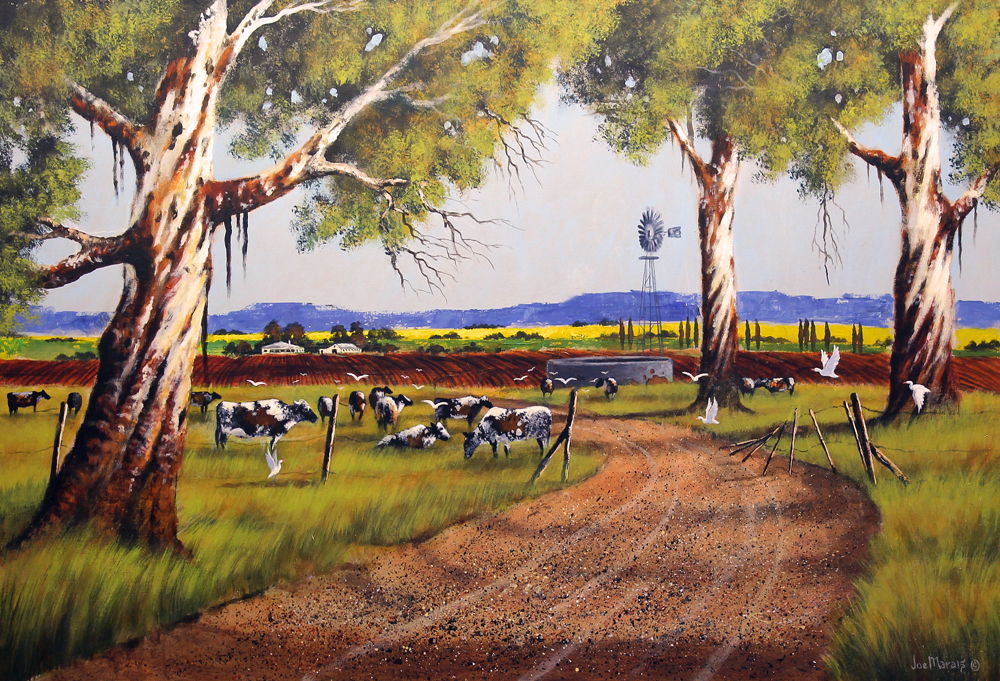
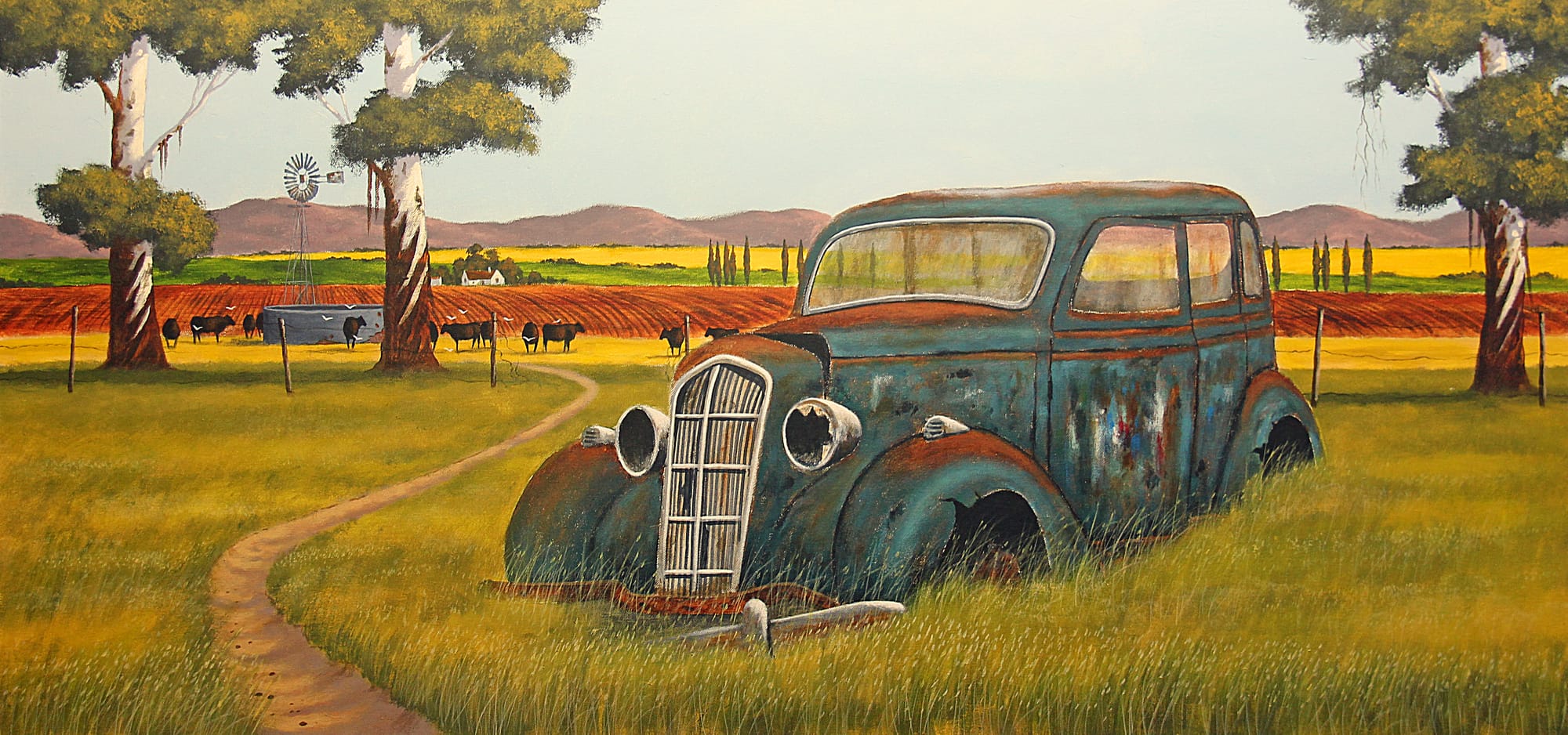
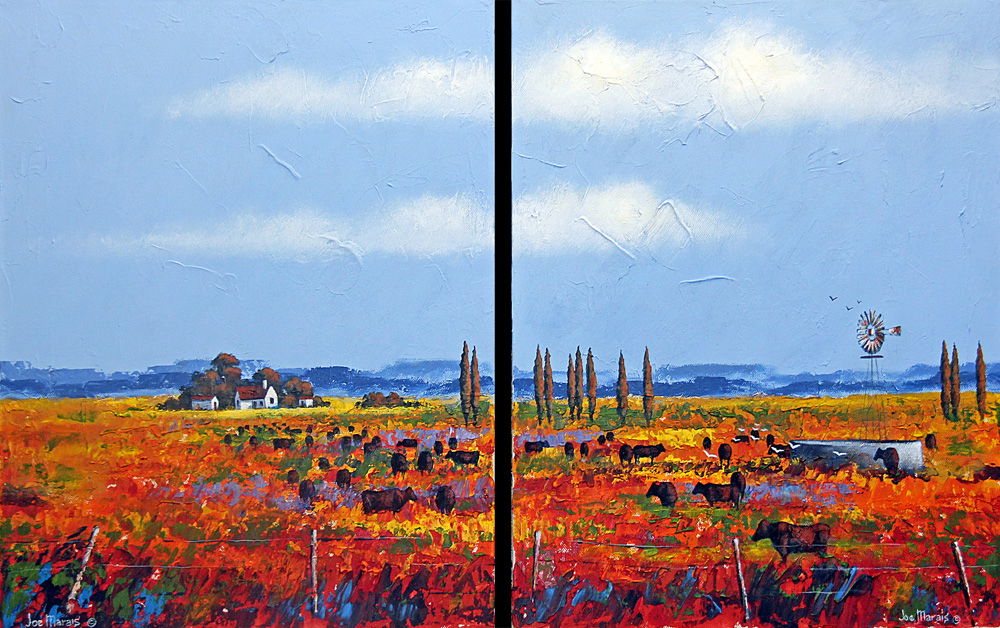
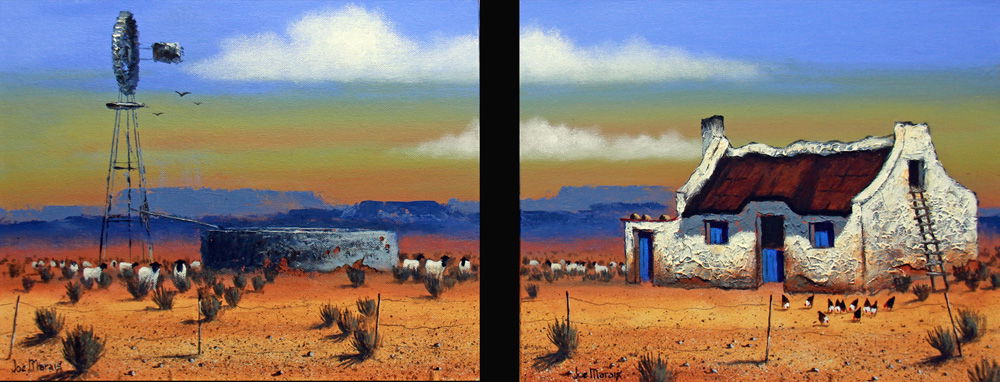
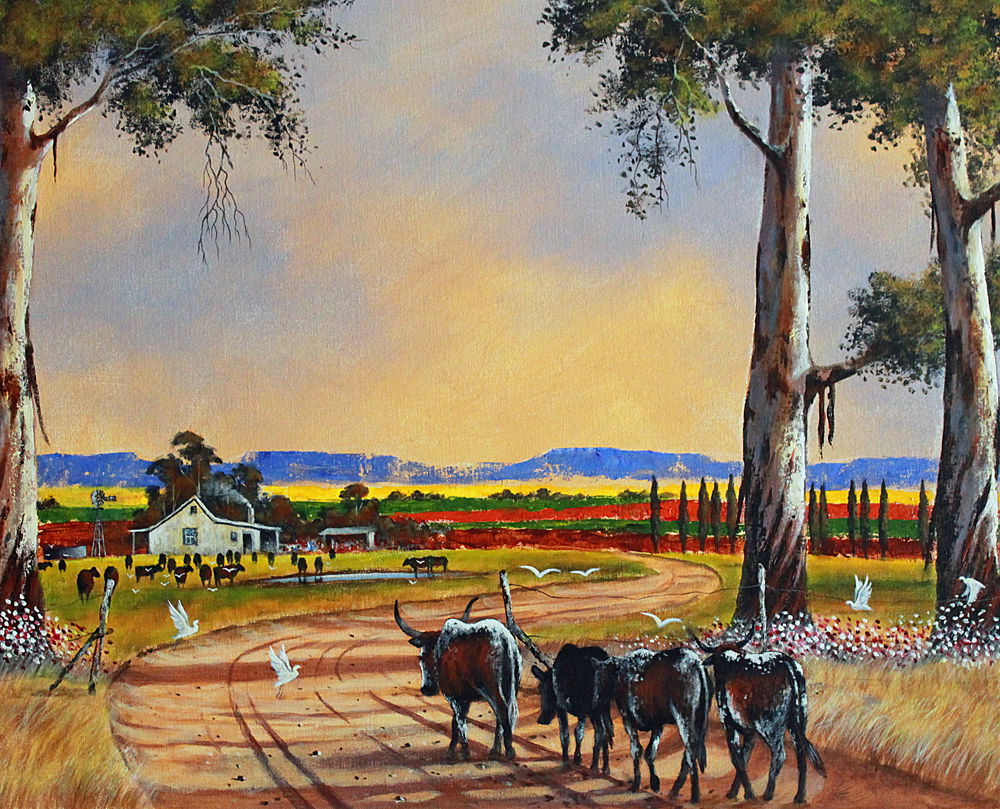
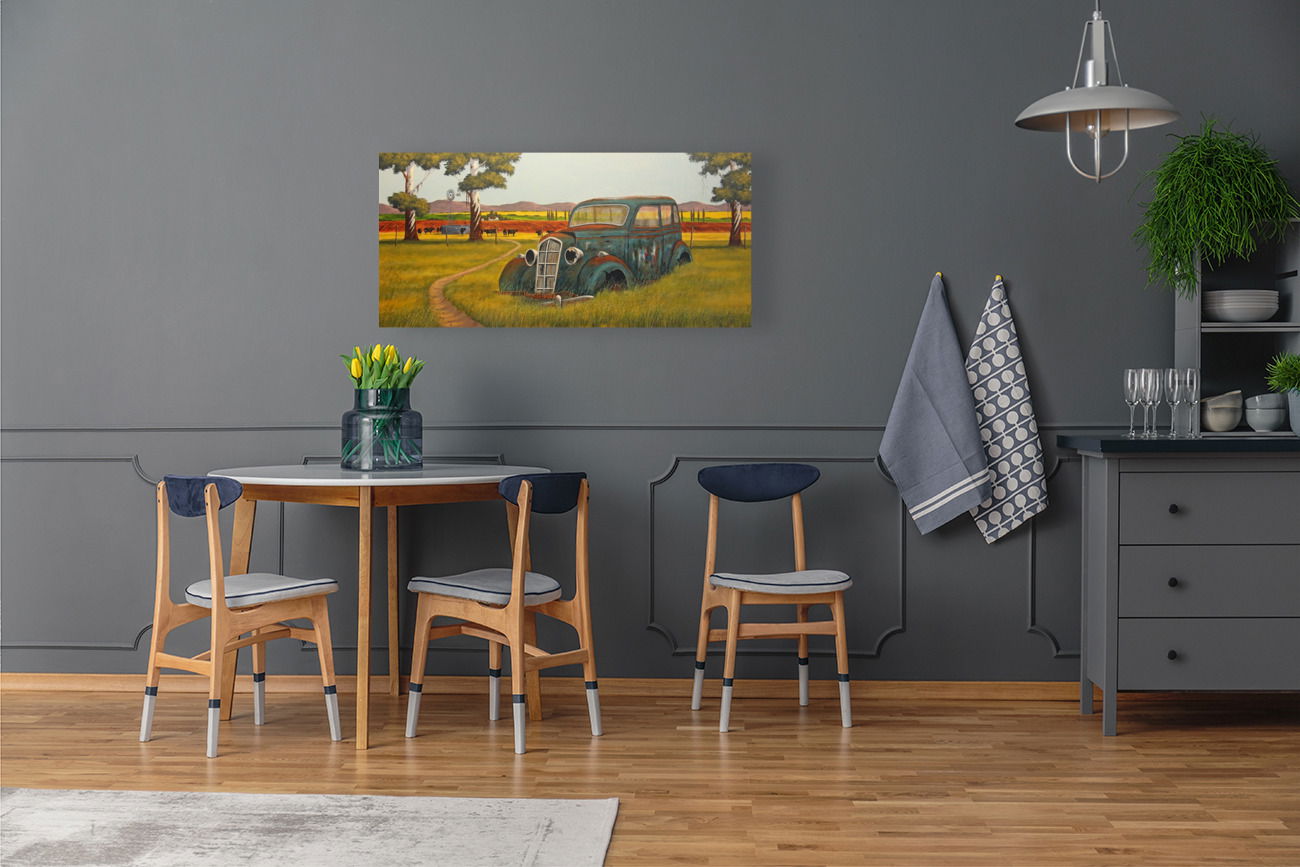
Title: The Forgotten Canvas Original Acrylic Painting on Canvas Mixed Medium Measurements: 1500 x 600mm Block Mounted The story about 'The Forgotten Canvas'! I recently decided to organize the storeroom at the back of my studio. In fact, I had been meaning to organize the space for quite a while, but there was always something else to do! A couple of days ago I decided to dive in and get the place sorted out once and for all. As I carefully navigated through the storeroom, my eyes suddenly landed on a familiar-looking painting, tucked away in the far corner. Intrigued, I pulled it out! It was a painting I had created a couple of years ago and one that I had completely forgotten about. The painting was a vibrant depiction of a South African landscape, with its rolling hills, lush vegetation, a farmhouse, and the distant silhouette of mountains. Of course, there had to be a windmill, a reservoir, and cattle! I hope many of us can relate to this type of scene!
West Coast Magic by Joe Marais
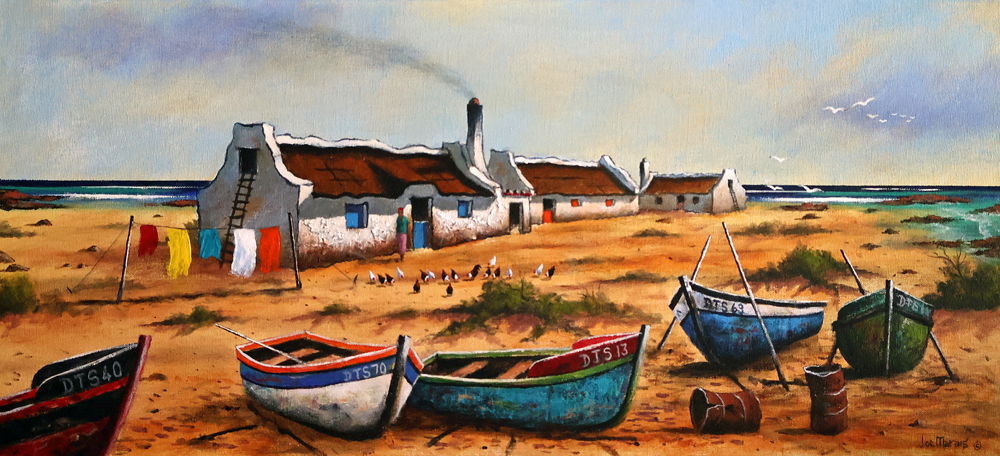
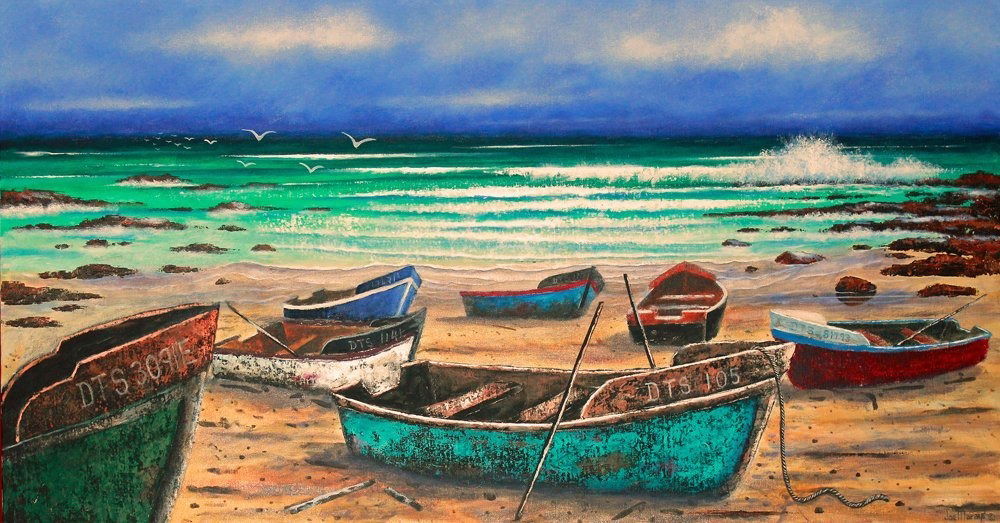
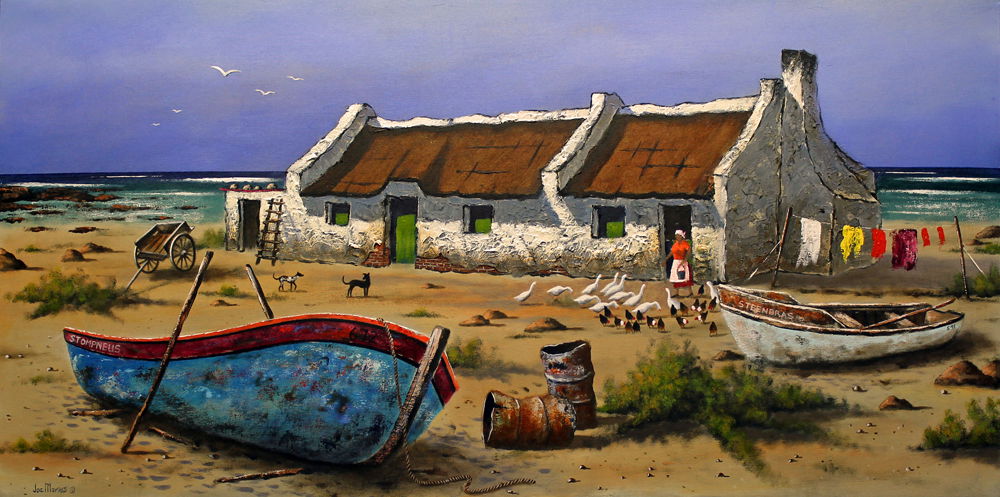
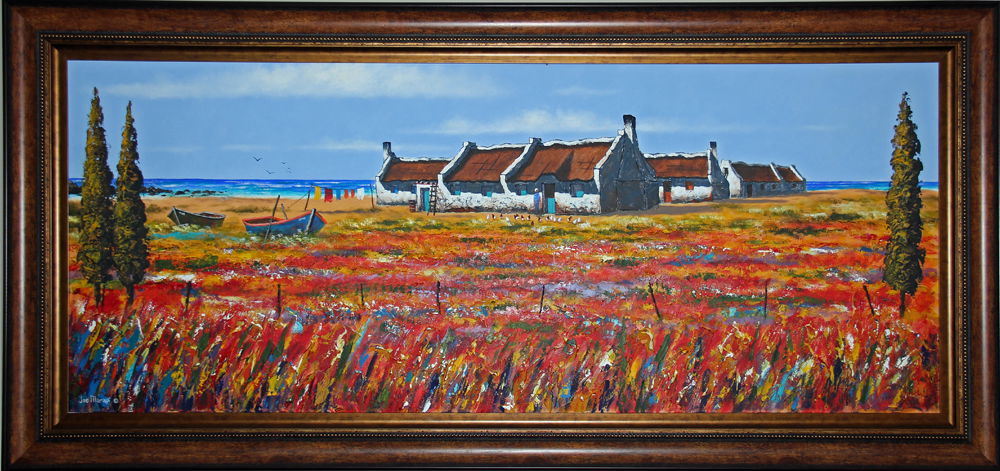
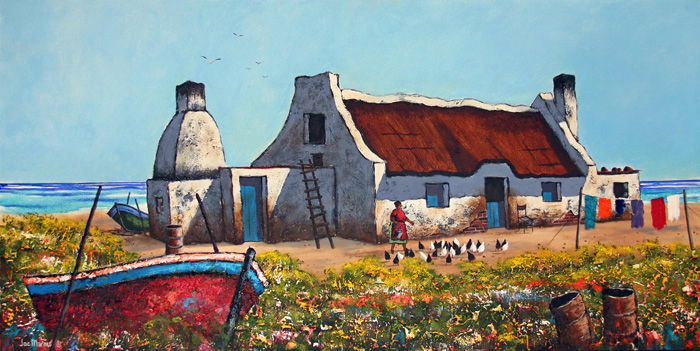
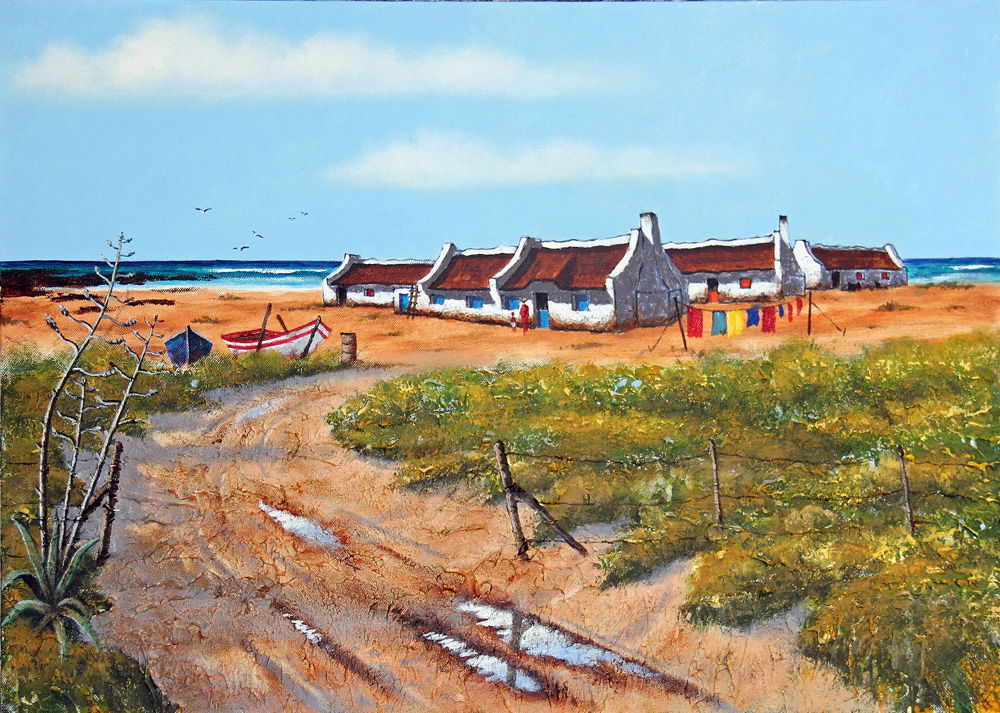
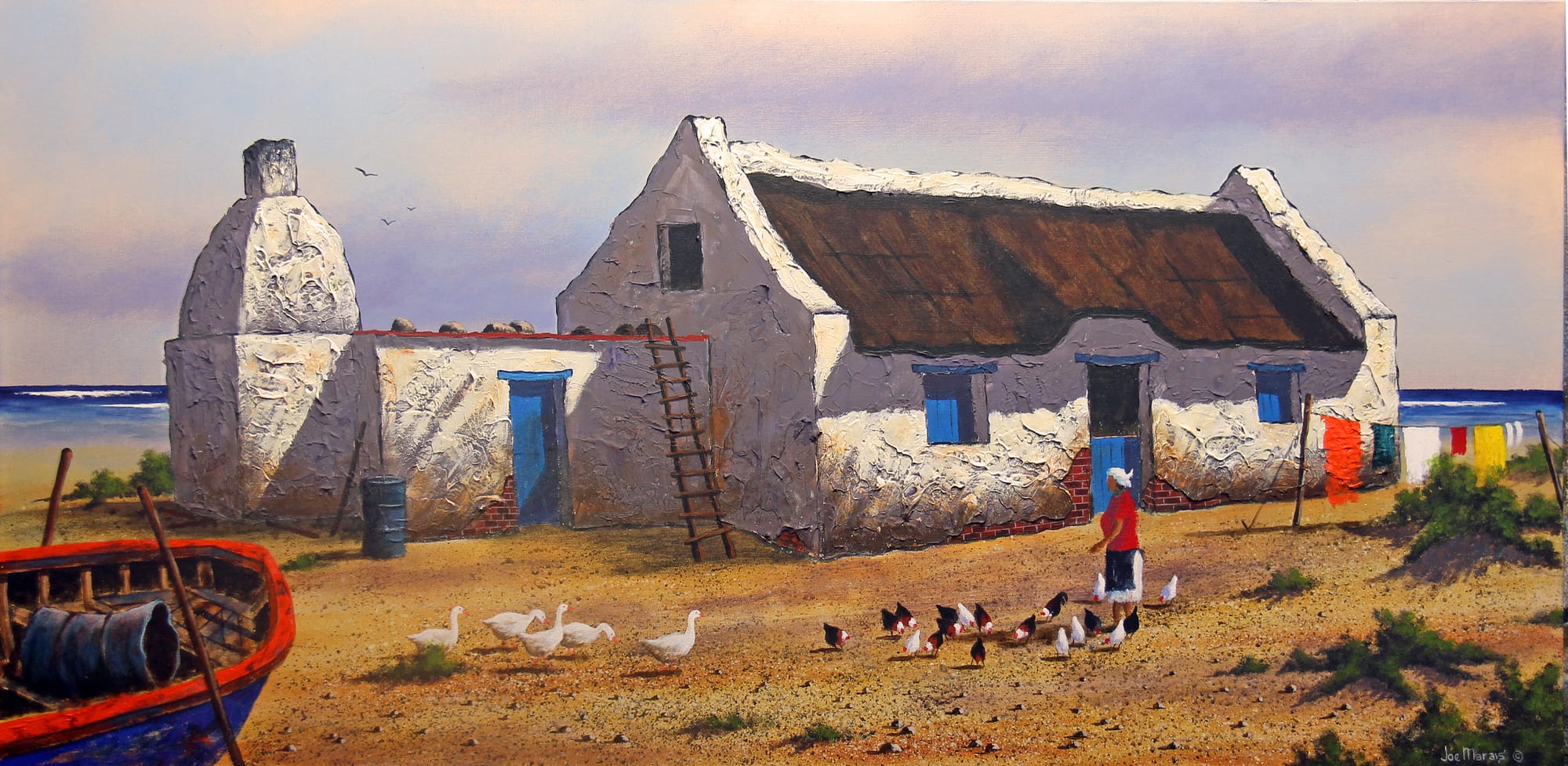
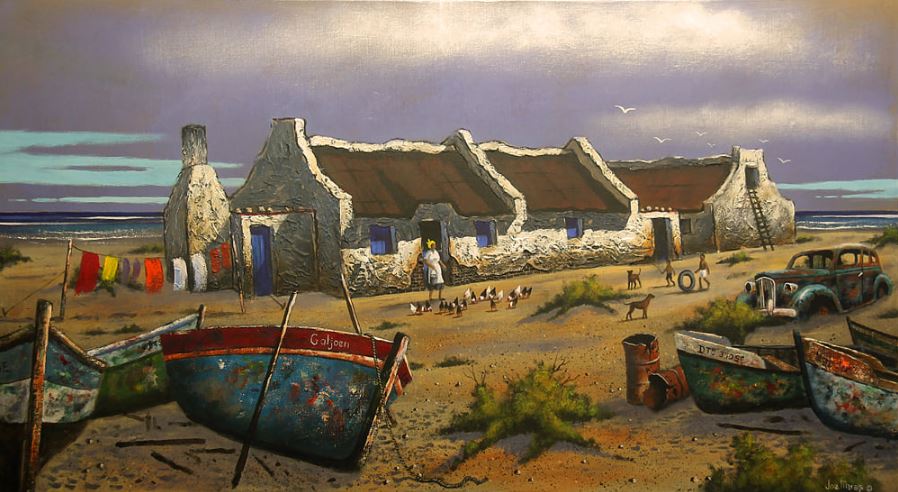
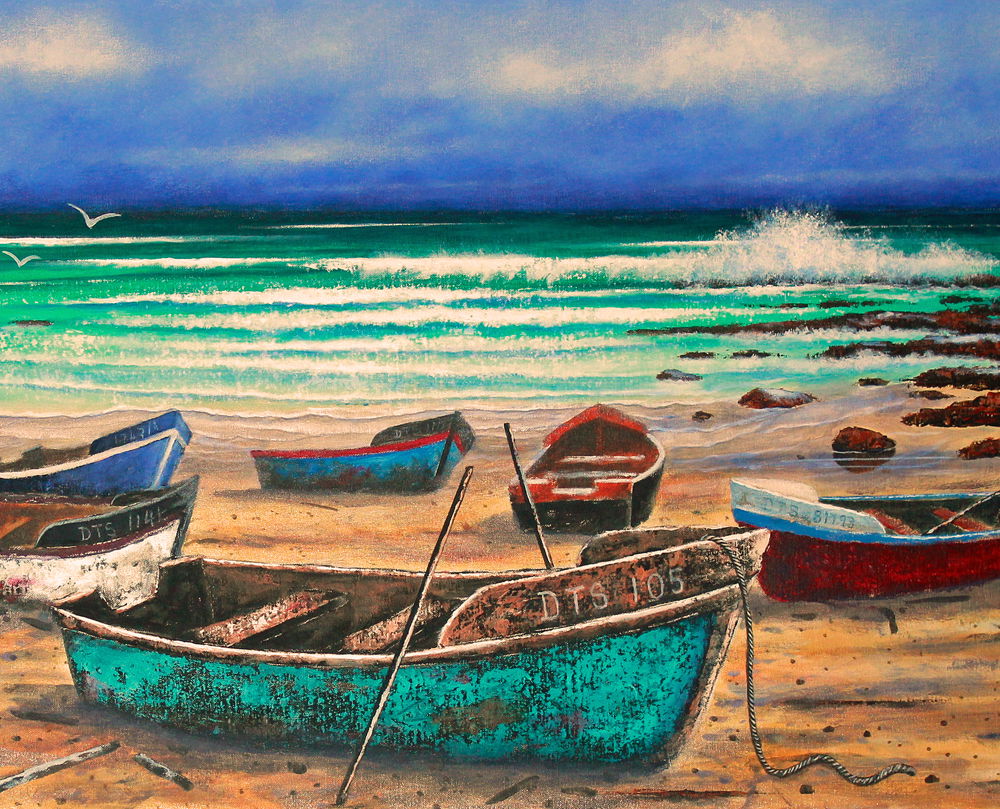
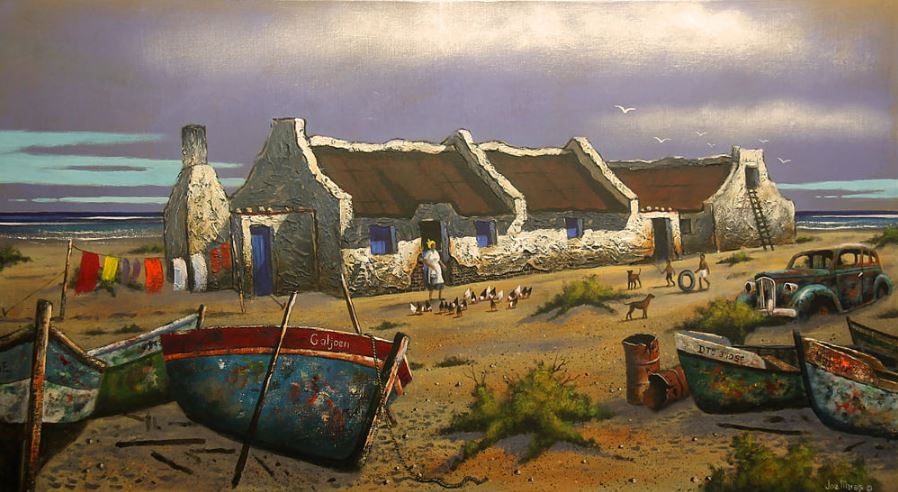
Title: West Coast Magic Original Acrylic Painting on Canvas Measurements: 1200 x 600mm Block Mounted In one small corner of South Africa’s West Coast, early Khoi people called ‘strandlopers’ (beach walkers) lived simply and harmoniously – at one with the elements. Today, the elements are central to the pleasures of those who visit Paternoster. Coming to Paternoster reminds you of the truly important things in life, where you find that special space to exhale, heal, and rejuvenate. Molded by generations of fishing families, the village’s quaint character seems unconcerned over time. Instead, the tides and changing seasons guide those who live by the rhythmic ebb and flow of nature. One thing’s certain, though. It won’t be long before you, too, succumb to its charms – basking in the many sensual pleasures of the bay… perhaps a contemplative moment sipping on a glass of wine at a beach restaurant, a browse for the unusual at one of the characteristic, whitewashed stores or a lively barter at the weekly fisherman’s market.
The Perfect Duet by Joe Marais
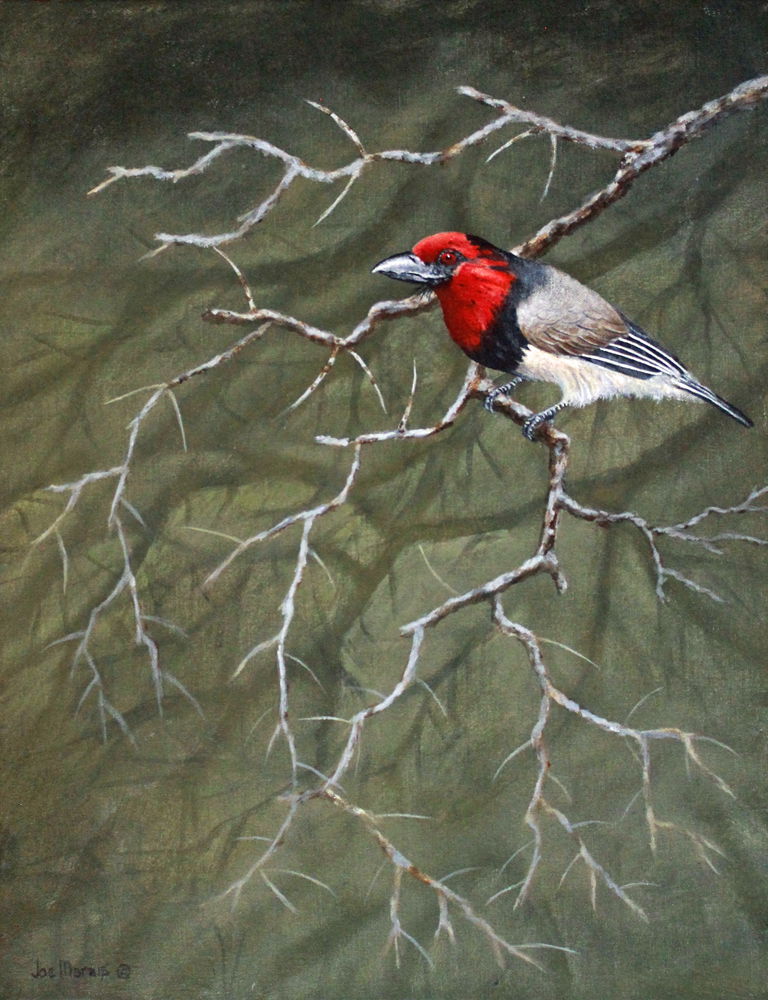
Title: The Perfect Duet Original Acrylic Painting on Canvas Measurements: 600 x 450mm Block Mounted The black-collared barbet is one of the many duetting species in the genus Lybius and it regularly uses duetting in its day-to-day life. There are no solitary song instances heard from this species. Also, the repertoire of the duets does not vary greatly. This species is readily recognized by its loud duet, commonly rendered as "too-puddly too-puddly too-puddly" or "too-doodle too-doodle".... accompanied by wing-flicking.
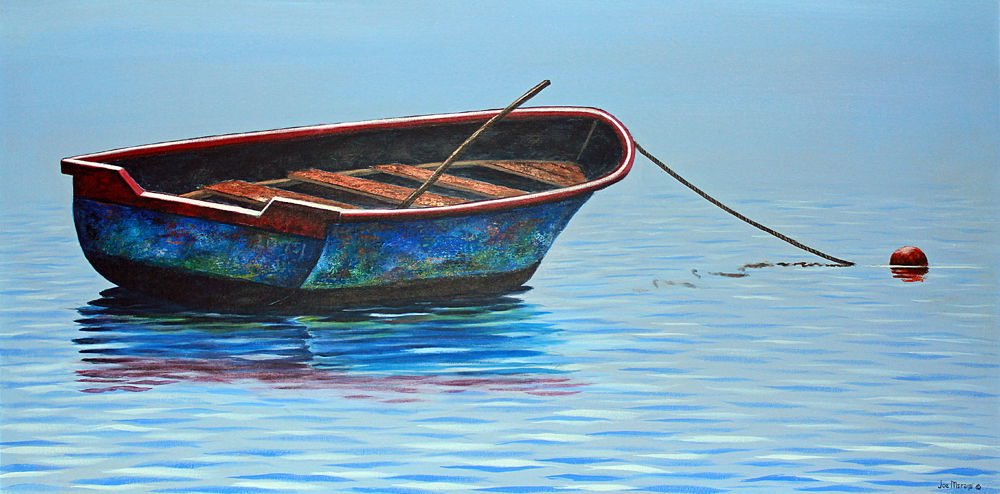
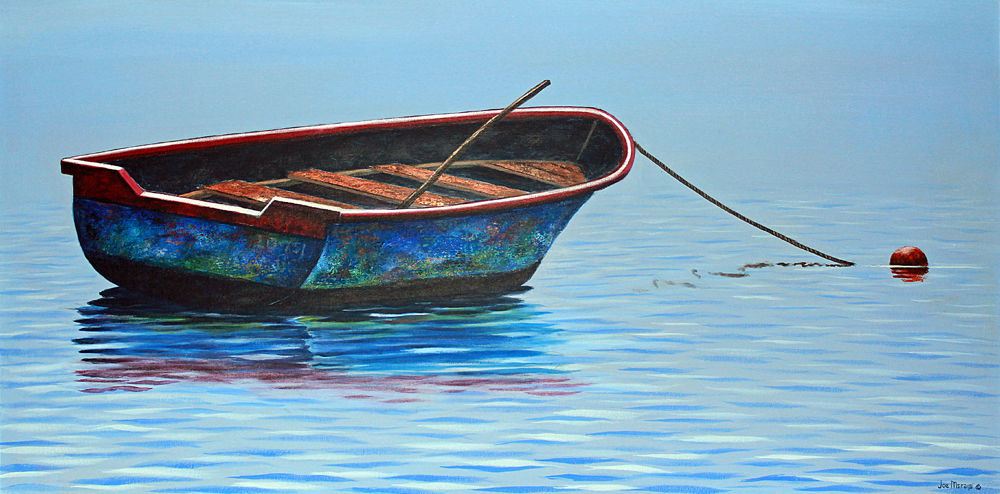
Tranquility by Joe Marais
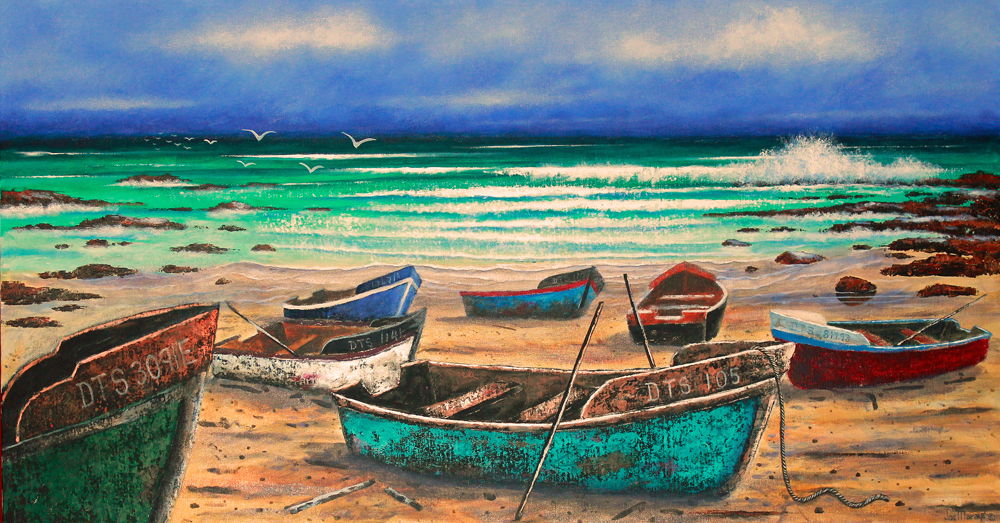
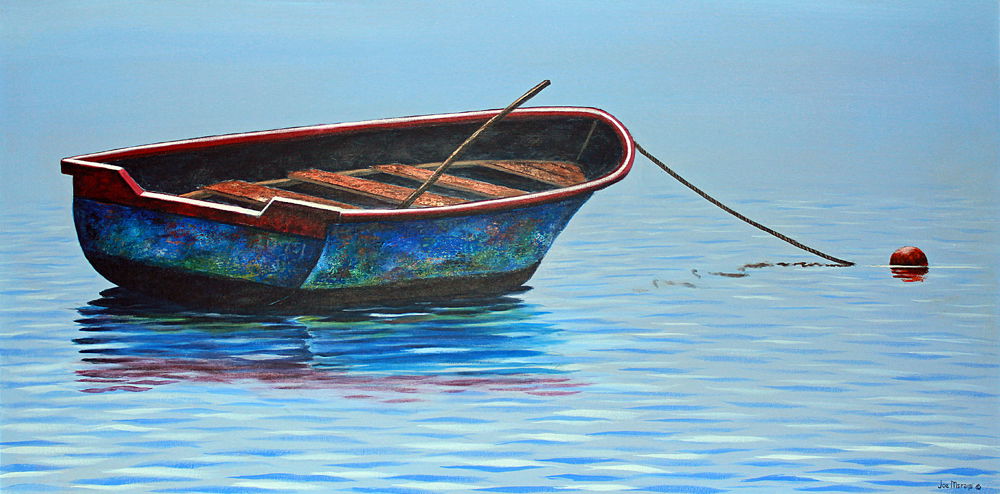
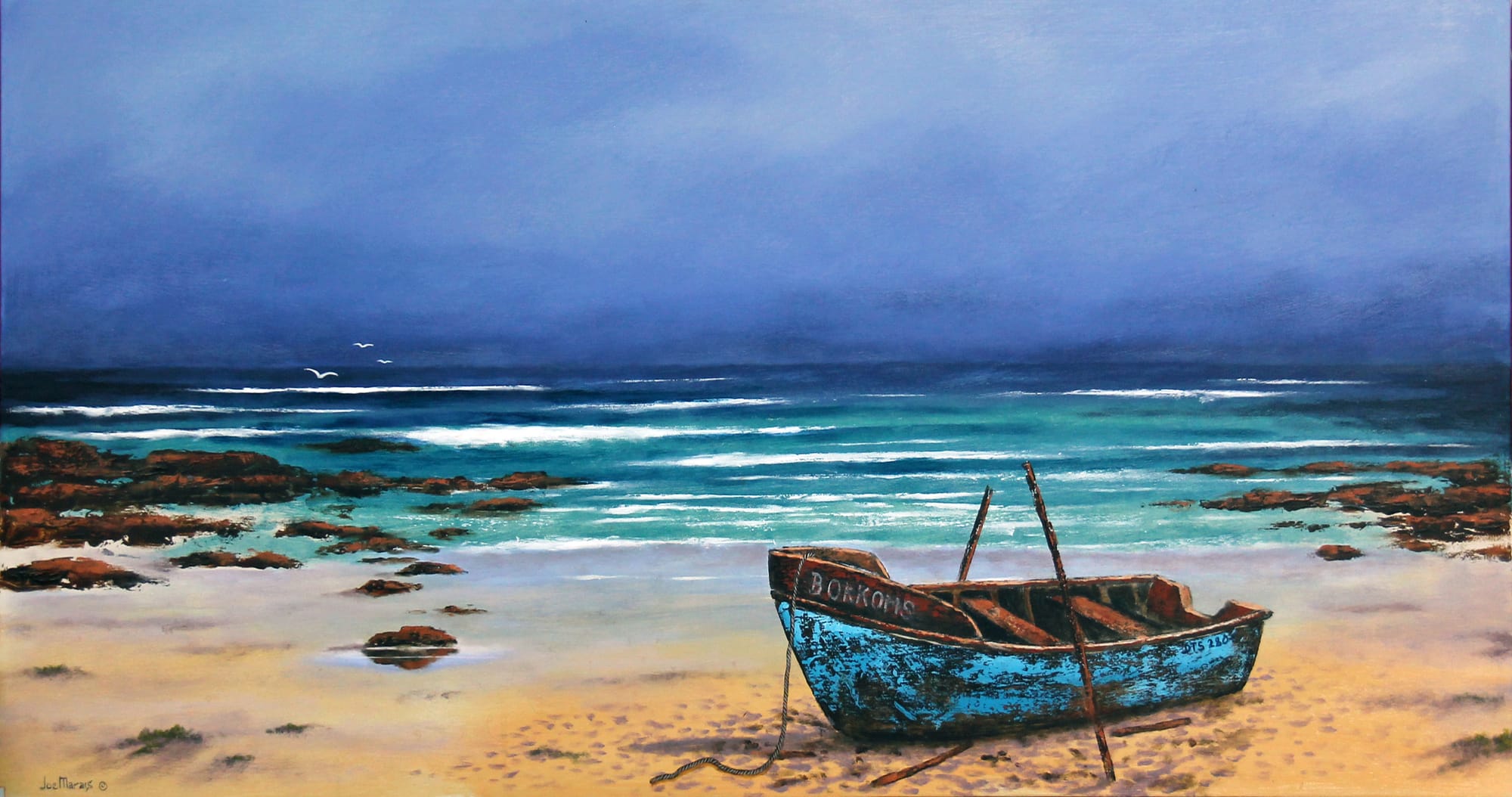
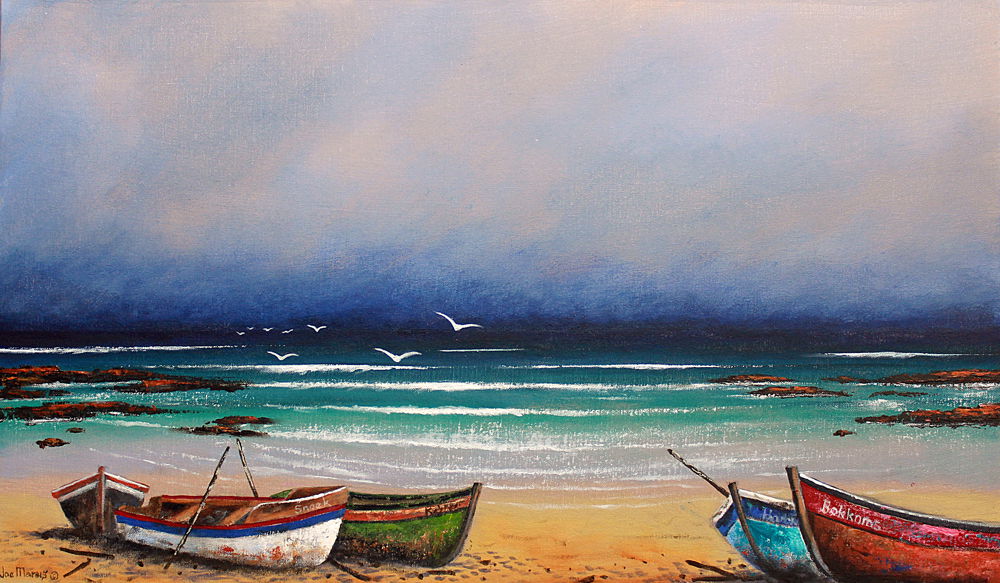
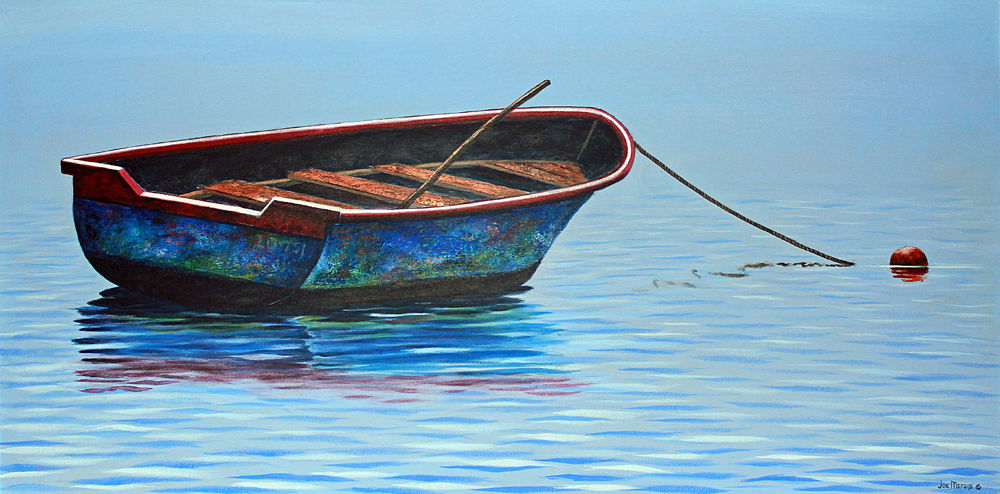
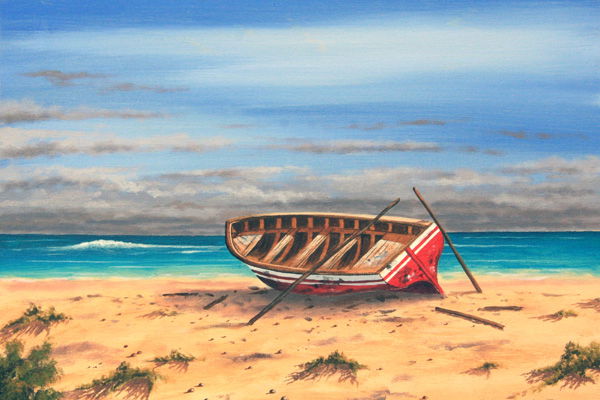
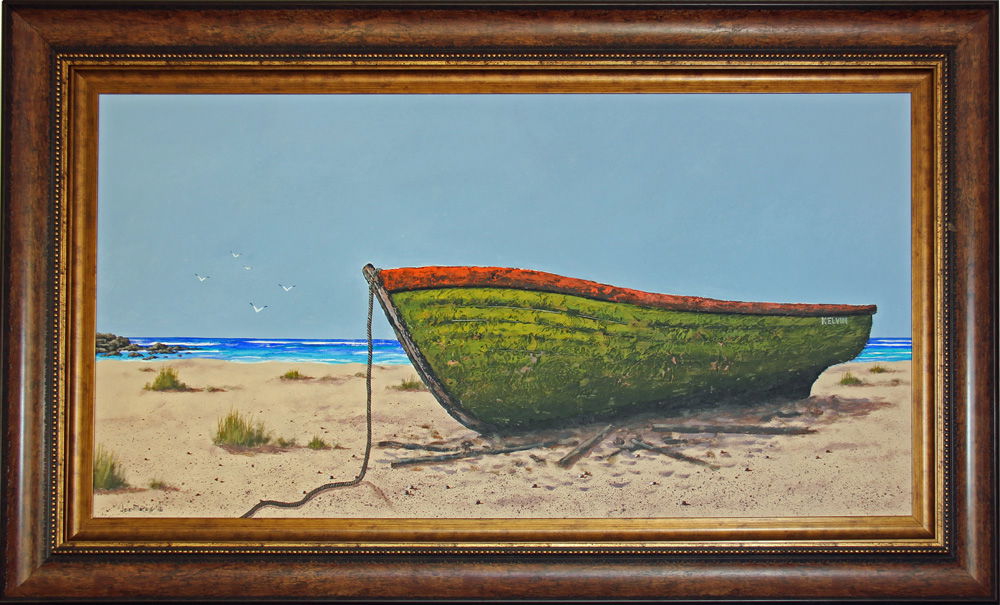
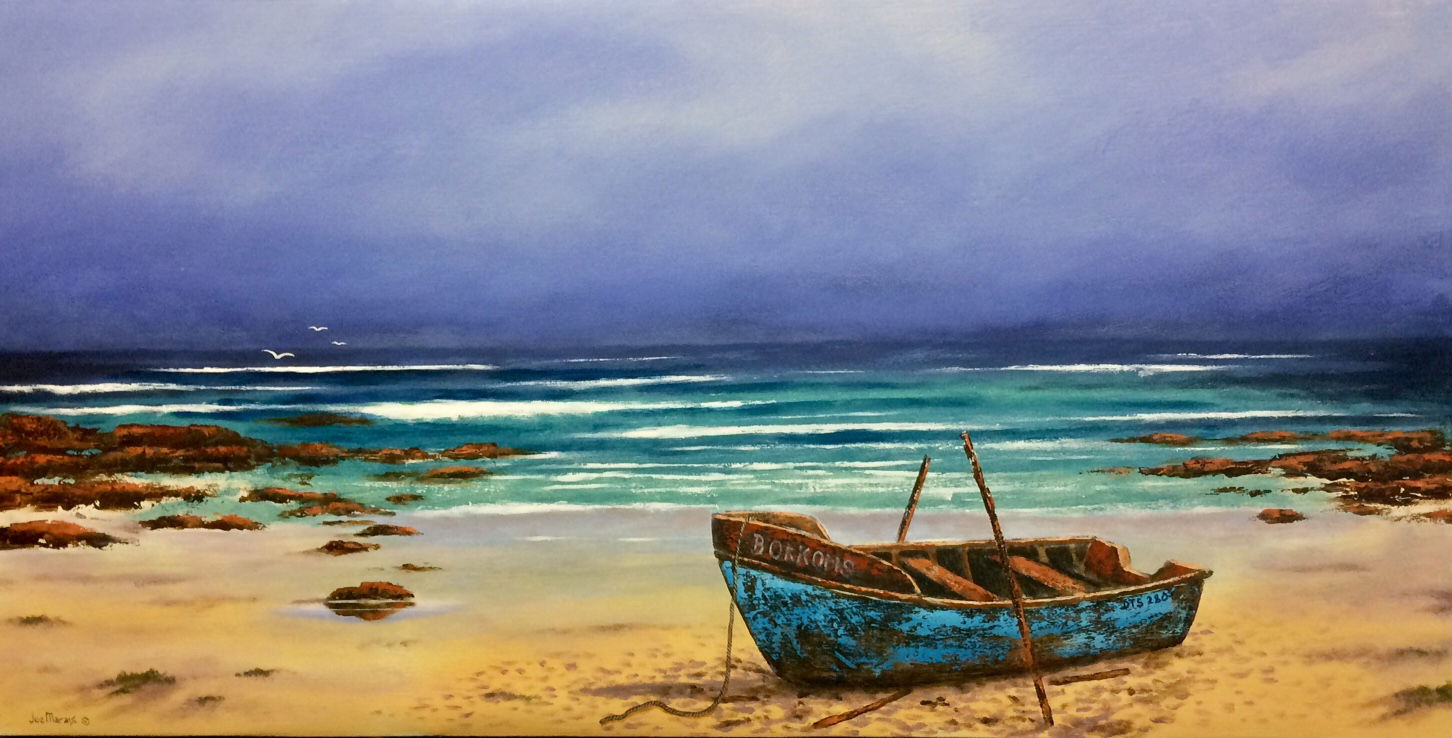
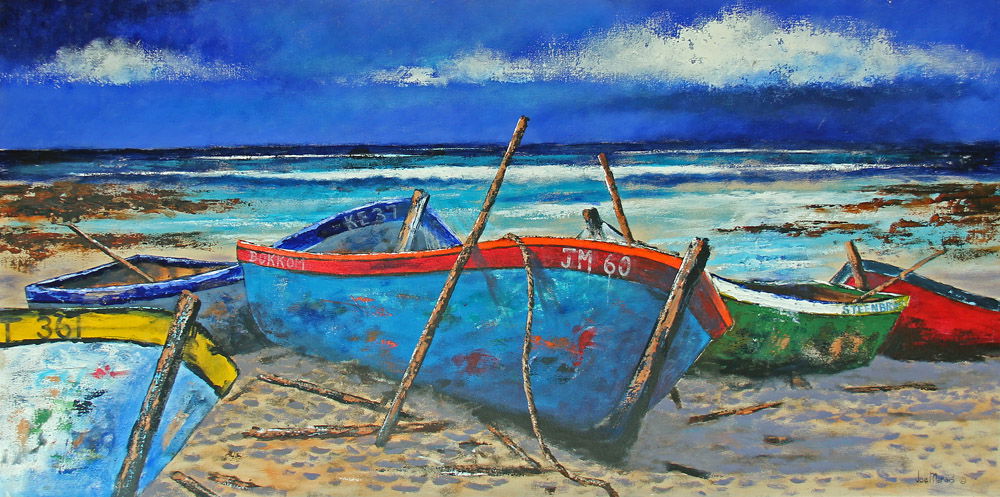
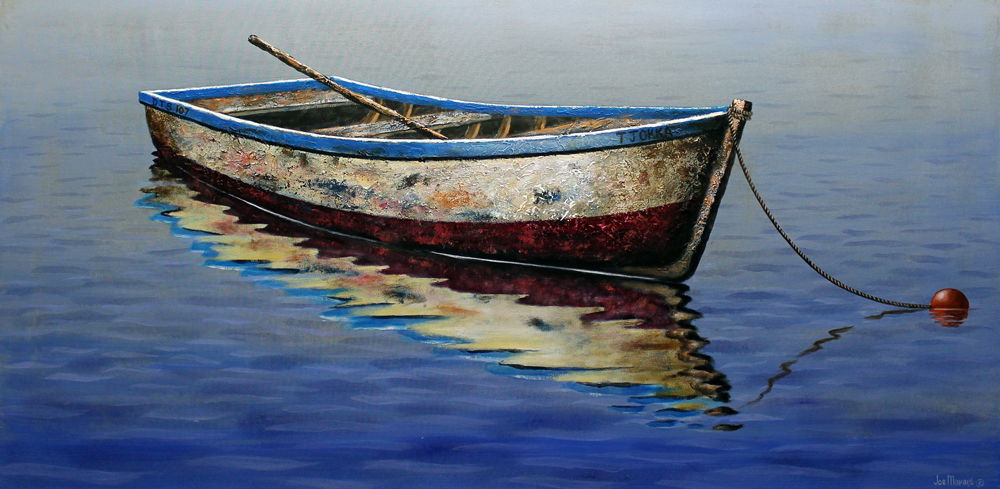
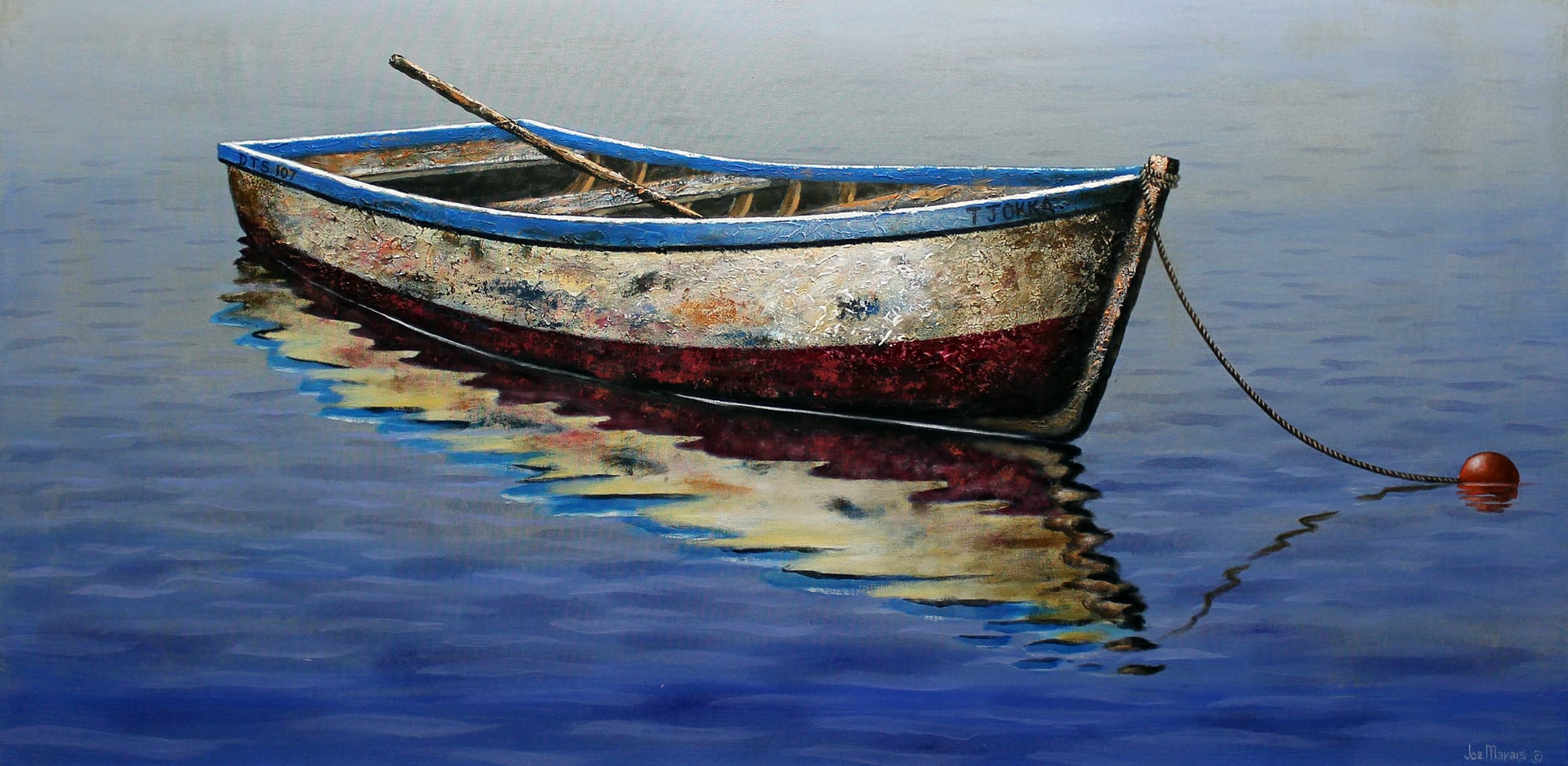
Title: Tranquility Original Acrylic Painting on Canvas Measurements:1200 x 600mm Box Mounted This old boat has lots of stories to tell over many years, through good and bad times! His reflection is tranquil, peaceful, and in harmony with the surroundings.
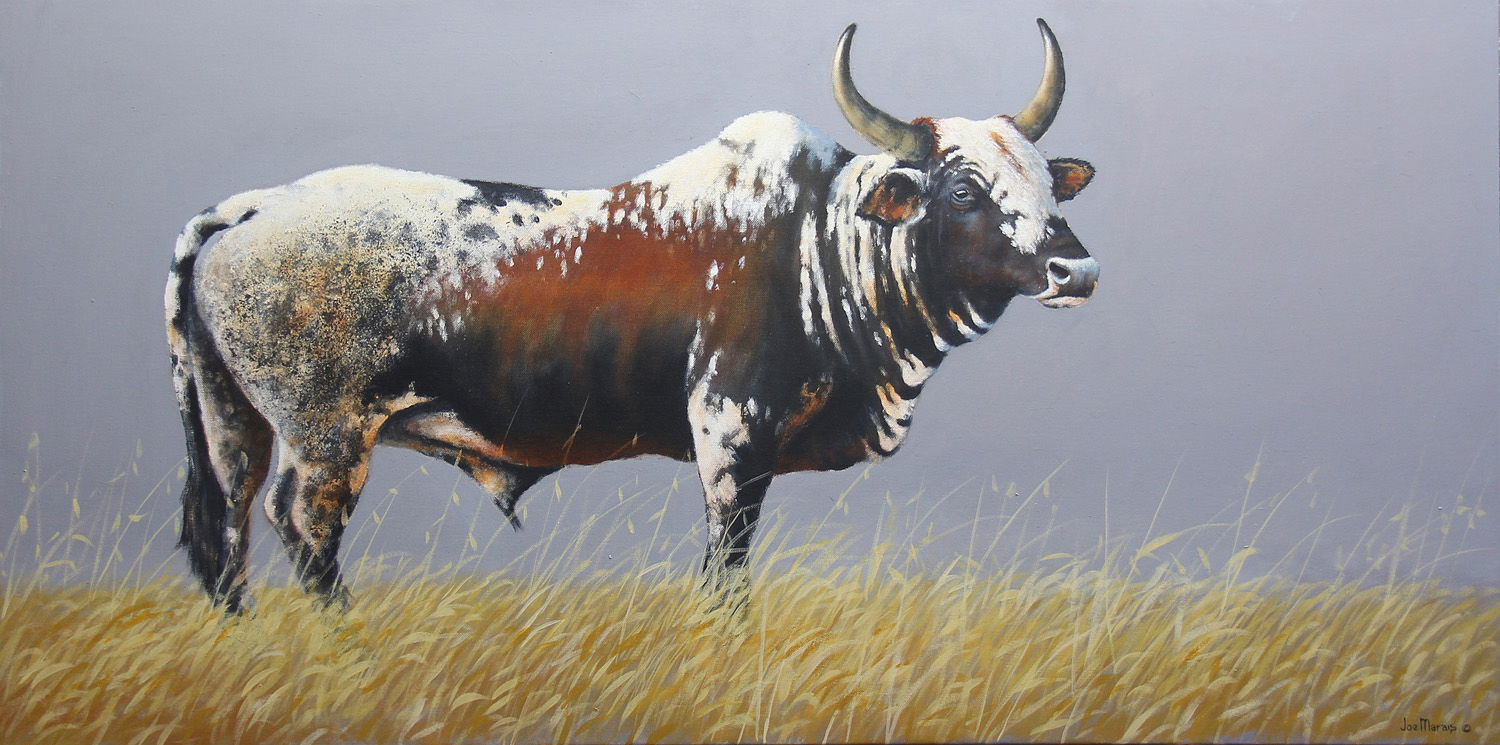
Ndumo by Joe Marais
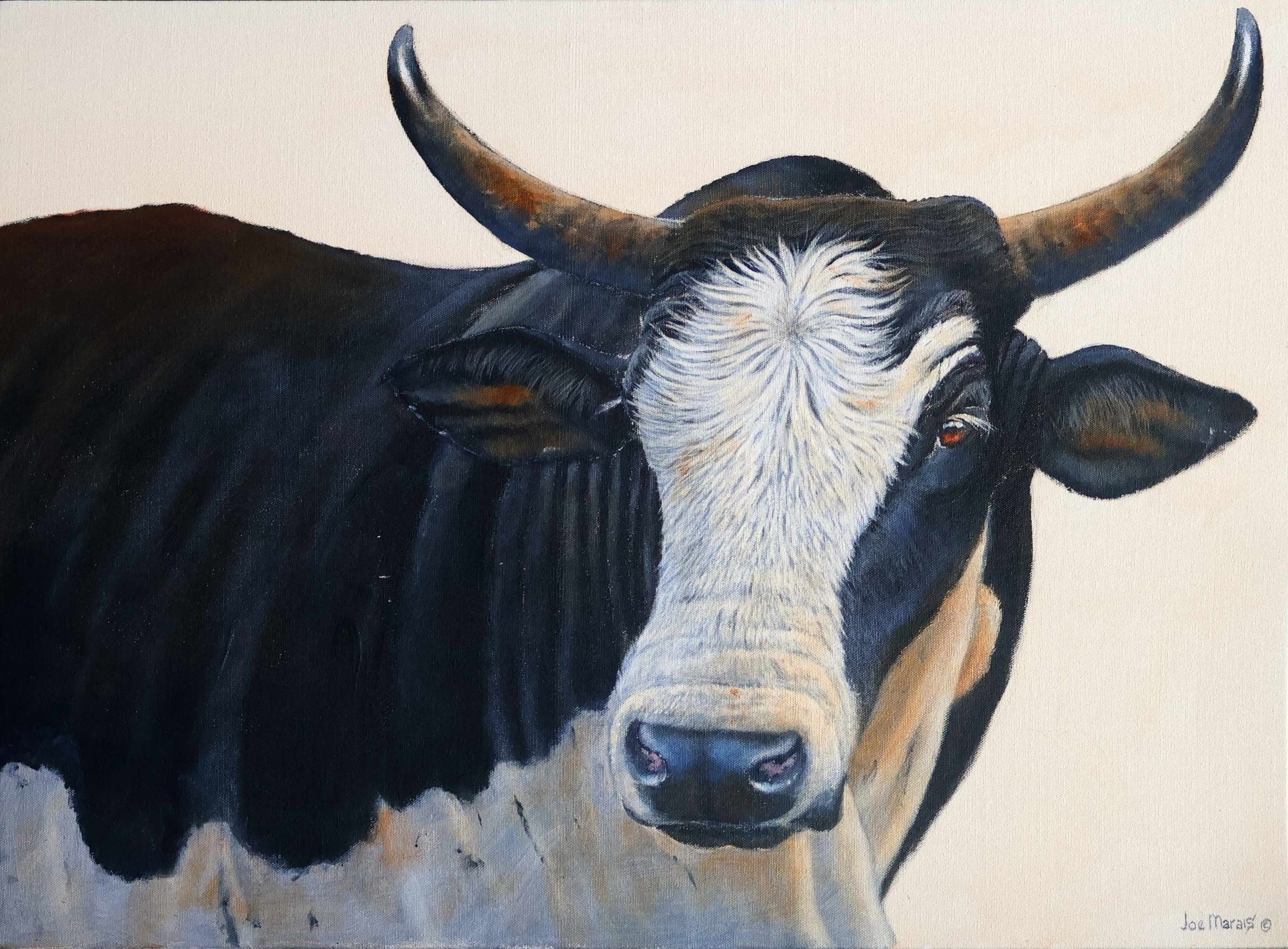
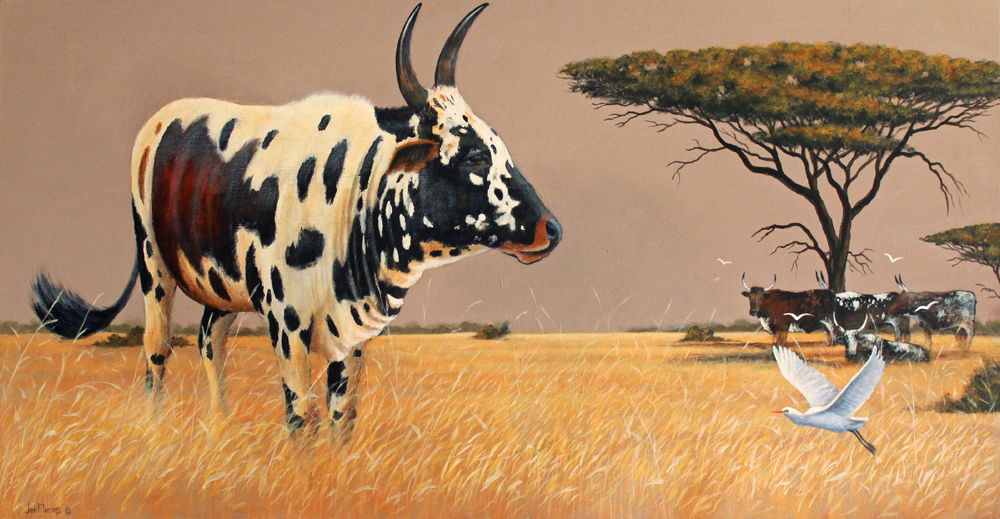
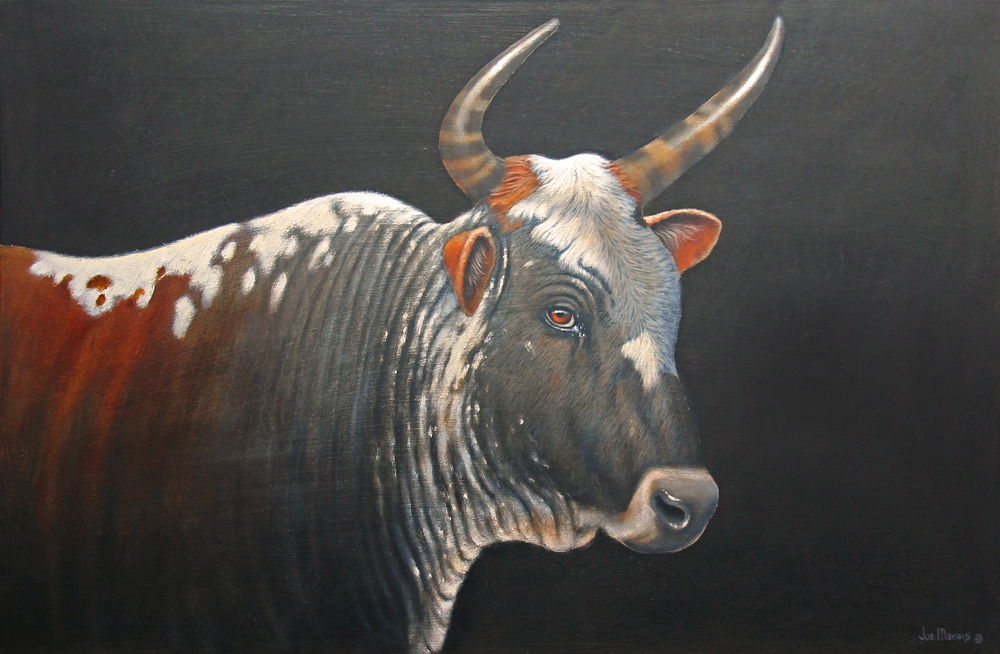
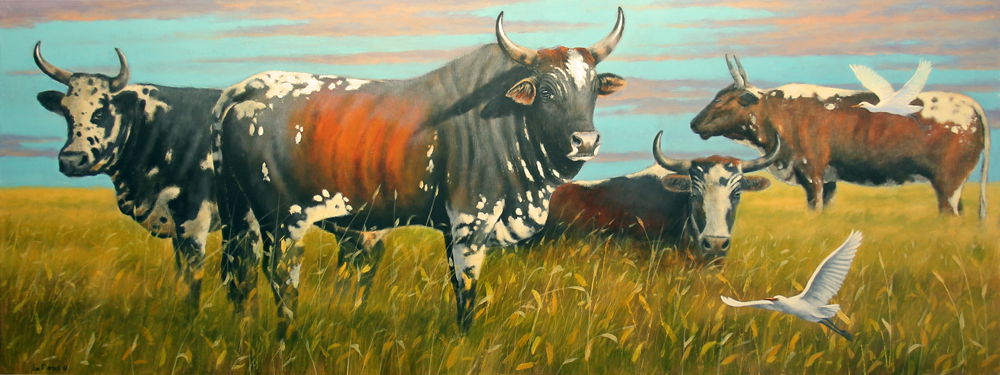
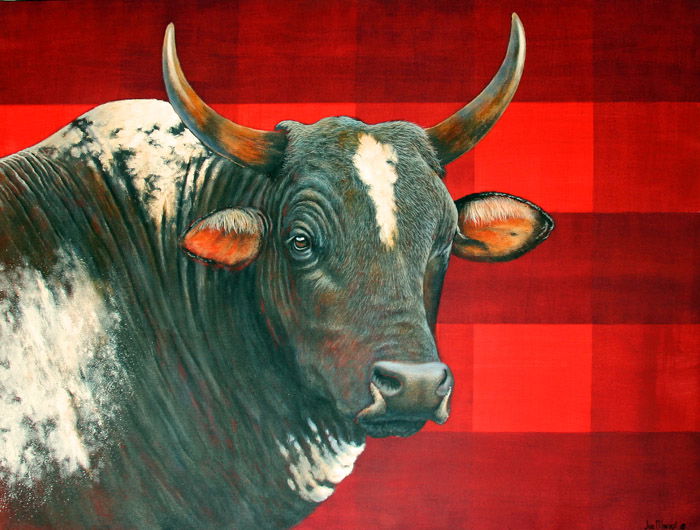
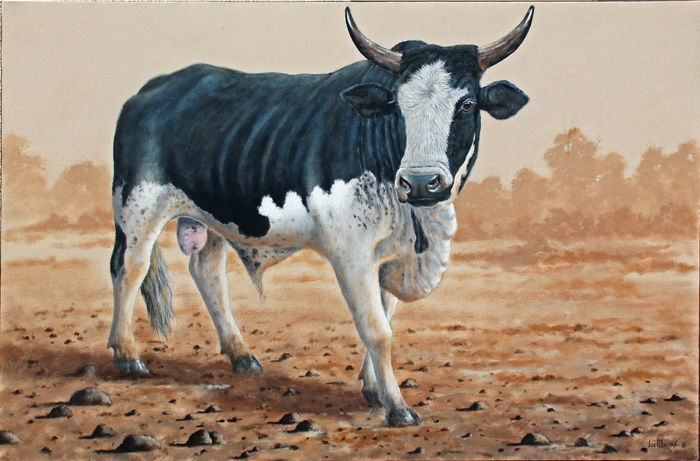
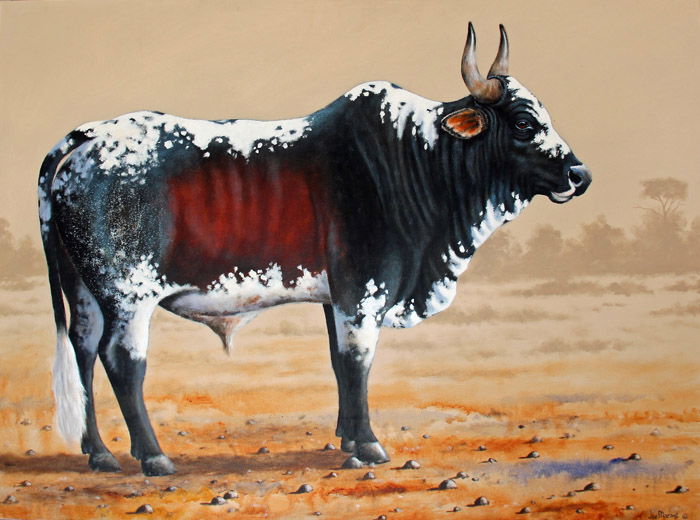
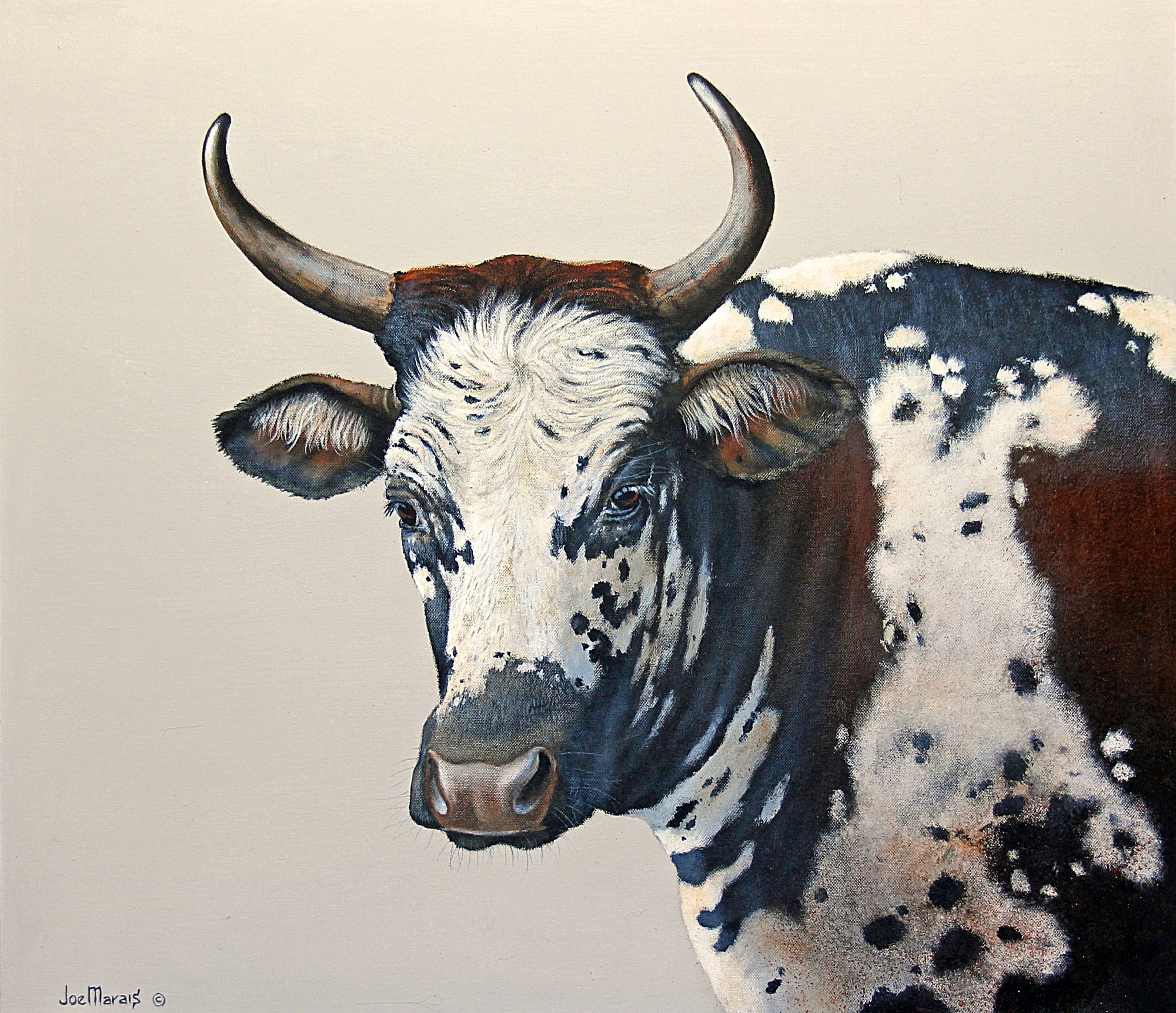
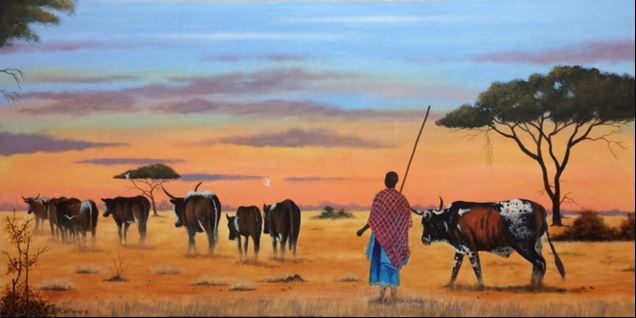
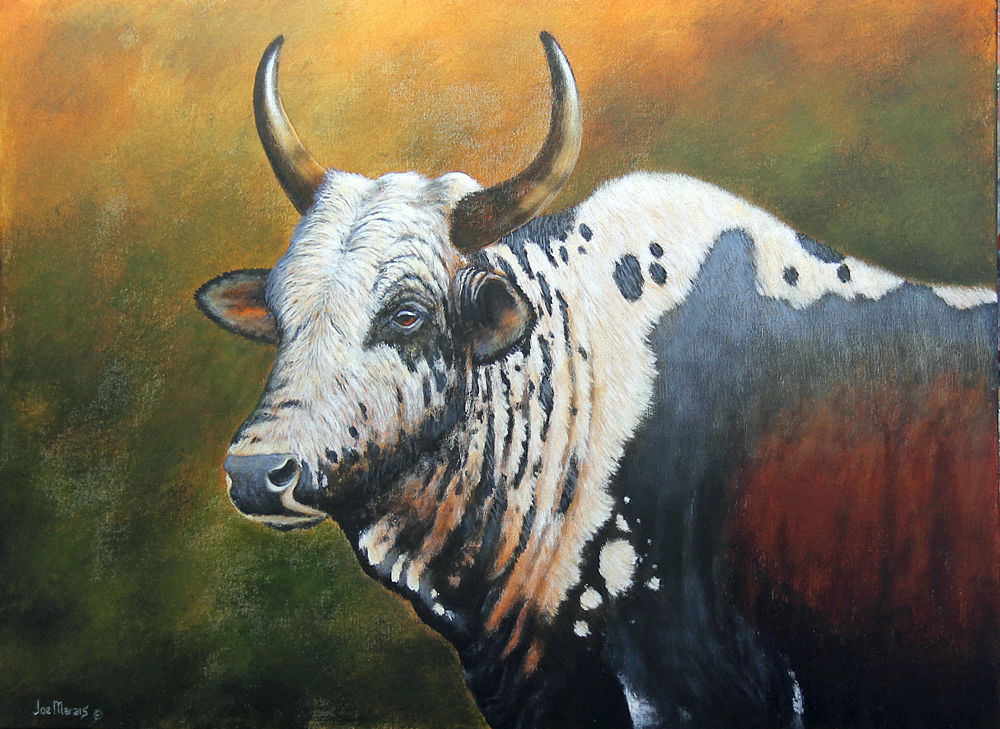
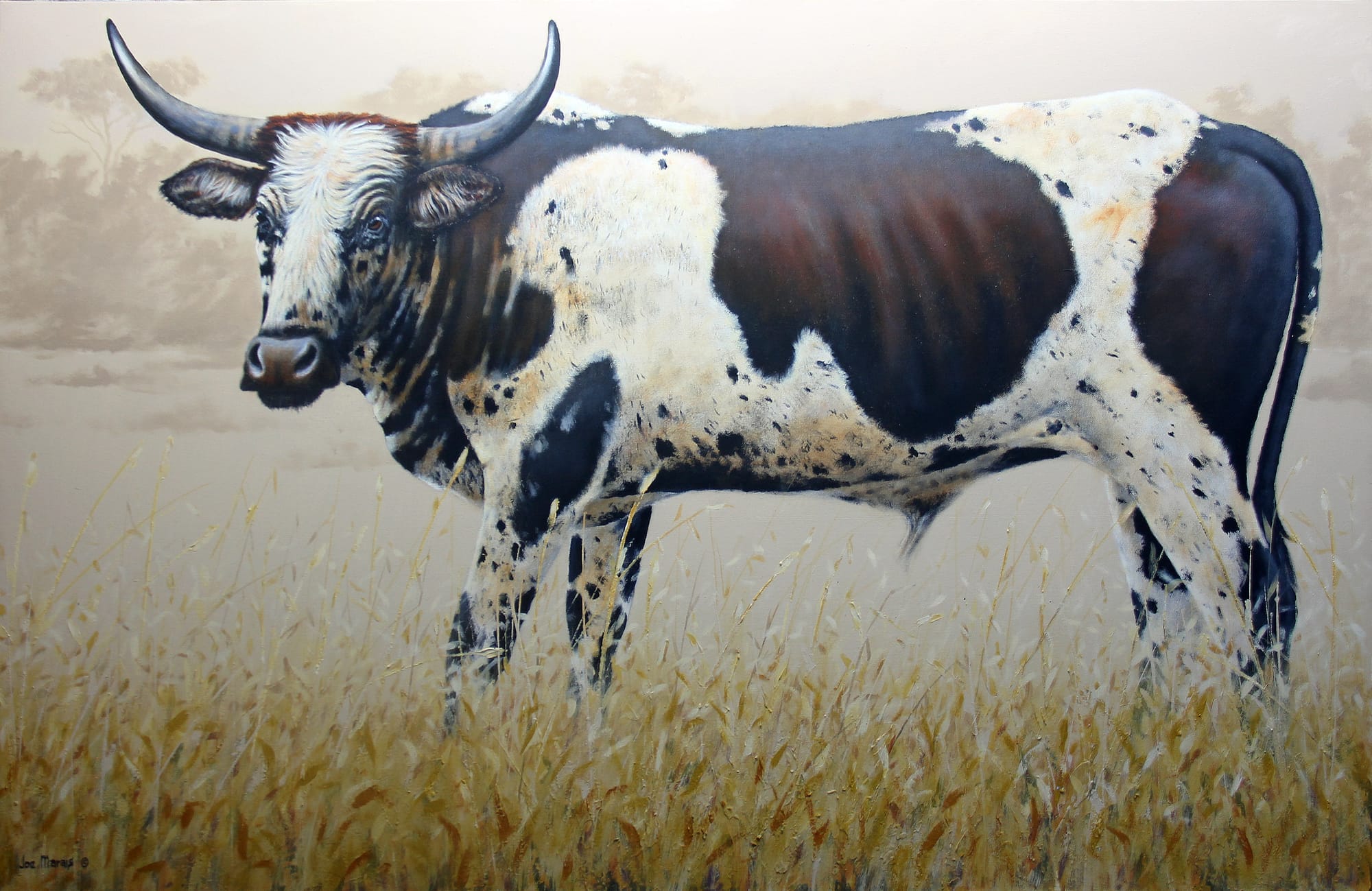
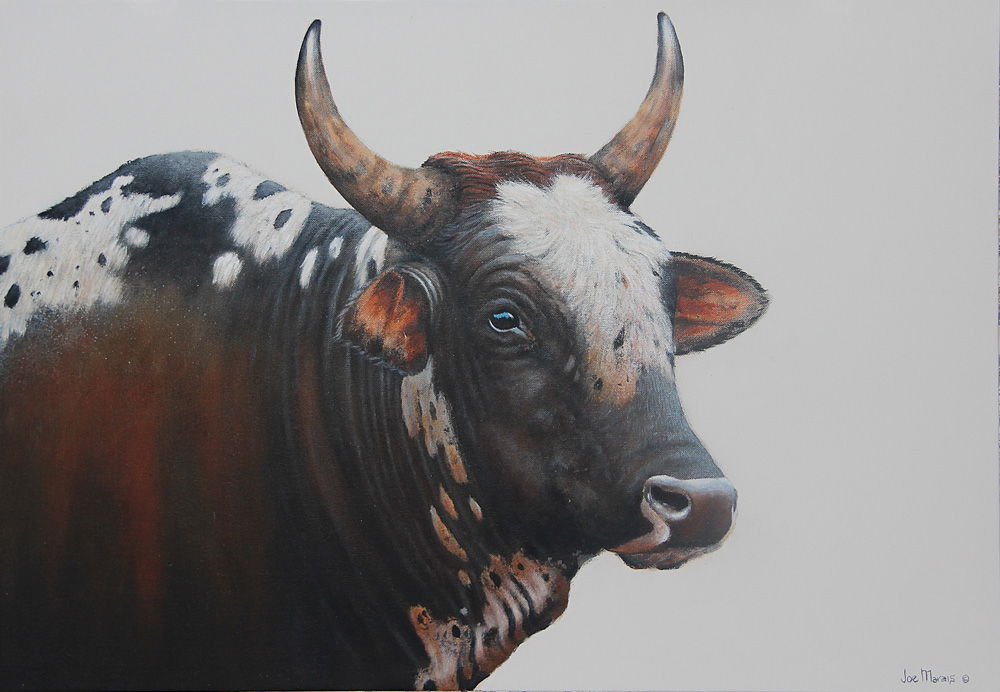
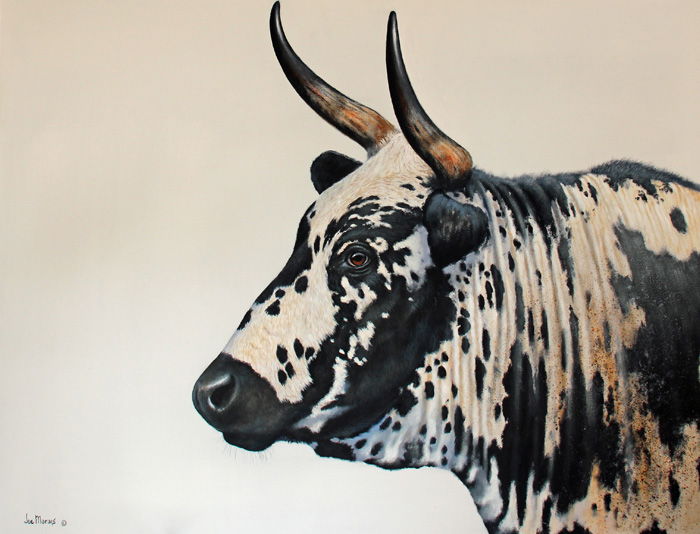
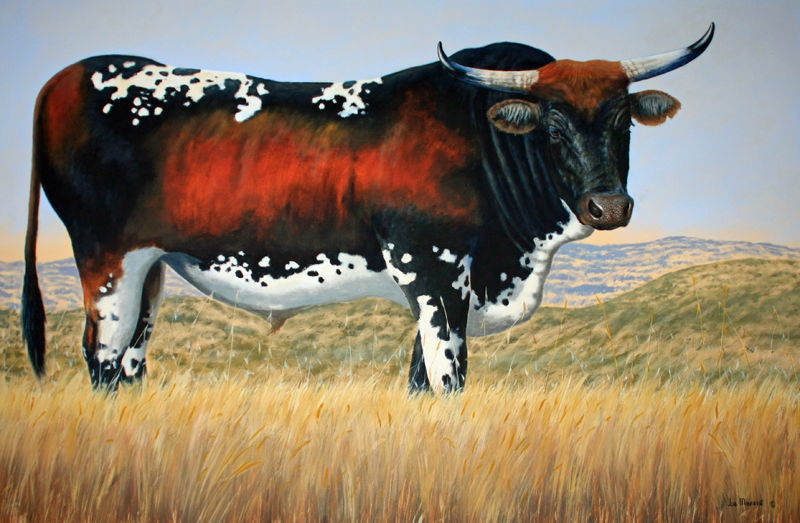
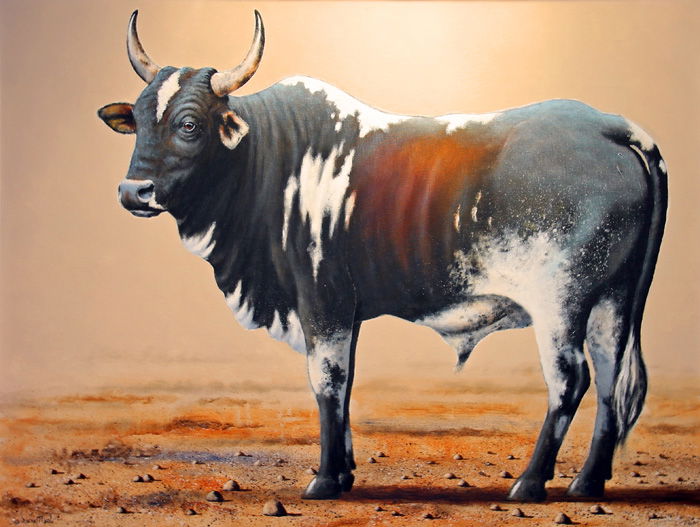
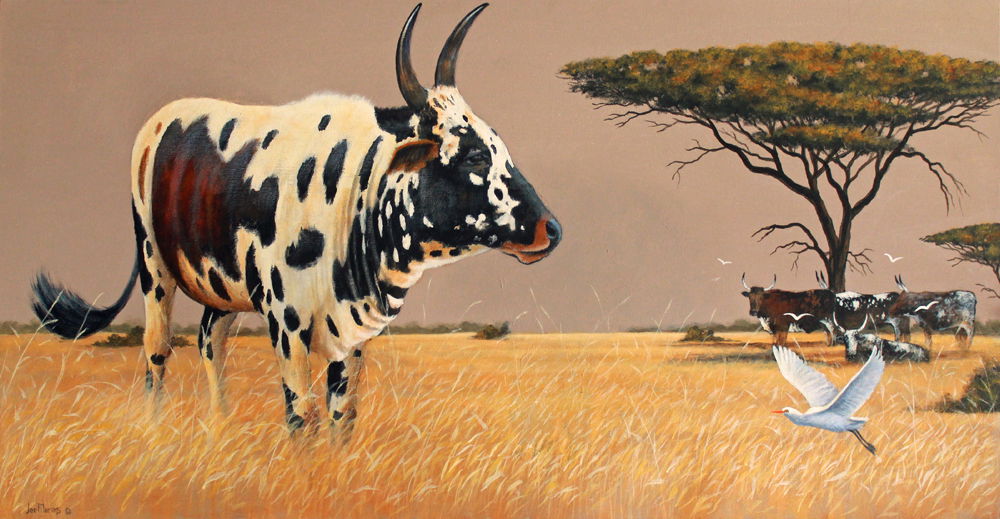
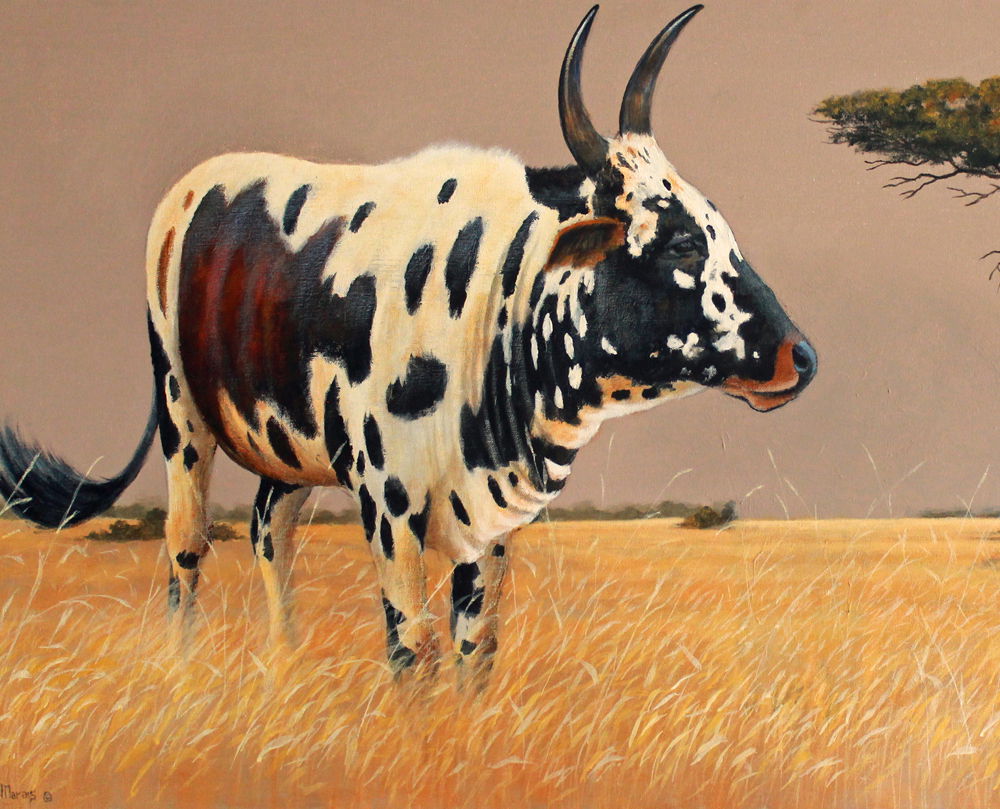
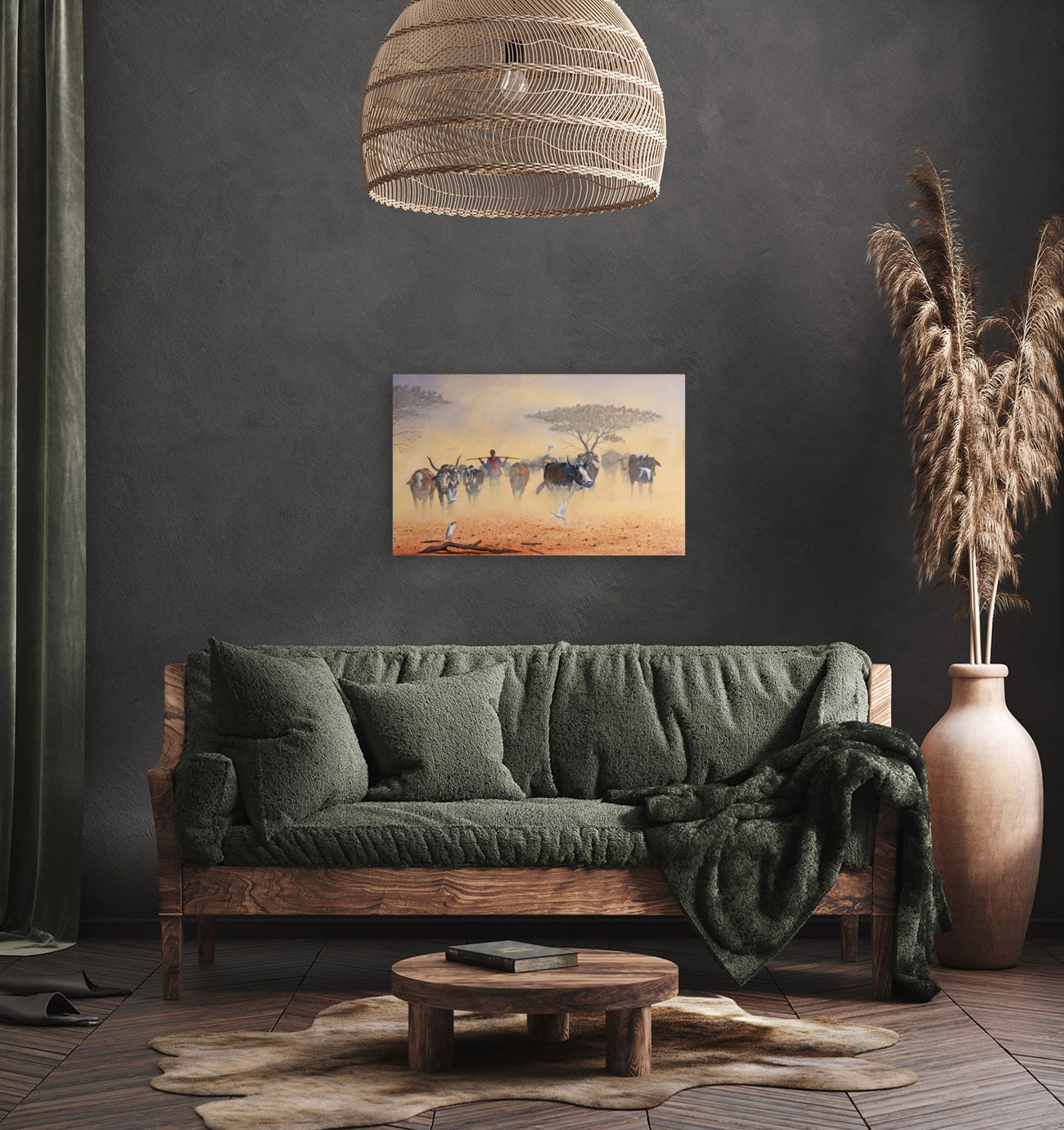
Title: Ndumo Original Acrylic Painting on Canvas Measurements: 120 x 60cm Block Mounted The Nguni is widely acknowledged to be the outstanding beef breed for optimal production under harsh African conditions. South Africa's indigenous Nguni cattle, long the mainstay of traditional Zulu culture, are possibly the most beautiful cattle in the world, with their variously patterned and multicoloured hides everywhere in demand.
Painted Horse by Joe Marais
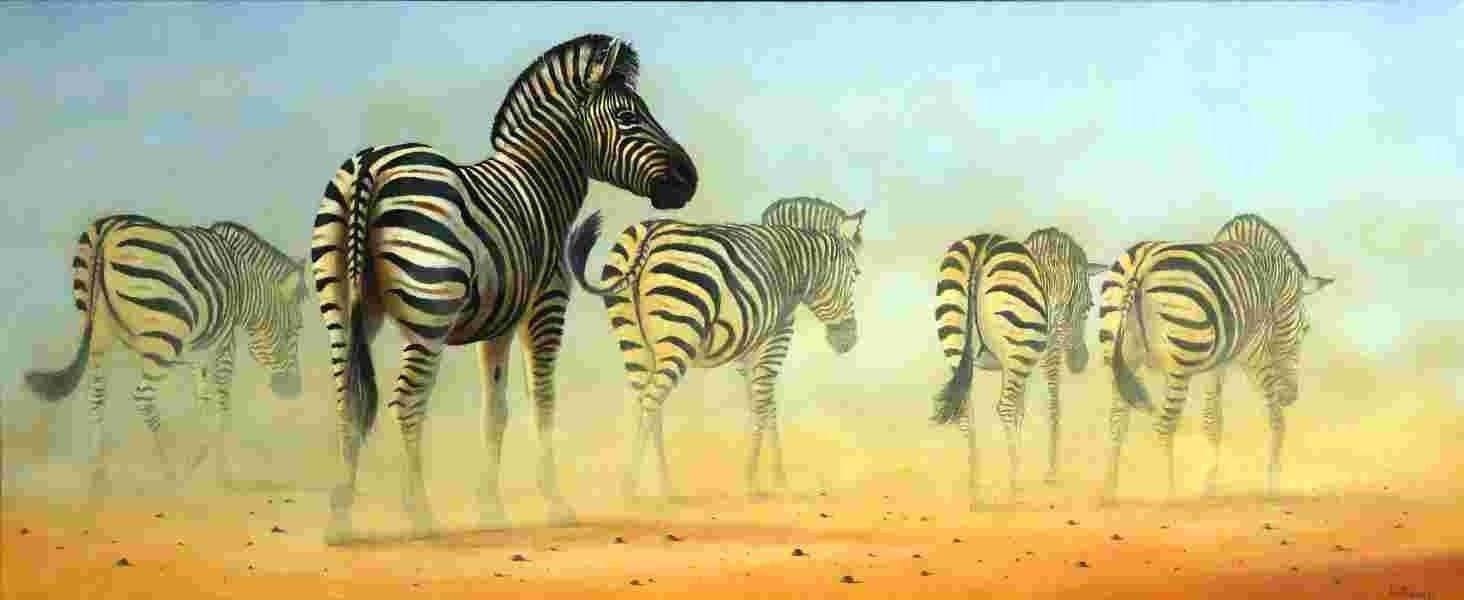
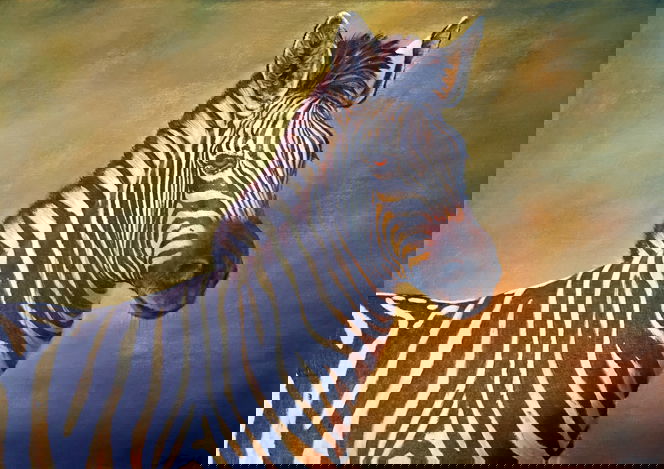
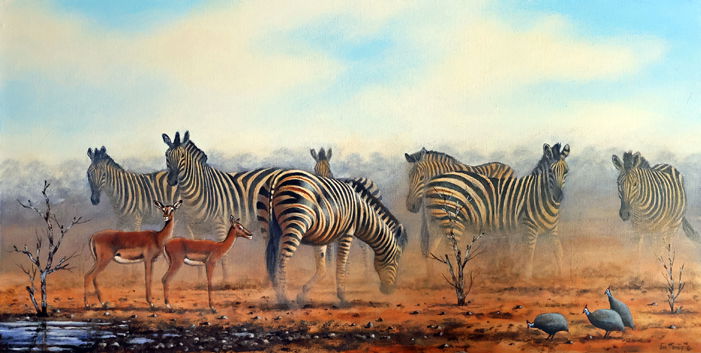
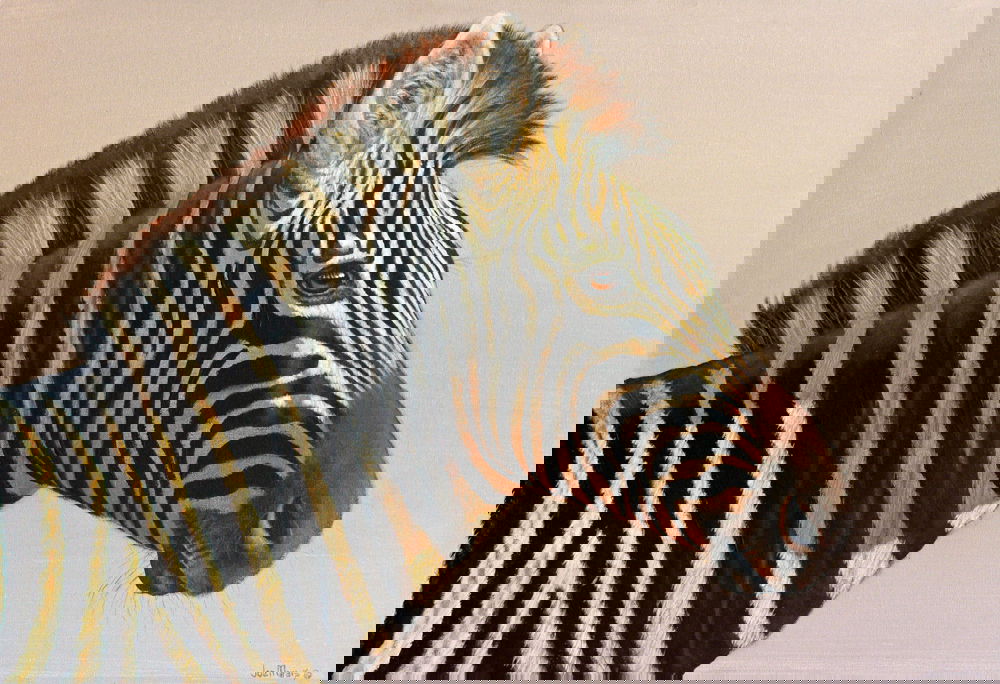
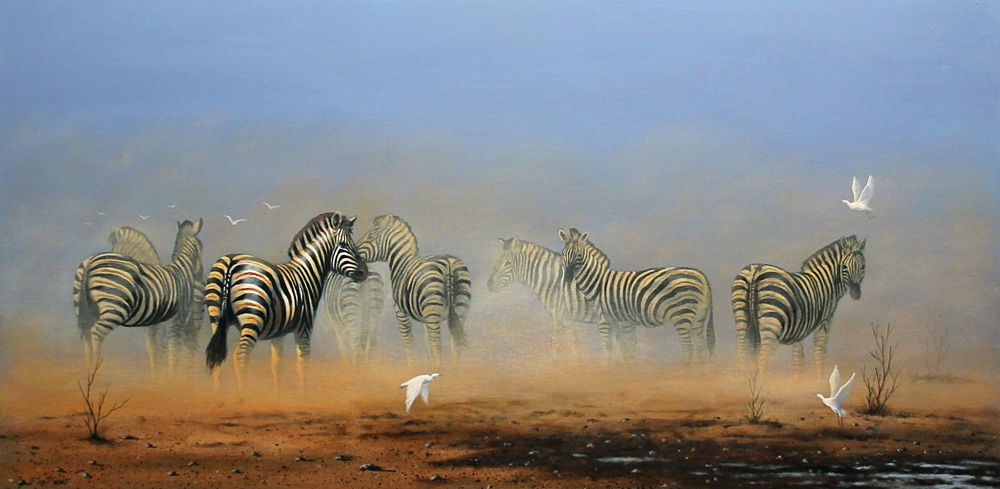
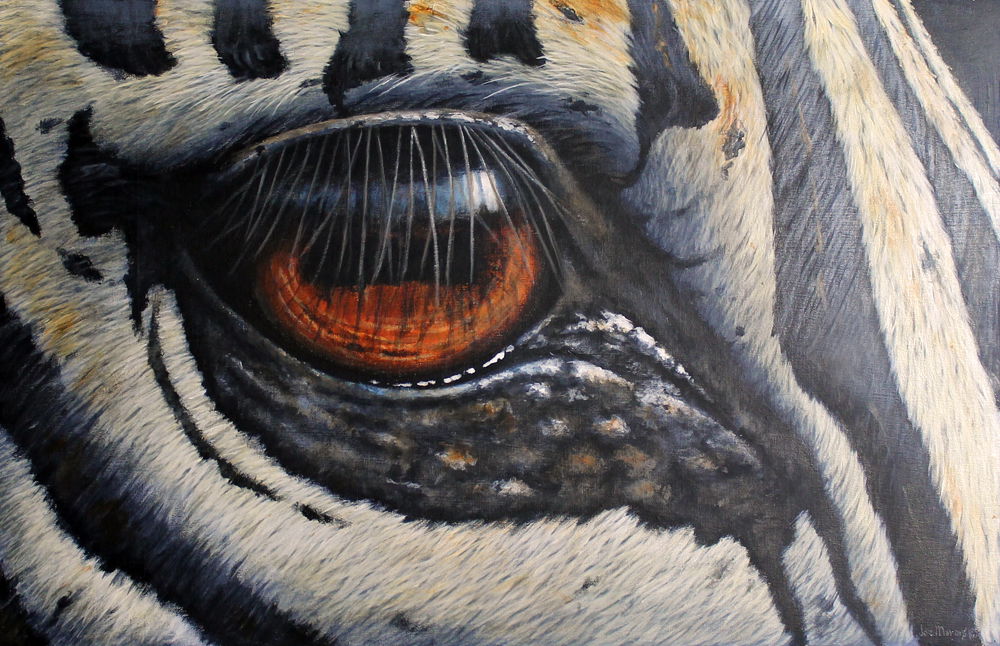
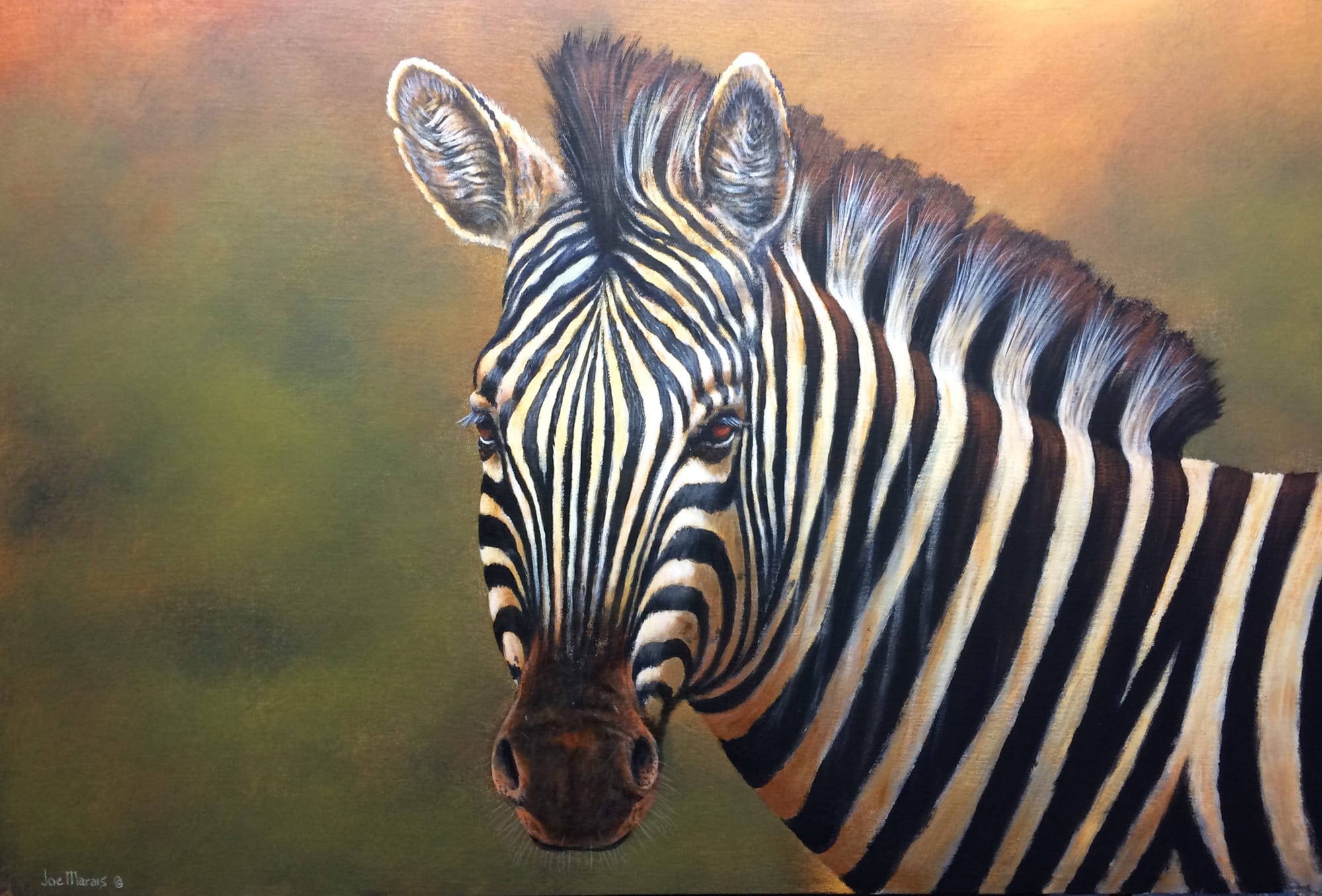
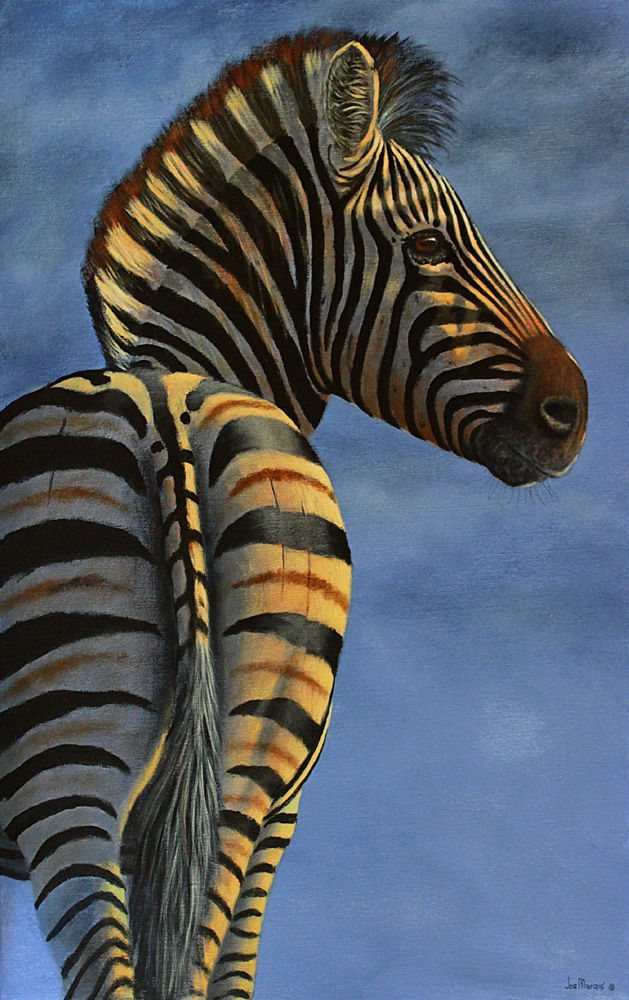
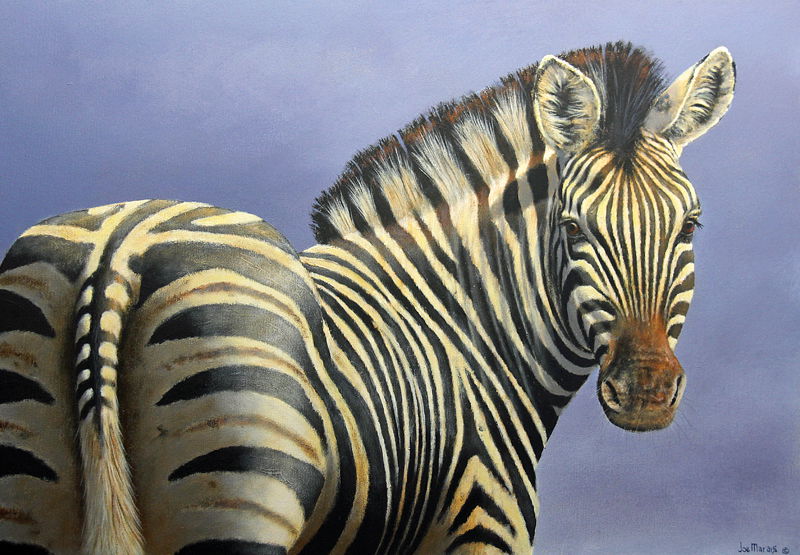
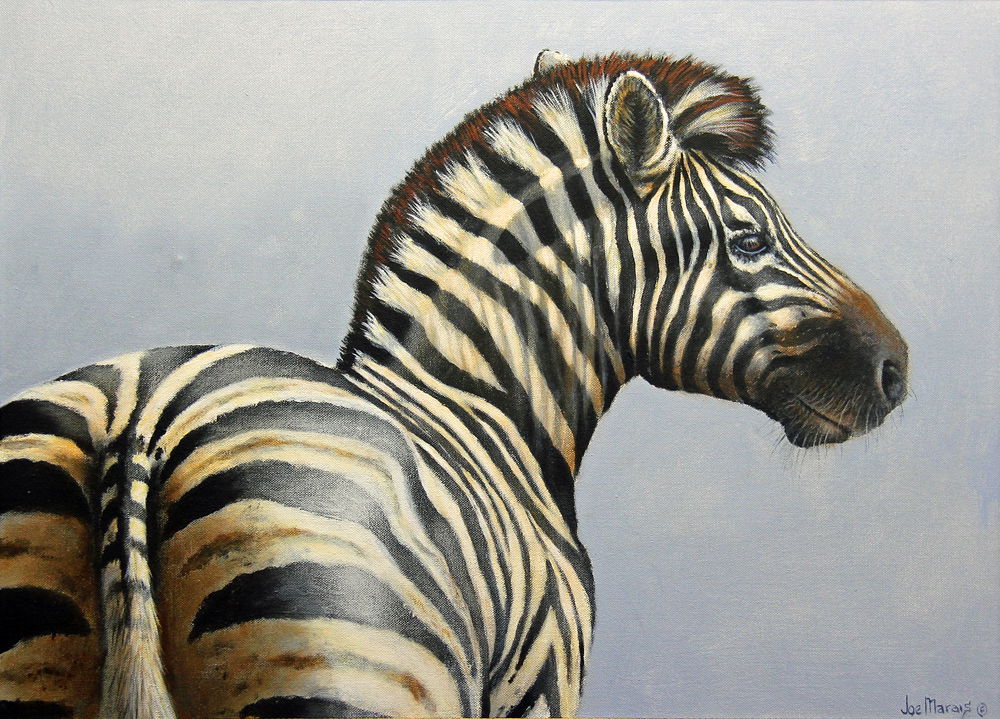
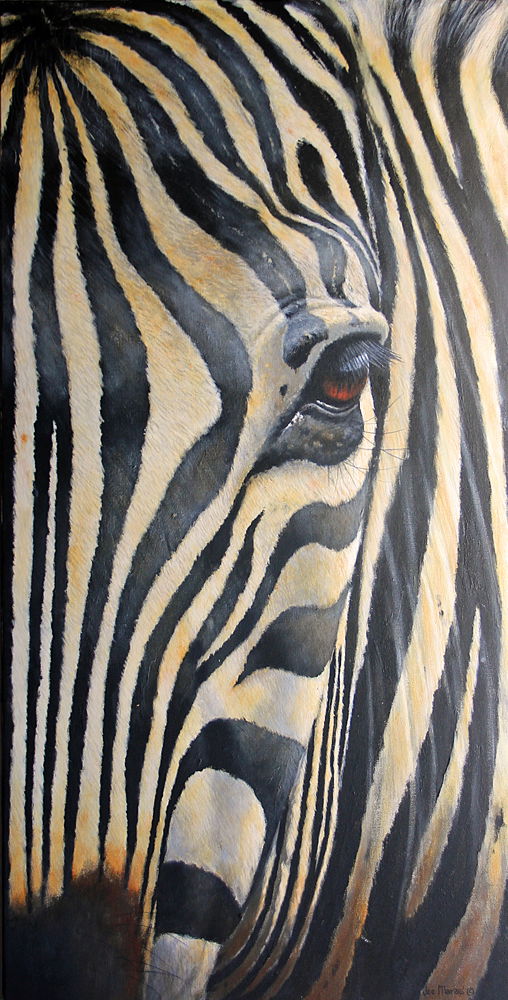
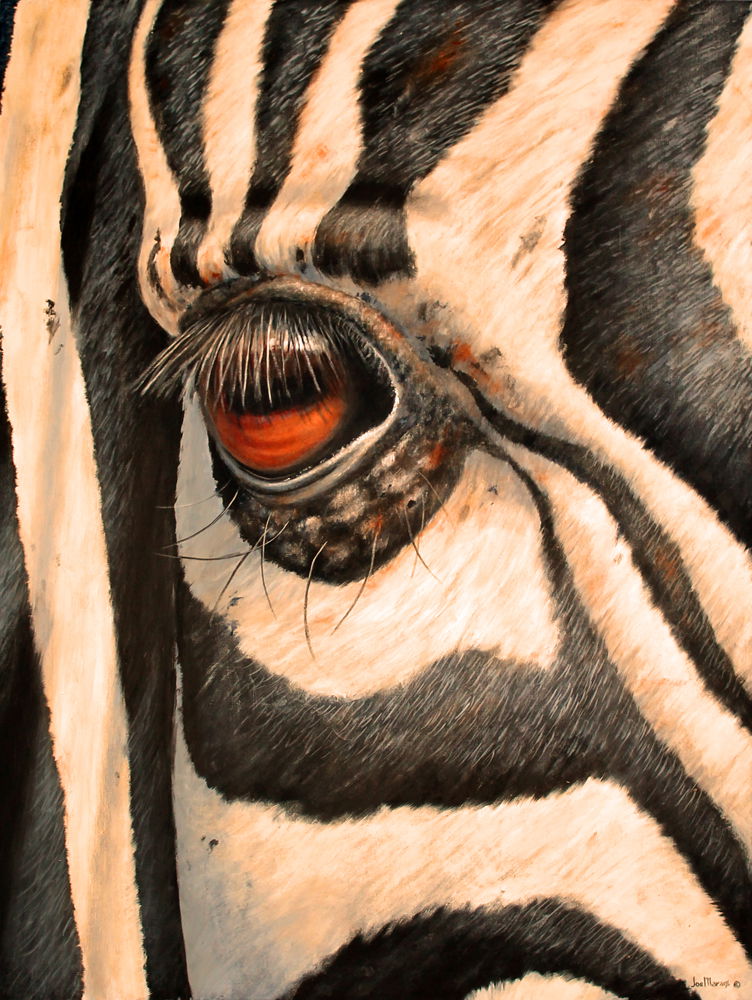
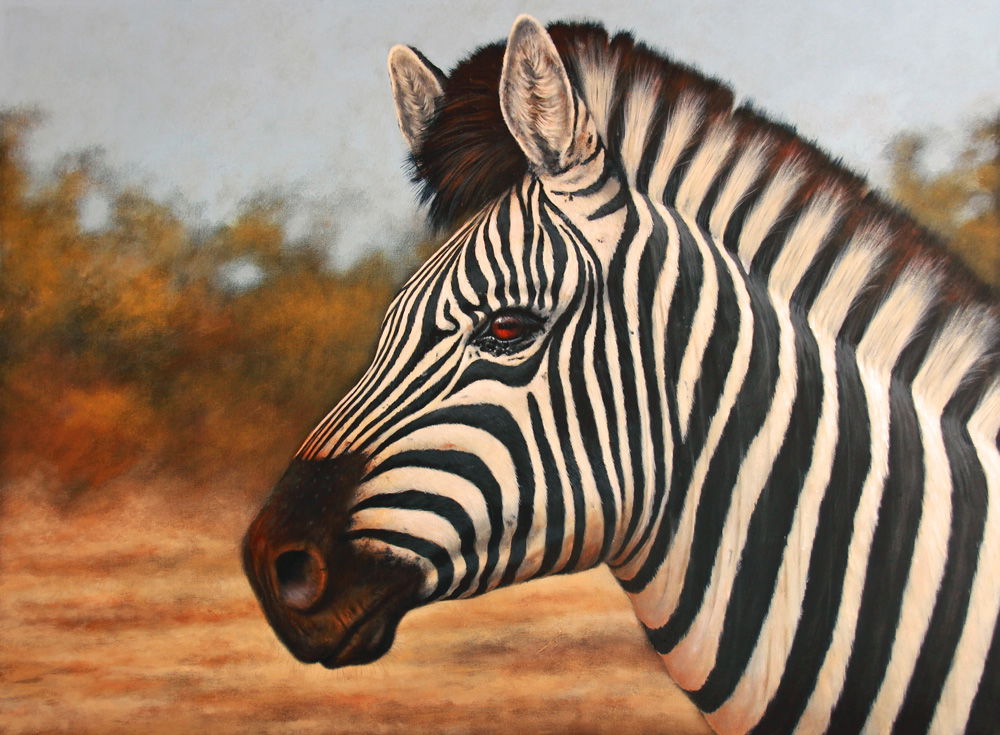
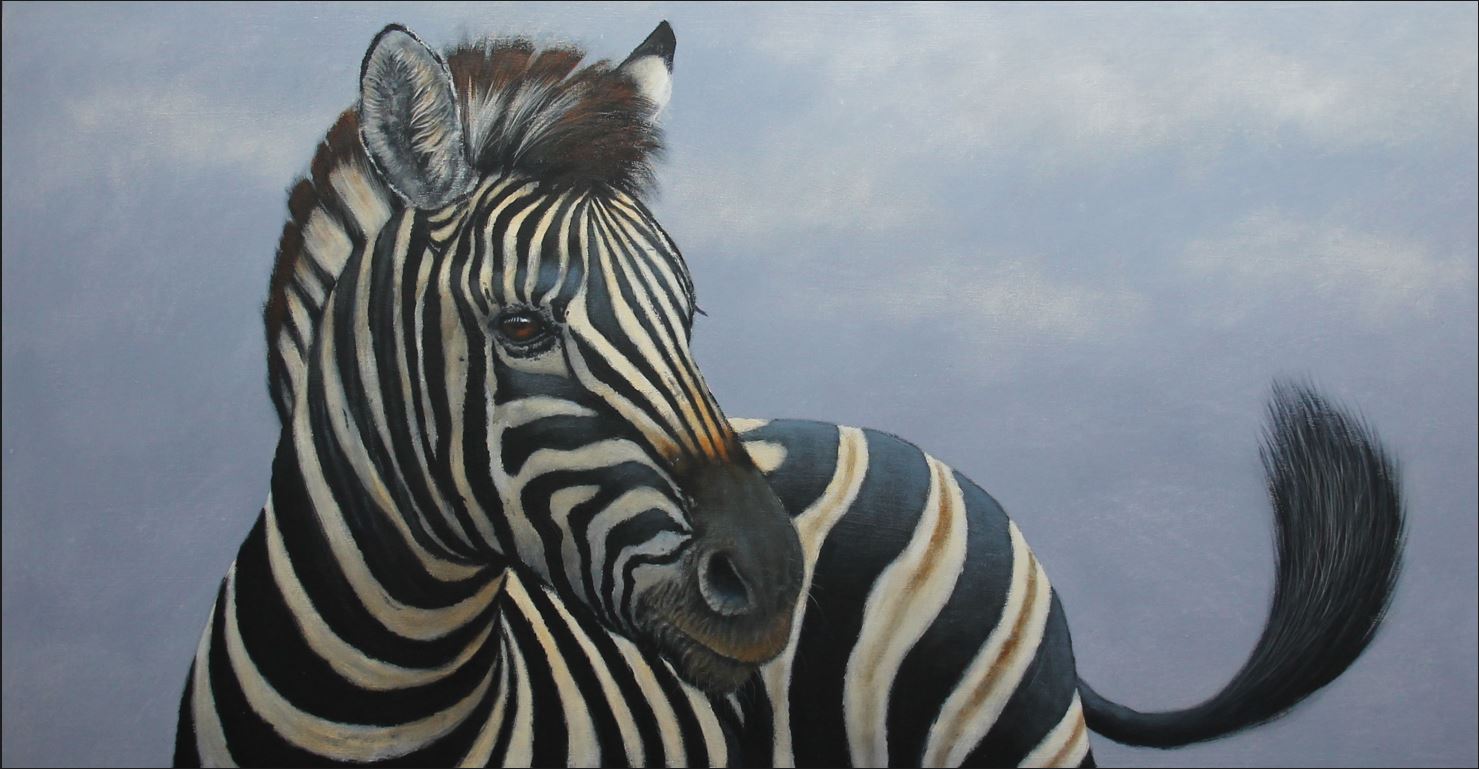
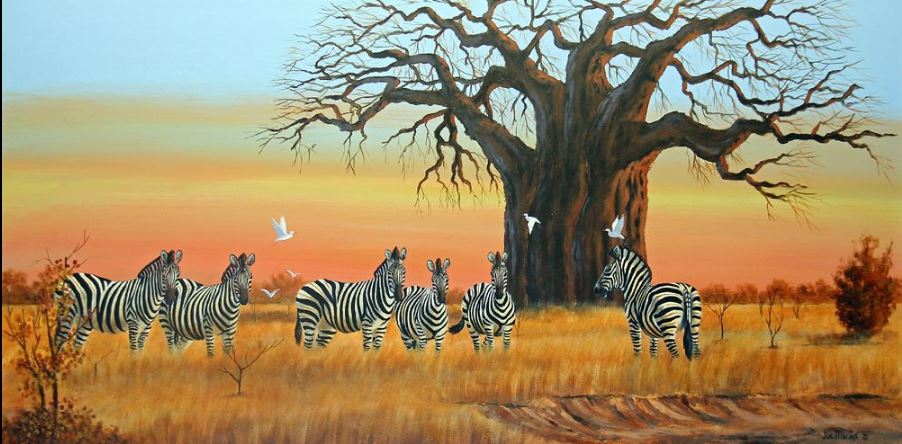
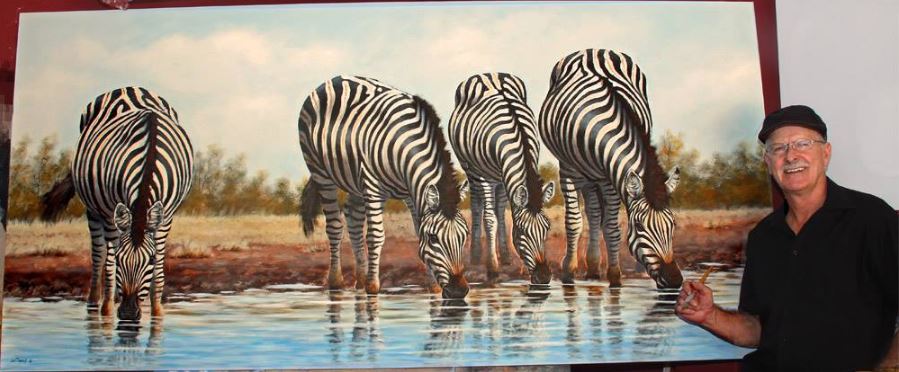
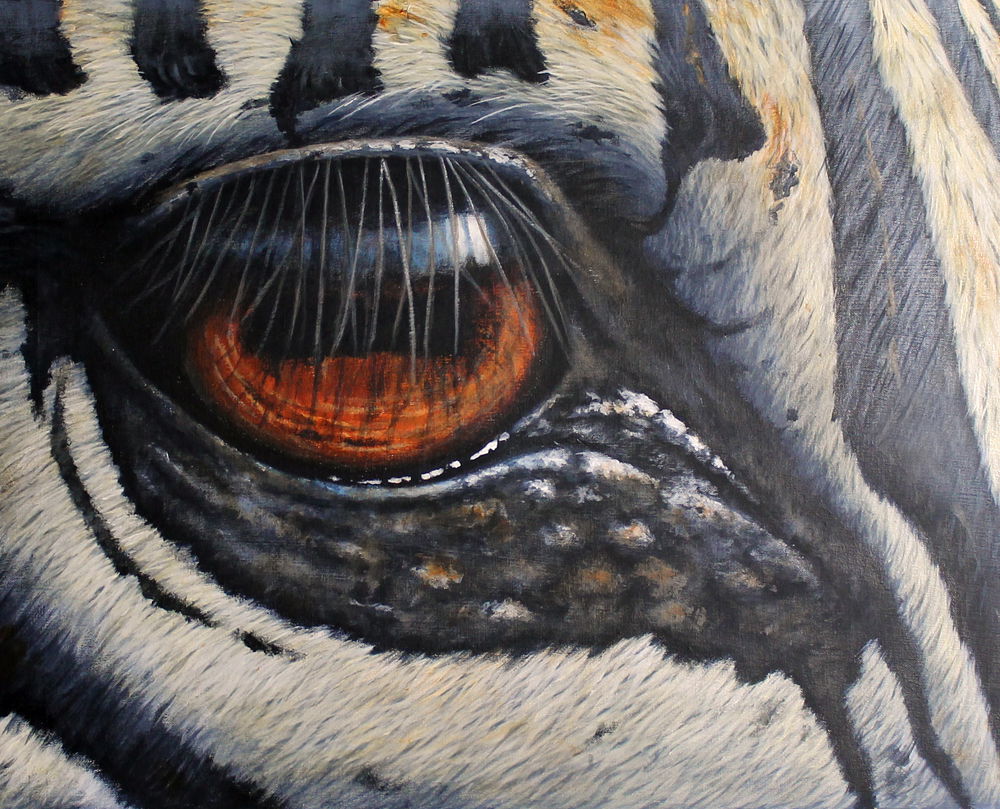
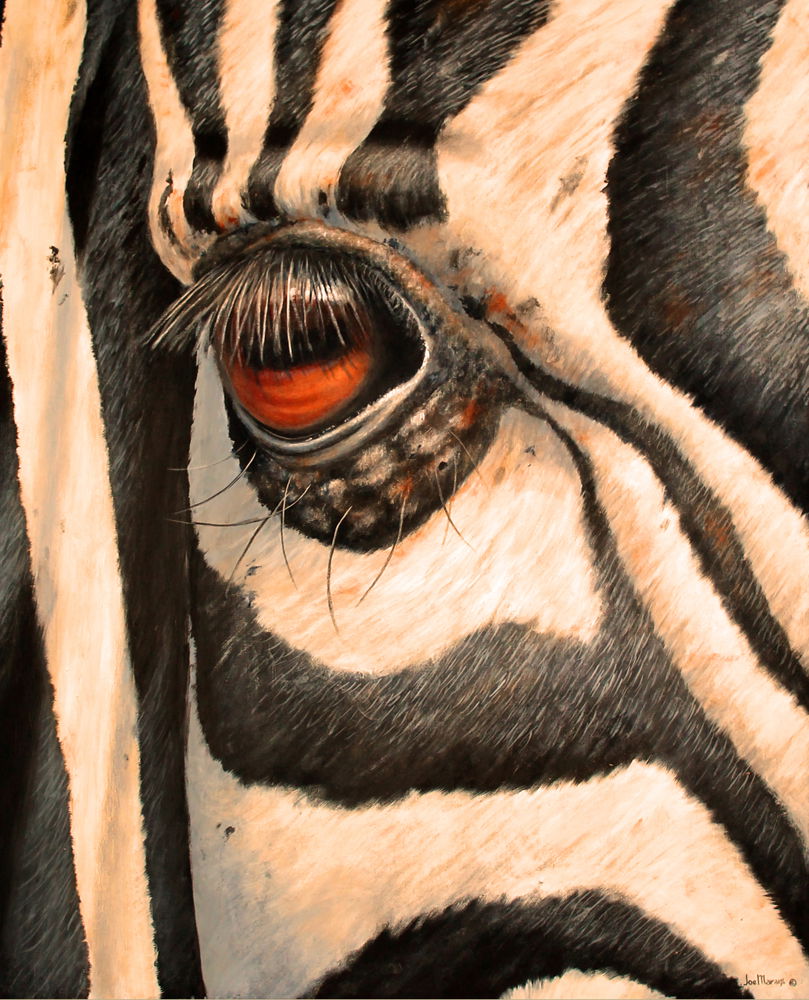
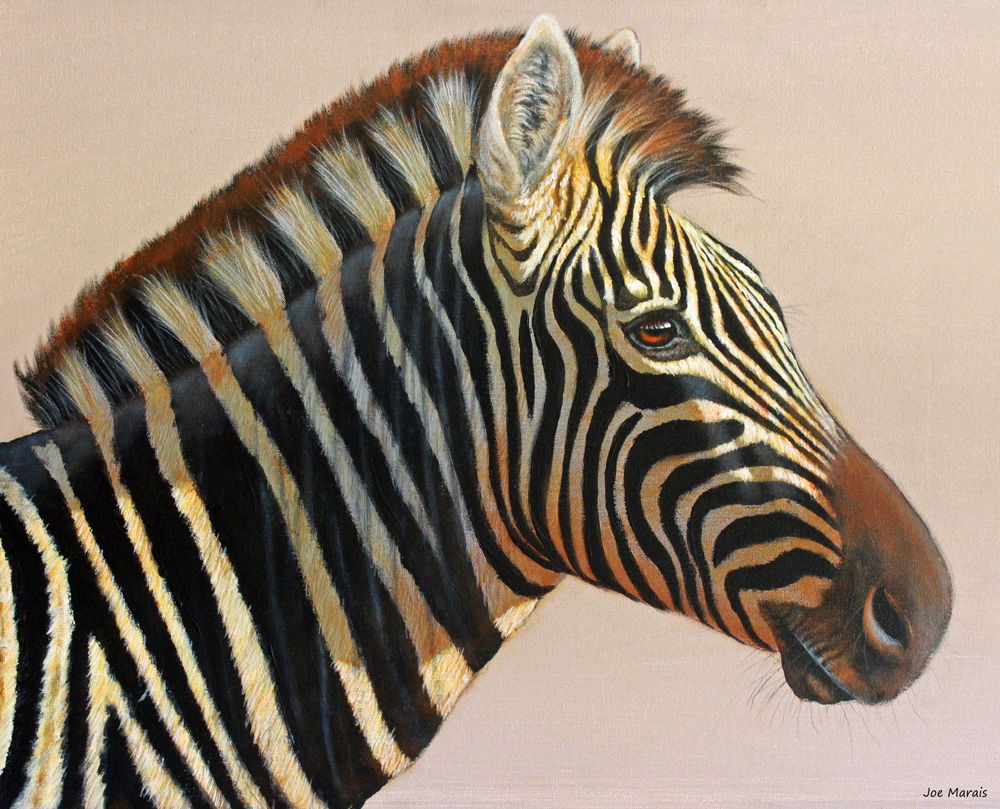
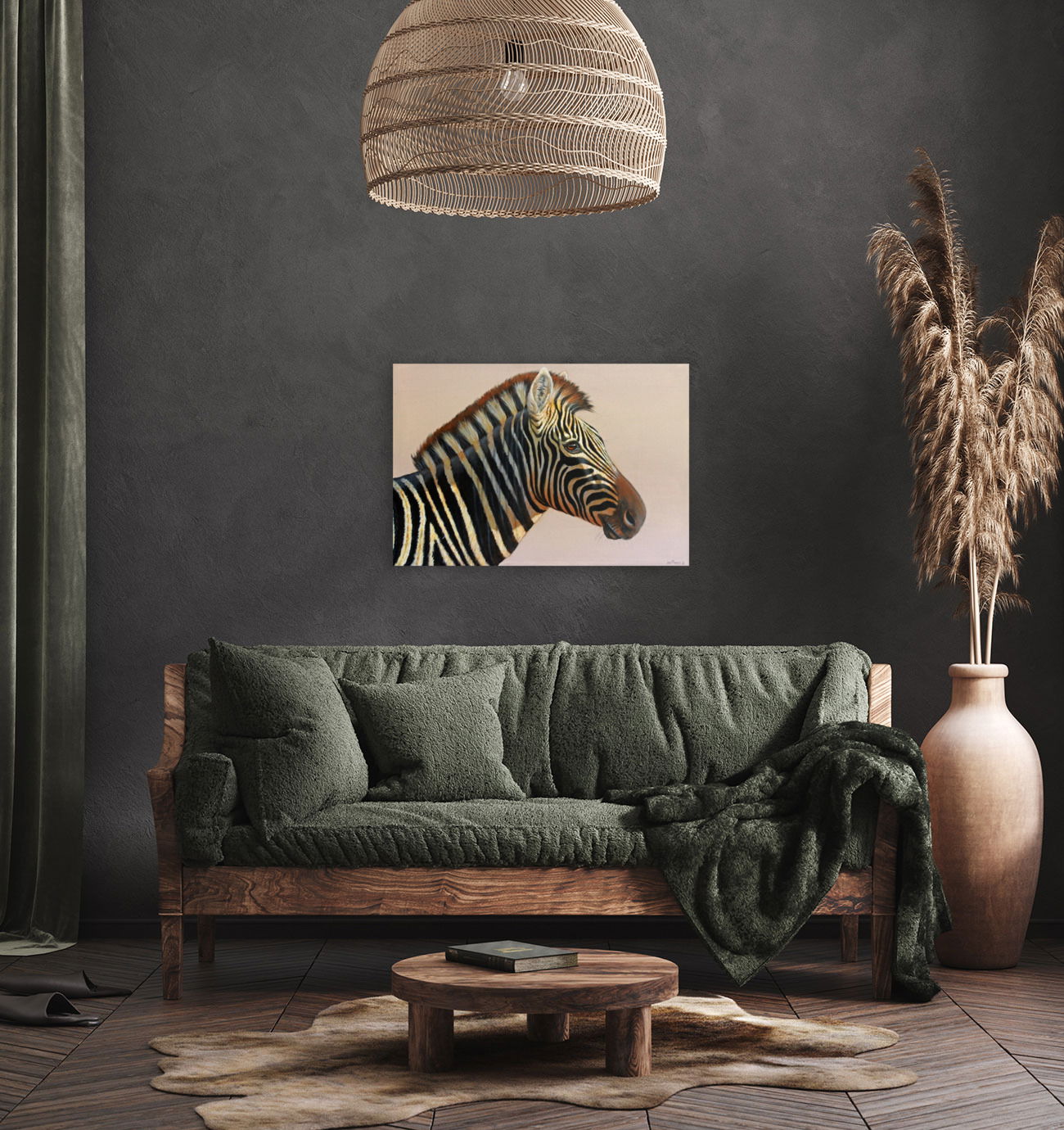
Title: Painted Horse Original Acrylic Painting on Canvas Measurements: 86 x 60cm Block Mounted Each zebra has its own unique pattern of distinctive stripes, just as humans have their own unique pattern of fingerprints. Zebras stick together in herds. Within a herd, zebras tend to stay together in smaller family groups. Families are generally made up of a male, several females, and their young.
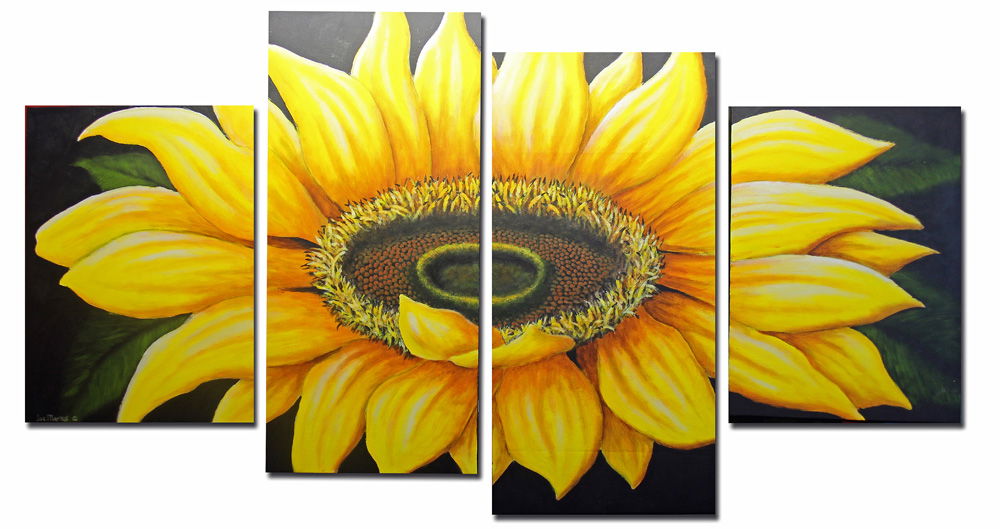
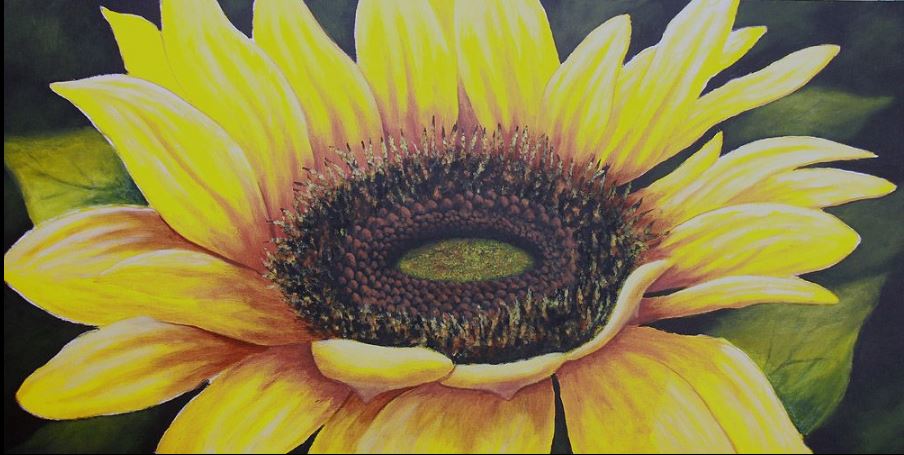
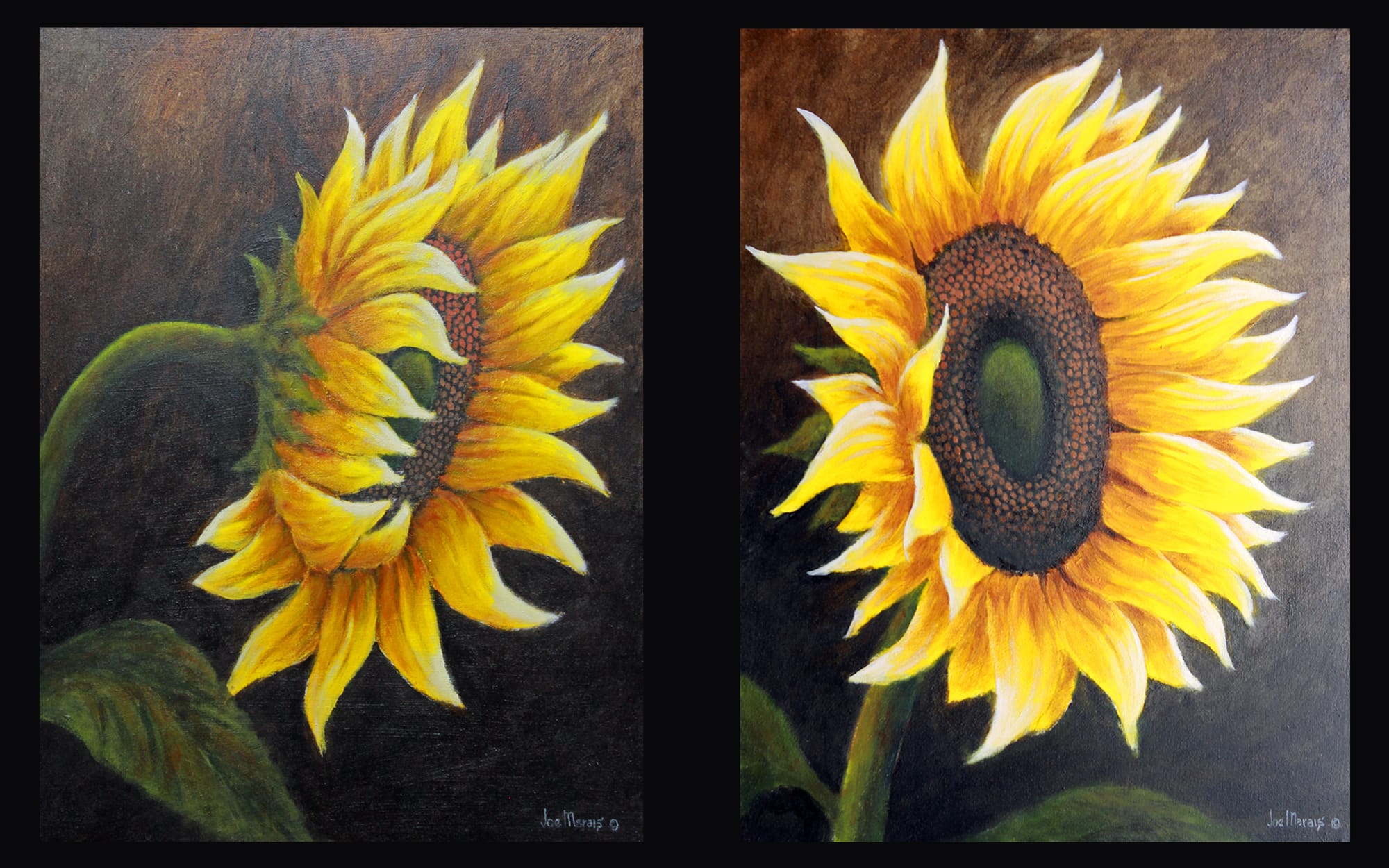
Flower of the Sun by Joe Marais
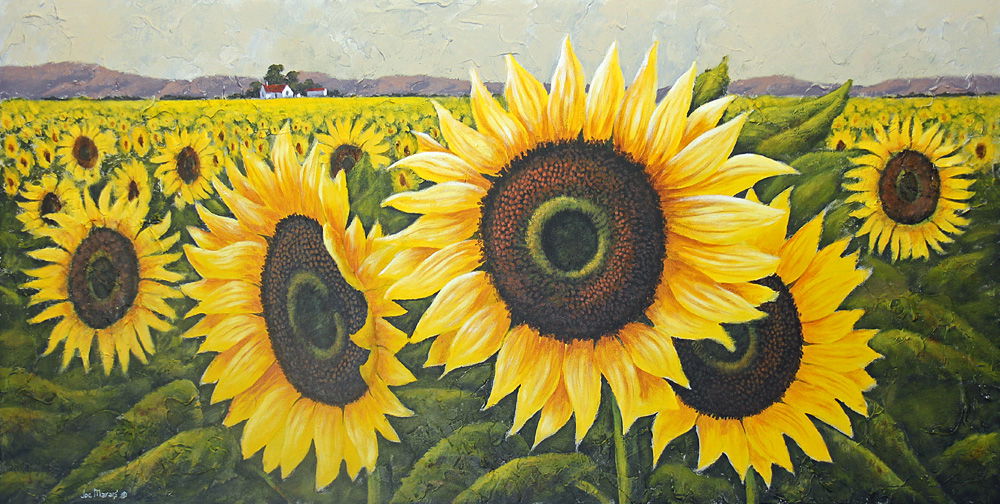
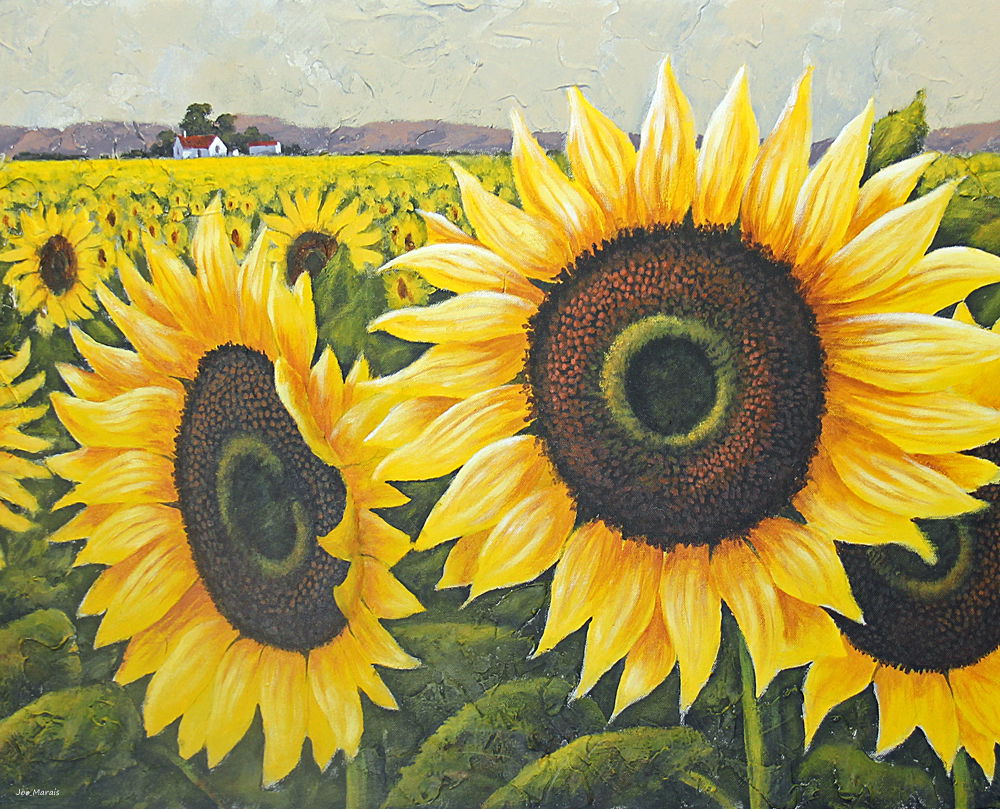
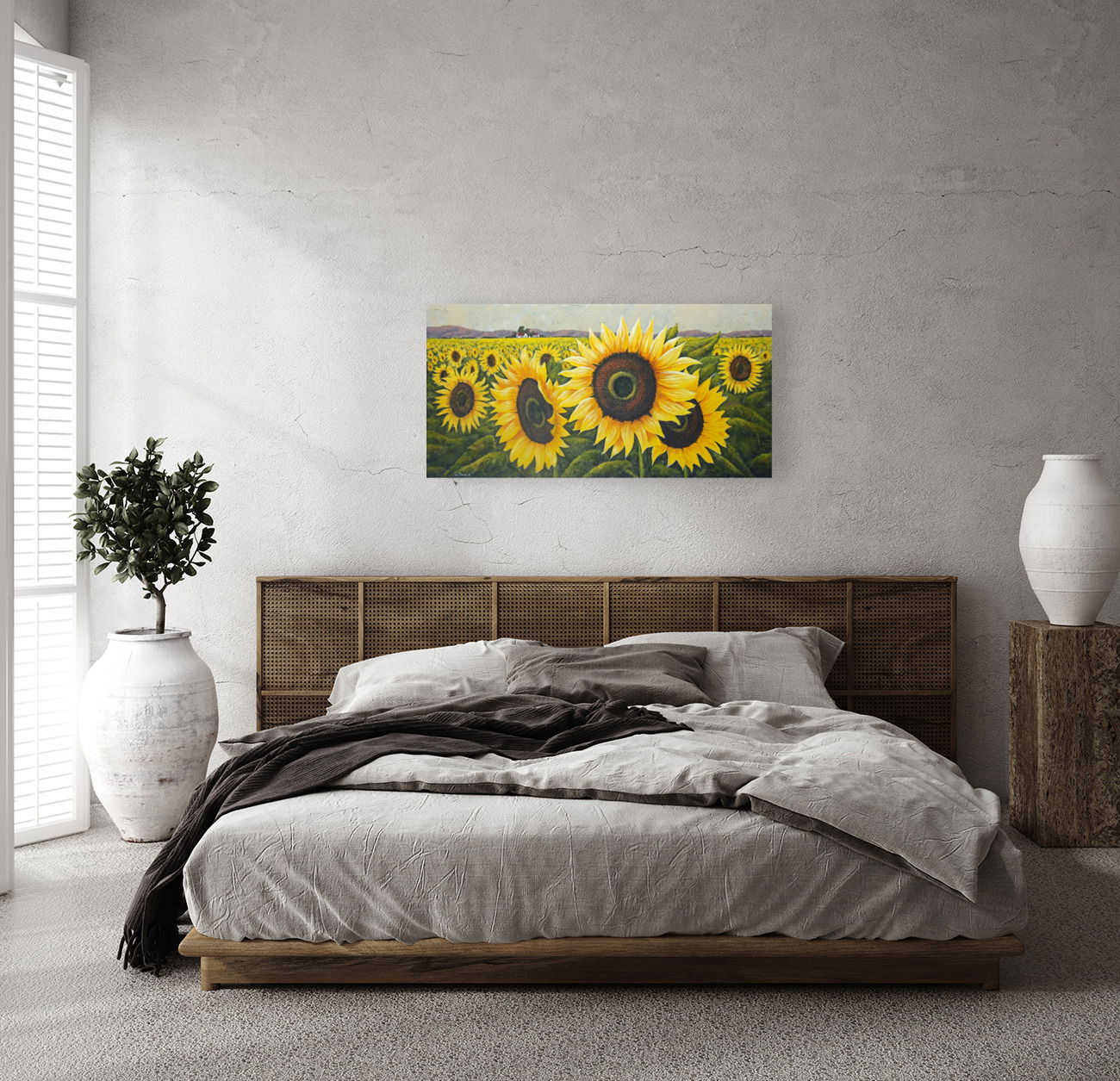
Title: Flower of the Sun Original Acrylic Painting on Canvas Measurements: 86 x 60cm Block Mounted Every now and then my wife, Ilse, tells me my Gallery is looking like a Mancave. It is just Wildlife and landscape paintings! She is absolutely right! I then do one or two flower paintings, like this one, to keep everyone in the house happy! 😄 Sunflowers symbolise loyalty as well as adoration, and because of their association with the sun, sunflowers are well-known for being a happy flower and the perfect bloom for a summer flower delivery to brighten someone's mood!
Nature's Therapist by Joe Marais
Title: Nature's Therapist Original Acrylic Painting on Canvas Measurements: 95 x 60cm We have salt in our blood, in our sweat, in our tears. We are tied to the ocean. (John F. Kennedy)
Barn Owl by joe Marais
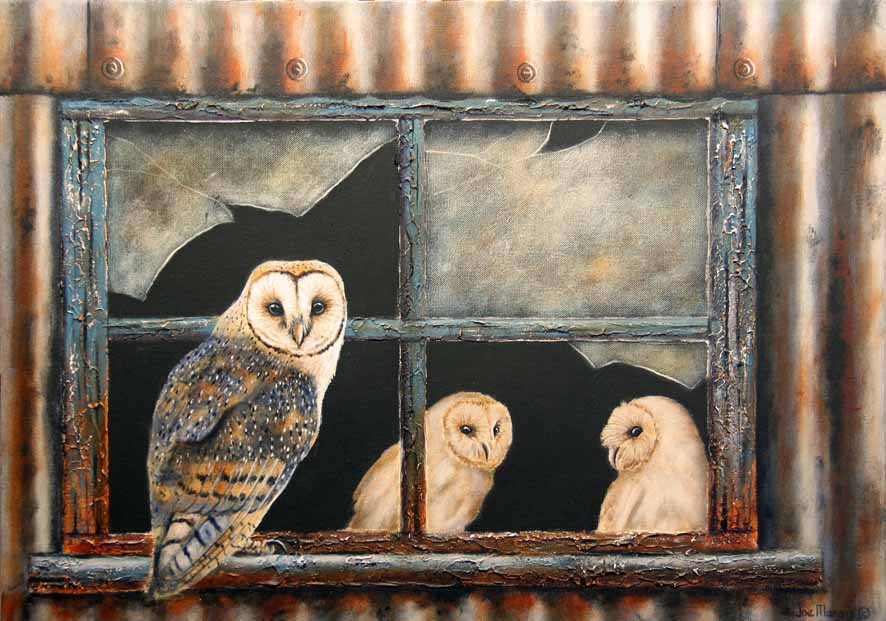
Title: Barn Owl Original Acrylic Painting on Canvas Measurements: 600 x 450mm Block Mounted The Barn Owl is the most widely distributed species of owl, and one of the most widespread of all birds and is most recognizable by its heart-shaped facial disc. Barn owls readily live near people, often nesting in man-made structures and are excellent for rodent control and a breeding pair of owls can consume around 80kg of rodents annually. This is approximately the equivalent of 2800 mice.
Flamboyance by Joe Marais
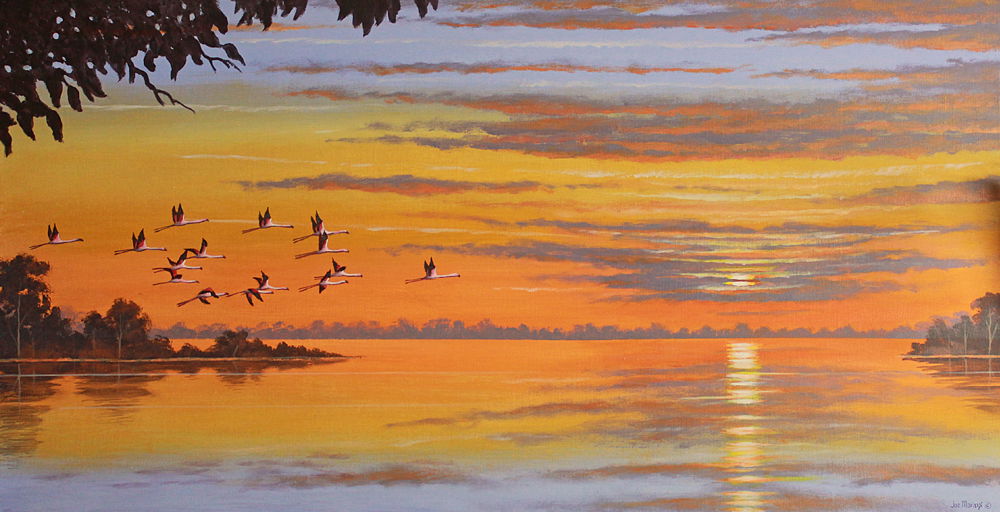
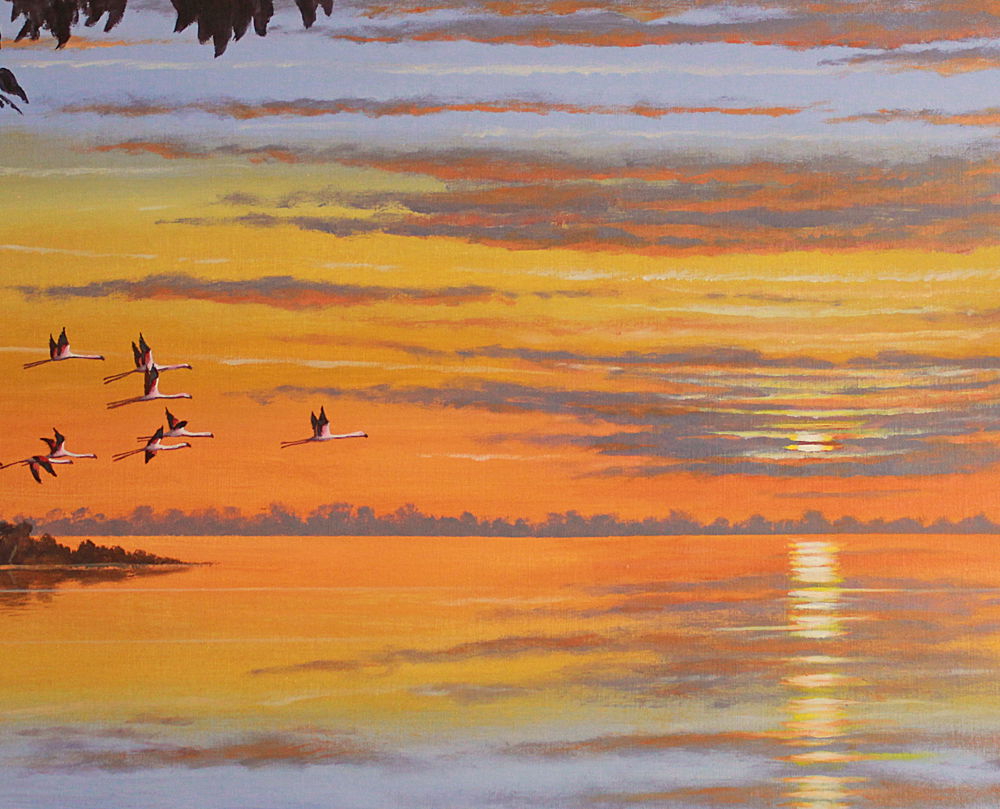
Title: Flamboyance Original Acrylic Painting on Canvas Measurements: 1200 x 600 mm Block Mounted The collective noun to describe a gathering of flamingos is “flamboyance,” an appropriate term for these colourful-feathered creatures. They flock together by the thousands on salt flats, lagoons, lakes, and swamps around the world, where they can filter-feed for shrimp, algae, and insects.
Coming Home by Joe Marais
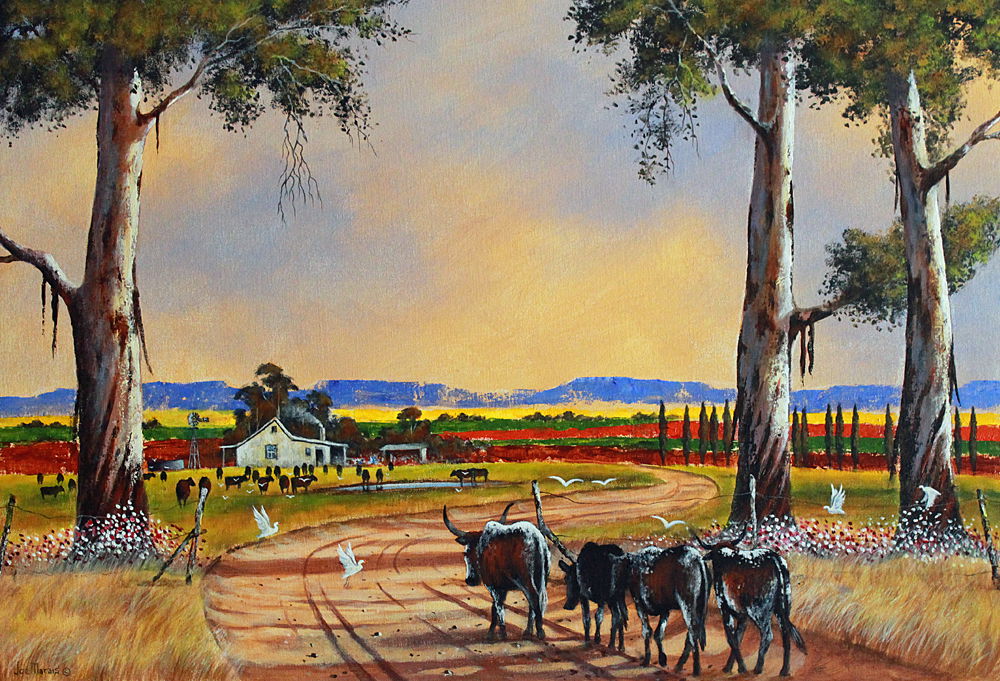
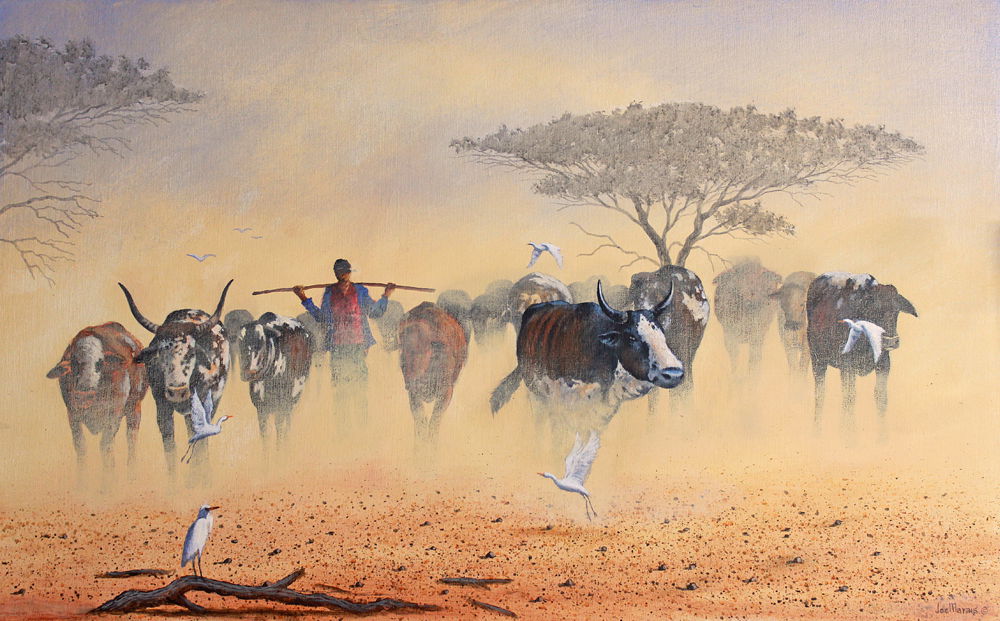
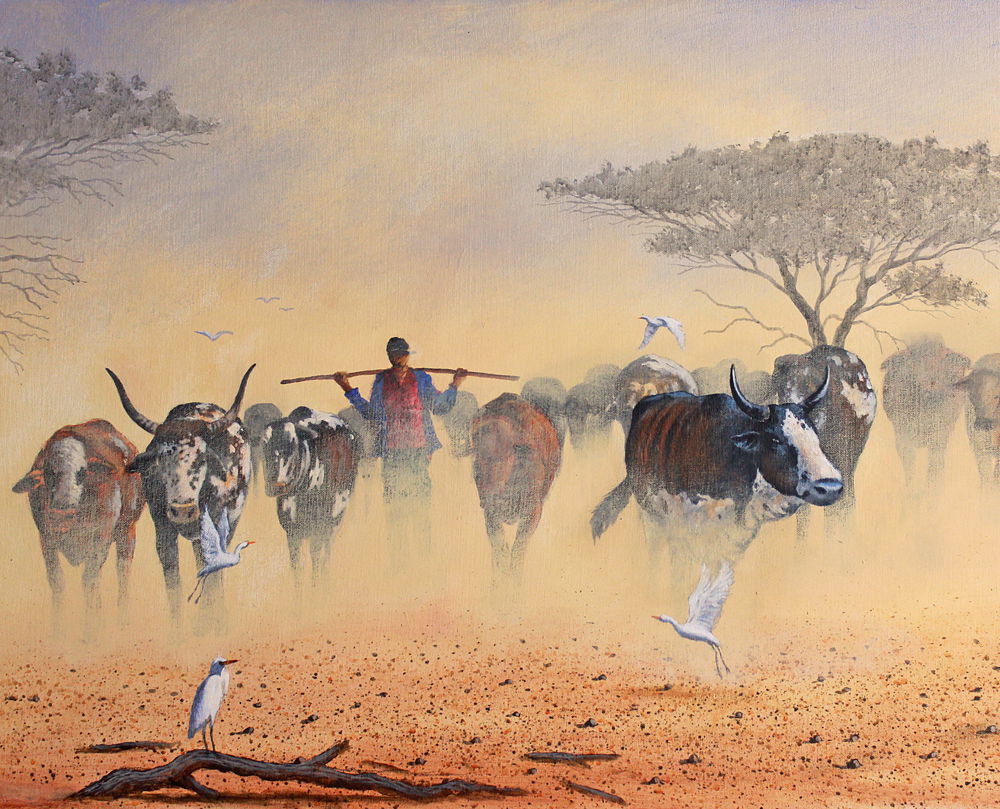
Title: Coming Home Original Acrylic Painting on Canvas Measurements: 950 x 600mm Block Mounted The Nguni is known for its good temperament. Nguni cattle are heat and light tolerant and can handle extreme heat and cold alike. They are adaptable and hardy and possess excellent resistance to internal and external parasites with natural immunity to tick borne diseases.
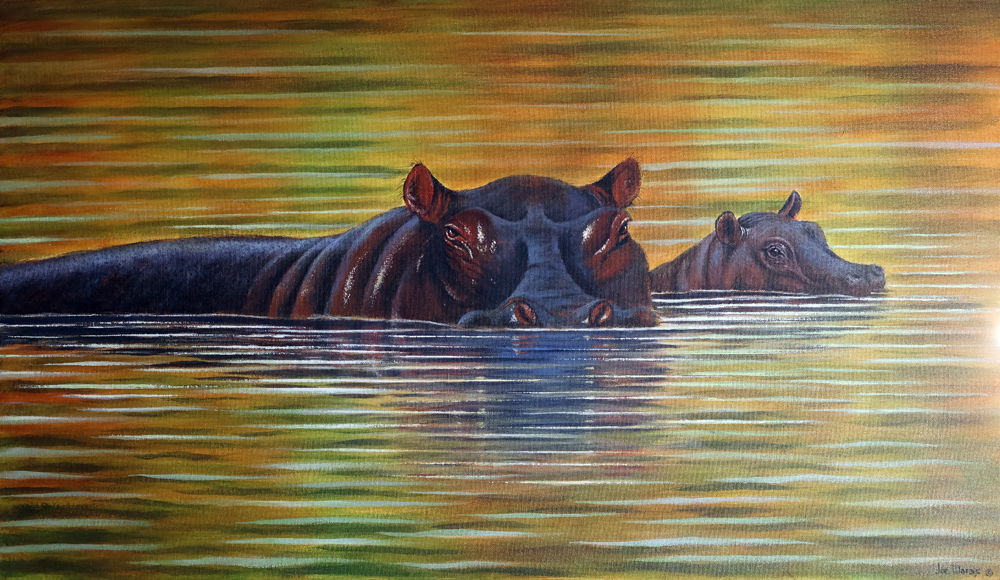
River Horse by Joe Marais
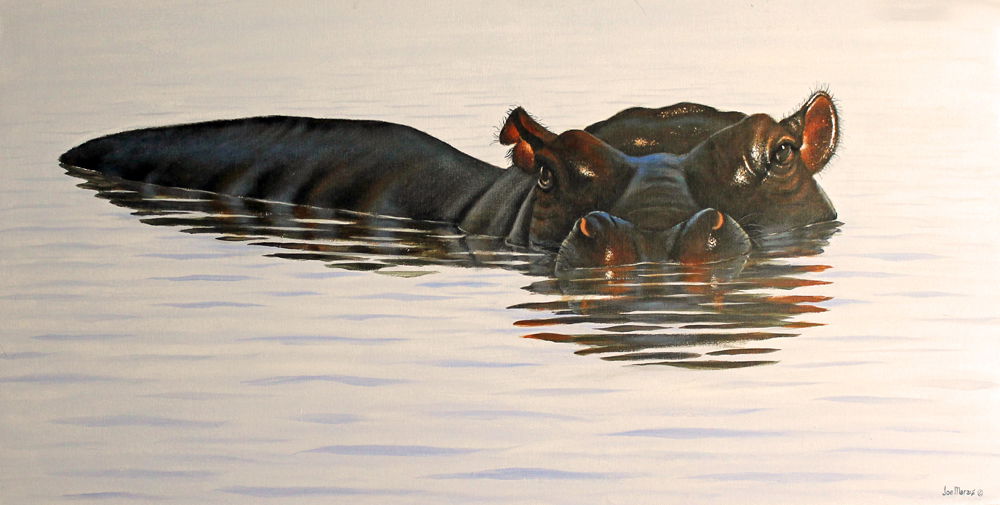
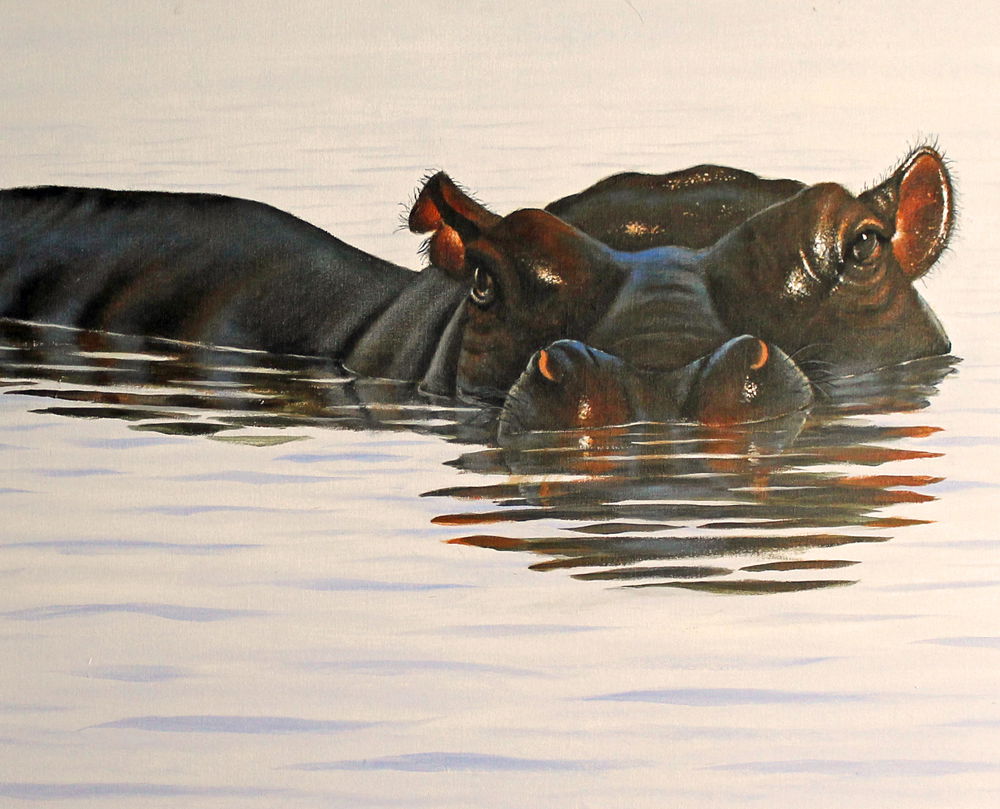
Title: River Horse Original Acrylic Painting on Canvas Measurements: 1200 x 600mm Block Mounted The common hippopotamus is semiaquatic, inhabiting rivers, lakes and mangrove swamps, where territorial bulls preside over a stretch of river and groups of five to thirty females and young. During the day, they remain cool by staying in the water or mud; reproduction and childbirth both occur in water. They emerge at dusk to graze on grasses. While hippopotamuses rest near each other in the water, grazing is a solitary activity, and hippos are not territorial on land.
Incredible Africa! A moment in Time by Joe Marais
Title: Incredible Africa! A moment in Time! Original Acrylic Painting on Canvas Measurements: 950 x 600mm Known as a tourist paradise, Botswana is where scenic beauty and exhilarating wildlife meet. The most popular time to visit Botswana is during the dry months from May to November, when animals have to venture to watering holes and the river’s edge to find something to drink – making for dramatic game viewing with some incredible sightings.
King of the Sky by Joe Marais
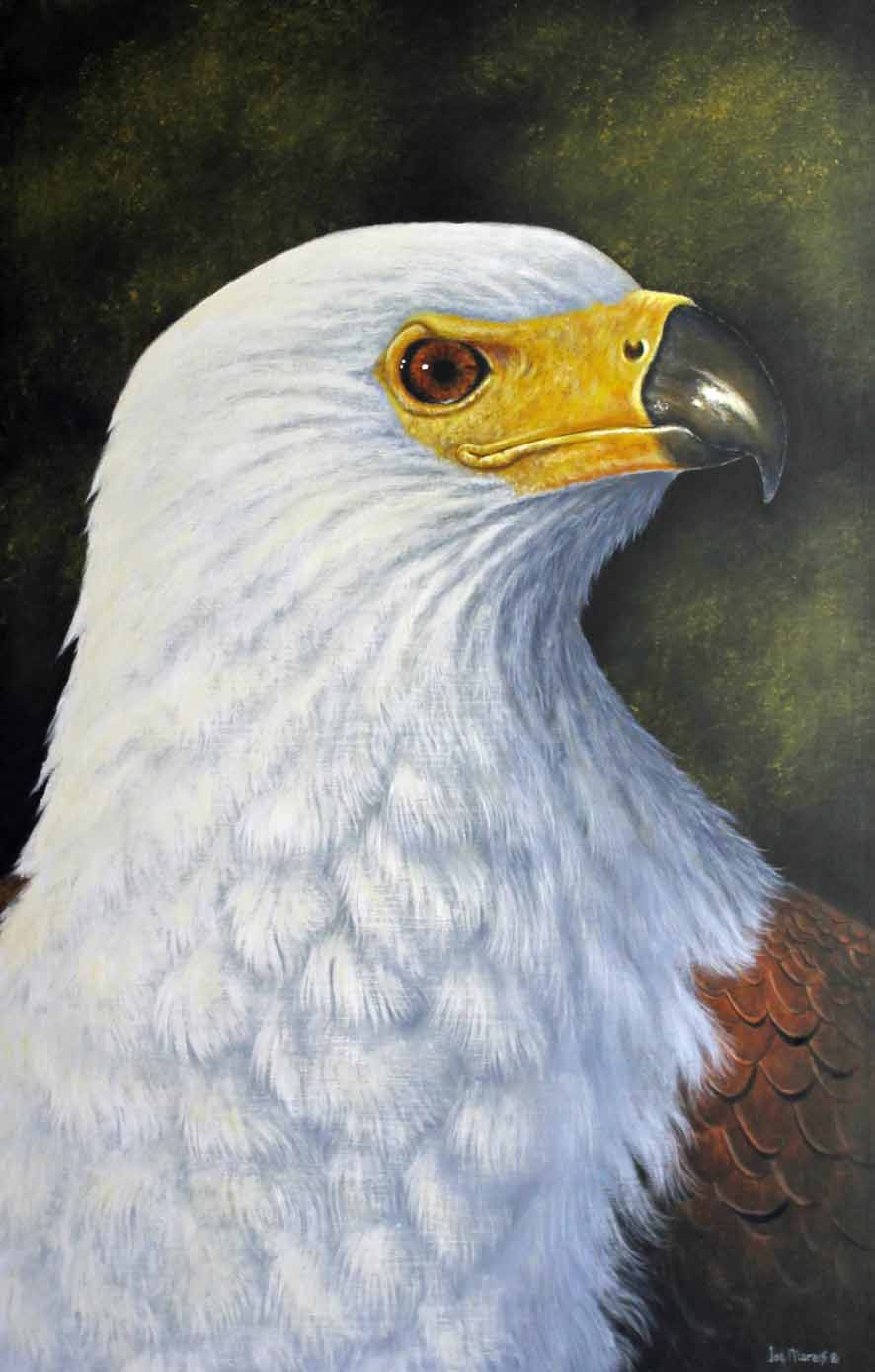
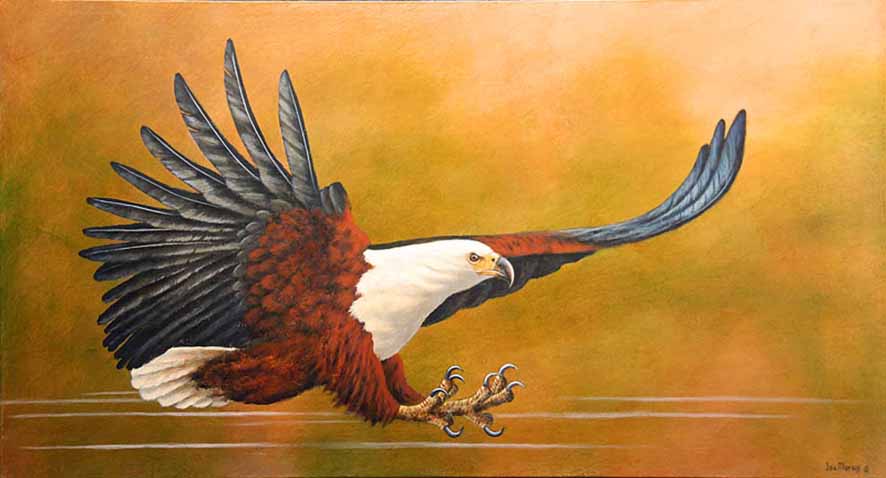
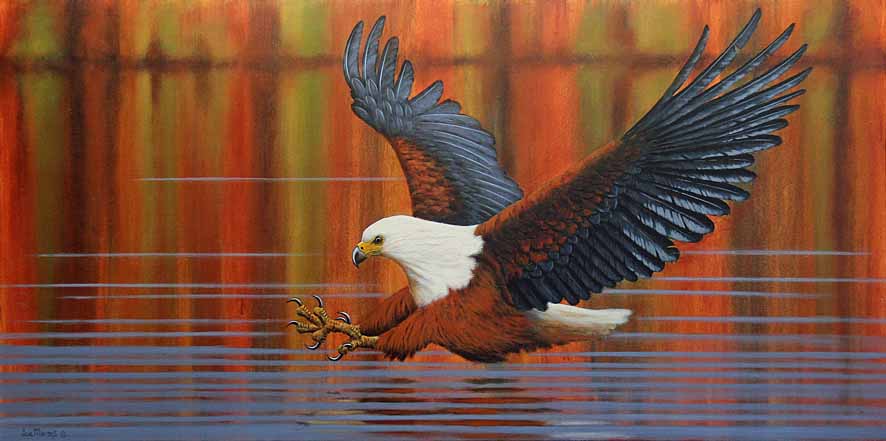
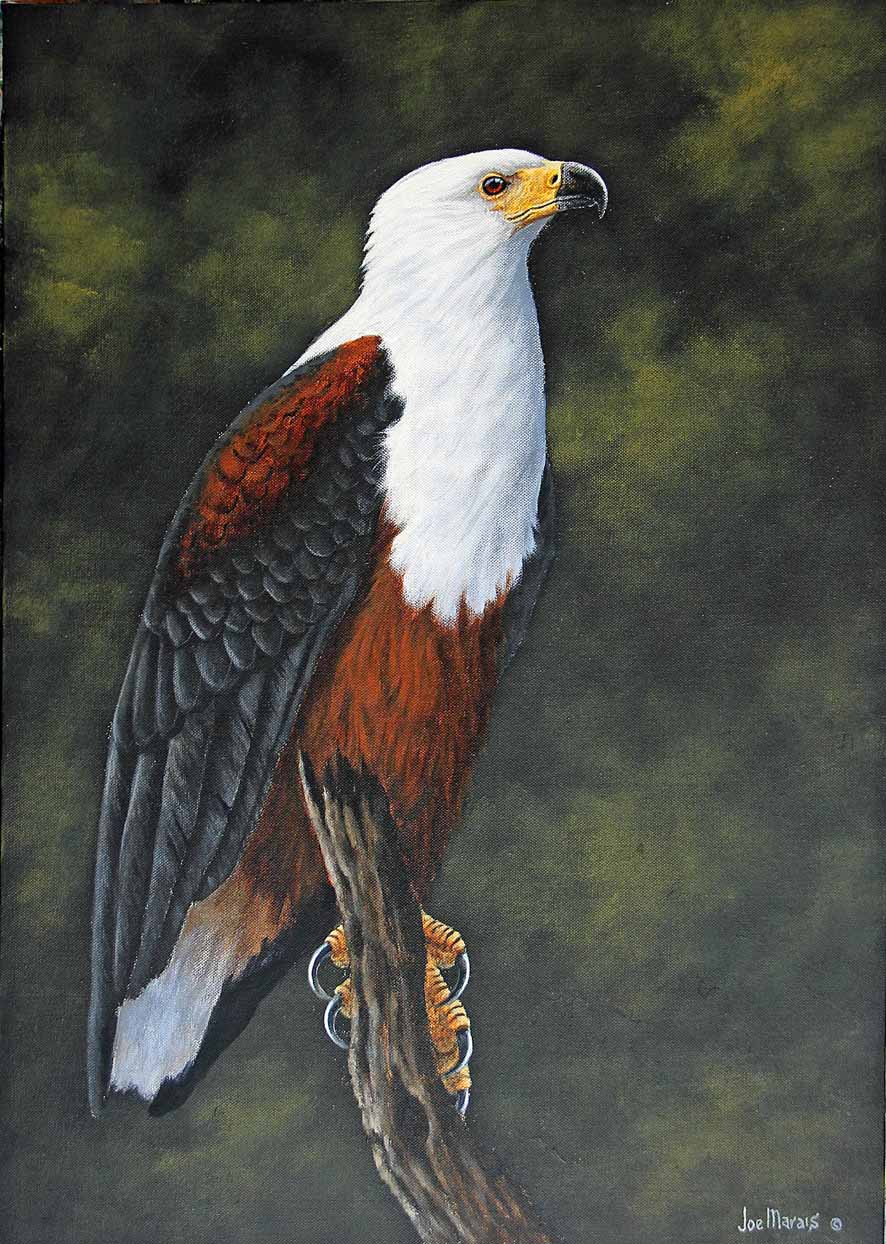
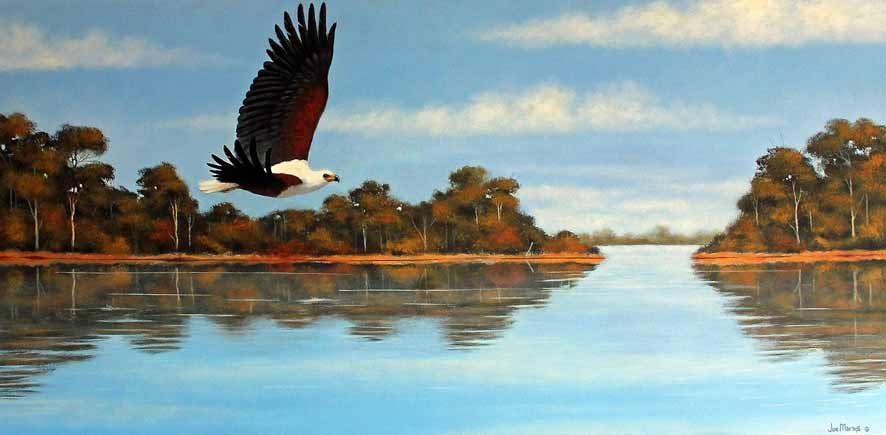
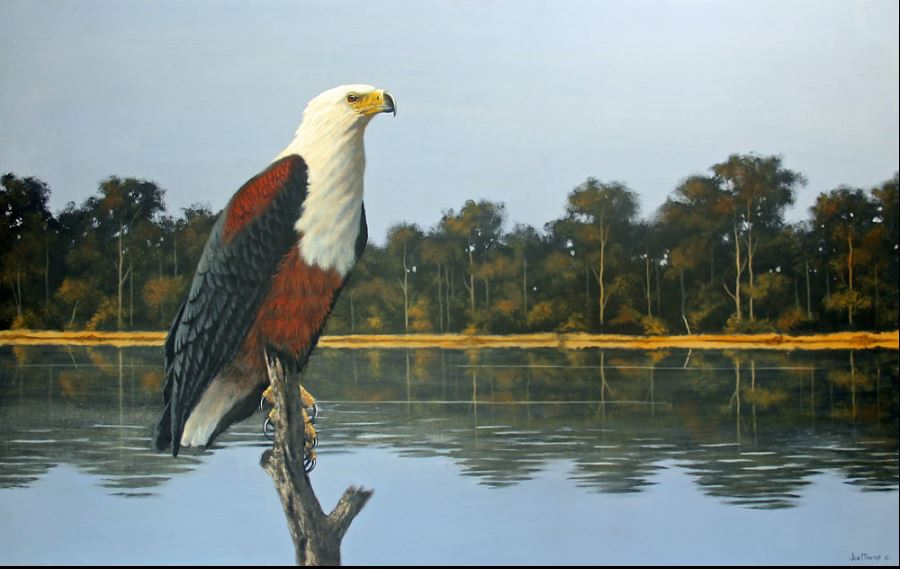
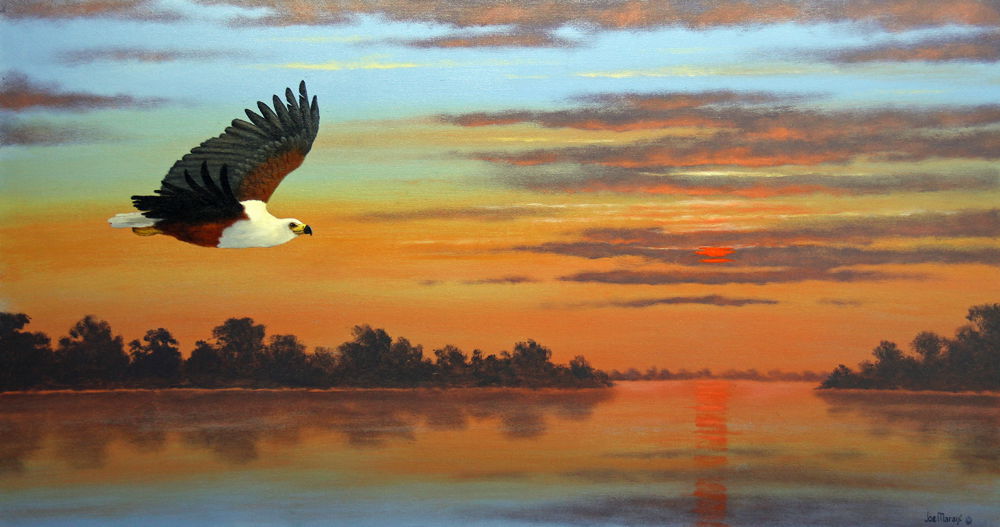
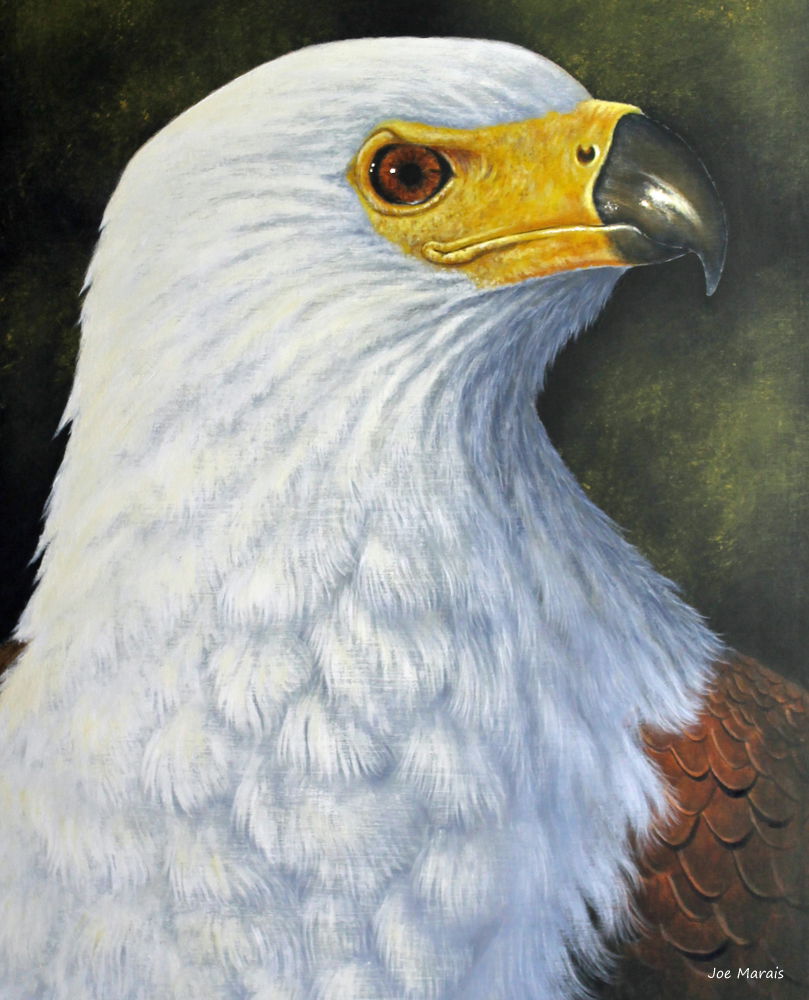
Title: King of the Sky Original Acrylic Painting on Canvas Measurements: 960 mm x 600 mm (Block Mounted) African fish Eagle: It's such a difficult choice, but perhaps my favourite bird! Possibly the most recognized bird in Africa, the African Fish Eagle is known for its very distinct call. Often referred to as the “Voice of Africa”. I am fortunate enough to hear them on a daily basis from my studio as they circle the sky near Lake Mzingazi!
Lily of the Desert by Joe Marais
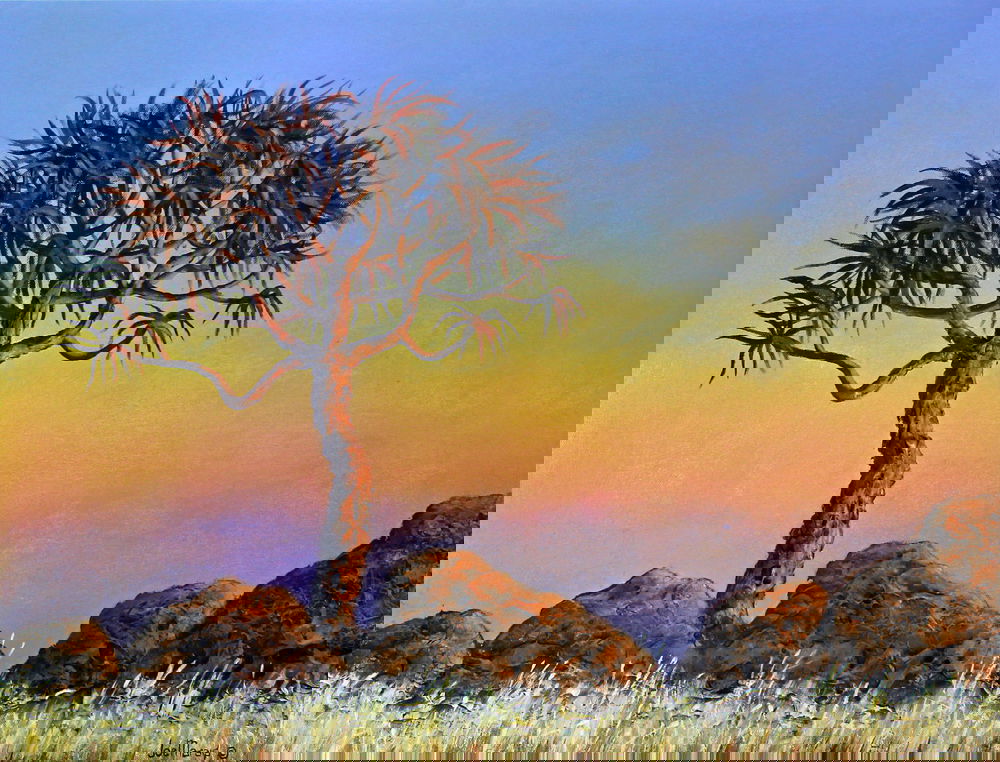
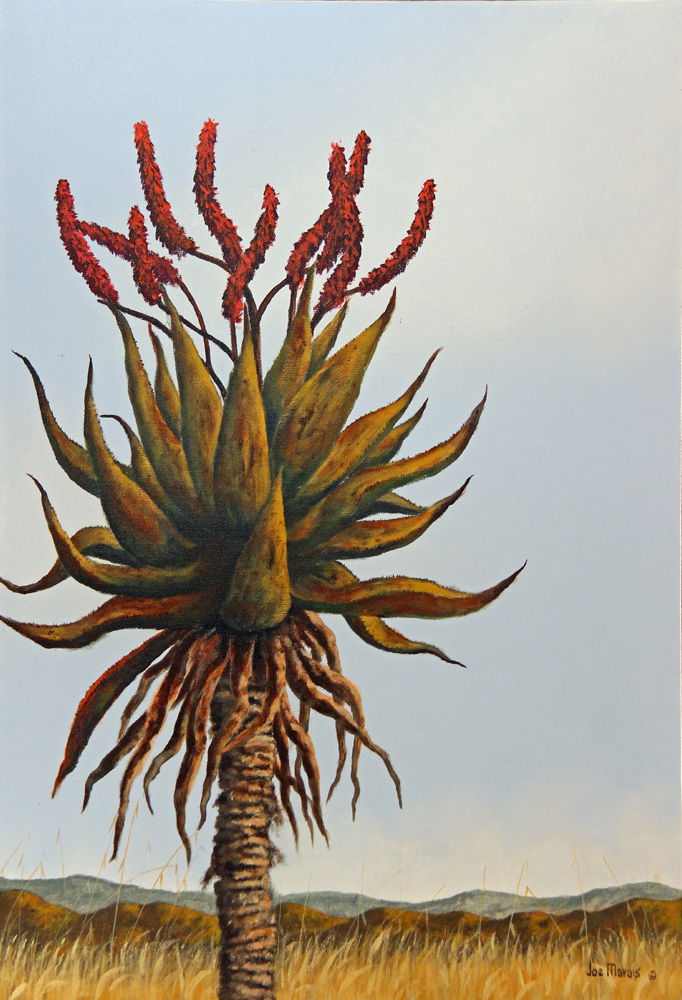
Title: Lily of the Desert Original Acrylic Painting on Canvas Measurements: 900 x 600mm This painting was done about 25 years ago! Block Mounted Interesting Facts: Aloe Can Survive For Over 100 Years. ... Aloe Is Not A Cactus, But Its Own Species of Plant. ... There Are Over 500 Varieties of Aloe Plants. ... Aloe Is 95% Water, 5% Beneficial Solids. ... The Aloe Plant Has Self-Healing Properties. ... Aloe Juice Is A Key Ingredient In Healthy Smoothies.
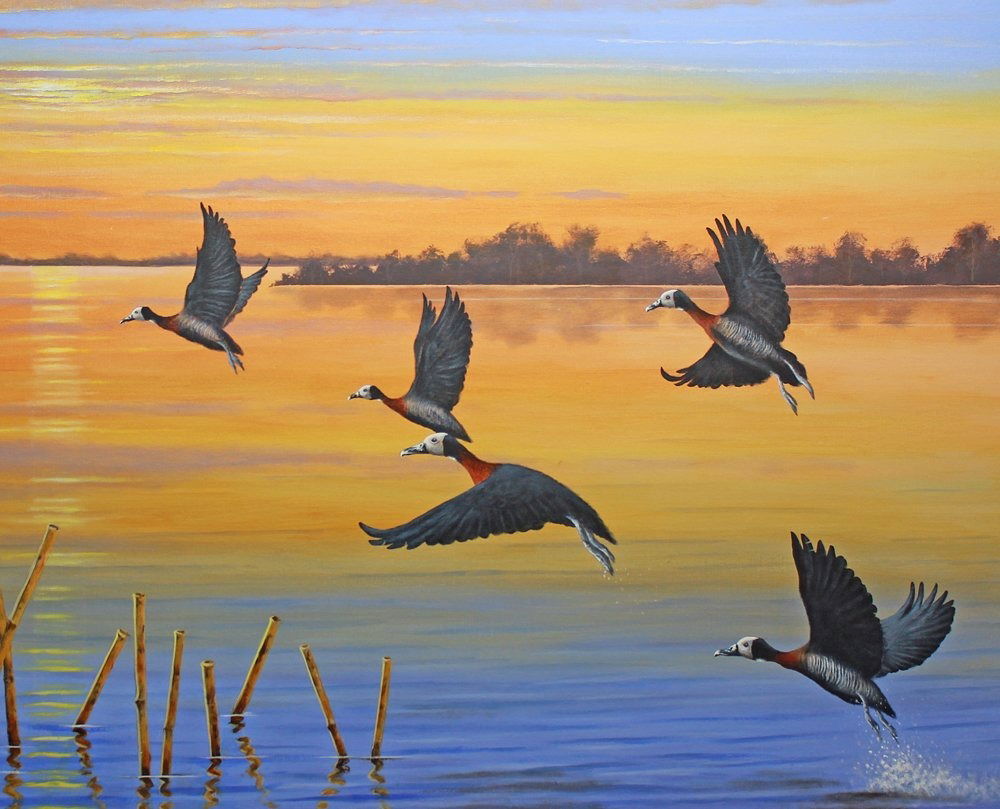
Flying Home by Joe Marais
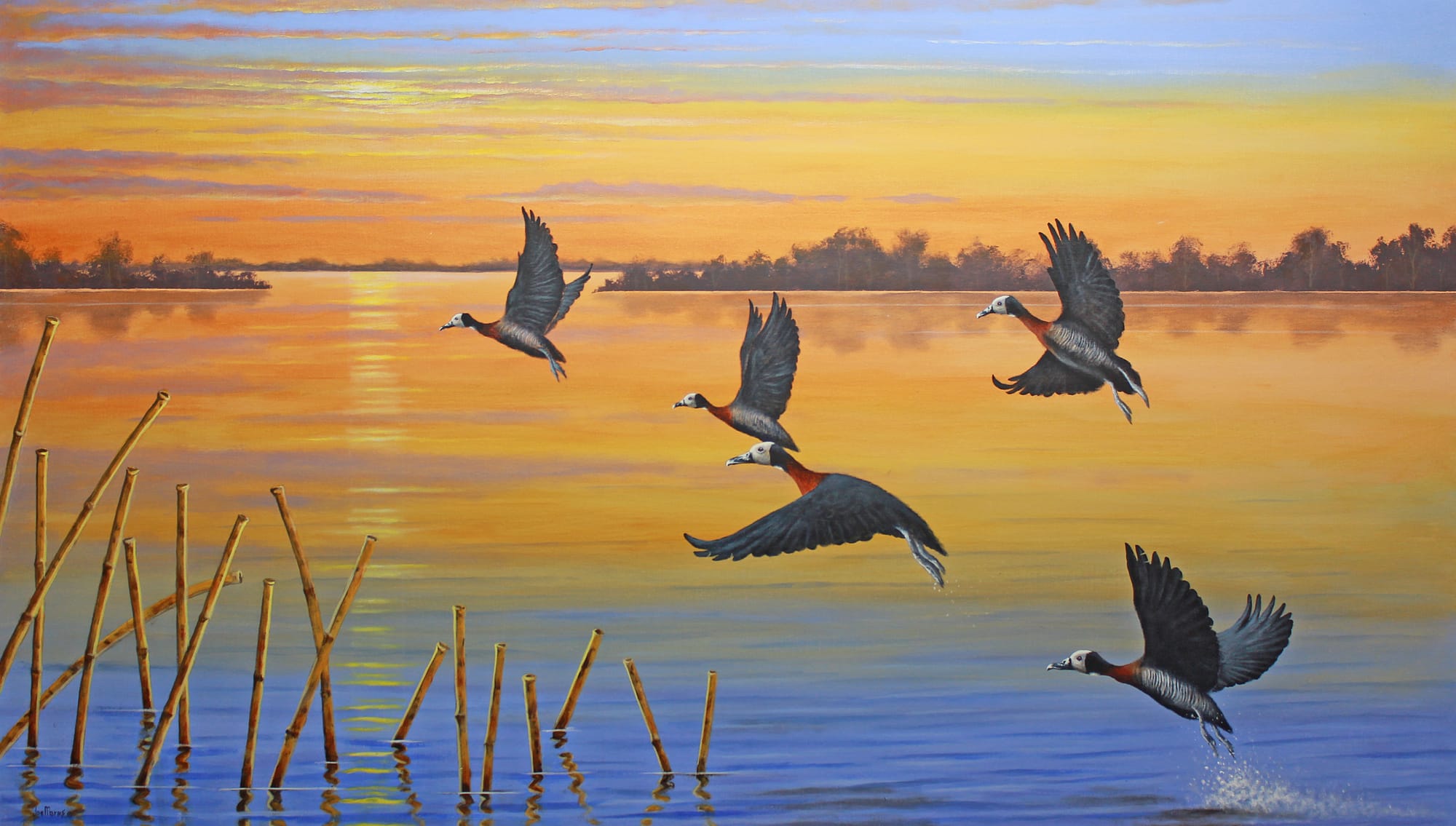
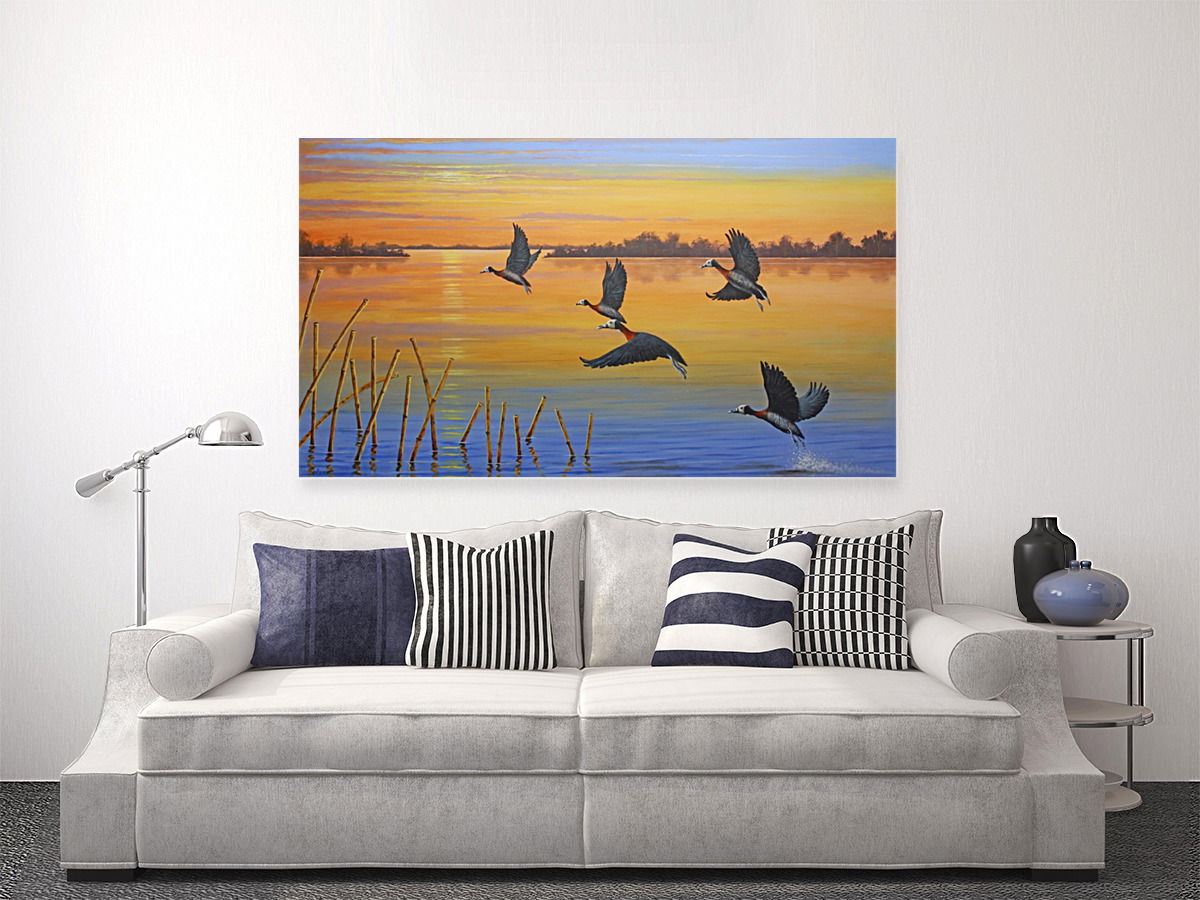
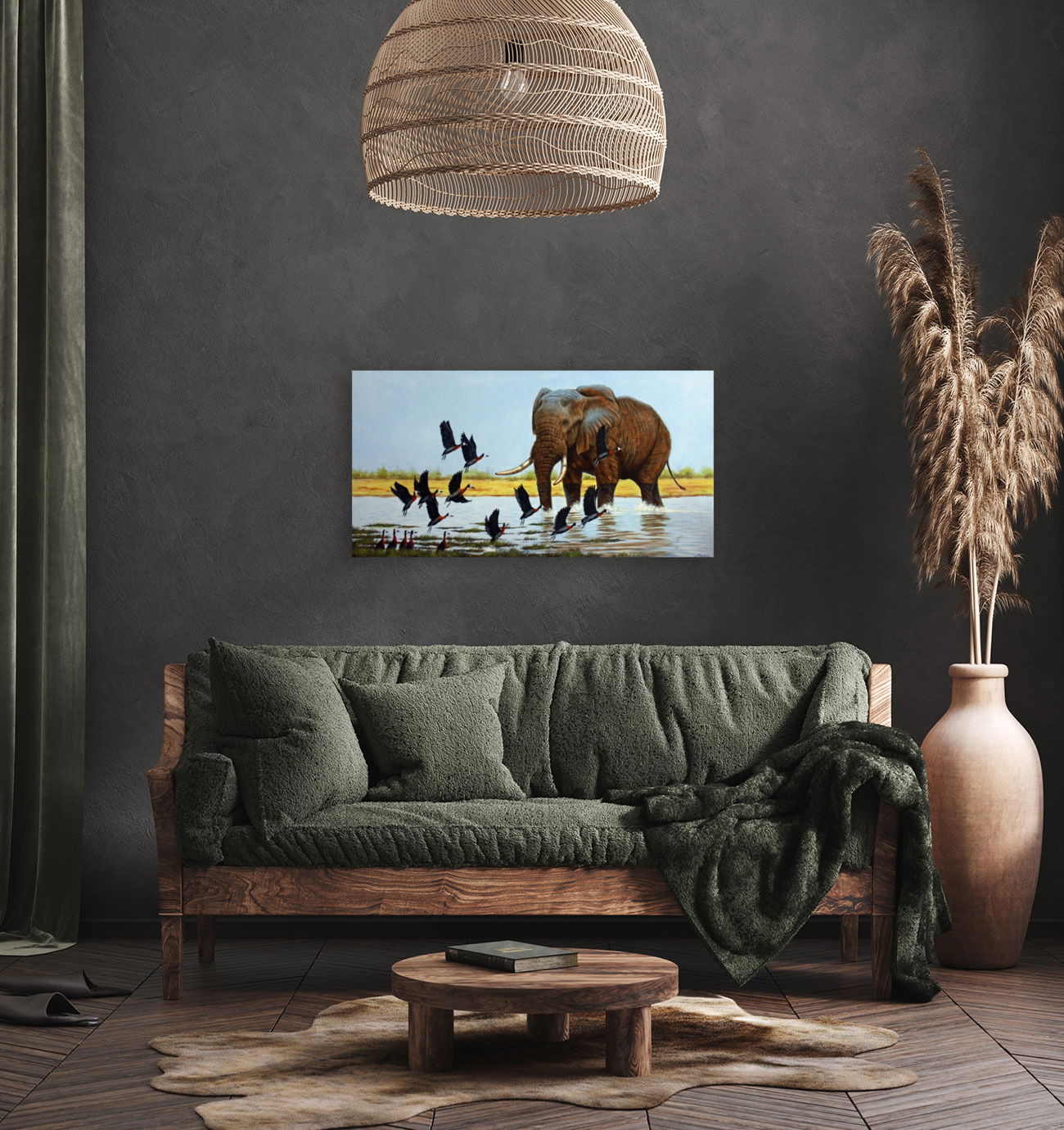
Title: Flying Home Original Acrylic Painting on Canvas Measurements: 1500 x 900mm Block Mounted White-faced whistling duck (Dendrocygna viduata) is a gregarious species, occurring in sub-Saharan Africa, South America, and even some regions in Central America, and the Caribbean. They arrived in their preferred site at dawn in huge numbers, which provides a remarkable sight. As its names suggest, white-faced whistling ducks are noisy birds, known for their distinct three-note whistling call.
Ivory Country by Joe Marais
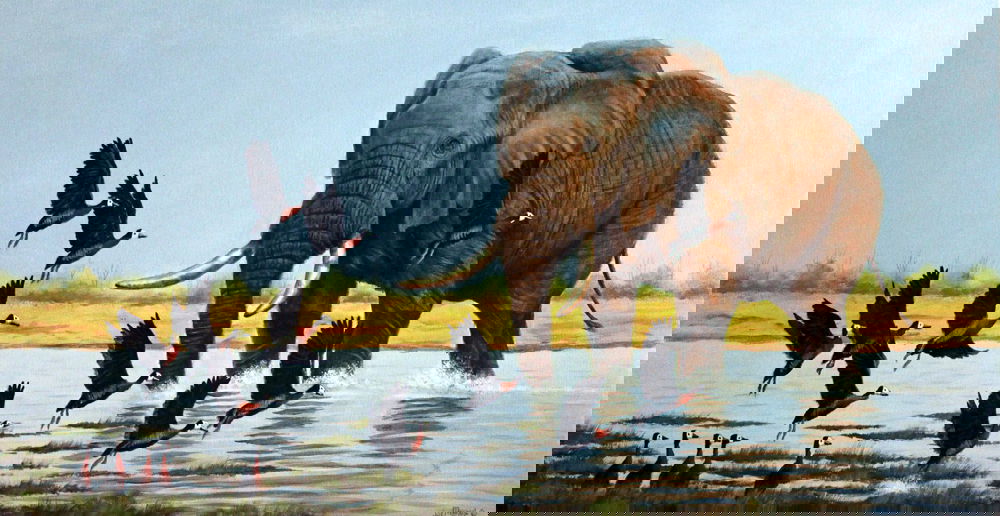
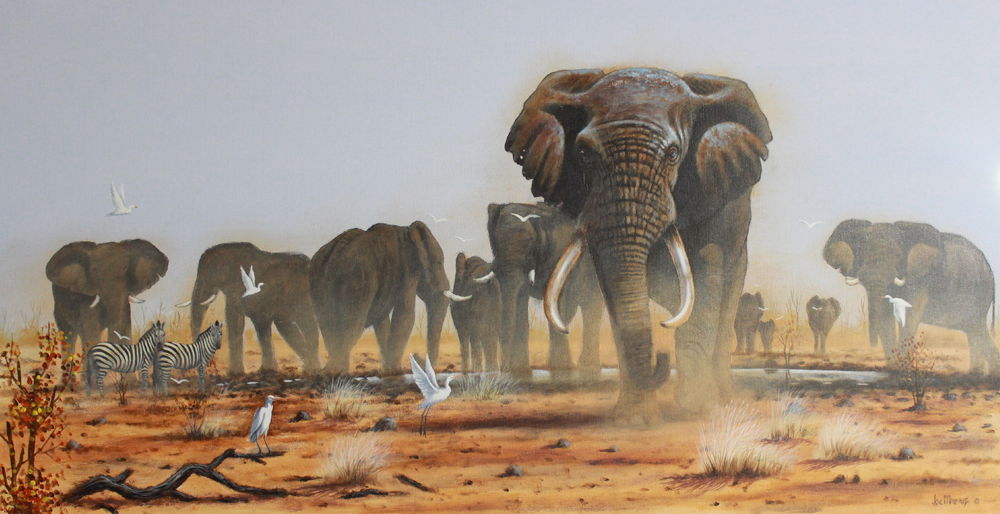
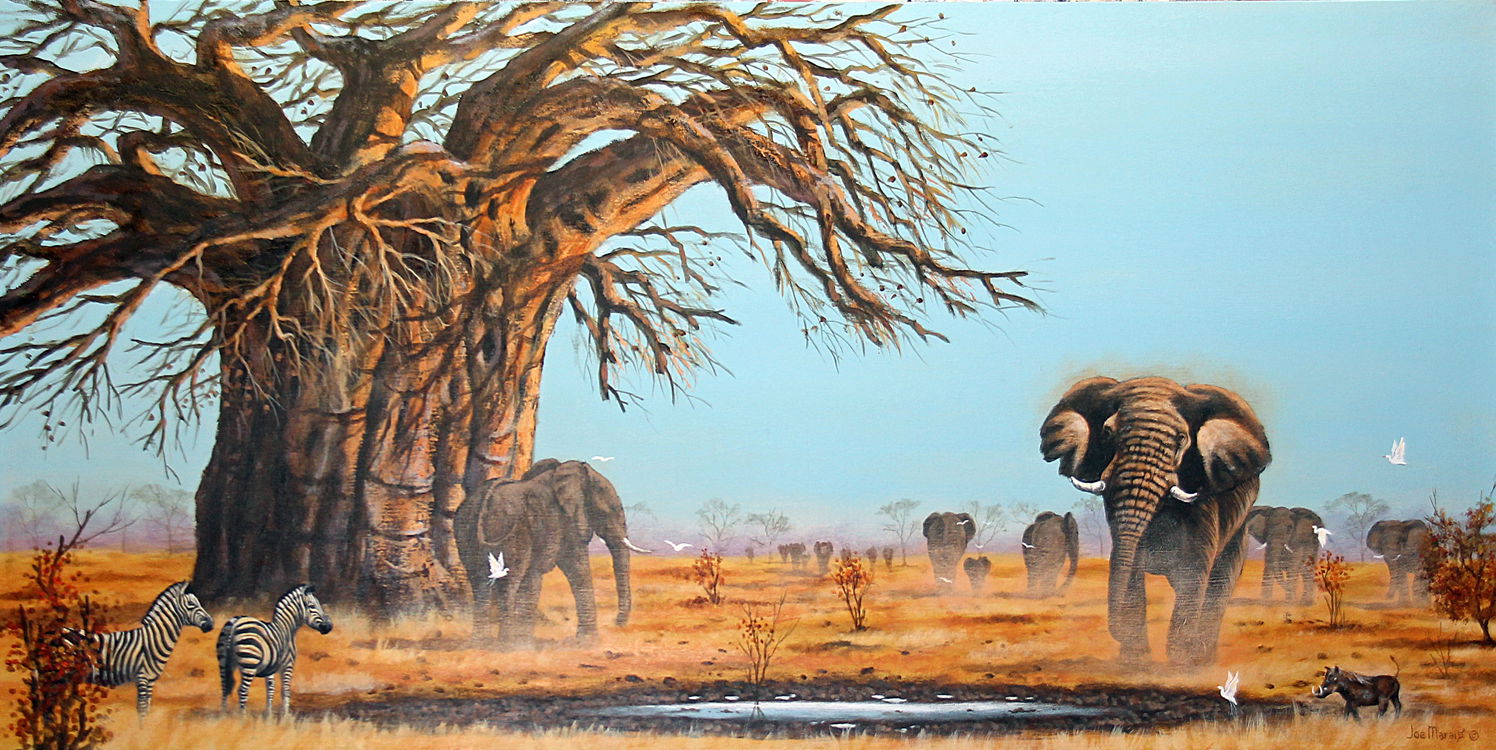
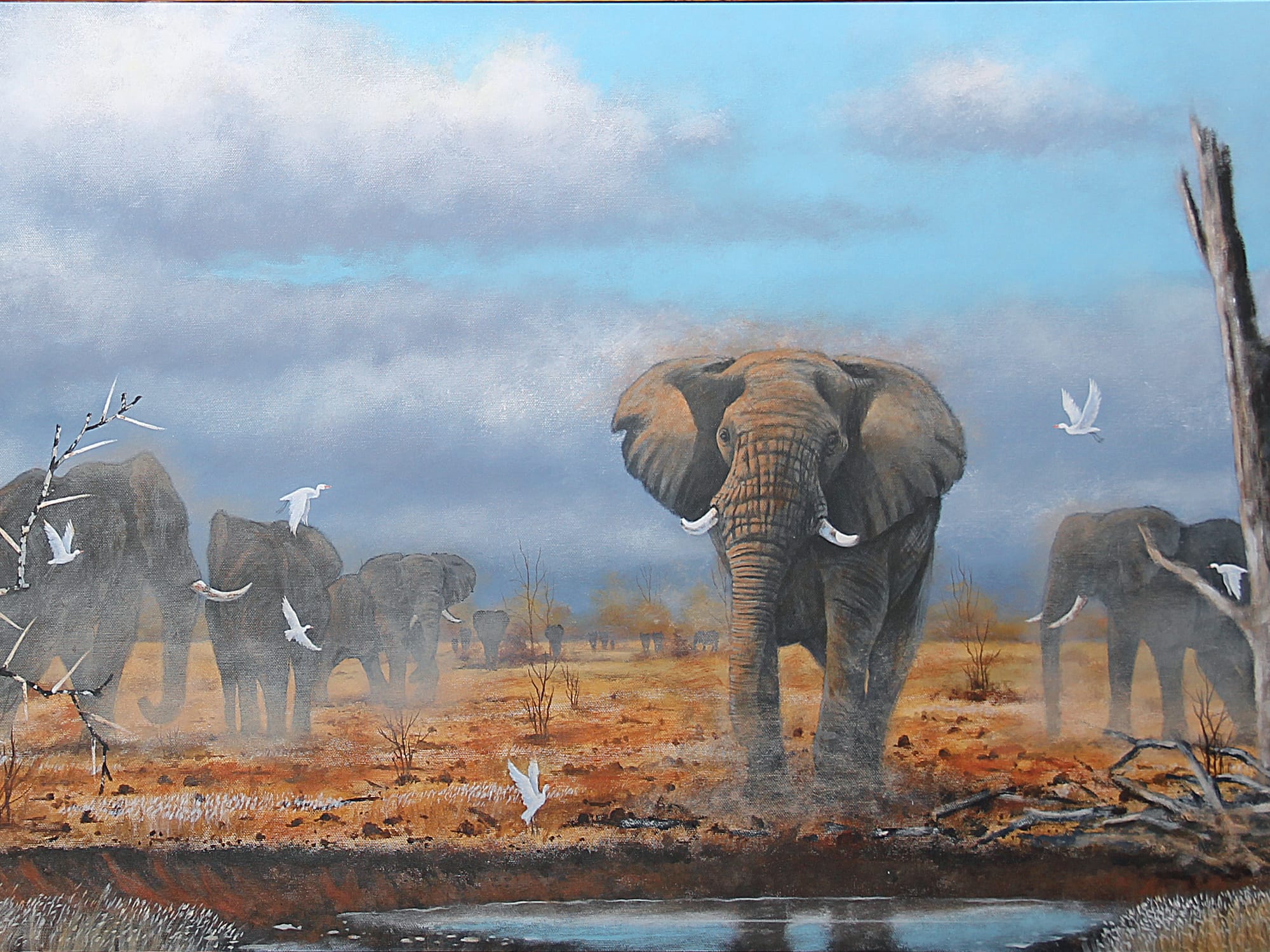
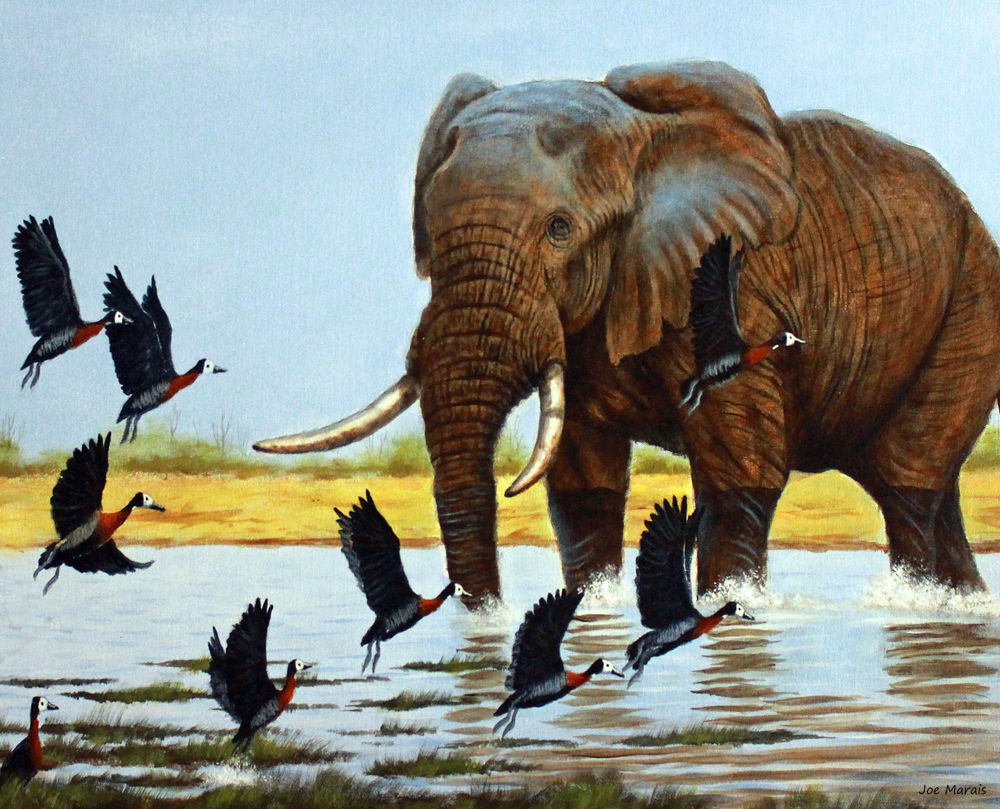
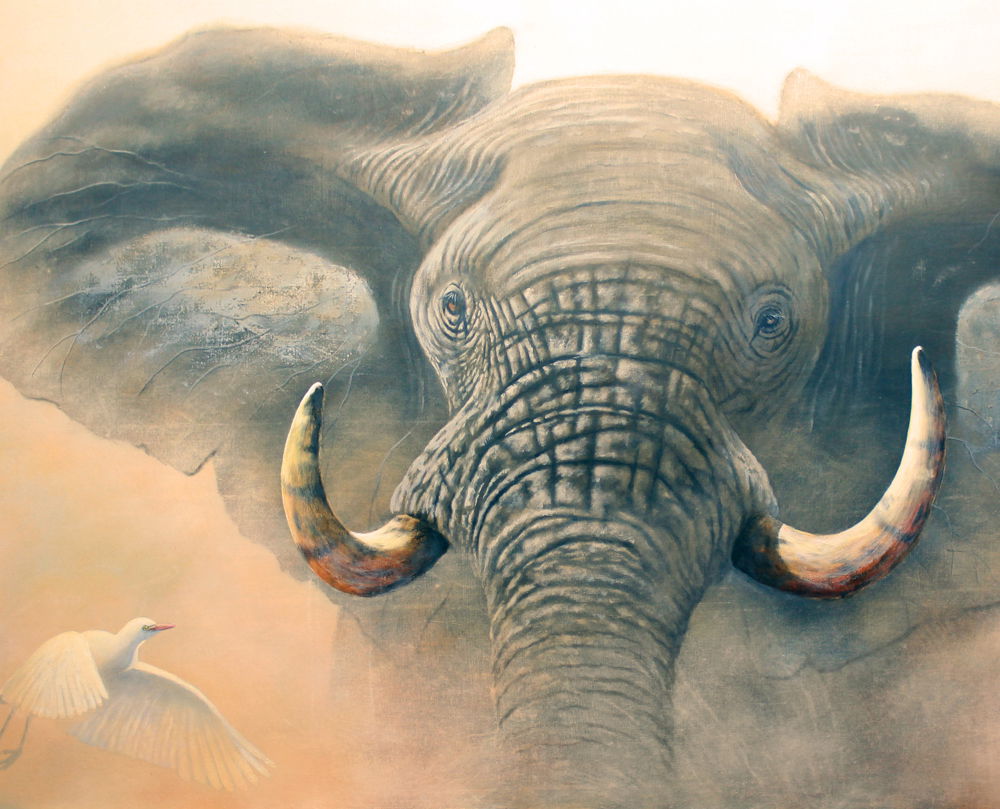
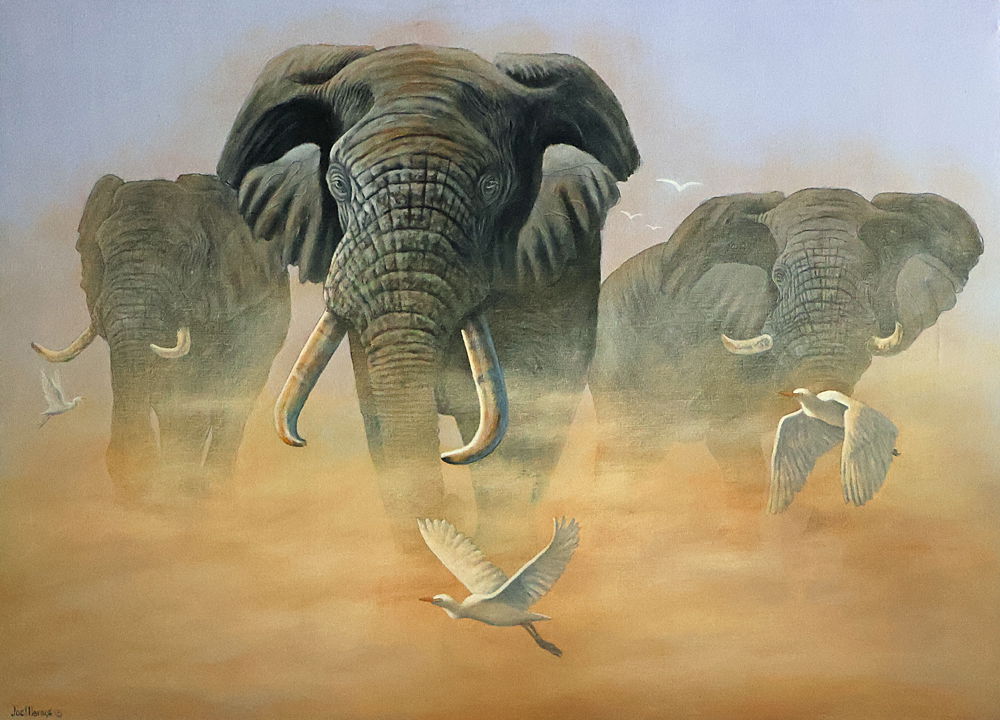
Title: Ivory Country Original Acrylic Painting on Canvas Measurements: 1200 x 600mm Block Mounted Located in the north of Botswana, Chobe National Park is famed for its elephants, its diverse habitats, its varied array of animals and birds and its beautiful river, which allows for amazing game viewing The most popular time to visit the area is during the dry months from May to November, when animals have to venture to watering holes and the river’s edge to find something to drink – making for dramatic game viewing with some incredible sightings.
Prince of the Sky by Joe Marais
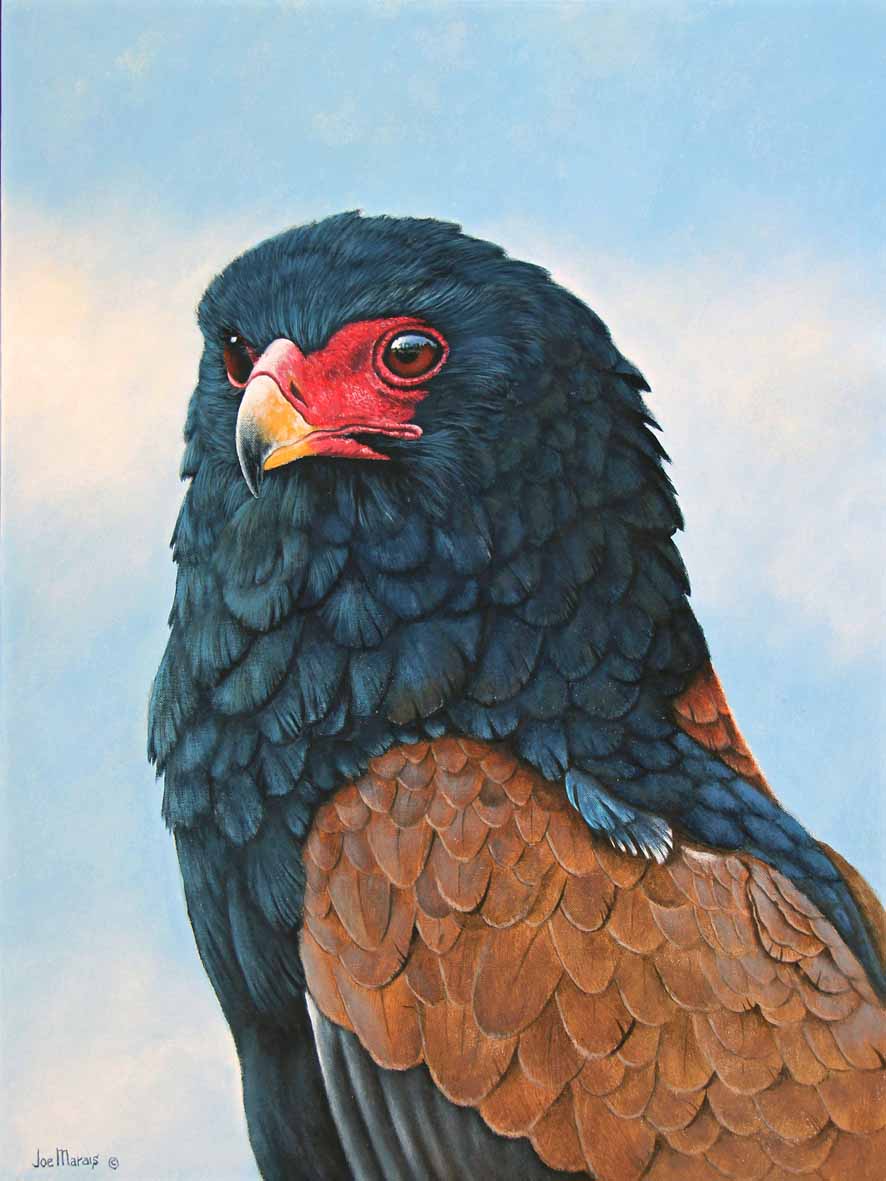
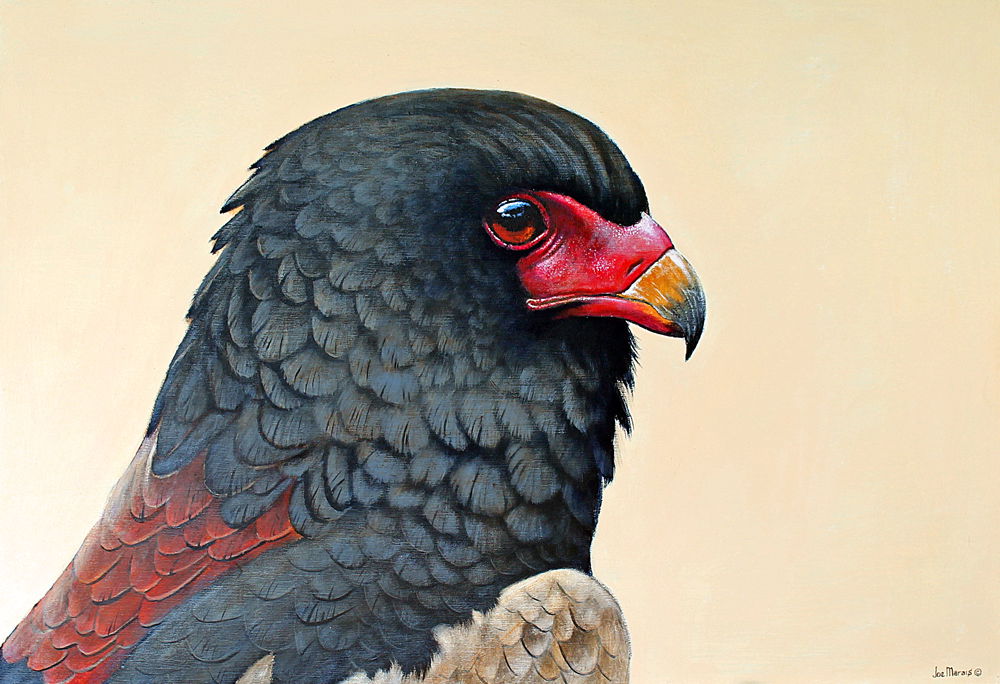
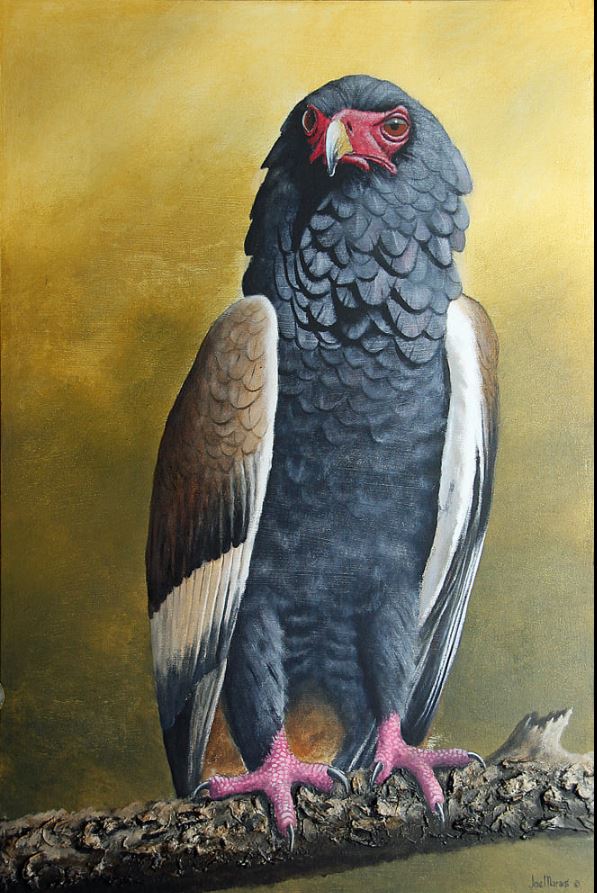
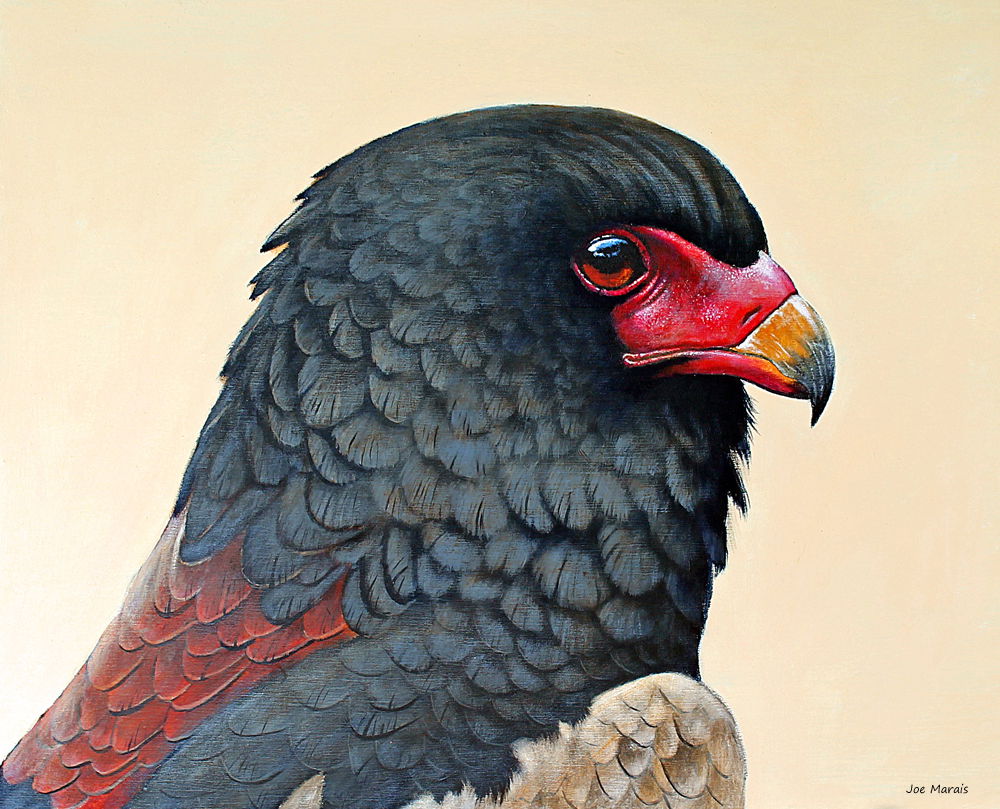
Title: Prince of the Sky Original Acrylic Painting on Canvas Measurements: 900 x 600mm This eagle is spectacularly beautiful, with glossy black feathers, a red face and legs, and a black beak. The upper wings are tawny, while the feathering under the wings is black and white. Bateleurs pair for life, and may use the same nest for many years. The female, which is larger than the male, lays a single egg. The fledgling remains in the vicinity of the nest for several months after it hatches.
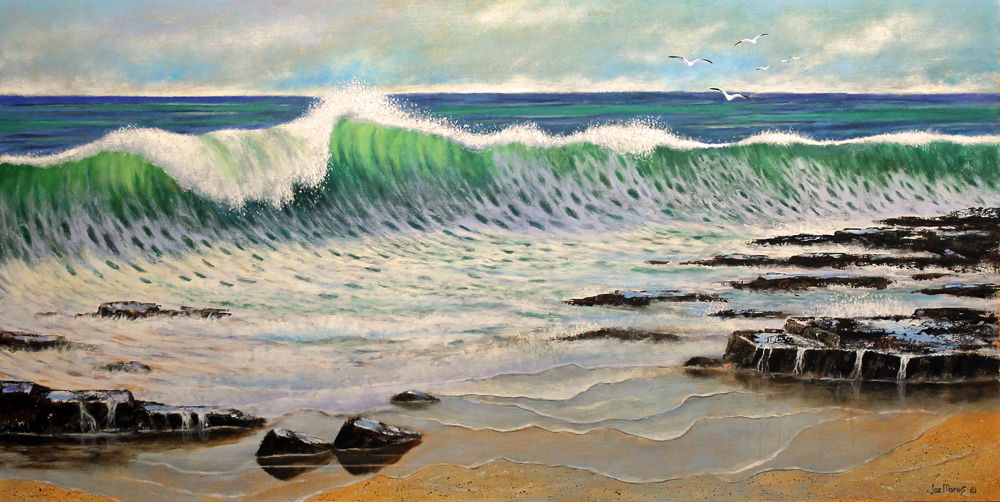
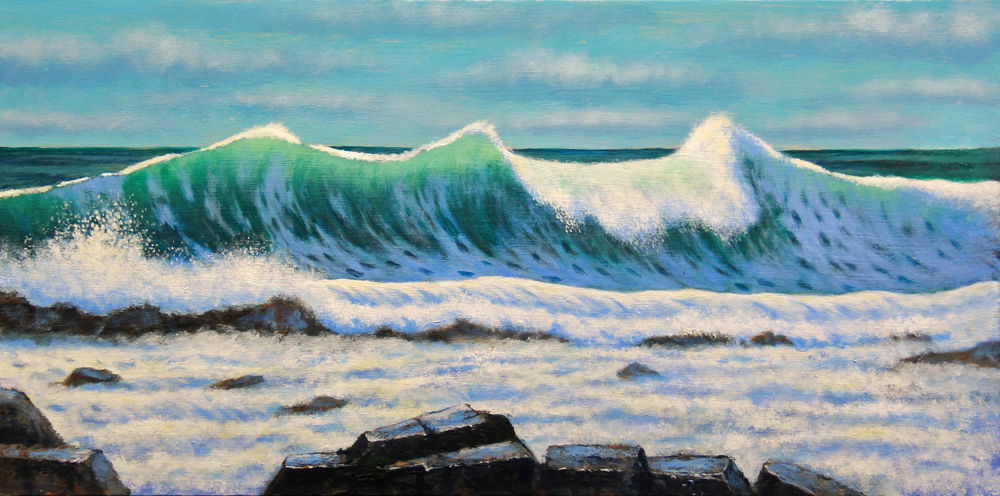
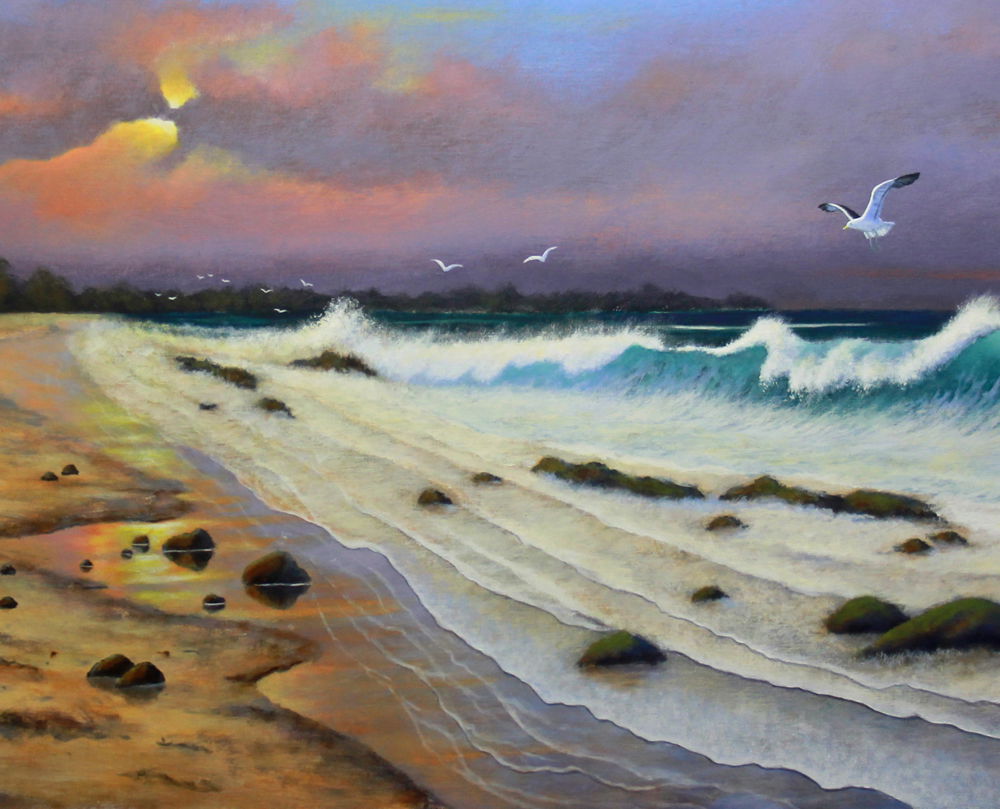
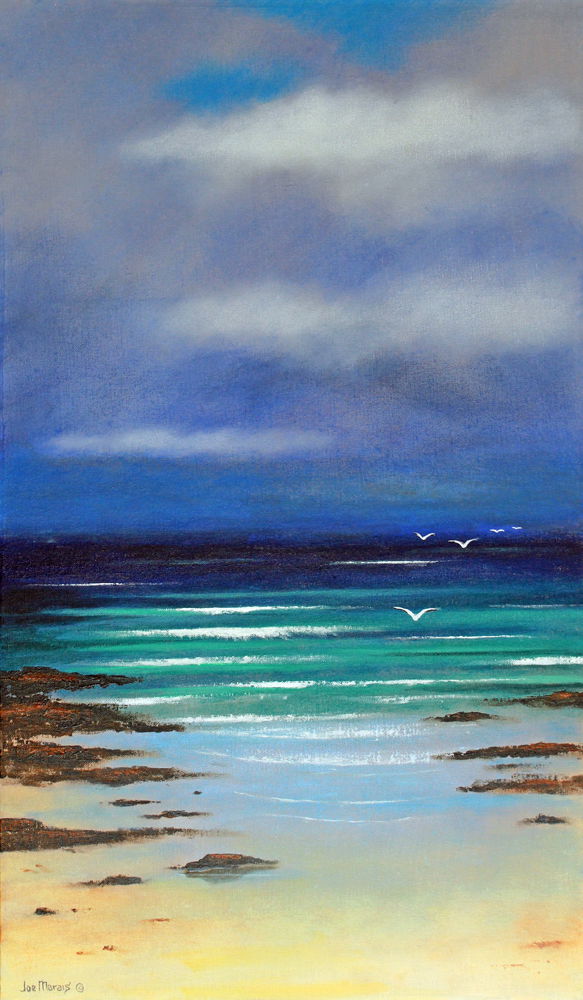
Beach Therapy by Joe Marais
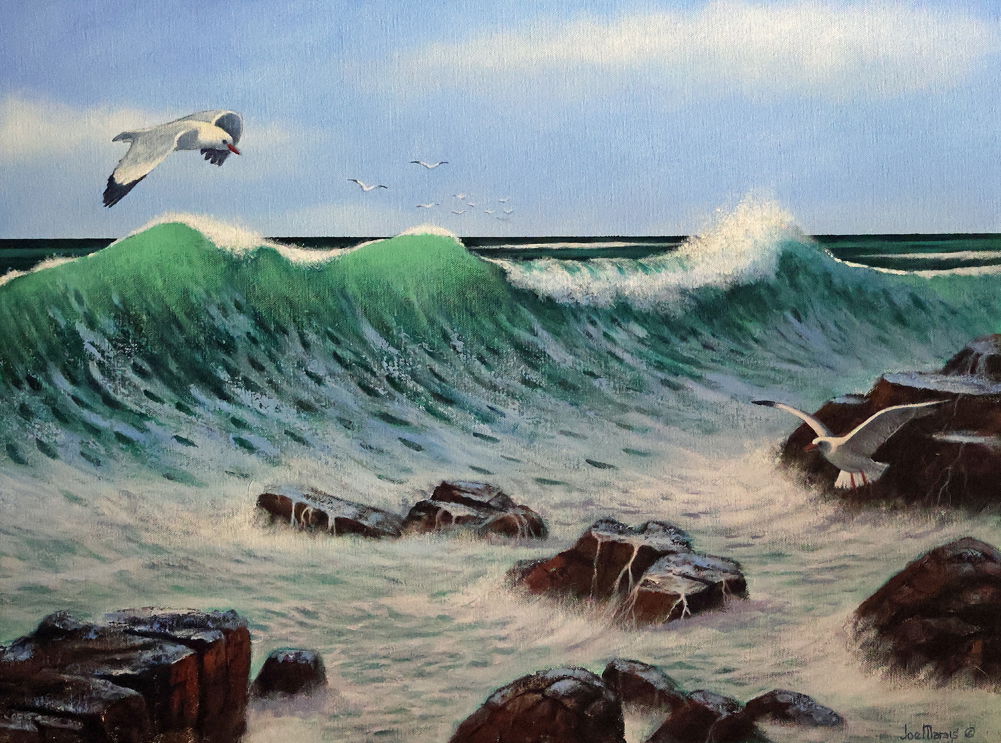
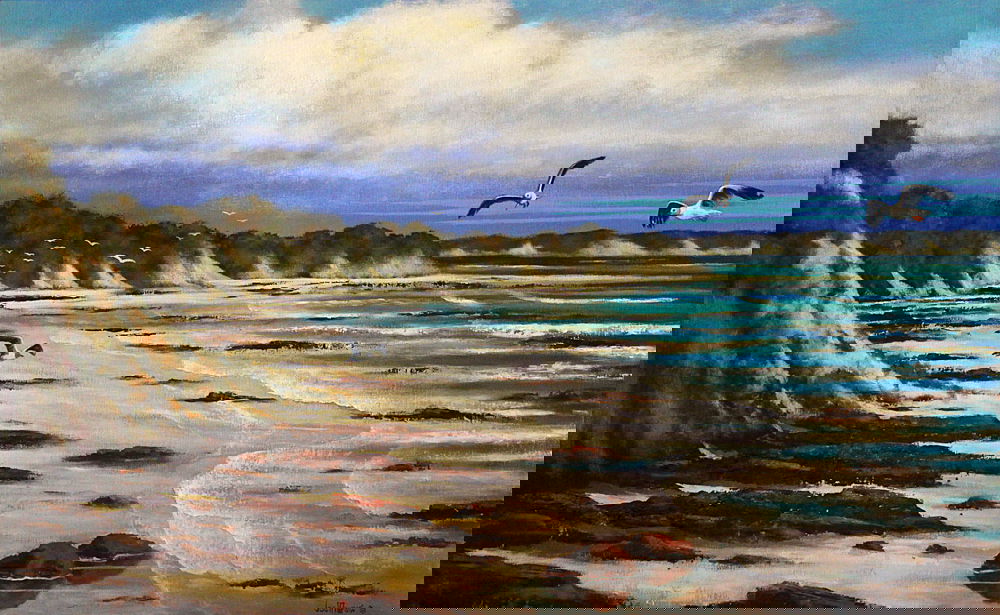
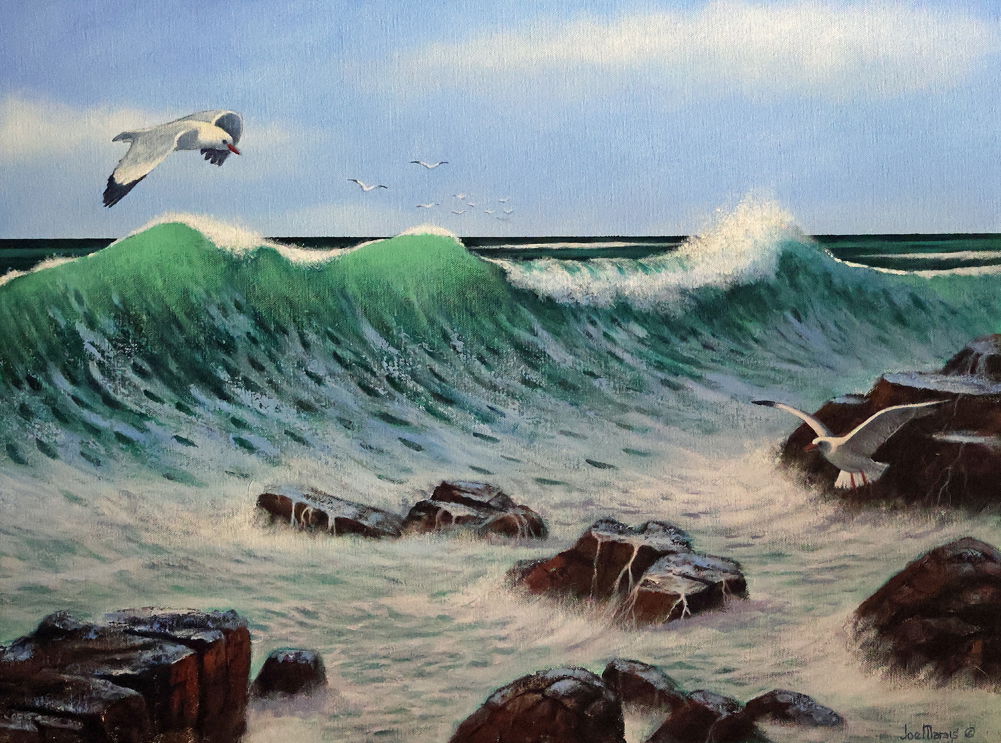
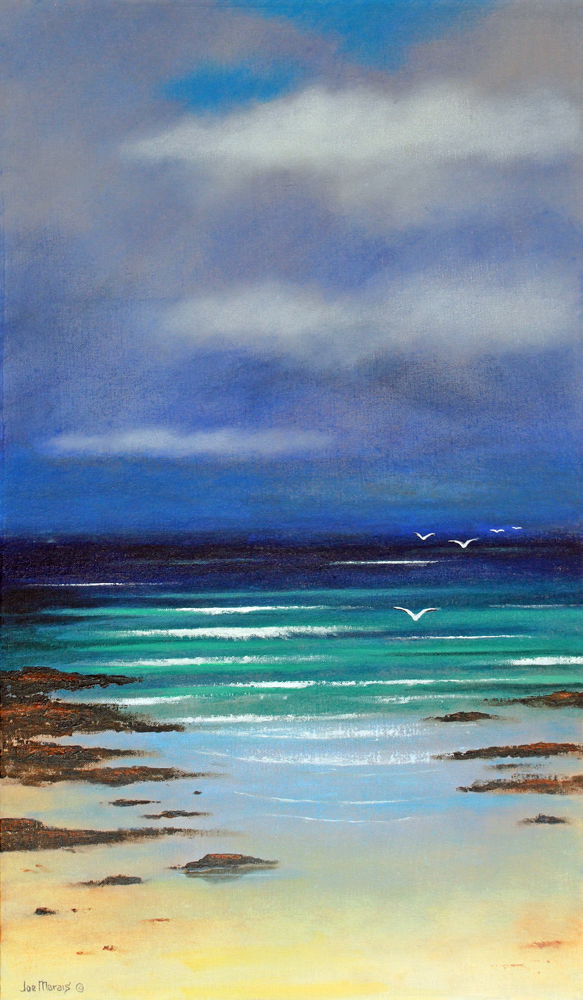
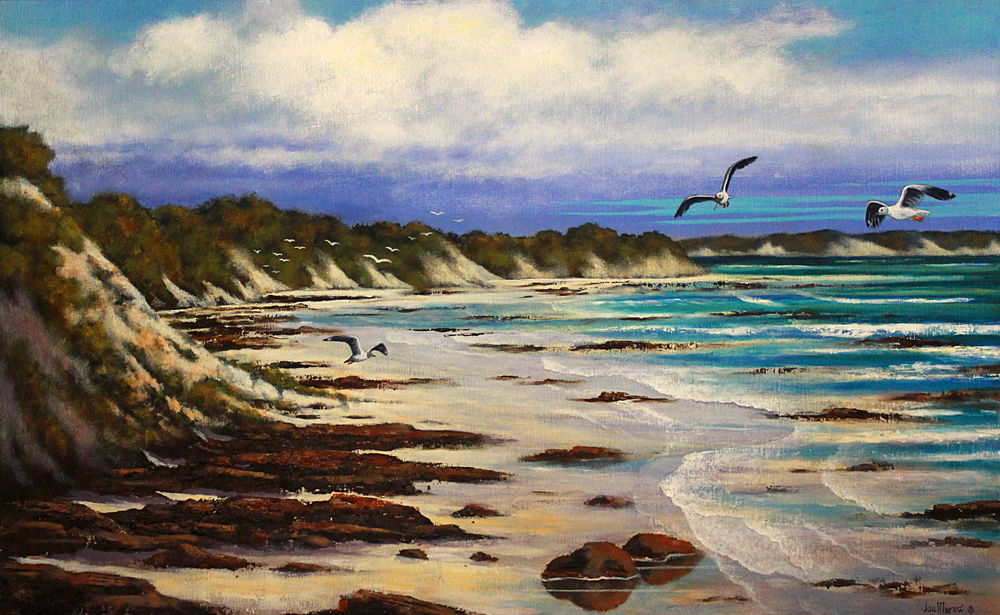
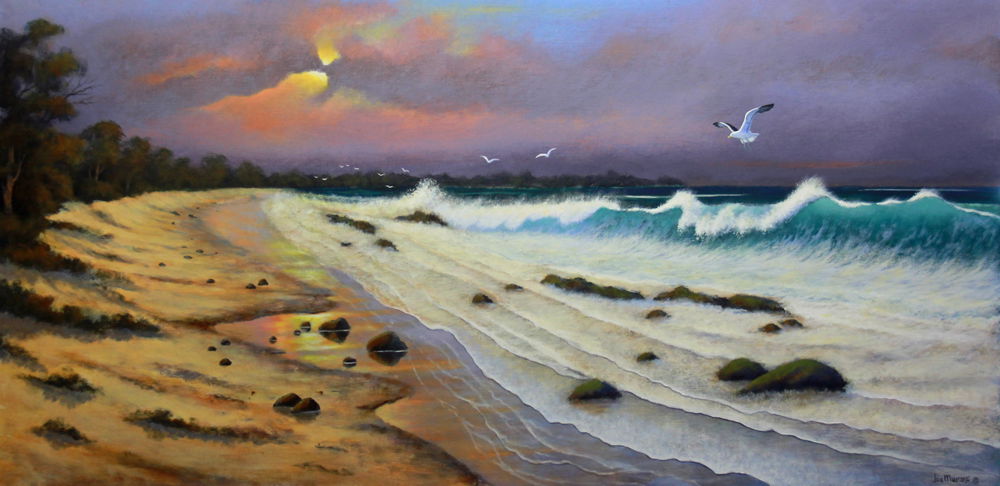
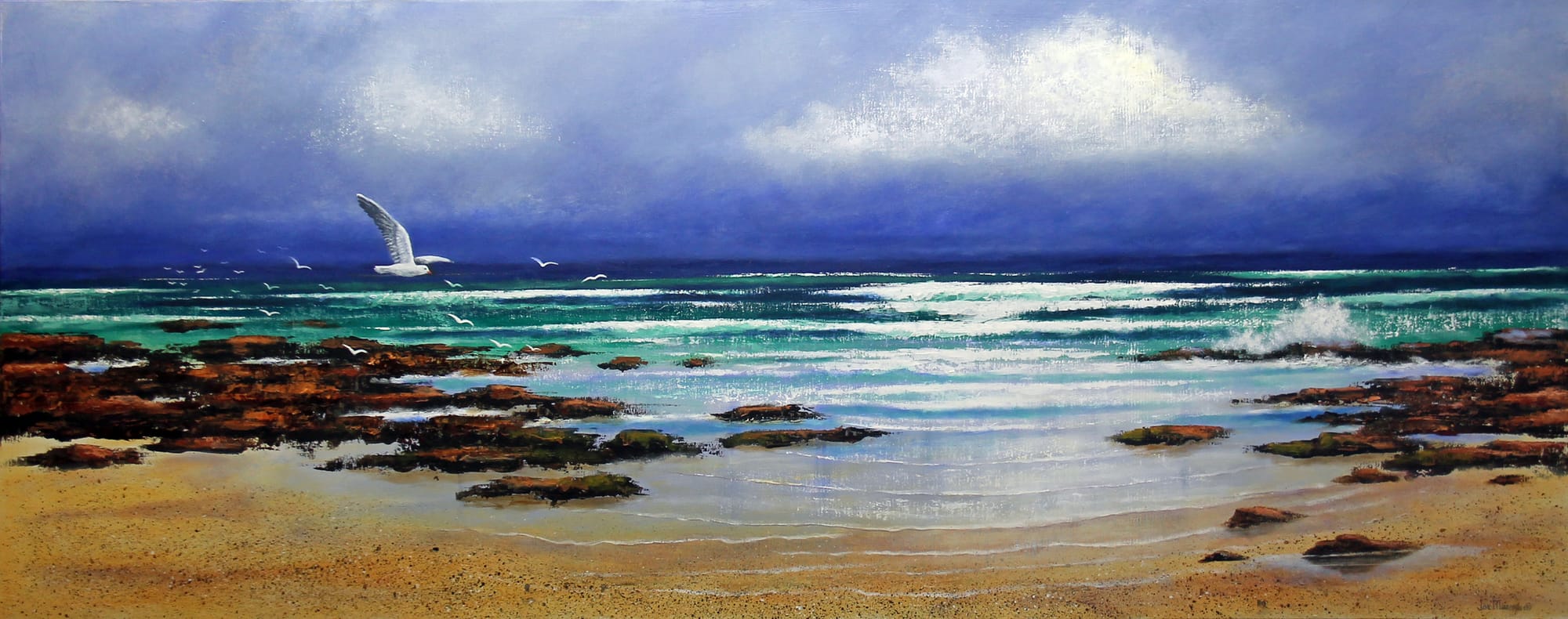
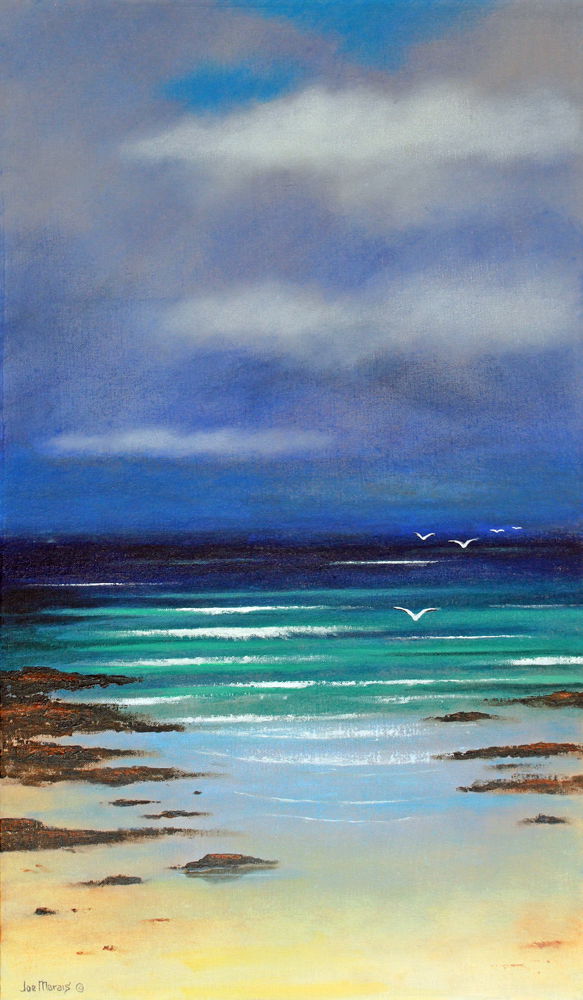
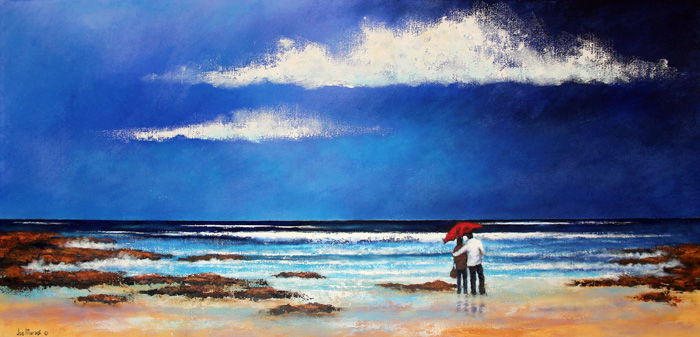
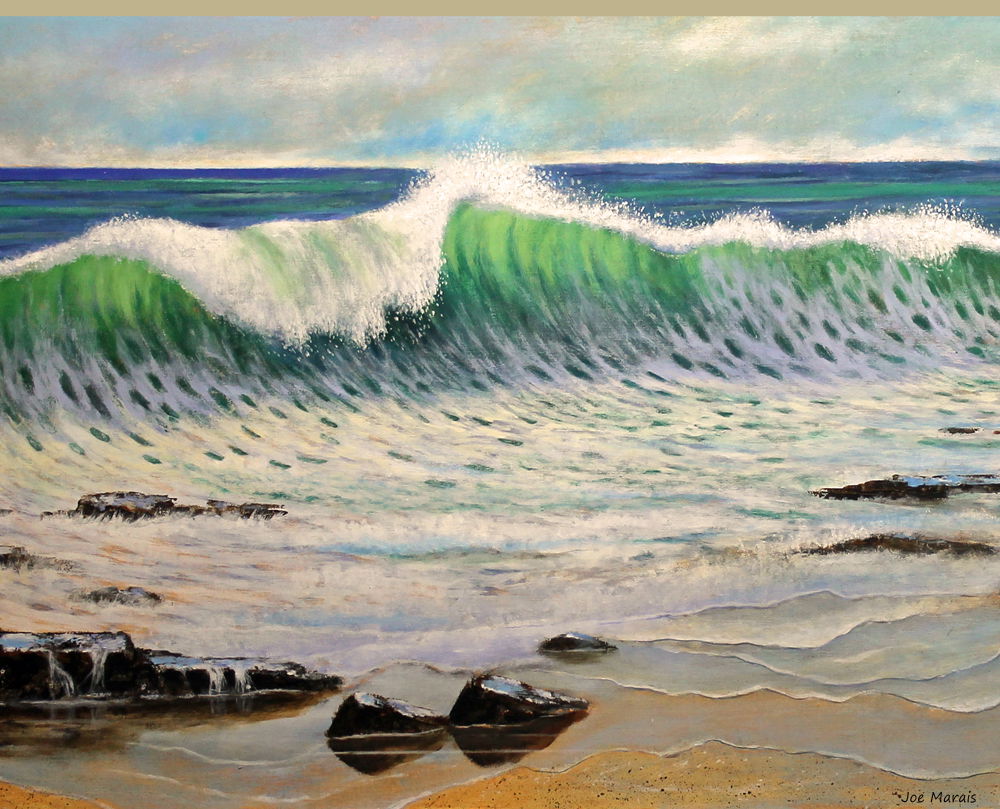
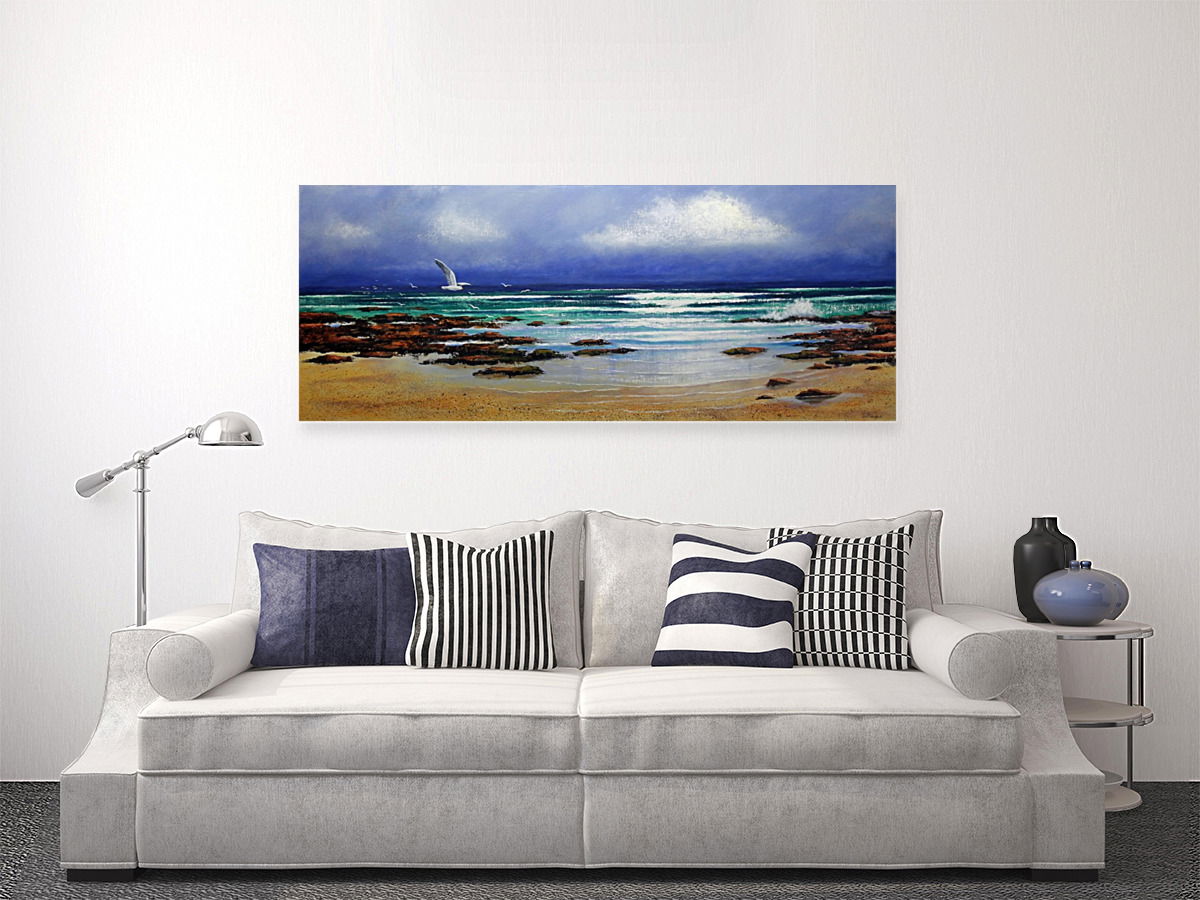
Title: Beach Therapy Original Acrylic Painting on Canvas Measurements: 900 x 600mm Block Mounted The sea has a rhythmic pulse unmatched by any other part of nature. It creates its own sounds and composes its own symphony. The sea is buzzing with energy. The waves are gliding gently to the shore. The slow crushing and swelling of sea sounds are naturally calming and soothing to the brain. We, therefore, process these ocean sounds in a very different way to other noises, allowing us to relax and even sleep through these non-threatening types of audio.
Our Natural Splendour by Joe Marais
Title: Our Natural Splendour Original Acrylic Painting on Canvas Measurements: 900 x 500mm Block Mounted
Tall and handsome by Joe Marais
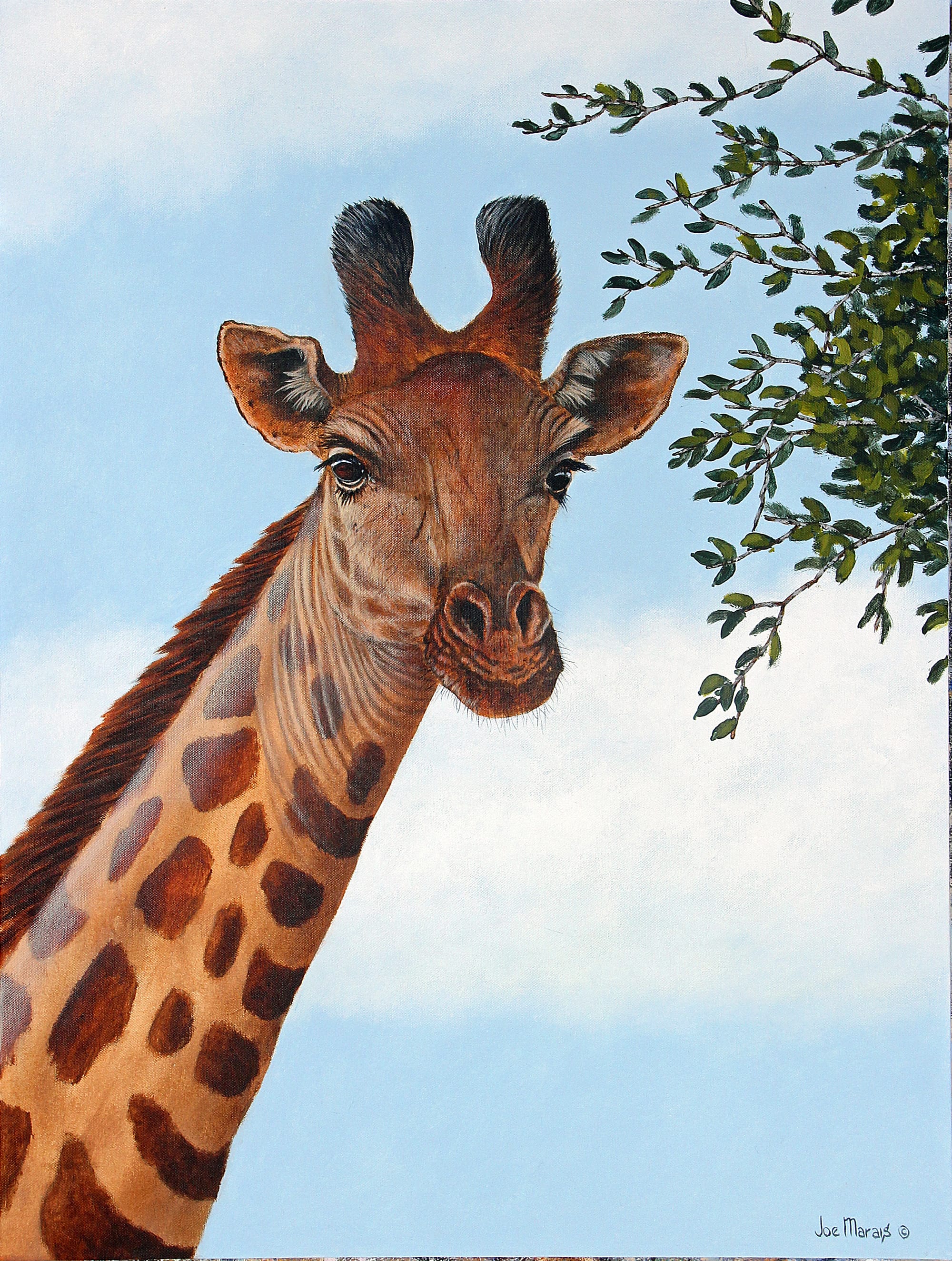
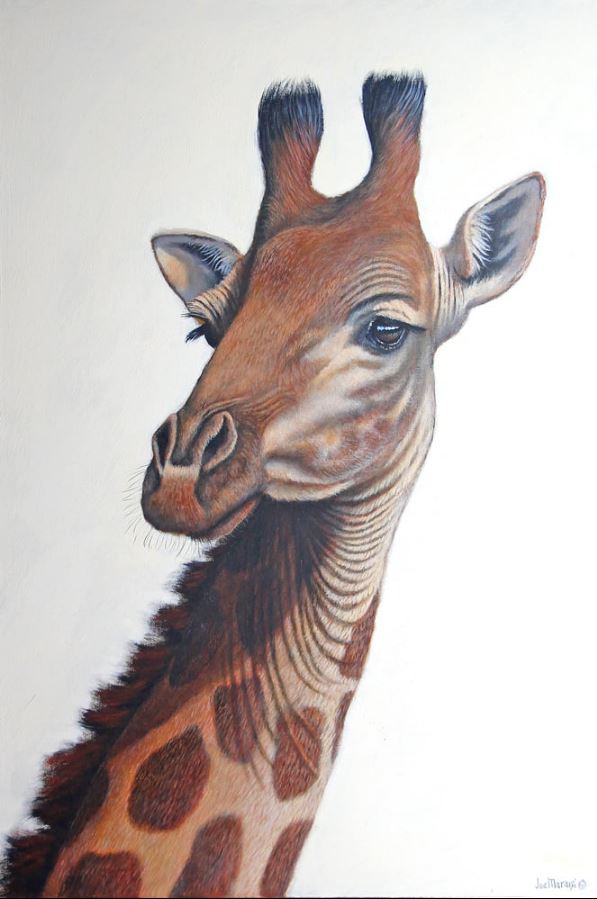
Title: Tall and handsome! Original Acrylic Painting on Canvas Measurements: 900 x 600mm Block Mounted One of the distinguishing characteristics of a giraffe is its long neck. This allows giraffes to reach the highest leaves and shoots up in the Acacia tree (their favourite food source), which others browsers cannot reach, whilst also keeping an eye out for predators from their vantage point. The neck is also used for ‘necking’ in Bulls. This is a ritualised fight that appears to help establish dominance, and involves repeatedly swinging their neck to deliver head-butts to the other bull on their body and belly. The giraffe’s neck has a very complex system that regulates their blood pressure, ensuring that plenty of blood gets to their brain but not too much when they bend down to take a drink.
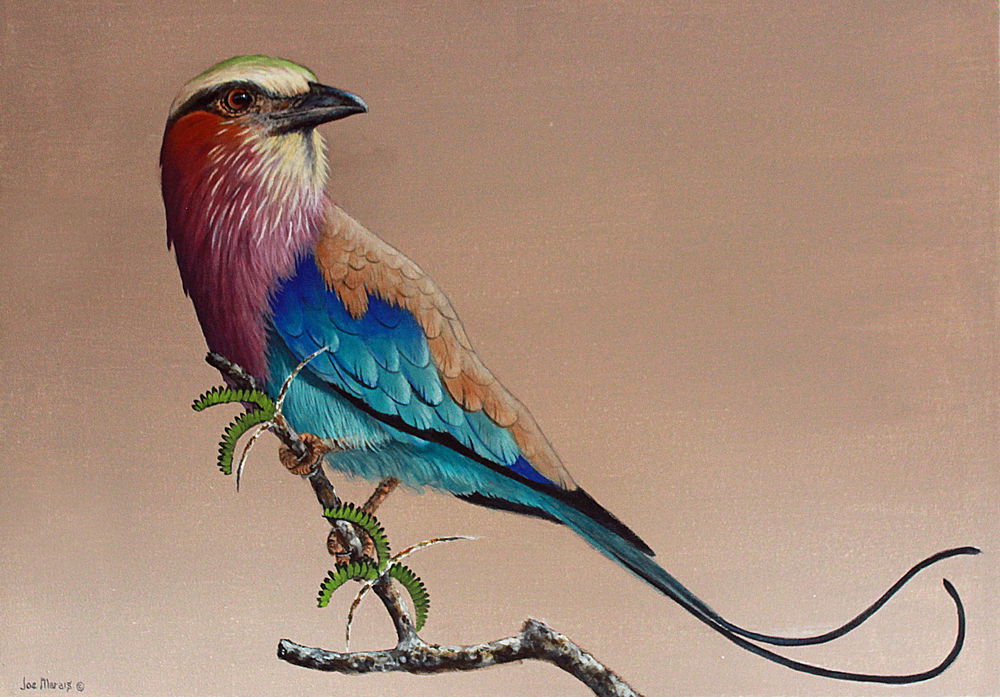
Flying Rainbows of the Sky by Joe Marais
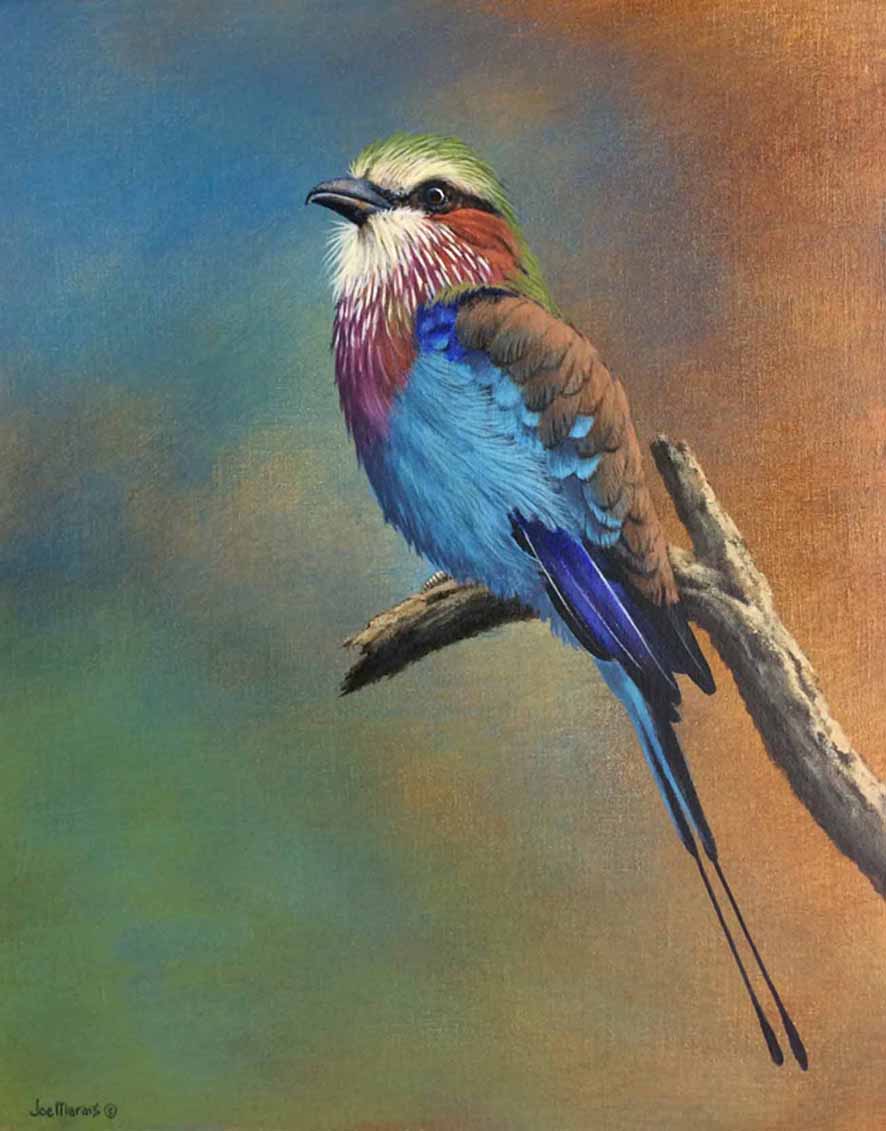
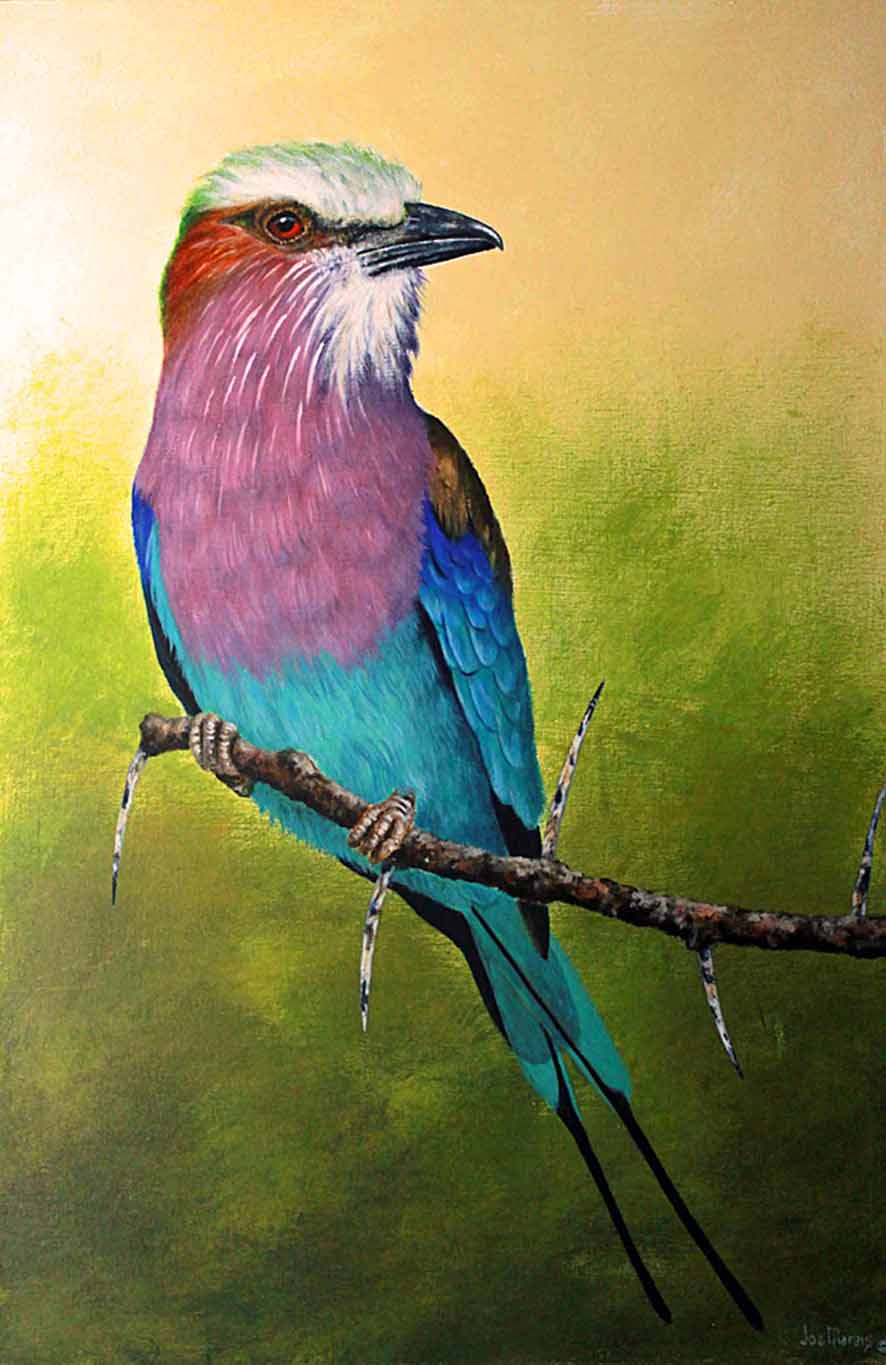
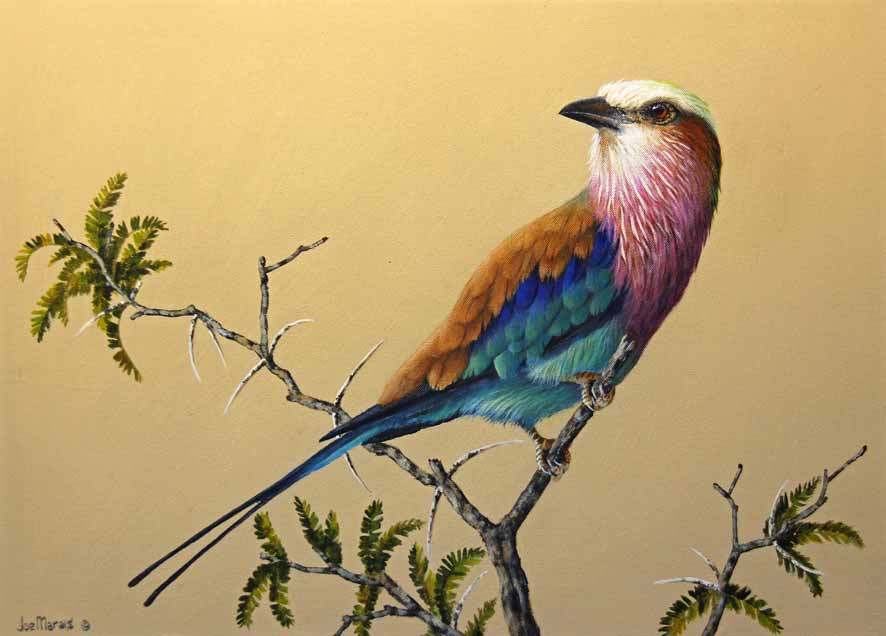
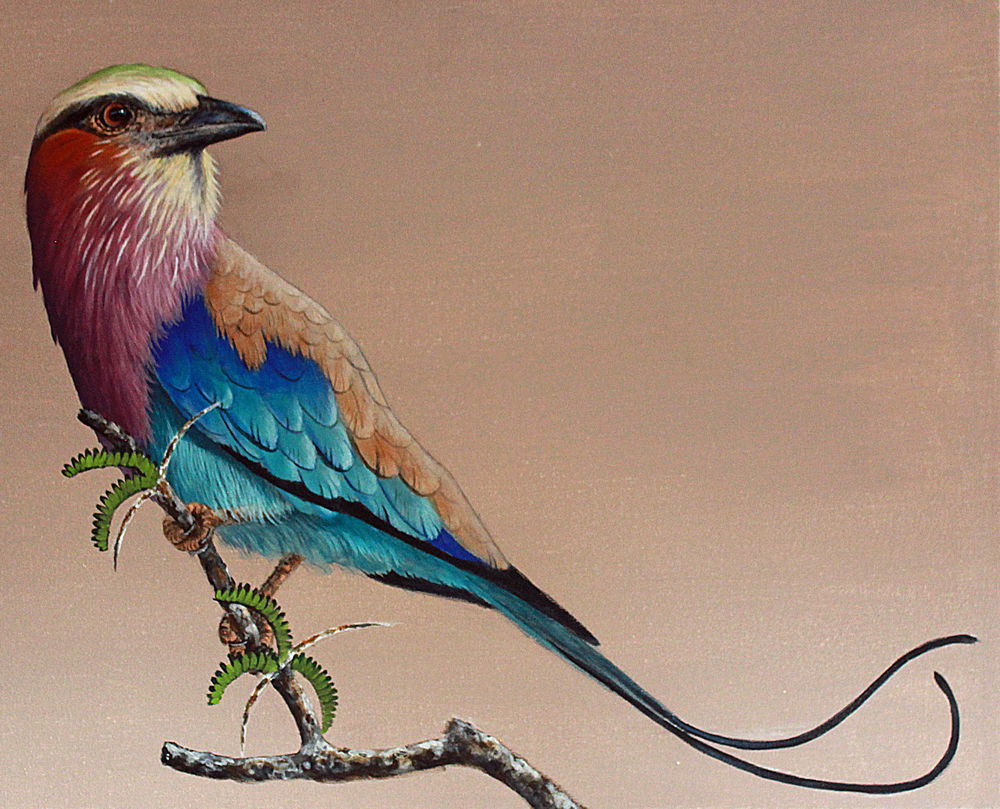
Title: Flying Rainbows of the Sky Original Acrylic Painting on Canvas Measurements: 900 x 600mm Block Mounted Lilac-breasted rollers are truly rainbows in the African skies. With blue wings, a green head, and a lilac chest, this tiny bird amazes and hypnotizes onlookers. They also hold a depth of tradition and folklore in many cultures. In African culture, the Lilac-breasted Roller is considered the bird of peace. It was often sacrificed by kings declaring peace in their land. It was known as ‘the bird of the sun’ and helped maintain harmony between ancient communities.
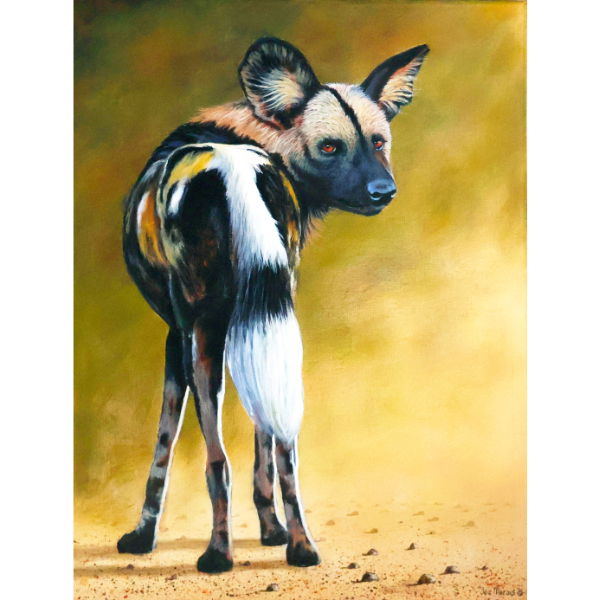
Be aware! The hunt is on! by Joe Marais
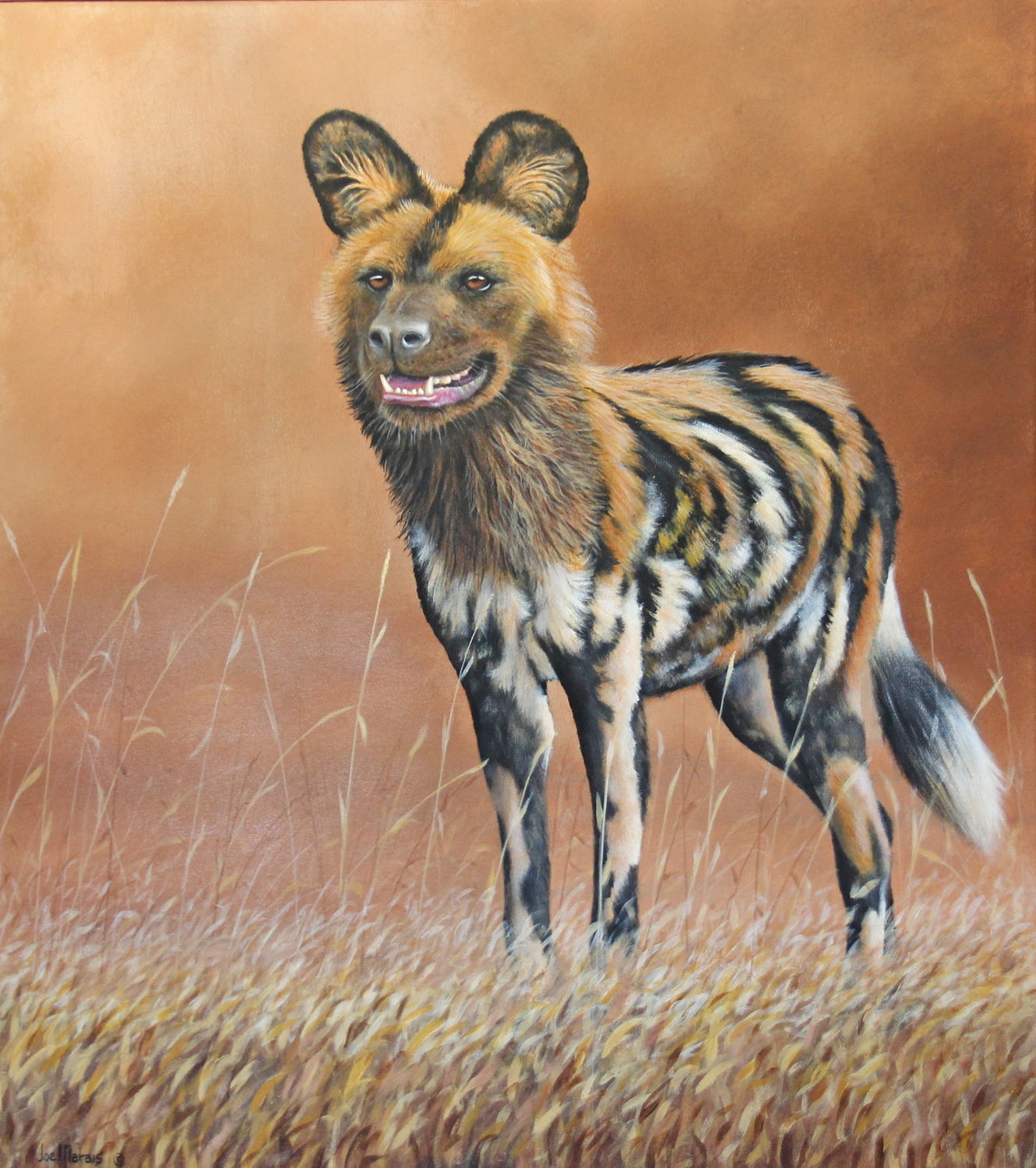
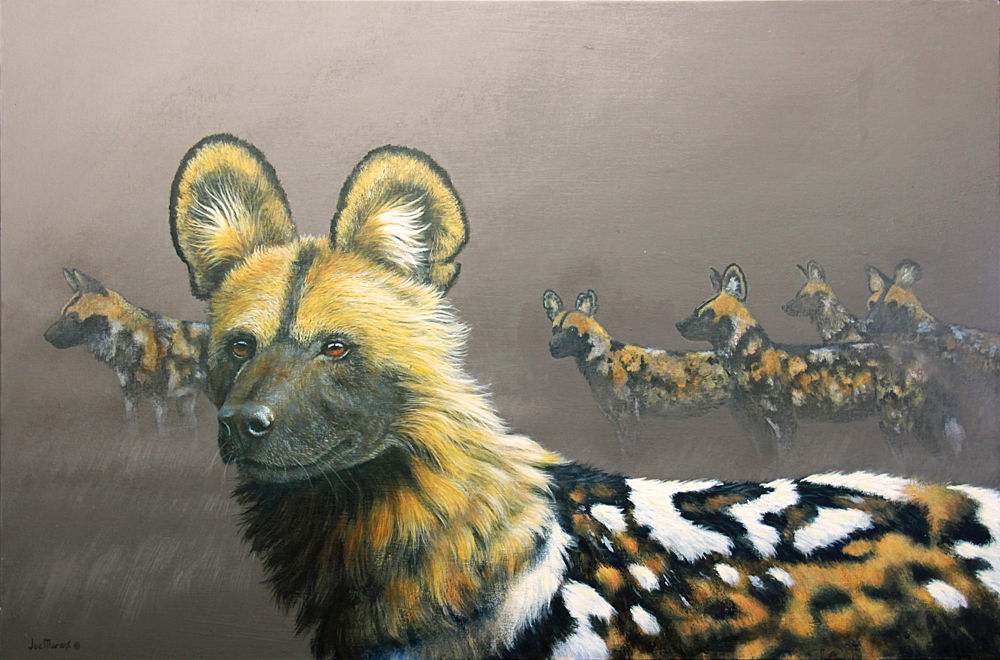
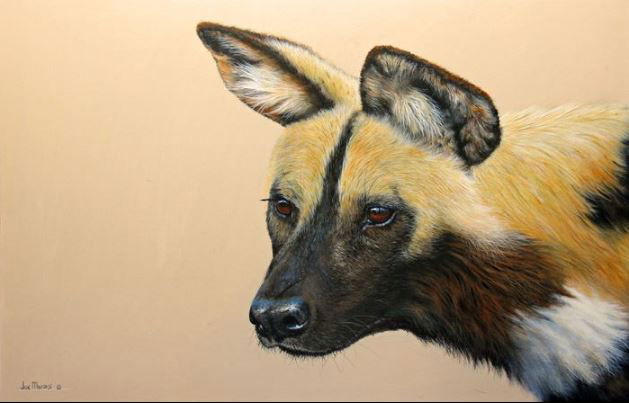
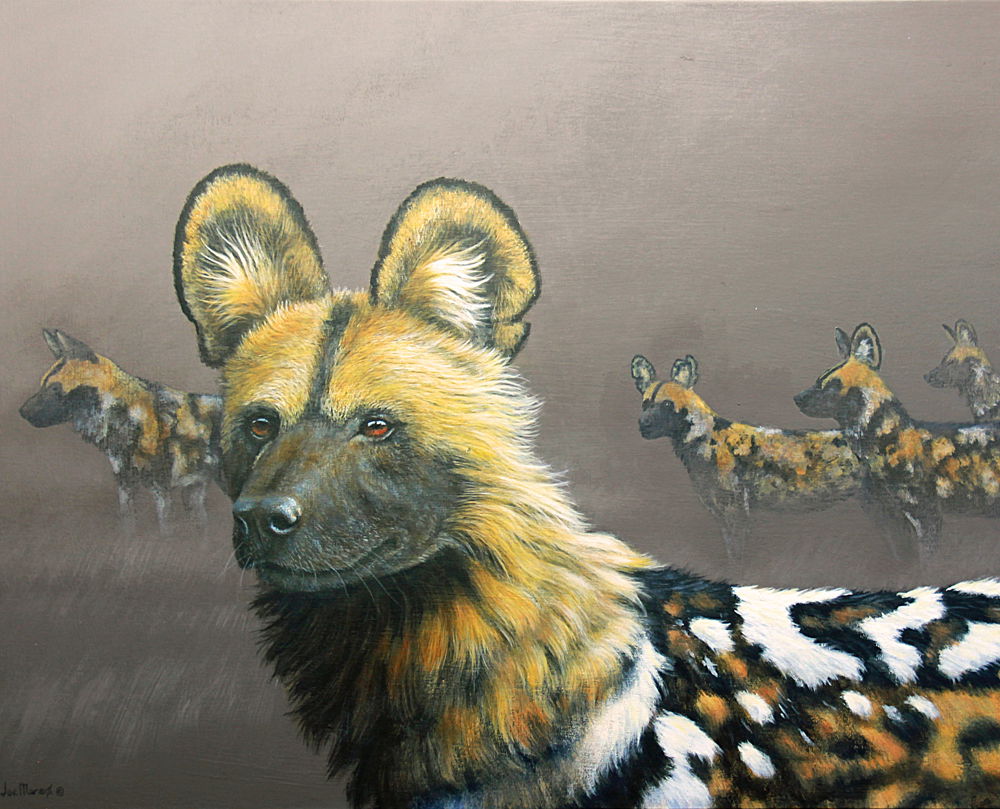
Title: Be aware! The hunt is on! Original Acrylic Painting on Canvas Measurements: 900 x 600mm The African Wild Dog is one of the world’s most endangered mammals. The largest populations remain in southern Africa and the southern part of East Africa. Wild dogs are social and gather in packs of around ten individuals, but some packs number more than 40. They are opportunistic predators that hunt medium-sized ruminants, such as gazelles. In a sprint, African wild dogs can reach speeds of more than 70 km per hour.
A Golden Moment In Time by Joe Marais
Title: A Golden Moment In Time Original Acrylic Painting on Canvas Measurements: 1200 x 600mm Block Mounted Some things are still free to enjoy, like watching a sunset, the sound of the ocean, starry nights, the smell of rain, etc. A sunset symbolizes the completion of a day’s work and is a reminder to wind down and reset our souls for the next day!
Beacon of Hope by Joe Marais
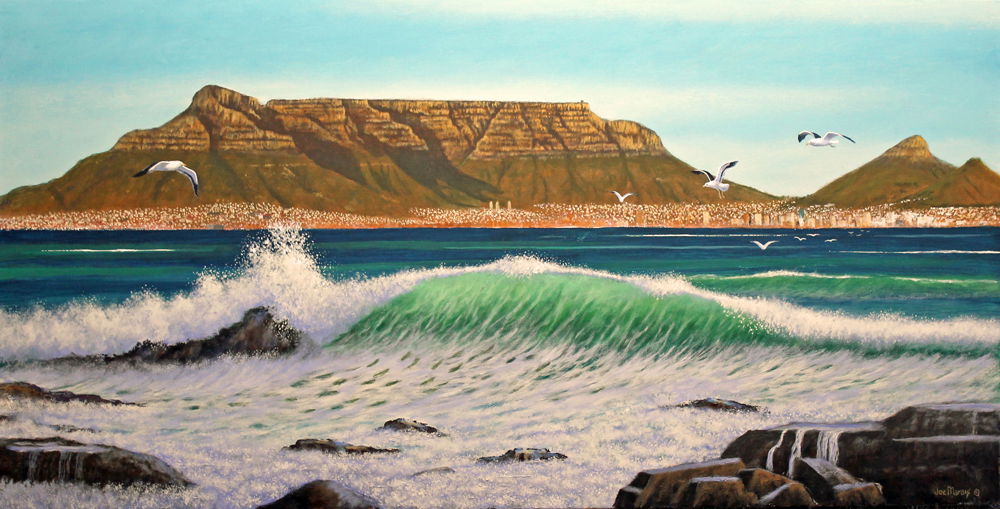
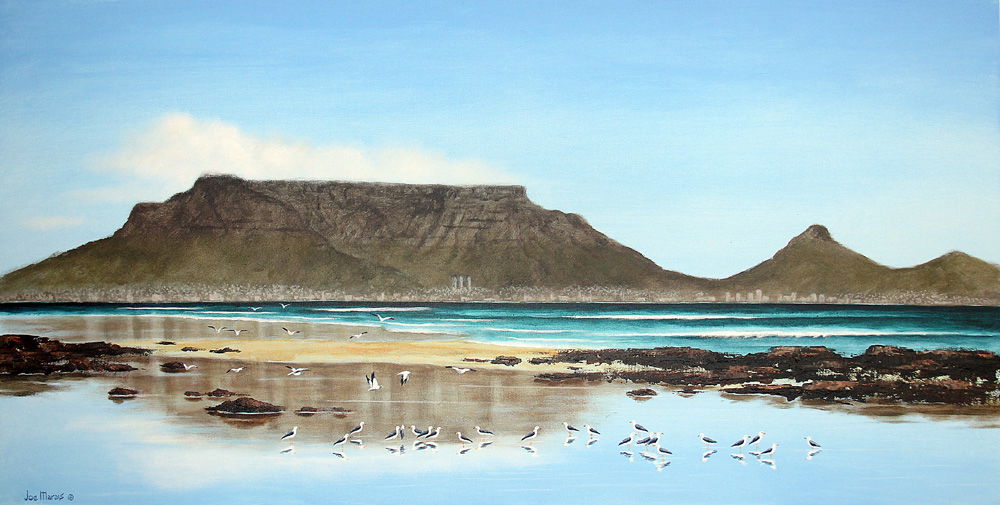
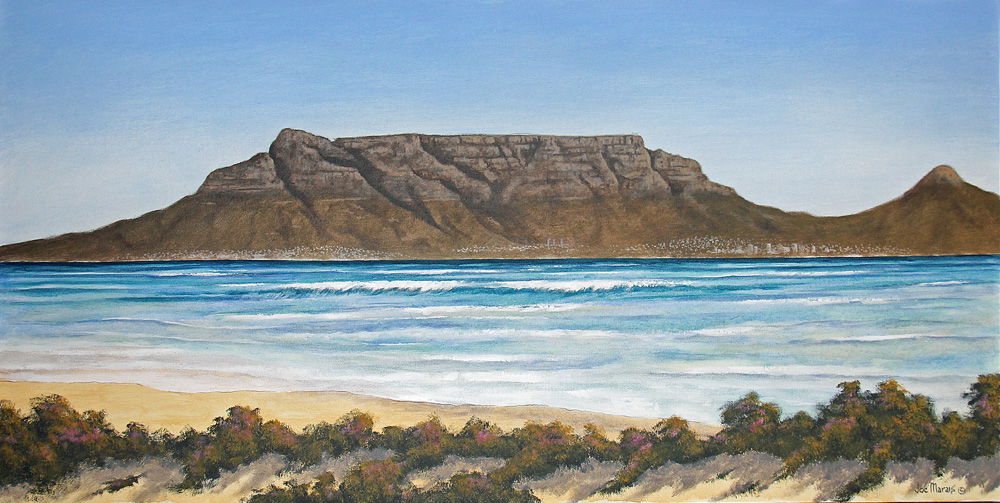
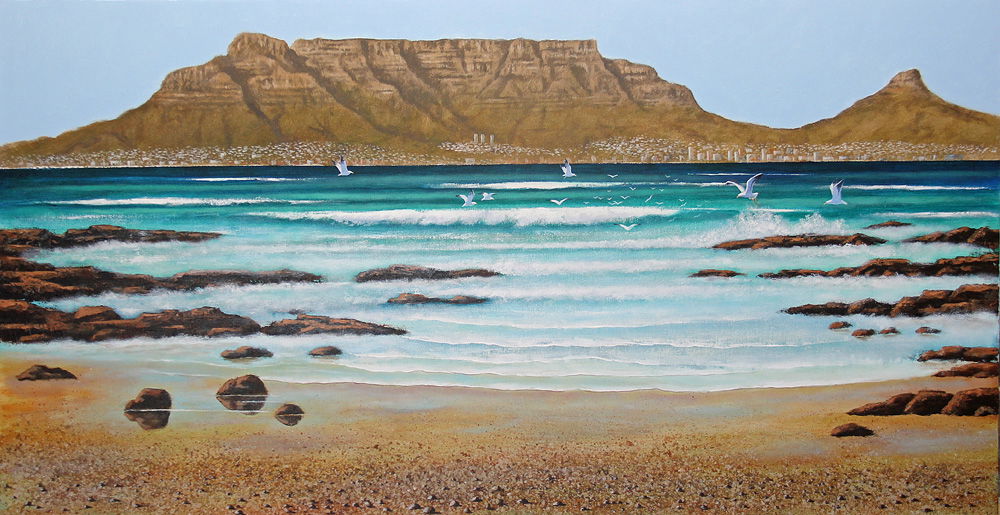
Title: Beacon of Hope Original Acrylic Painting on Canvas Measurements: 1200 x 600mm Box Mounted Table Mountain is proud to be one of the official New 7 Wonders of Nature, and the only one to be located in an urban area, making it highly accessible. Competing against major international attractions, Table Mountain made it to the top seven after a campaign that attracted more than 100-million global votes.
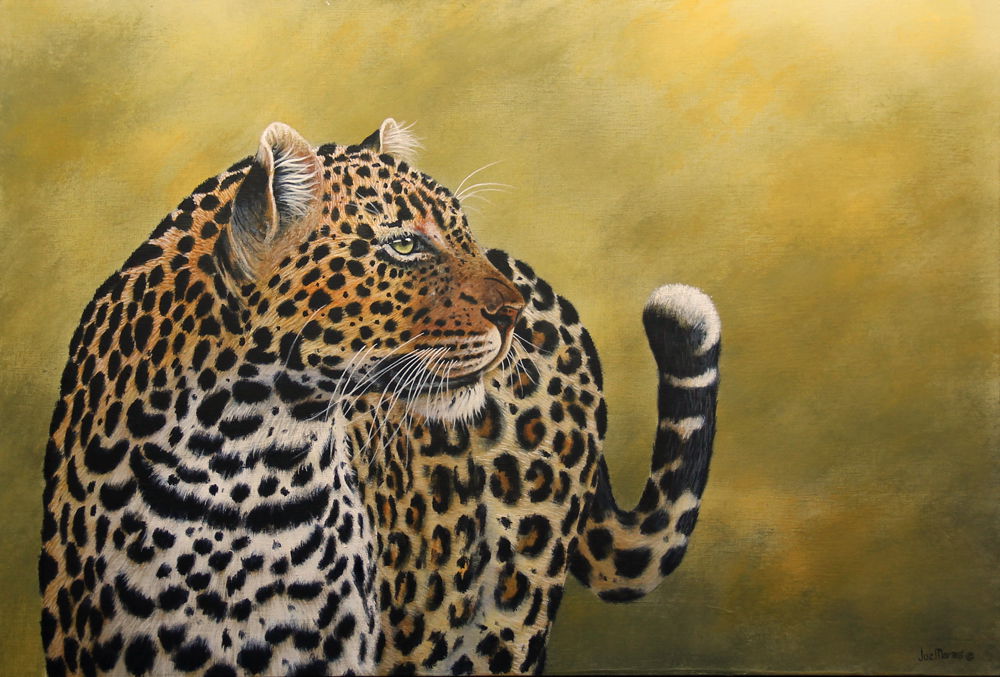
The Ultimate Cat by Joe Marais
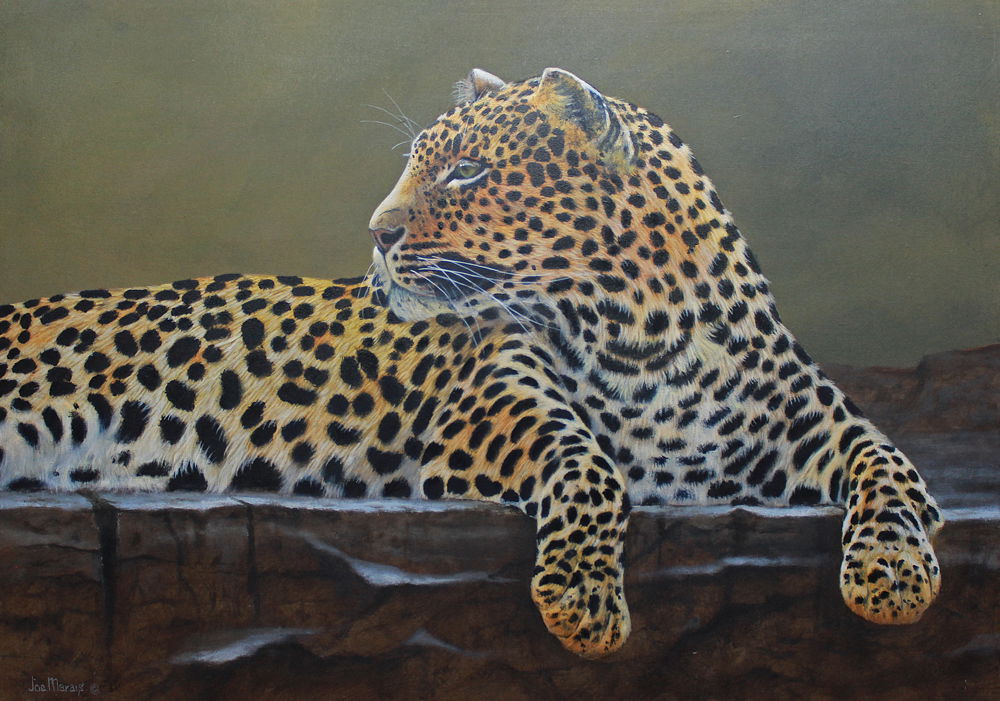
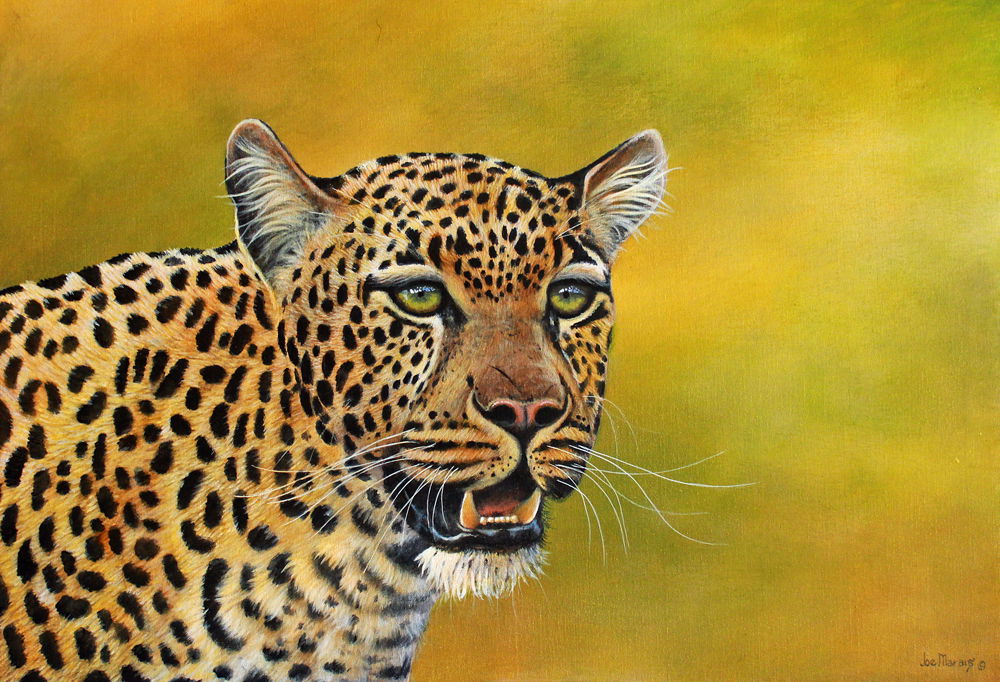
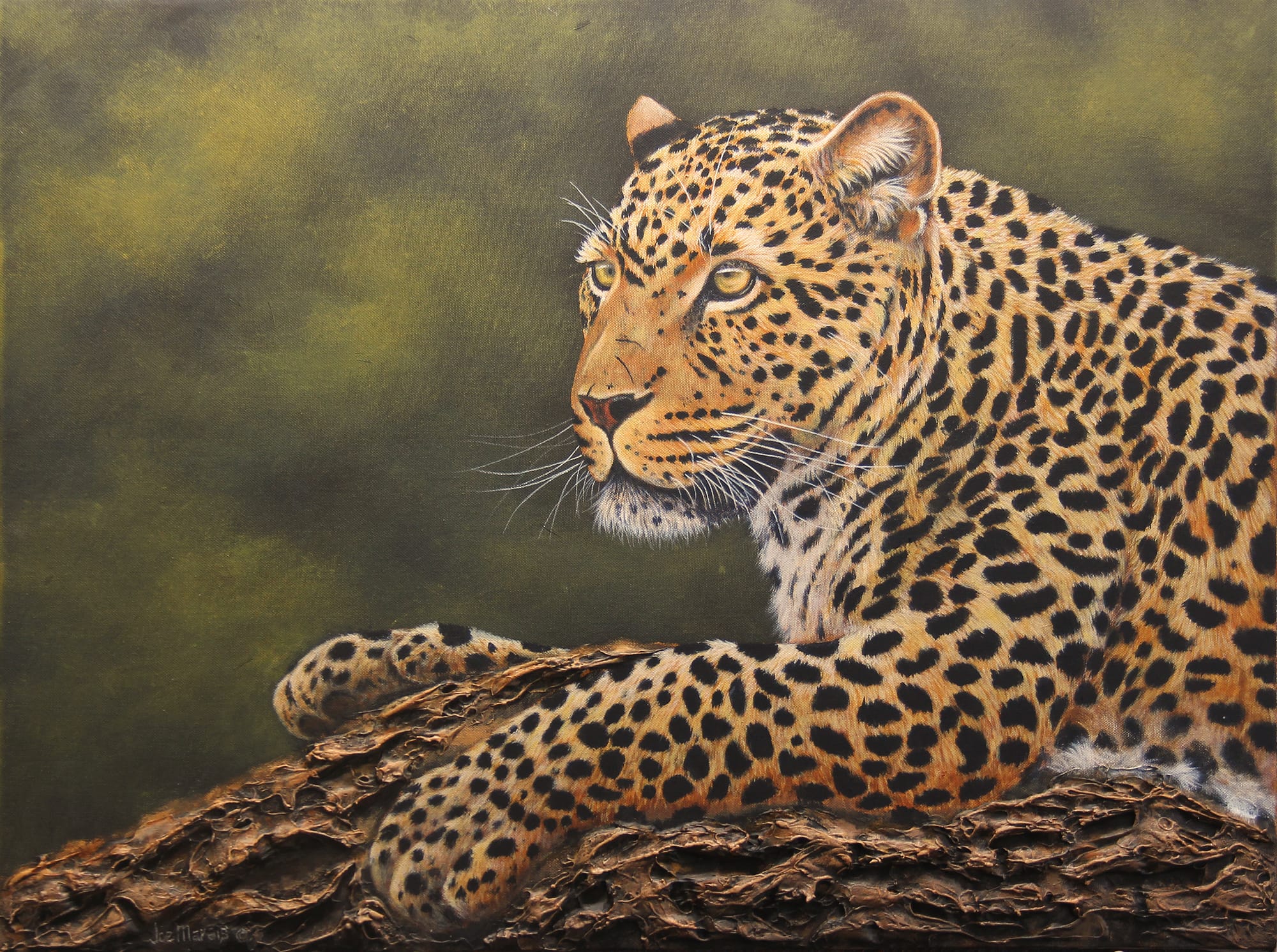
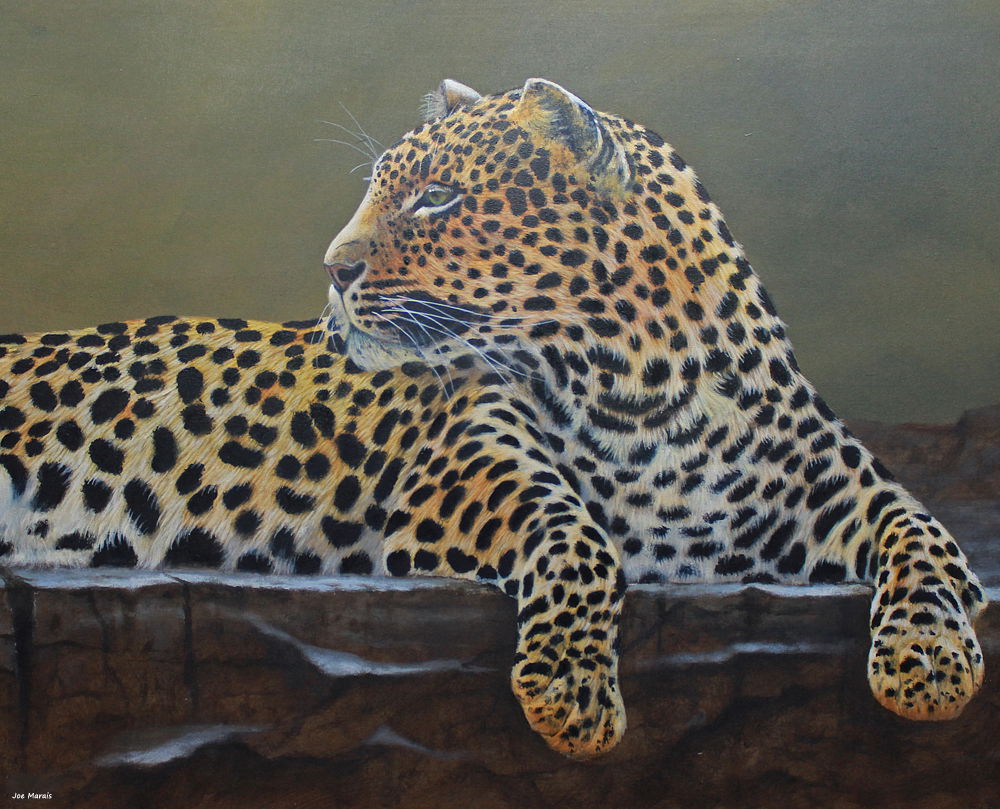
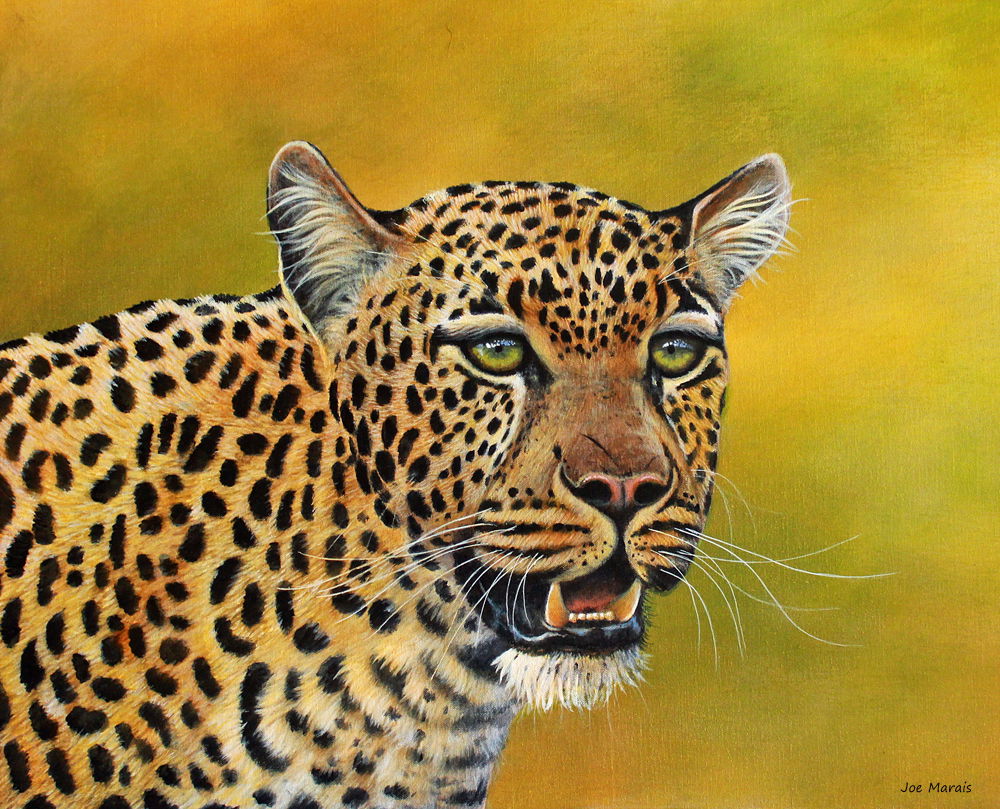
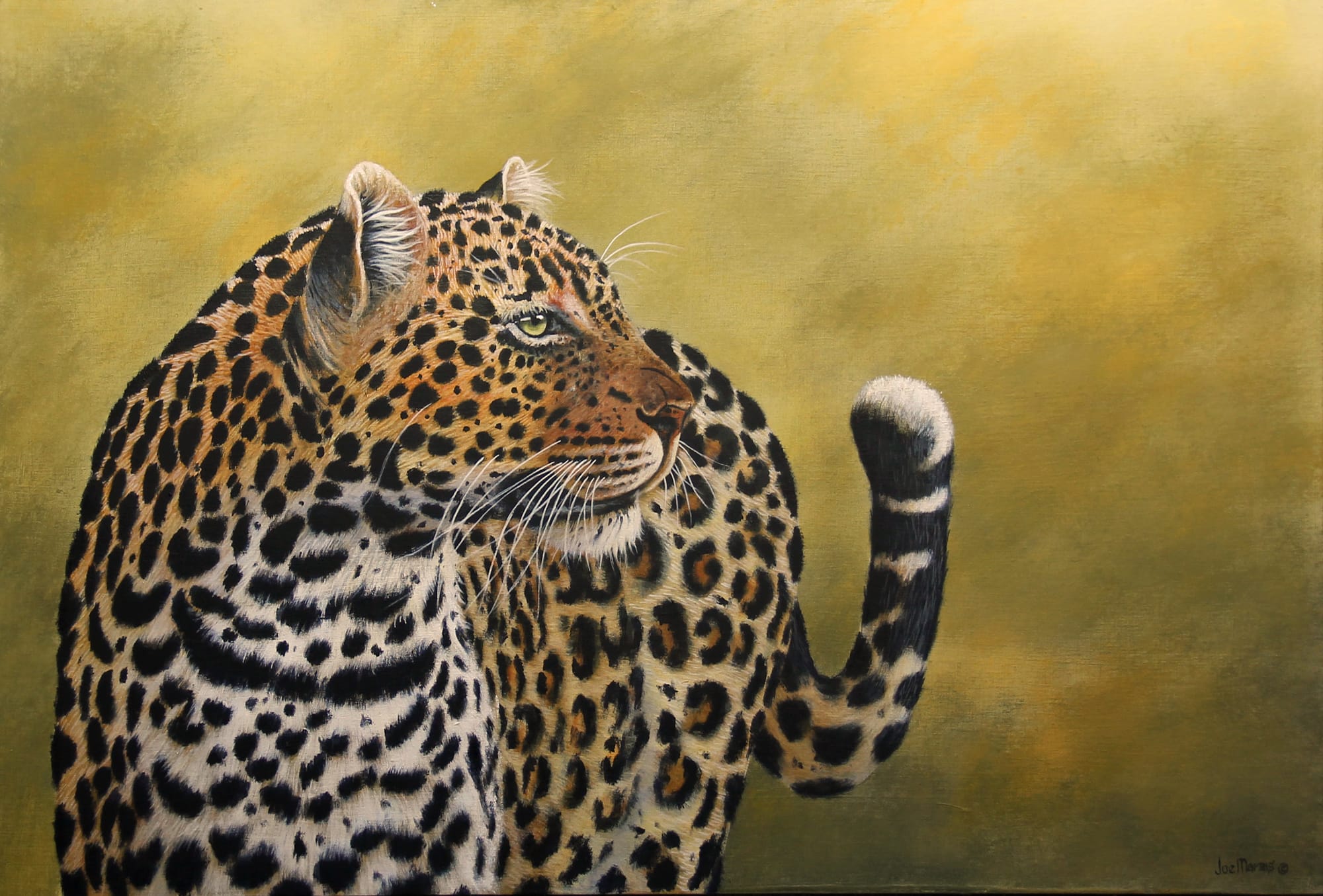
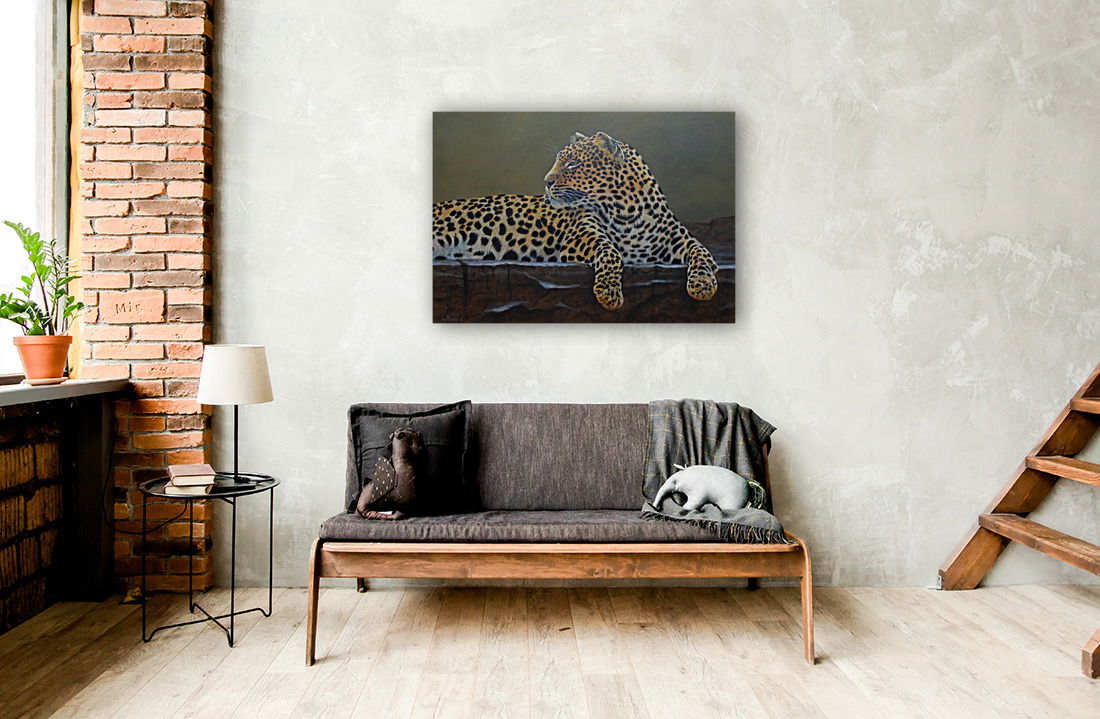
Title: The Ultimate Cat Original Acrylic Painting on Canvas Block Mounted Measurements: 900 x 600mm The African leopard (Panthera pardus) is an elegant and powerfully-built predator. It is the most secretive and elusive big cat, and arguably one of the most beautiful members of the entire Panthera genus. Because of its adapted retinas, leopards can see seven times better in the dark than humans. While the carnivore's preferred food sources are ungulates like antelope, gazelles, and impalas, they feed on many animals that might surprise us. Baboons, hares, rodents, birds, lizards, porcupines, warthogs, fish, and dung beetles are all part of the leopard's extensive menu.
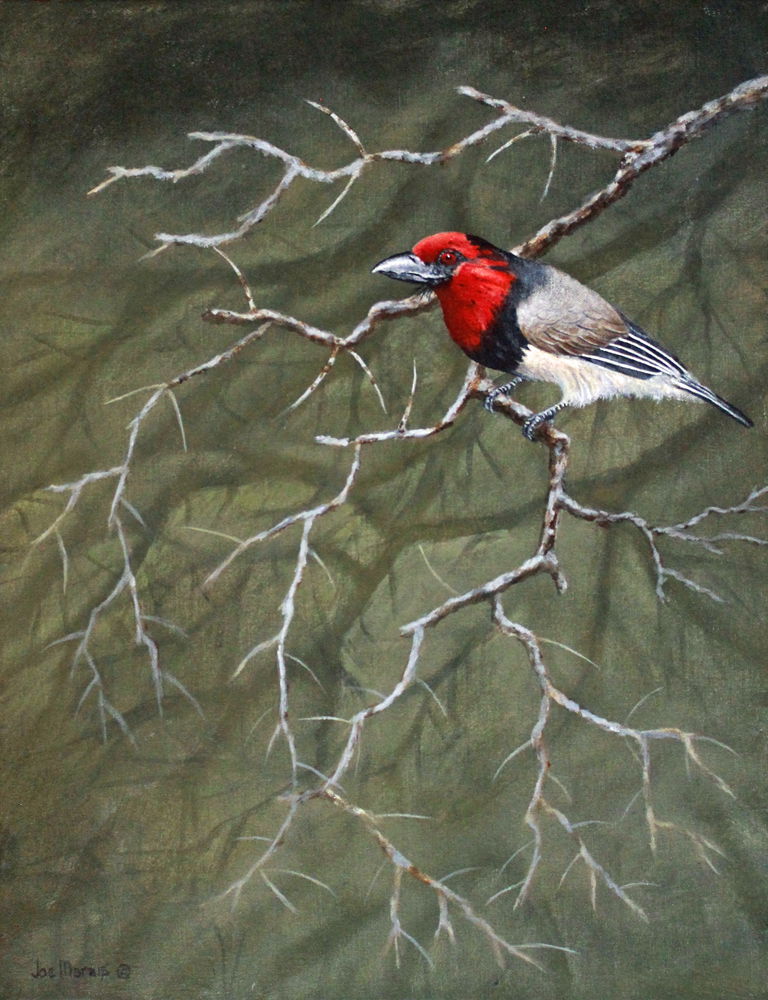
Black-collared Barbet by Joe Marais
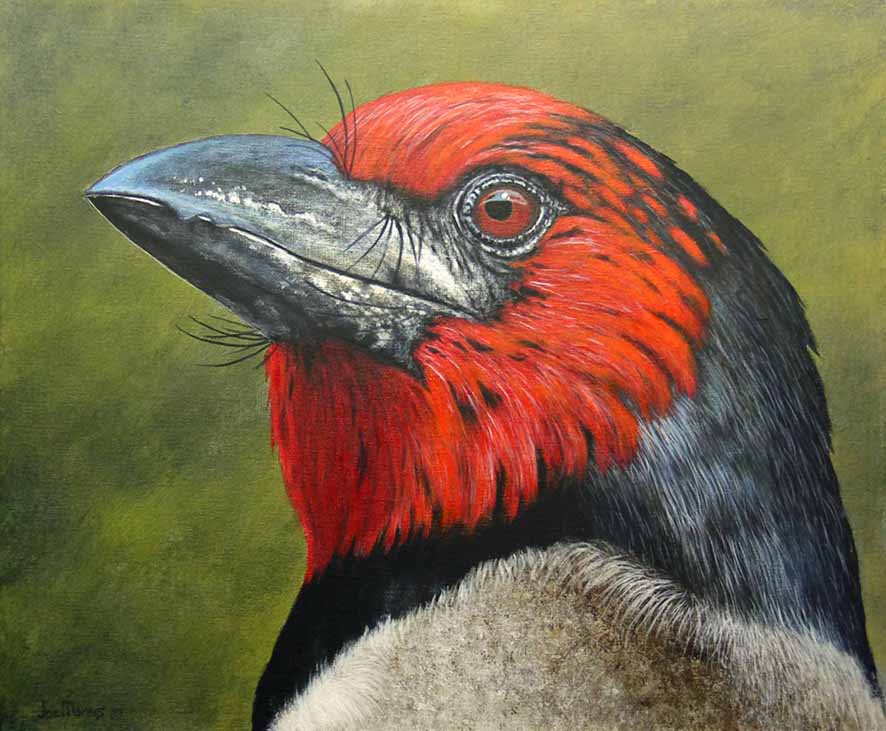
Title: Black-collared Barbet. Original Acrylic Painting on Canvas Measurements: 600 x 500 mm Block Mounted The call of the black-collared barbet consists of the duet of a pair, with the calls being so perfectly synchronized that it sounds as if they are made by one bird. As they call, the two birds bob up and down in front of each other on the branch, with slightly spread wings.
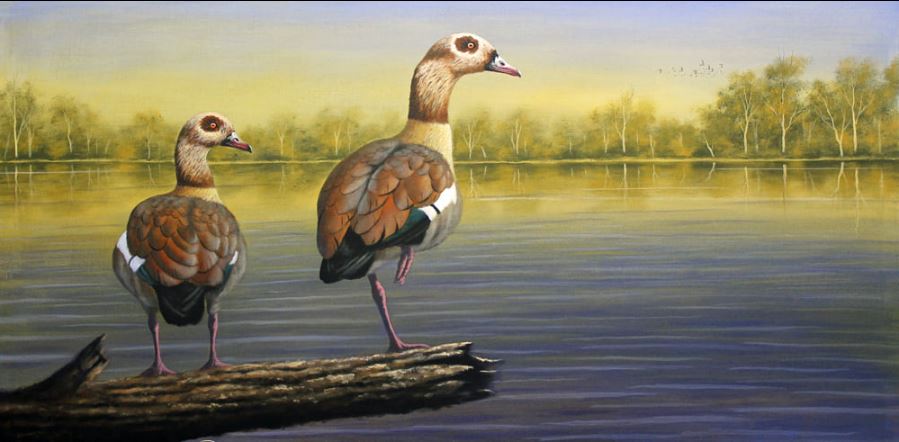
The Sacred Egyptian Geese by Joe Marais
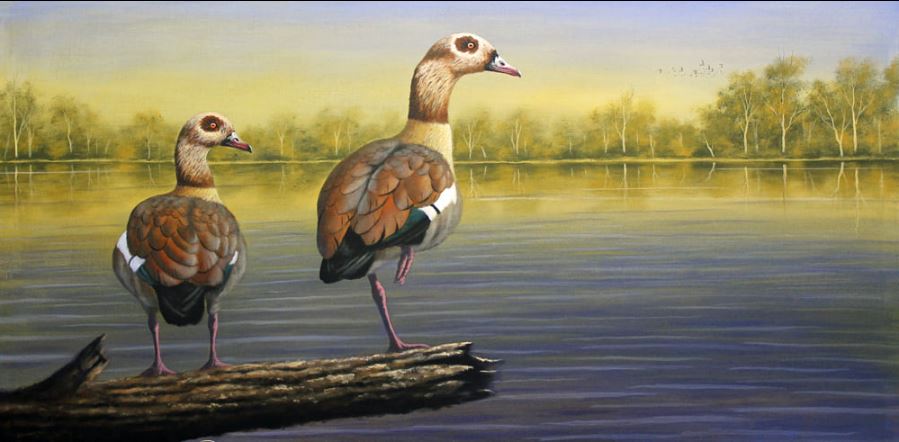
Title: The Sacred Egyptian Geese Original Acrylic Painting on Canvas Measurements: 1200 x 600 mm Block Mounted Egyptian geese were considered sacred by the Ancient Egyptians, and appeared in much of their artwork. Egyptian geese usually pair for life. Both the male and female care for the offspring until they are old enough to care for themselves. Zululand has so many amazing places to enjoy it's natural beauty! This particular place, where I saw this 'happy couple', must be near the top of the list....for me anyway, and I know for many others as well! Any idea which place I am talking about?
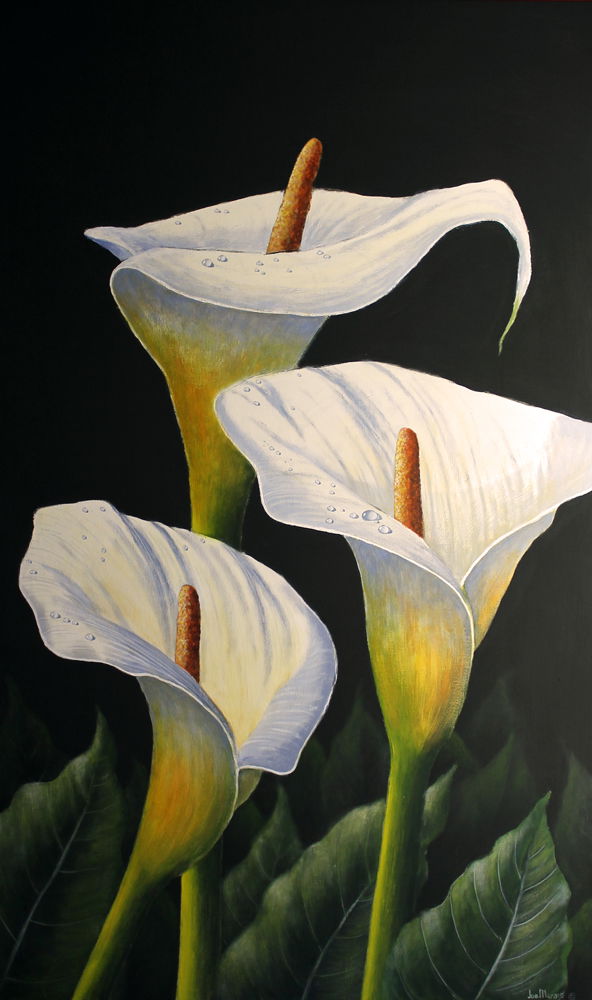
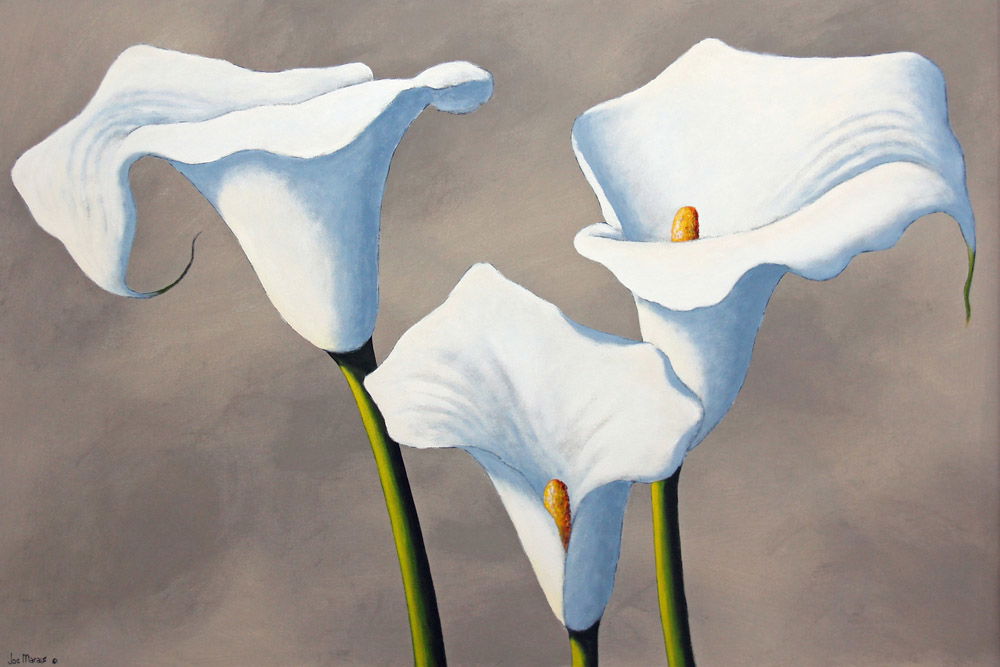
Arum Lily of the Valley by Joe Marais
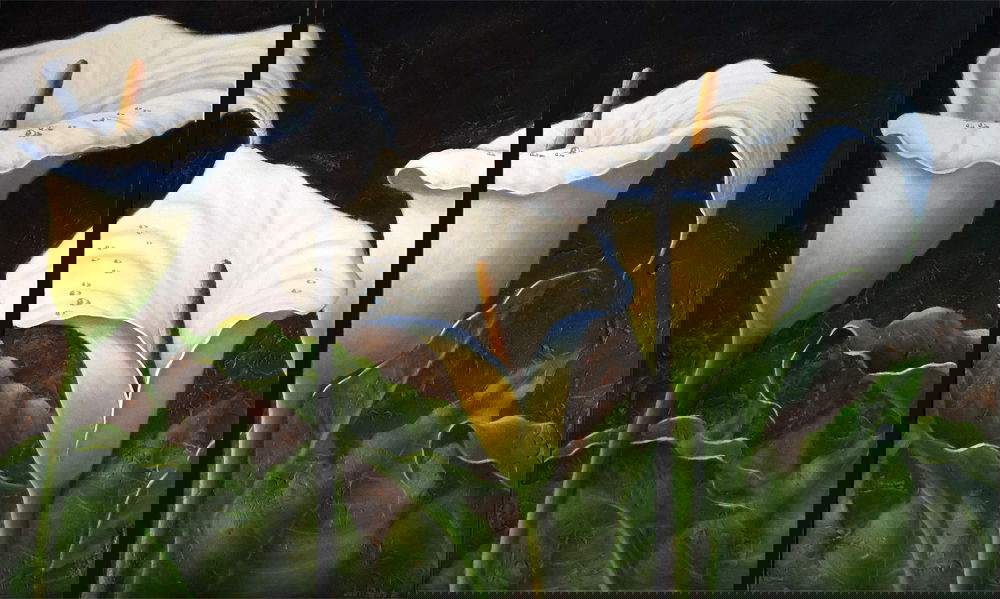
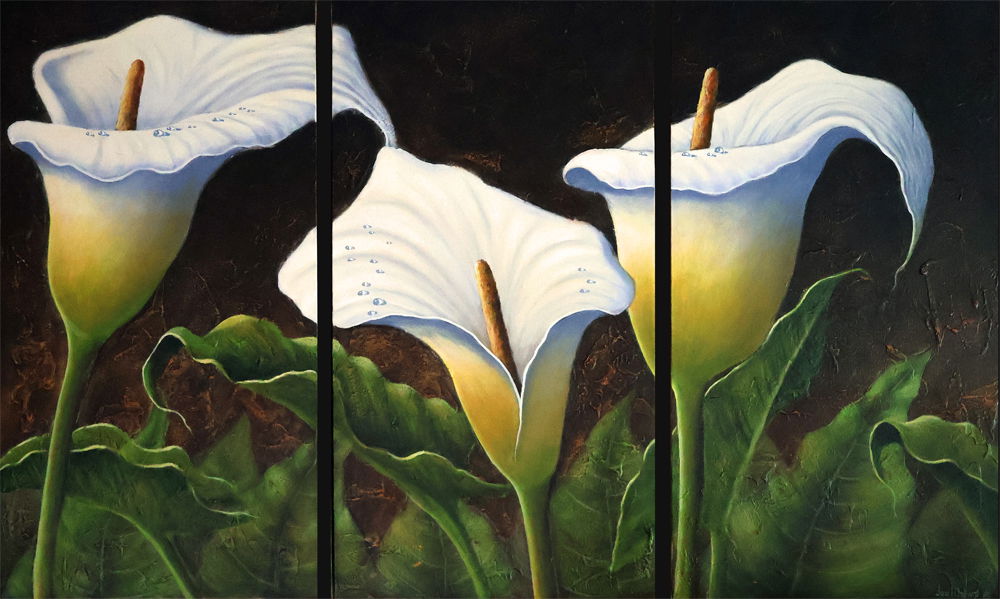
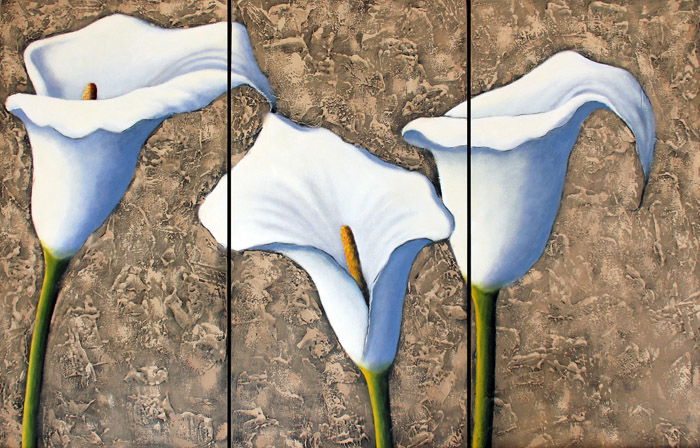
Title: Arum Lily of the Valley Original Acrylic Painting on Canvas Measurements: 1505 x 900 mm Box mounted What could be more beautiful than a creamy white arum lily – whether in your garden, a pot, or the wild? Arum lilies (Zantedeschia) are native to southern Africa from South Africa north to Malawi and grow well in full sun near water, but prefer a semi-shaded environment when there’s no permanent water nearby.
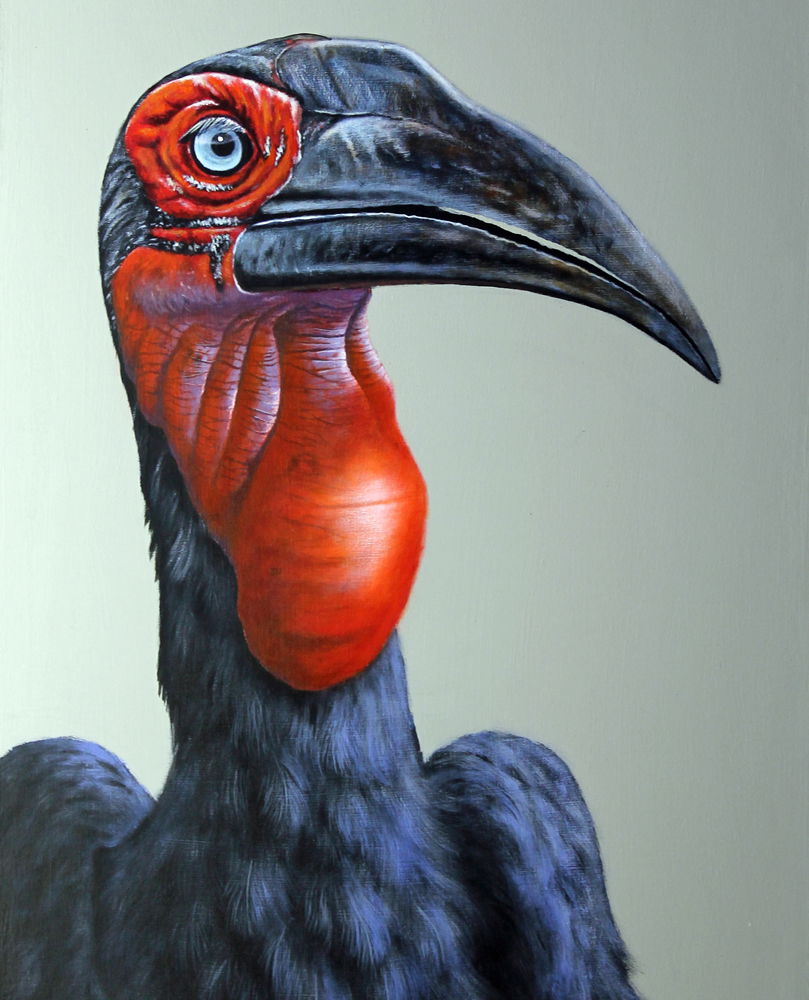
Thunderbird by Joe Marais
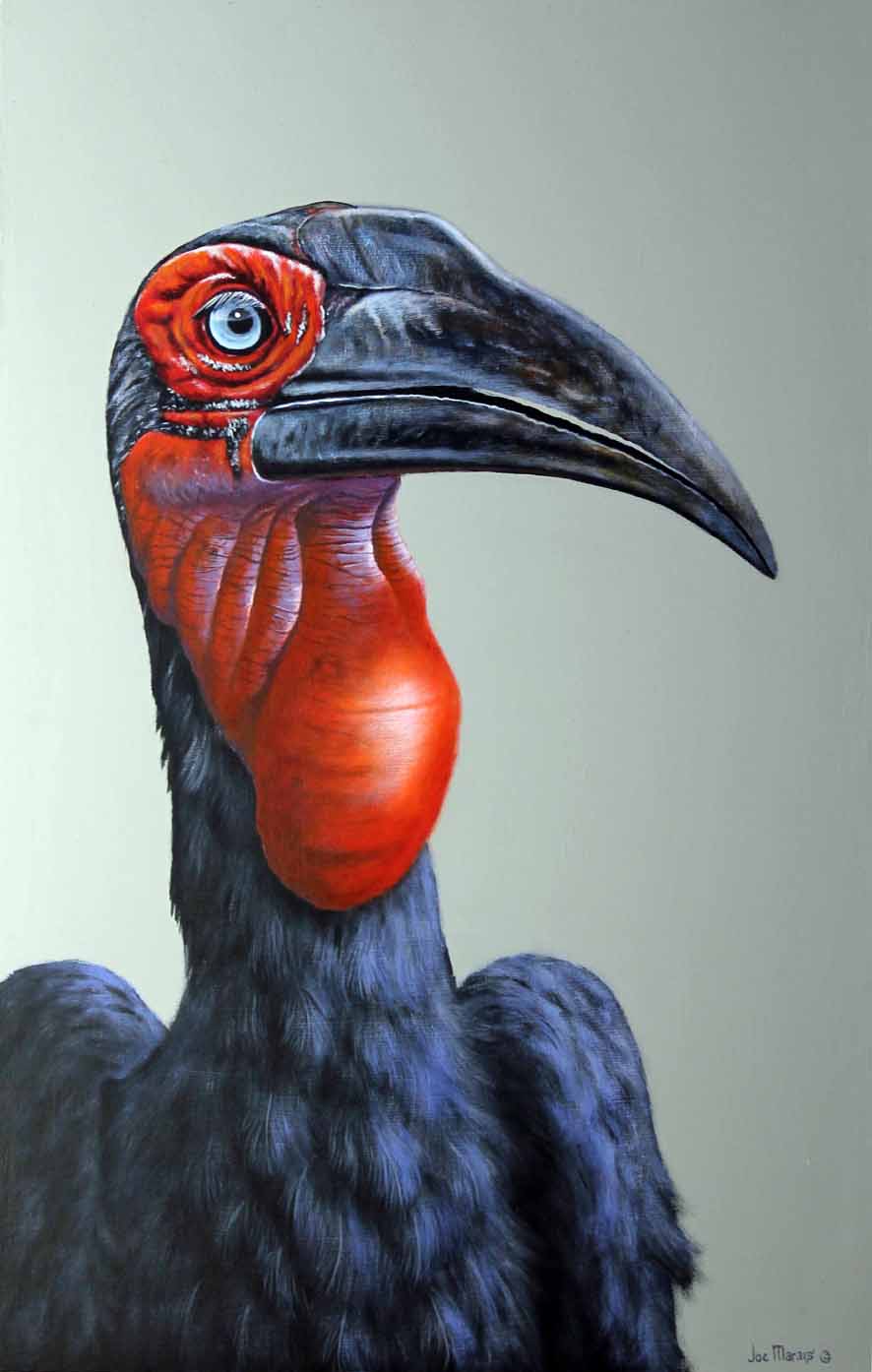
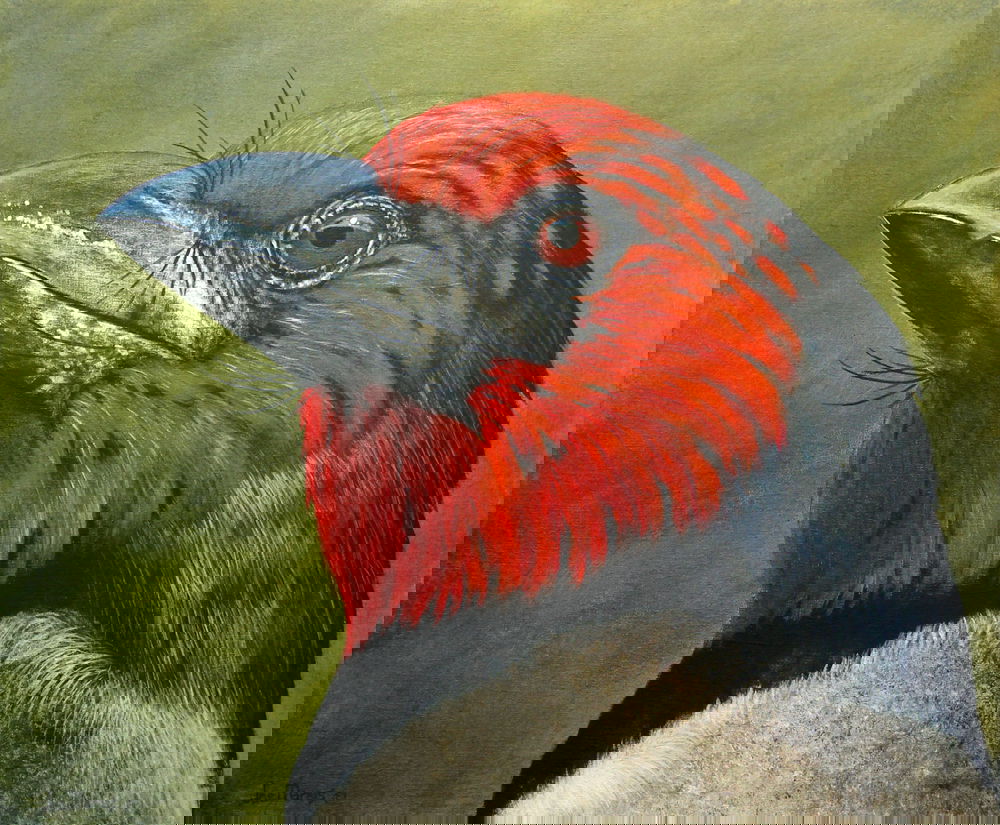
Title: Thunderbird Original Acrylic Painting on Canvas Measurements: 960 x 600 mm Block Mounted Southern Ground Hornbills are one of the most easily identifiable and most cherished bird species associated with trips to the game reserve. They are the largest members of the hornbill family. Formerly far more widespread, they are now an endangered species, seldom seen outside conservation areas. There booming calls are often mistaken for roaring lions.
Dabchick by Joe Marais
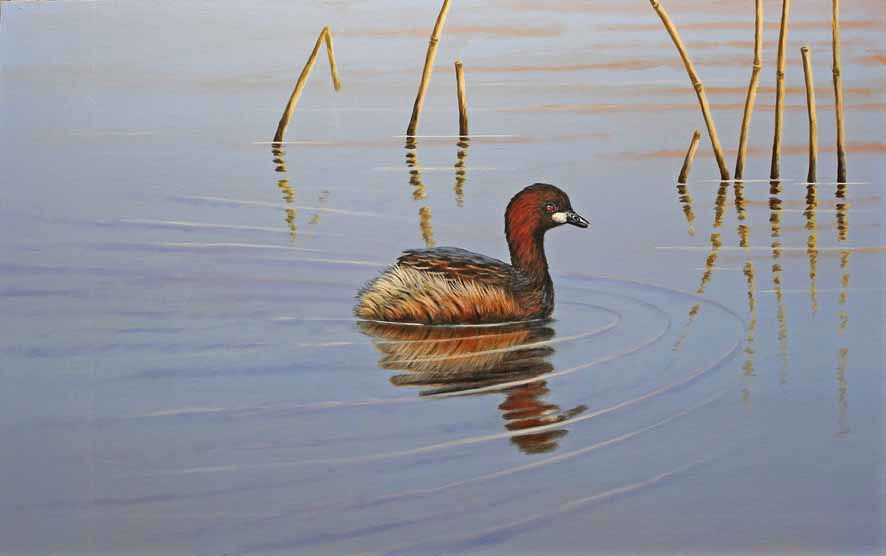
Title: Dabchick Original Acrylic Painting on Canvas Measurements: 960 x 600 mm The little grebe or dabchick is a fantastic diver, but to help it swim underwater, its feet are placed towards the back of its body, making it rather clumsy on land. It only really comes ashore to breed.
Purchase Artwork Securely

paypal checkout
Pay Now - Click on 'PayPal' underneath the image.

https://www.paypal.com/ncp/payment/JM7JN6N3HHDJ6
contact
- 100 Krewelkring, Meerensee, Richards Bay, KZN, South Africa
 +27-764944356 - Joe Marais
- retail@joemarais.co.za
- Gallery - 10am to 4pm Weekdays Saturdays phone for appointment 0764944356 Closed on Sundays
Please feel free to send me a WhatsApp for any questions. Kind regards. Joe
refund & cancellation policy
Refund & Cancellation Policy
Effective Date:[03/02/2026]Thank you for choosing Art by Joe Marais (“we”, “us”, “our”). We strive to ensure you are delighted with your purchase of original artworks, prints, and related products. Please read our refund and cancellation policy carefully.
1. General
All sales are final once the order is confirmed and payment is processed. Due to the nature of original artworks and custom products, refunds are not available unless explicitly stated below.
2. Digital Products & Downloads
If you purchase digital downloads (e.g., digital prints), refunds are not provided once the product has been delivered or the download link has been accessed.
3. Physical Products
For physical products (prints, framed artwork, etc.):
Change of Mind
- We do not offer refunds for change of mind.
- If you wish to cancel your order before shipment, please contact us immediately at art@joemarais.co.za. Cancellations may be accepted at our discretion before dispatch.
Damaged or Faulty Items
If your item arrives damaged or faulty:
- Contact us within 7 days of delivery at art@joemarais.co.za with:
- Order number
- Clear photos of the damage
- We will review the claim and may request additional information.
- If approved, we will offer:
- Replacement of the item, or
- Store credit, or
- Refund, depending on the situation.
4. Custom or Commissioned Artworks
Custom, commissioned, or made-to-order pieces are non-refundable once the creative process has begun. If you cancel before work begins, a partial refund may be issued less any fees incurred.
5. Shipping & Returns
- Customers are responsible for return shipping costs unless the item is defective or damaged.
- Return items must be securely packaged to prevent further damage.
- We recommend using tracked or insured postage.
6. Refund Processing
If a refund is approved:
- The refund will be processed within 15 to 30 business days.
- Original payment method will be credited where possible.
7. How to Contact Us
For queries, cancellations, or claims:
📧 Email: art@joemarais.co.za
🌐 Website:https://www.artbyjoemarais.co.za/contact